“I tell you, Helen, I am not jesting. It is true, dreadfully true, in the face of all modern science and all modern religion.”
— Dr. Raymond explains the reality of supernatural forces to Helen Vaughan.

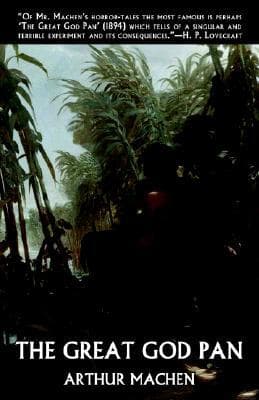
Arthur Machen (1894)
Genre
Fantasy
Reading Time
90 min
Key Themes
See below
Sign in to track this book
A reckless scientific experiment to glimpse the pagan god Pan unleashes a monstrous, seductive entity whose very presence drives men to madness and suicide across London.
The story opens in the study of Dr. Raymond, a physician with an interest in the occult. He is preparing to perform a dangerous experiment on a young woman named Mary, a former governess, who is under his care. His friend, Clarke, expresses strong reservations, fearing the harm to Mary's sanity. Dr. Raymond is convinced that by making a small incision in Mary's brain, he can allow her to perceive the true reality of the world, beyond everyday perception, and perhaps even glimpse the god Pan. During the procedure, Mary experiences an ecstatic vision, uttering the name 'Pan' before collapsing into a vegetative state, her mind shattered by the revelation. Clarke is horrified by the outcome, which Dr. Raymond dismisses as a necessary sacrifice for scientific truth.
Many years after the experiment, London gentleman Villiers is walking through the woods near his home when he encounters a beautiful, enigmatic woman. She seems to appear and disappear almost supernaturally, and her presence leaves him with a sense of unease, a feeling of something ancient and monstrous lurking beneath her captivating exterior. He is drawn to her despite his apprehension. This encounter is the beginning of a series of inexplicable and disturbing events in Villiers' life, as he finds himself increasingly entangled with the mysterious woman. He learns that she is known as Helen Vaughan, a figure who seems to bring an unsettling influence wherever she goes, often leading to tragic ends for those who fall under her spell.
Dr. Phillips, a London physician, is called to the home of Mr. Herbert, a respectable man who has suddenly gone insane. Herbert raves about a beautiful, terrifying woman who has seduced him and revealed unspeakable horrors, driving him to the brink. Herbert eventually commits suicide in a gruesome manner, his face contorted in an expression of ultimate terror. Dr. Phillips, disturbed by the incident, tries to understand the cause of Herbert's madness. He learns that Herbert had recently become infatuated with a woman named Helen Vaughan, who had a reputation for attracting and then destroying men. The doctor begins to connect this case with other similar, unexplained suicides and mental breakdowns among London's elite.
Clarke, still troubled by Dr. Raymond's experiment and Mary's fate, begins to investigate the string of suicides and mental collapses gripping London. He hears whispers of a 'Helen Vaughan' and recognizes the unsettling pattern. His investigation leads him to a secluded Welsh village, where he uncovers disturbing local legends and accounts of a strange child born to a woman who had previously been 'touched' by an unspeakable entity. The villagers speak of a 'changeling' and unnatural events, hinting at a connection to the ancient, pagan forces of the land. Clarke suspects that Helen Vaughan is somehow linked to the experiment performed on Mary years ago, and that the god Pan is involved.
Through his inquiries in Wales, Clarke learns about Helen Vaughan's unsettling childhood. She was raised by a foster mother who experienced strange, terrifying visions and inexplicable phenomena around the girl. Animals would react with fear or unnatural fascination in her presence, and other children were either drawn to her with an unhealthy obsession or recoiled in terror. There were rumors of strange rituals and unholy rites performed in the woods, with Helen at the center. It becomes clear that Helen is not entirely human, but rather the offspring of Mary's encounter with Pan during Dr. Raymond's experiment. Her existence seems to emanate a corrupting, destructive force.
Villiers, initially captivated by Helen Vaughan, begins to feel an escalating sense of dread and repulsion. He observes her interactions in London's social circles, noting how men become obsessed with her, only to descend into madness, moral degradation, or suicide. Helen, with her ethereal beauty and unsettling charm, seems to be a catalyst for their destruction. Villiers is particularly disturbed by the accounts of those who have been intimate with her, describing visions of primal, grotesque forms and a profound sense of cosmic horror. He realizes that her influence is not merely psychological but something far more ancient and supernatural, actively corrupting the souls of those around her.
Villiers and Clarke meet and share their independent investigations. Clarke reveals the details of Dr. Raymond's experiment and Mary's subsequent fate, along with the legends from the Welsh village. Villiers recounts the disturbing effects Helen has had on London society and the accounts of her victims. They slowly piece together the terrifying truth: Helen Vaughan is the monstrous offspring of Mary and the entity she glimpsed during the experiment – Pan himself. She is a being of both human and inhuman essence, a conduit for ancient, pagan forces, and her presence brings forth the primordial chaos and horror of the natural world, driving humans to madness and self-destruction.
Driven by a desperate need to stop Helen's destructive influence, Villiers actively seeks her out. He follows her movements, observing her chilling effect on those around her. He knows he must confront her, but he also understands the immense danger. He learns that Helen has married a man named Austin, who quickly succumbs to her corrupting power, his mind and body deteriorating rapidly. Villiers, armed with the knowledge of her true nature, prepares for a final confrontation, knowing that he faces not just a woman, but a primal force of nature, a living embodiment of the Great God Pan's terrifying essence, capable of dissolving the very fabric of human sanity.
Villiers finally confronts Helen Vaughan. In a horrifying climax, he witnesses her undergo a series of grotesque transformations, her body shifting and dissolving through various forms – reptilian, bestial, and ultimately, an indescribable amalgamation of horrors. This physical disintegration reflects the spiritual corruption she embodies. As she writhes and changes, her true, monstrous nature is revealed, a living manifestation of the ancient god Pan. Overwhelmed by the unspeakable sight, Villiers is nevertheless determined. Helen eventually dies, dissolving into a putrid, formless mass, her end as unnatural and terrifying as her life. Her death brings an end to the immediate terror, but the cosmic horror she represented lingers.
With Helen Vaughan's death, the string of suicides and madness in London ceases. Villiers is left deeply scarred by what he has witnessed, forever haunted by the revelation of the primordial forces lurking beneath the veneer of reality. Clarke, too, is profoundly affected, his scientific curiosity forever tempered by the terrifying consequences of Dr. Raymond's hubris. The book concludes with the understanding that while a particular manifestation of horror has been dealt with, the Great God Pan and the ancient, unspeakable forces he represents still exist, ever-present, just beyond the thin veil of human perception, waiting to be glimpsed again, always with devastating consequences for those who dare to look.
The Supporting
He initiates the central conflict with his experiment, remains largely detached from the consequences, and represents the intellectual arrogance that unleashes horror.
The Supporting
Witnesses the initial horror, then actively investigates the subsequent events, becoming a key figure in unraveling the mystery.
The Supporting
She is a victim whose tragic fate directly enables the central horror of the story.
The Protagonist
Starts as a curious observer, becomes a horrified witness, and finally a determined agent against Helen Vaughan.
The Antagonist
Her arc is one of escalating destructive influence, culminating in her horrific transformation and demise.
The Mentioned
Briefly appears as a victim, illustrating Helen's sinister power.
The Supporting
Serves as an early investigator, documenting the effects of Helen's influence before the full truth is known.
The Mentioned
A final victim, demonstrating the persistent and fatal nature of Helen's influence.
This theme explores the thin barrier separating human perception from a deeper, more primal reality. Dr. Raymond's experiment is a deliberate attempt to tear this veil, driven by the desire for forbidden knowledge. The horrific consequences for Mary and the subsequent birth of Helen Vaughan demonstrate the dangers of peering beyond the mundane. The novel suggests that some truths are too vast and terrible for the human mind to comprehend, and attempting to force such revelations leads only to madness and destruction. Helen Vaughan herself embodies this shattered veil, her existence a constant reminder of the monstrous 'other' lurking just beneath the surface of civilization.
“'What if there were a real world, a world of greater splendour and triumph, of intolerable ecstasy and intolerable agony?'”
Machen's novel is a foundational work of cosmic horror, depicting a universe where humanity is insignificant and vulnerable to ancient, indifferent forces. Pan represents this cosmic indifference and primal power, a god of nature that is neither benevolent nor malevolent in human terms, but utterly alien and destructive to human sanity. Helen Vaughan, as Pan's offspring, brings this cosmic dread into the human realm. Her victims don't just die; they are driven insane by visions of unspeakable realities, hinting at a vast, terrifying cosmos beyond human comprehension. The horror stems not just from her actions, but from the unsettling truth she reveals about existence.
“'The sight of the Great God Pan is a sight of agony and terror, for it is the sight of the world as it is, not as we have made it for ourselves.'”
The story sets up a clear dichotomy between the ordered, Christian, and civilized world of Victorian London and the ancient, chaotic, and pagan forces represented by Pan. Helen Vaughan, a creature of the wild and the ancient woods, infiltrates and corrupts London's refined society, bringing a primal, pre-human horror into modern life. Her influence strips away the veneer of civilization, revealing the bestial and chaotic instincts beneath. The novel suggests that humanity's attempts to suppress or ignore its pagan past and the wildness of nature are futile, and that these forces will inevitably erupt, bringing destruction to the artificial constructs of society.
“'He saw the world as a thin veil drawn over a hell of unspeakable torment.'”
The central theme revolves around the idea that direct contact with the supernatural, especially that which is ancient and primal, is inherently corrupting and destructive to the human mind and soul. Mary's mind is shattered, and Helen's victims are not merely killed but spiritually tainted, driven to madness, moral degradation, and suicide by the 'revelations' she offers. This corruption is both psychological and physical, as seen in the grotesque transformations and decay of Helen's victims and her own eventual dissolution. The book argues that true evil isn't necessarily a moral choice but an inherent quality of certain otherworldly entities, which by their very nature, distort and destroy human reality.
“'She was a priestess of the Great God Pan, and her mission was to reveal the horror that underlies all being.'”
Horror is often conveyed through suggestion and fragmented accounts, leaving much to the reader's imagination.
Machen frequently employs an unreliable or ambiguous narrative style. The most horrifying events, particularly Helen's 'revelations' to her victims and her final transformation, are rarely described directly. Instead, they are hinted at through the reactions of witnesses (madness, suicide, terror) or through vague, evocative language. This technique forces the reader to fill in the blanks, often imagining something far more terrifying than any explicit description could convey. It enhances the cosmic horror by suggesting that the true nature of Pan and Helen is beyond human comprehension and therefore inexpressible.
A recurring symbol representing the barrier between mundane reality and cosmic truth.
The concept of a 'veil' is a central metaphor, representing the thin barrier that separates everyday human perception from a deeper, more profound, and often horrific spiritual reality. Dr. Raymond's experiment aims to 'lift the veil,' and Helen Vaughan's existence and actions are described as tearing or dissolving this veil for her victims. When the veil is breached, it reveals unspeakable truths associated with Pan, leading to madness and destruction. This device emphasizes the fragility of human understanding and the dangers of seeking forbidden knowledge beyond the perceived world.
Helen Vaughan's unnatural birth and monstrous nature are framed through the folklore of changelings.
The story utilizes the folklore motif of the 'changeling' to describe Helen Vaughan's origins and nature. Local Welsh villagers refer to her as such, implying she is not fully human but a supernatural entity left in place of a human child. This motif immediately establishes her as alien and inherently monstrous, born of an unholy union. It taps into ancient fears of inhuman entities infiltrating human society, reinforcing her role as a harbinger of primal, pre-human horror that cannot be understood or contained by human norms.
The horror is gradually revealed through a series of increasingly disturbing events and fragmented accounts.
Machen builds horror not through immediate, graphic descriptions but through a gradual accumulation of unsettling incidents and indirect revelations. The story starts with a disturbing experiment, then introduces a mysterious woman whose presence causes madness and death, and only slowly, through the investigations of Clarke and Villiers, is her true, monstrous nature and connection to the experiment revealed. This slow burn, piecing together fragments of terror, creates a profound sense of dread and suspense, making the ultimate truth all the more shocking and impactful when it is finally understood.
“I tell you, Helen, I am not jesting. It is true, dreadfully true, in the face of all modern science and all modern religion.”
— Dr. Raymond explains the reality of supernatural forces to Helen Vaughan.
“The Great God Pan is dead.”
— A character declares the demise of the ancient deity, symbolizing the clash of old and new worlds.
“I saw the shape of a man, but the face was the face of a beast.”
— A witness describes a horrifying transformation during an occult experiment.
“There are sacraments of evil as well as of good about us, and we live and move to my belief in an unknown world.”
— Reflection on the hidden, malevolent forces permeating reality.
“She is not a woman; she is a horror.”
— A character describes Helen Vaughan, whose nature blurs human and monstrous.
“The woods and the fields are full of strange things, and there are more things in heaven and earth than are dreamt of in our philosophy.”
— An allusion to Shakespeare, emphasizing the unknown terrors in nature.
“It is a horrible story, but it is true.”
— A character insists on the veracity of a terrifying account, blurring fiction and reality.
“I have seen the black stars and the voids that lie between them.”
— A description of cosmic horror glimpsed through occult experiences.
“The world is not as we see it; there are doors that open into other places.”
— Hinting at hidden dimensions or realities accessible through forbidden knowledge.
“Her beauty was a mask for something unspeakable.”
— Describing Helen Vaughan's deceptive appearance concealing her true nature.
“We have meddled with things that should have been left alone.”
— A warning about the dangers of exploring forbidden occult knowledge.
“The past is not dead; it is not even past.”
— Suggests the lingering influence of ancient, pagan forces in the modern world.
“There are things that man was not meant to know.”
— A cautionary statement about the limits of human understanding and curiosity.
“In the heart of the city, the old gods still whisper.”
— Implies that ancient, malevolent forces persist even in urban, modern settings.
Ready to see how well you understood this book? Take our interactive quiz with 10 questions.
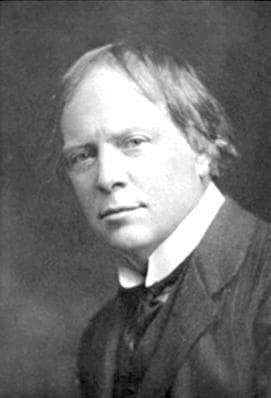
Arthur Machen was a British author known for his contributions to the horror and fantasy genres. His novella, 'The Great God Pan,' is considered a classic of supernatural horror, exploring themes of the uncanny and the hidden forces of nature. Machen's distinctive prose and mystical approach influenced many later writers in the field.







