“I could tell you that I've been to every state in the Union, and I could tell you that I've been to the moon. You wouldn't know the difference. You don't know me.”
— Gilly's initial defiance to Mrs. Trotter.

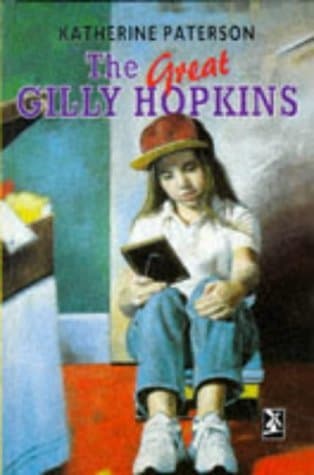
Katherine Paterson (1978)
Genre
Children's / Young Adult
Reading Time
90 min
Key Themes
See below
Sign in to track this book
Gilly Hopkins, an independent and troubled foster child, uses her sharp wit and schemes to navigate a world she believes is against her, only to discover that victory lies not in winning battles but in finding unconditional love.
Eleven-year-old Galadriel 'Gilly' Hopkins arrives at the unconventional home of her new foster mother, Maime Trotter, in an impoverished neighborhood. Gilly, a veteran of the foster care system, has a hard exterior and a reputation for being difficult. She immediately assesses Mrs. Trotter, a large, unkempt woman, and her other foster child, William Ernest, a shy and nervous seven-year-old, with disdain. Gilly's primary goal is to make herself so unpleasant that she'll be moved to another home, preferably one closer to her glamorous, but absent, biological mother, Courtney. She wastes no time in asserting her dominance, trying to intimidate William Ernest and dismissive of Mrs. Trotter's attempts at kindness.
Gilly continues to be rude and rebellious, refusing to do chores, insulting Mrs. Trotter's cooking, and generally making life difficult. She discovers that Mr. Randolph, a blind, elderly black man, lives next door and comes to the Trotter house for dinner every evening, where Mrs. Trotter reads to him. Gilly views this as another eccentricity of the household. Her contempt extends to William Ernest, whom she initially bullies relentlessly, stealing his money and making him cry. Despite her efforts, Mrs. Trotter remains unfazed, responding to Gilly's provocations with patience and an almost unwavering kindness that Gilly finds both baffling and infuriating. Gilly begins formulating a plan to escape and find her mother.
Driven by her desire to reconnect with her biological mother, Courtney, Gilly writes a dramatic and exaggerated letter. In it, she paints a picture of extreme deprivation and misery at the Trotter house, hoping to elicit sympathy and prompt Courtney to rescue her. She describes Mrs. Trotter as a cruel, unfeeling woman and the living conditions as squalid, all designed to make her mother feel guilty enough to take her away. Gilly enlists William Ernest to help her steal money from Mrs. Trotter's purse to buy stamps for the letter, further exploiting his timid nature. She mails the letter, full of hope that her plan will soon bear fruit.
Gilly starts at a new school and immediately clashes with her teacher, Miss Ellis. Despite her rebellious attitude, it quickly becomes apparent that Gilly is intelligent and academically gifted, far surpassing her classmates. She enjoys reading and demonstrating her knowledge, but her sharp tongue and independent spirit often get her into trouble. She also meets Agnes Stokes, a girl who tries to befriend her but Gilly initially rebuffs, seeing her as another potential victim or nuisance. Gilly continues to maintain her tough facade, both at school and at home, convinced that showing any vulnerability would be a sign of weakness and would jeopardize her ultimate goal of leaving the Trotters.
Thanksgiving arrives, and Mrs. Trotter prepares a large meal. Gilly, initially resistant, finds herself drawn into the domesticity. During the meal, Mr. Randolph shares a story, and Gilly, despite herself, becomes engaged, even offering to help him find the right words. She also notices Mrs. Trotter's genuine care for William Ernest. A significant moment occurs when Gilly, seeing William Ernest struggling with his food, discreetly helps him, a small act of kindness that signals a shift in her attitude. She still maintains her hardened exterior, but the warmth and stability of the Trotter home, along with the consistent, unconditional love from Mrs. Trotter, begin to subtly chip away at her defenses.
Gilly's letter to her mother, Courtney, finally yields a response, but not the one she expected. Instead of Courtney, her maternal grandmother, Nonnie, arrives unexpectedly. Nonnie is a kind, gentle woman who is genuinely concerned for Gilly's well-being. She reveals that Courtney is not the glamorous, independent woman Gilly imagined, but rather a troubled and somewhat irresponsible individual. Nonnie, having been misled by Gilly's exaggerated letter, intends to take Gilly to live with her in Virginia. This development throws Gilly into a turmoil, as she realizes her plan has succeeded but not in the way she envisioned, and she feels regret at the thought of leaving the Trotters.
Despite Gilly's growing attachment to Mrs. Trotter, William Ernest, and even Mr. Randolph, the decision is made for her to go live with Nonnie. The goodbye is heartbreaking for Gilly, who struggles to express her newfound affection and sorrow. Mrs. Trotter, with her usual understanding, offers Gilly a small, treasured ceramic bird as a parting gift, symbolizing the love and acceptance Gilly had found. Gilly leaves with Nonnie, feeling a profound sense of loss and confusion. She realizes, too late, the true value of the home and family she had so desperately tried to escape, and the genuine love she had received from Mrs. Trotter.
Life with Nonnie in Virginia is quiet and orderly, a stark contrast to the lively chaos of the Trotter household. Nonnie is kind and loving, but Gilly finds herself missing the boisterousness of Mrs. Trotter, the quiet presence of William Ernest, and the intellectual conversations with Mr. Randolph. She realizes that the freedom she sought wasn't what she truly needed. Gilly tries to adapt, but she feels a profound sense of emptiness and longing for her old foster family. She starts to understand that genuine love and belonging aren't about grand gestures or perfect circumstances, but about consistent care and acceptance.
Overwhelmed by her longing, Gilly makes a desperate phone call to Mrs. Trotter. The conversation is brief and emotional. Gilly, still struggling to articulate her feelings, tries to convey how much she misses them. Mrs. Trotter, ever perceptive, understands Gilly's unspoken words and reassures her. This phone call is a moment, as it signifies Gilly's complete emotional turnaround. She no longer wants to escape the Trotters; instead, she desperately wants to return. This moment highlights the depth of the bond that Gilly had formed with her foster family, a bond she had initially fought against with all her might.
Nonnie, seeing Gilly's unhappiness, makes arrangements for Gilly to potentially return to the Trotters. Gilly is overjoyed, her spirits lifting at the prospect of being reunited with the people who had truly cared for her. However, this glimmer of hope is tragically cut short. Gilly receives devastating news: Mr. Randolph has passed away. This loss deeply affects Gilly, reminding her of the fragility of life and the importance of cherishing the people she loves. The news also complicates her potential return, as the Trotter household will be forever changed by the absence of their beloved friend.
In the aftermath of Mr. Randolph's death, Gilly understands that some things cannot be undone and that life often takes unexpected turns. While she still misses the Trotters intensely, she begins to accept her new reality with Nonnie. She has learned valuable lessons about love, family, and self-acceptance. Gilly realizes that even though she is not physically with the Trotters, the love and lessons they imparted will always be with her. She begins to see her future with Nonnie not as a punishment, but as another chapter in her life, armed with a newfound understanding of what it means to belong and to be loved.
The Protagonist
Gilly transforms from a cynical, rebellious child into one who recognizes and embraces love, learning that true strength lies in vulnerability and connection.
The Supporting
Mrs. Trotter remains a steadfast source of unconditional love, acting as the catalyst for Gilly's transformation without undergoing significant personal change herself.
The Supporting
William Ernest grows in confidence and finds a sense of security through his bond with Gilly and Mrs. Trotter.
The Supporting
Mr. Randolph remains a consistent source of wisdom and gentle influence, providing a stable presence until his death.
The Supporting
Nonnie provides a new, stable home for Gilly, patiently helping her adjust to a different kind of loving environment.
The Mentioned
Courtney remains a static, idealized figure in Gilly's mind, whose reality is eventually shattered by Nonnie's revelation.
The Supporting
Miss Ellis consistently provides academic and emotional support to Gilly, helping her channel her intelligence productively.
The Supporting
Agnes remains a persistent, if ultimately unsuccessful, attempt at friendship for Gilly during her time with the Trotters.
The novel explores how family is defined not by blood ties but by love, care, and acceptance. Gilly initially yearns for her biological mother, Courtney, an idealized figure, but eventually learns that her true family is the unconventional, loving household of Maime Trotter, William Ernest, and Mr. Randolph. The Trotter home, despite its messiness, provides the emotional stability and unconditional love Gilly needs. Her realization that she belongs with them, and her subsequent heartbreak at leaving, shows that genuine family is built on shared experiences and deep emotional bonds, not just genetics.
“What she didn't realize was that every time she won, she really lost, until she discovered a love as formidable as any enemy she'd ever known.”
Gilly begins the story as a guarded and emotionally closed-off child, using anger and defiance as a defense mechanism. Her journey with the Trotters forces her to confront her own vulnerabilities and to slowly open her heart. Mrs. Trotter's unwavering patience and love chip away at Gilly's tough exterior, allowing her to experience genuine affection and connection. Gilly's tears when leaving the Trotters and her desperate phone call to Mrs. Trotter are strong indicators of her emotional growth, demonstrating her willingness to feel and express love, even if it brings pain.
“It was the only time in her life that Gilly had ever cried for love. And she cried hard.”
The novel consistently challenges characters, and the reader, to look beyond surface appearances. Gilly initially judges Mrs. Trotter as an unkempt, unintelligent woman and her home as squalid, but she gradually discovers Mrs. Trotter's wisdom, kindness, and strength. Similarly, Gilly idealizes her 'glamorous' biological mother, Courtney, only to find that the reality is far less appealing and responsible. The eccentric household with a blind neighbor and a timid foster brother proves to be the most nurturing environment Gilly has ever known, demonstrating that true value and love can be found in unexpected places.
“You can't just go around judging people by the way they look, Gilly. It ain't right.”
Maime Trotter embodies unconditional love, offering it freely and consistently to Gilly despite the girl's constant rebellion and insults. This love is not earned but given, and this unwavering acceptance ultimately breaks down Gilly's defenses. Mrs. Trotter's love provides a safe space for Gilly to be herself, to make mistakes, and to eventually learn to love in return. It highlights how consistent, non-judgmental affection can heal deep emotional wounds and foster personal change, even in the most resistant individuals.
“I may not be no great looker, and I may not be no great shakes as a cook, but I got love in my heart, and that’s what counts.”
Gilly's exaggerated letter to her mother that triggers a chain of unintended consequences.
Gilly's dramatic and fabricated letter to her biological mother, Courtney, detailing her supposed misery at the Trotter house, serves as a crucial plot device. Intended to force Courtney to 'rescue' her, the letter instead brings Nonnie, Gilly's maternal grandmother, into the picture. This unexpected turn of events forces Gilly to leave the Trotters, creating the central conflict of her emotional realization. The letter highlights Gilly's initial immaturity and manipulative tendencies, but its unforeseen outcome ultimately leads to her profound growth and understanding of what she truly values.
A small, treasured gift from Mrs. Trotter to Gilly, symbolizing love and connection.
The ceramic bird, a small, inexpensive object that Mrs. Trotter gives to Gilly as a parting gift, is a powerful symbol. It is one of Mrs. Trotter's few personal treasures, signifying the depth of her affection and the genuine bond she shares with Gilly. For Gilly, the bird becomes a tangible reminder of the love she found and lost, representing her emotional connection to the Trotters. It underscores the theme that true value lies not in material possessions, but in the love and memories associated with them, and serves as a constant touchstone for Gilly's longing.
Evening rituals of poetry and stories that provide comfort and intellectual stimulation.
The daily ritual of Mrs. Trotter reading to Mr. Randolph, often poetry or classic literature, serves multiple functions. It provides a consistent, comforting backdrop to the Trotter household, showcasing Mrs. Trotter's kindness and Mr. Randolph's intellectual depth. For Gilly, these readings initially highlight the eccentricity of the household, but they gradually draw her in, appealing to her own intelligence and love of words. They offer a shared cultural experience that subtly binds the unconventional family together and provides Gilly with a sense of calm and belonging she hasn't experienced before.
Gilly's desperate phone call to Mrs. Trotter, revealing her emotional vulnerability.
Gilly's phone call to Mrs. Trotter from Nonnie's house is a pivotal moment, serving as the climax of Gilly's emotional arc. It is the first time Gilly is truly vulnerable, openly expressing her longing and love for her foster family. The call, though brief, symbolizes Gilly's complete transformation from a defiant, unfeeling child to one capable of deep affection and regret. It is a raw, unscripted moment where Gilly's true feelings burst forth, confirming her profound attachment to the Trotters and her understanding of the love she had found with them.
“I could tell you that I've been to every state in the Union, and I could tell you that I've been to the moon. You wouldn't know the difference. You don't know me.”
— Gilly's initial defiance to Mrs. Trotter.
“She was not going to be like these people. She was going to be Gilly Hopkins, and Gilly Hopkins was a winner.”
— Gilly's internal resolve to maintain her tough exterior.
“You can't just take people and throw them away like yesterday's garbage.”
— Gilly's anger and frustration about being moved between foster homes.
“It was impossible to hate someone who was so dumb and so good.”
— Gilly's internal conflict regarding William Ernest.
“Maybe if she was bad enough, someone would notice her enough to keep her.”
— Gilly's underlying motivation for her disruptive behavior.
“You got to be tough, Gilly, because nobody else is gonna be tough for you.”
— Gilly's self-talk and survival mantra.
“There were some things you couldn't run away from. Some things you had to face.”
— Gilly's realization about confronting her past and feelings.
“The trouble with growing up is that you have to give up some of your favorite lies.”
— Gilly's internal reflection on maturity and honesty.
“Love wasn't a thing you could just turn off and on like a water faucet.”
— Gilly's struggle with her feelings for Mrs. Trotter.
“It wasn't that she didn't want to be loved. It was that she didn't know how to be loved.”
— Gilly's deep-seated emotional barriers.
“A person could starve to death in the midst of plenty if they didn't know how to take.”
— Gilly's observation about receiving kindness and help.
“You don't have to be perfect to be loved. You just have to be.”
— A message Gilly implicitly learns from Mrs. Trotter.
“She had thought she was so clever, so strong, so independent. But she was just a kid who wanted a home.”
— Gilly's moment of profound self-realization.
“Sometimes the things you try to escape are the very things that save you.”
— Gilly's reflection on her journey with Mrs. Trotter.
Ready to see how well you understood this book? Take our interactive quiz with 10 questions.

Katherine Womelsdorf Paterson is an American writer best known for children's novels, including Bridge to Terabithia. For four different books published 1975–1980, she won two Newbery Medals and two National Book Awards. She is one of four people to win the two major international awards; for "lasting contribution to children's literature" she won the biennial Hans Christian Andersen Award for Writing in 1998 and for her career contribution to "children's and young adult literature in the broadest sense" she won the Astrid Lindgren Memorial Award from the Swedish Arts Council in 2006, the biggest monetary prize in children's literature. Also for her body of work she was awarded the NSK Neustadt Prize for Children's Literature in 2007 and the Laura Ingalls Wilder Medal from the American Library Association in 2013. She was the second US National Ambassador for Young People's Literature, serving 2010 and 2011.

Dan Gemeinhart
4.5

Kate O'Hearn
4.4

Jeanne Birdsall
4.4

Jen Wang
4.4
Wendelin Van Draanen
4.3

John Marsden
4.3

Chris Van Allsburg
4.3
Jennifer A. Nielsen
4.2