“So we beat on, boats against the current, borne back ceaselessly into the past.”
— Nick Carraway's final reflection on Gatsby and the American Dream.

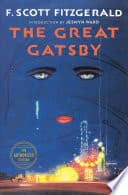
F. Scott Fitzgerald (2021)
Genre
Historical Fiction / Romance
Reading Time
166 min
Key Themes
See below
Sign in to track this book
In the opulent Roaring Twenties, a mysterious millionaire's lavish parties hide his desperate, tragic pursuit of a lost love, exposing the emptiness within the American Dream.
In the spring of 1922, Nick Carraway, a Yale graduate and World War I veteran, moves from the Midwest to West Egg, Long Island, to work in bonds. He rents a small house next to the large mansion of the mysterious millionaire, Jay Gatsby. Nick visits his wealthy cousin, Daisy Buchanan, and her strong, arrogant husband, Tom Buchanan, at their East Egg estate. There, he also meets Jordan Baker, a professional golfer. During dinner, Nick sees Tom's open affair with Myrtle Wilson, and he notices the superficiality and unhappiness under the Buchanans' rich life. He goes home to see Gatsby alone on his dock, reaching for a green light across the bay.
Soon after, Tom Buchanan takes Nick to New York City. On the way, they stop in the desolate industrial area called the Valley of Ashes, a sharp contrast to the wealthy Eggs. Here, Nick meets Tom's mistress, Myrtle Wilson, the lively wife of George Wilson, a struggling garage owner. The three go to an apartment in New York City that Tom uses for his affair. Myrtle's sister, Catherine, and the McKees join them. The evening involves heavy drinking and crude talk. When Myrtle repeatedly insults Tom about Daisy, Tom violently breaks her nose, showing his brutal side.
Nick gets a rare invitation to one of Jay Gatsby's Saturday night parties. He attends, feeling like an outsider among the hundreds of rich, uninvited guests who enjoy Gatsby's hospitality while spreading rumors about his host. Nick walks through the chaotic mansion and grounds, seeing the unrestrained fun. He finds Jordan Baker, and they look for Gatsby. They meet an eccentric man in the library, 'Owl Eyes,' who is surprised that Gatsby's books are real. Finally, Nick meets Gatsby, who is surprisingly young, handsome, and speaks formally, calling Nick 'old sport' and inviting him on his hydroplane.
Gatsby takes Nick to lunch in New York City, trying to impress him with an elaborate, hard-to-believe life story about Oxford, war heroics, and European travels. He even shows Nick a medal and a photograph as proof. Nick remains doubtful. During lunch, Gatsby introduces Nick to Meyer Wolfsheim, a known gambler who claims to have 'fixed' the 1919 World Series. Wolfsheim's presence suggests the darker, illegal sources of Gatsby's money. Later, Jordan Baker tells Nick the real reason for Gatsby's friendship: Gatsby bought his mansion across the bay to be near Daisy and hopes Nick will arrange a reunion for them.
Nick, feeling awkward, agrees to arrange a tea party at his house for Gatsby and Daisy. The first part of the reunion is full of tension and embarrassment. Gatsby seems nervous and clumsy. As the afternoon goes on, and Gatsby shows Daisy his large mansion and all his possessions, their old affection returns. Daisy is overwhelmed by Gatsby's devotion and his beautiful shirts, crying into them. Gatsby's long-held dream of reuniting with Daisy seems to be coming true, and the green light across the bay, once a symbol of distant hope, now feels close.
Gatsby and Daisy begin an affair, often meeting at Gatsby's mansion. Nick sees Gatsby's intense happiness, but also a growing worry as Gatsby tries to get back a past that might be lost. Gatsby even fires his old servants to stop gossip, replacing them with Wolfsheim's questionable associates. Tom Buchanan, at first unaware, starts to notice Daisy's increasing distraction and her frequent visits to West Egg. He becomes suspicious of Gatsby's background and his relationship with Daisy, feeling his own position and marriage are threatened, despite his ongoing affair with Myrtle.
On a very hot summer afternoon, Daisy suggests they all go to the city. Gatsby, Nick, Jordan, Tom, and Daisy drive to the Plaza Hotel. During the tense meeting, Tom directly confronts Gatsby about his affair with Daisy and the illegal ways he made his money, revealing Gatsby's bootlegging and other criminal acts. Gatsby tries to make Daisy admit she never loved Tom, but Daisy, conflicted, cannot truthfully say it. She only confesses she loved both men at different times. Tom, seeing Daisy hesitate, confidently sends Daisy and Gatsby home together in Gatsby's car, sure he has won.
As Gatsby and Daisy drive back from the city in Gatsby's yellow Rolls-Royce, a distressed Myrtle Wilson, having just argued with her husband George, runs into the road in the Valley of Ashes. She thinks it is Tom's car, as he had driven it earlier. Daisy, who is driving, accidentally hits and kills Myrtle. In a panic, Daisy does not stop. Gatsby, always protective, tells Nick he will take the blame for the accident to shield Daisy. Meanwhile, George Wilson, devastated by grief and rage, believes the driver of the yellow car was Myrtle's lover.
The morning after the accident, Nick urges Gatsby to leave, sensing danger, but Gatsby refuses, still hoping Daisy will call. George Wilson, driven by grief and Tom Buchanan's harmful suggestion that Gatsby owned the yellow car and was Myrtle's lover, finds Gatsby at his mansion. Wilson finds Gatsby in his swimming pool, waiting for Daisy's call that never comes. Wilson shoots Gatsby, killing him instantly, and then shoots himself. Gatsby dies alone, his dream broken, a victim of his misplaced hope and the wealthy's indifference.
Nick tries to arrange a proper funeral for Gatsby but finds himself almost completely alone. Daisy and Tom have left town without a trace, showing no regret or concern. None of Gatsby's former party guests attend, nor do any of his business associates, except for Owl Eyes. Gatsby's estranged father, Henry C. Gatz, arrives from the Midwest, showing Gatsby's humble beginnings and his ambitious nature. Nick realizes the deep emptiness and moral decay of the East Egg and West Egg elite. Disgusted by their carelessness, Nick decides to move back to the Midwest, thinking about the unreachable American dream and the destructive power of the past.
The Protagonist/Narrator
Nick begins as an eager, somewhat naive observer and ends as a disillusioned critic, returning to the Midwest for moral clarity.
The Protagonist
Gatsby rises from humble beginnings to immense wealth for a singular purpose, only to be destroyed by the very dream he pursued.
The Supporting
Daisy remains largely static, unable to escape her privileged, careless world, ultimately choosing security over love.
The Antagonist
Tom remains a static character, embodying the destructive forces of inherited wealth and unchecked power.
The Supporting
Jordan remains largely static, a symbol of the 'new woman' of the 1920s, but also of the era's moral decay.
The Supporting
Myrtle attempts to escape her social class through an affair, only to be brutally destroyed by the carelessness of the wealthy.
The Supporting
George transforms from a docile, unsuspecting husband into a grief-stricken avenger, ultimately succumbing to despair.
The Supporting
Wolfsheim remains static, a symbol of the criminal underbelly of the 'Roaring Twenties'.
The novel looks at the American Dream, originally about finding happiness through hard work. Here, it is ruined by materialism and moral decline. Gatsby's constant chase for wealth and Daisy is a twisted version of this dream, focused on getting back a past ideal instead of building a future. The rich characters' lavish lives, built on inherited money or illegal gains, show how the dream became about superficial spending and social climbing, leading to emptiness and tragedy, not fulfillment.
“Gatsby believed in the green light, the orgastic future that year by year recedes before us. It eluded us then, but that’s no matter—tomorrow we will run faster, stretch out our arms farther.... And one fine morning—”
A main theme is the sharp difference and conflict between 'old money' (East Egg) and 'new money' (West Egg). Tom and Daisy Buchanan, with their inherited wealth, represent the established, arrogant, and often corrupt rich who feel entitled. Gatsby, with his new, often illegal, wealth, represents the ambitious 'new money' class that wants acceptance but is rejected by the old guard. This division highlights the strict social rules of the time and how impossible it is to truly escape one's origins, no matter how much money one makes.
“They were careless people, Tom and Daisy—they smashed up things and creatures and then retreated back into their money or their vast carelessness, or whatever it was that kept them together, and let other people clean up the mess they had made.”
Gatsby's whole life is about getting back his past with Daisy, believing that wealth and a grand life can turn back time. His famous line, 'Can't repeat the past?…Why of course you can!', captures this desperate hope. But the novel repeatedly shows that the past cannot be changed or remade. Daisy herself has changed, and the innocence of their first love is gone. Gatsby's inability to accept this leads to his tragic end, as his dream is built on an illusion that eventually falls apart. This proves that one cannot truly relive the past.
“He wanted nothing less of Daisy than that she should go to Tom and say: 'I never loved you.' After she had obliterated four years with that sentence they could go back to Louisville and be married from her house, just as if it were five years ago.”
The novel clearly shows the moral decline and recklessness common during the Roaring Twenties. The characters, especially the wealthy elite, are self-indulgent, irresponsible, and lack real human connection. Tom's obvious infidelity, Daisy's eventual abandonment of Gatsby, and the general pleasure-seeking at Gatsby's parties all show a society that has lost its traditional values. The 'carelessness' of Tom and Daisy, who cause destruction without facing consequences, is a repeated idea, symbolizing the spiritual emptiness beneath the Jazz Age's glittering surface.
“What'll we do with ourselves this afternoon?' cried Daisy, 'and the day after that, and the next thirty years?'”
The contrast between illusion and reality is central to Gatsby and the story. Gatsby builds an elaborate facade of wealth and a made-up past to impress Daisy, living in a world he created. The glamorous parties, the grand mansion, and even Gatsby's identity are all part of this illusion. Nick, as the observer, slowly uncovers these layers, revealing the tragic truth: Gatsby's humble background, his illegal dealings, and Daisy's inability to live up to his perfect image. The novel suggests that holding onto illusions, no matter how beautiful, can ultimately be destructive.
“There must have been moments even that afternoon when Daisy tumbled short of his dreams—not through her own fault, but because of the colossal vitality of his illusion. It had gone beyond her, beyond everything.”
Provides a limited, subjective, yet morally grounded perspective on the events.
Nick Carraway's first-person narration is crucial, as he acts as both a participant and an observer. His Midwestern values and initial awe of the wealthy provide a lens through which the reader experiences the story. While he claims to be 'honest,' his perspective is inherently subjective, colored by his affections for Gatsby and his disdain for Tom and Daisy. This allows Fitzgerald to present a nuanced view of the 'Jazz Age' while maintaining a certain moral distance, drawing the reader into the world but also encouraging critical reflection on its excesses.
A powerful symbol of Gatsby's hopes, dreams, and the unattainable past.
The green light at the end of Daisy's dock is a potent symbol throughout the novel. For Gatsby, it represents his distant, idealized dream of Daisy and the past he yearns to recapture. It is a beacon of hope and desire, always visible but just out of reach. Once he is reunited with Daisy, the light loses its 'colossal significance,' indicating that the reality of his dream falls short of the illusion. Its enduring presence underscores the theme of the unattainable past and the elusive nature of the American Dream itself.
A symbolic wasteland representing the moral and social decay beneath the glamour.
The Valley of Ashes is a desolate, industrial wasteland located between the opulent East Egg and West Egg and New York City. It is literally and figuratively a place of moral decay, poverty, and despair, inhabited by the working class like George and Myrtle Wilson, whose lives are literally overshadowed by the waste of industrial society. It serves as a stark contrast to the glittering world of the wealthy, symbolizing the consequences of unchecked capitalism and the spiritual emptiness that underlies the superficial glamour of the Jazz Age, where dreams are literally turned to dust.
Illustrate the superficiality, excess, and loneliness of the Jazz Age.
Gatsby's lavish, open-house parties are a central plot device. They serve multiple functions: they introduce Nick to the chaotic world of West Egg, highlight Gatsby's mysterious persona, and are his primary, desperate attempt to attract Daisy's attention. While appearing vibrant and full of life, these parties are ultimately hollow, filled with uninvited guests who care little for Gatsby himself, only for his hospitality. They symbolize the superficiality, moral emptiness, and loneliness that pervade the wealthy society of the 1920s, where connection is fleeting and genuine intimacy is rare.
The changing weather mirrors the emotional tension and dramatic developments in the story.
Fitzgerald frequently uses weather to foreshadow or reflect the emotional atmosphere and plot developments. The initial reunion between Gatsby and Daisy is marked by a nervous rainstorm that clears as their love rekindles. The climactic confrontation between Gatsby and Tom in the Plaza Hotel occurs on the hottest day of the summer, symbolizing the escalating tension and explosive emotions. The damp, cold morning after Myrtle's death and Gatsby's vigil outside Daisy's house underscores the tragedy and impending doom. This device adds a layer of symbolic depth to the narrative, enhancing the reader's emotional experience.
“So we beat on, boats against the current, borne back ceaselessly into the past.”
— Nick Carraway's final reflection on Gatsby and the American Dream.
“I hope she'll be a fool—that's the best thing a girl can be in this world, a beautiful little fool.”
— Daisy Buchanan speaking about her daughter's future.
“They're a rotten crowd... You're worth the whole damn bunch put together.”
— Nick tells Gatsby this after Tom's confrontation at the Plaza Hotel.
“Gatsby believed in the green light, the orgastic future that year by year recedes before us.”
— Nick describing Gatsby's relentless pursuit of Daisy and his dreams.
“Can't repeat the past? Why of course you can!”
— Gatsby insists to Nick that he can recreate his past with Daisy.
“Her voice is full of money.”
— Gatsby explains to Nick why Daisy's voice is so captivating.
“I was within and without, simultaneously enchanted and repelled by the inexhaustible variety of life.”
— Nick reflecting on his experience at one of Gatsby's parties.
“Reserving judgments is a matter of infinite hope.”
— Nick's father's advice that he recalls early in the novel.
“The loneliest moment in someone's life is when they are watching their whole world fall apart, and all they can do is stare blankly.”
— Nick's observation about Gatsby after Daisy chooses Tom.
“There are only the pursued, the pursuing, the busy, and the tired.”
— Nick's musing on the social dynamics of East and West Egg.
“He smiled understandingly—much more than understandingly. It was one of those rare smiles with a quality of eternal reassurance in it.”
— Nick's first impression of Gatsby's charismatic smile.
“Angry, and half in love with her, and tremendously sorry, I turned away.”
— Nick's conflicted feelings after ending his relationship with Jordan Baker.
“It eluded us then, but that's no matter—tomorrow we will run faster, stretch out our arms farther...”
— Nick reflecting on the elusive nature of dreams and aspirations.
Ready to see how well you understood this book? Take our interactive quiz with 10 questions.
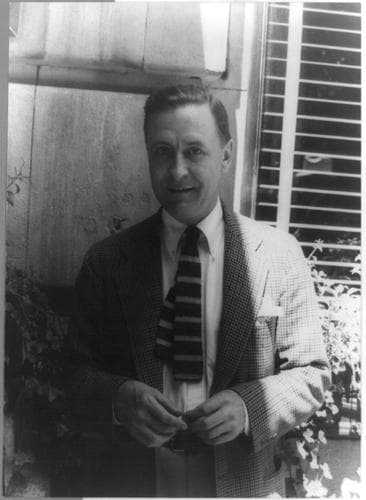
Francis Scott Key Fitzgerald was an American novelist, essayist, and short story writer. He is best known for his novels depicting the flamboyance and excess of the Jazz Age—a term he popularized in his short story collection Tales of the Jazz Age. During his lifetime, he published four novels, four story collections, and 164 short stories. Although he achieved temporary popular success and fortune in the 1920s, Fitzgerald received critical acclaim only after his death and is now widely regarded as one of the greatest American writers of the 20th century.







