“There are only two kinds of people in the end: those who say to God, 'Thy will be done,' and those to whom God says, in the end, 'Thy will be done.'”
— The narrator learns about the ultimate choice between surrender to God's will and self-will.

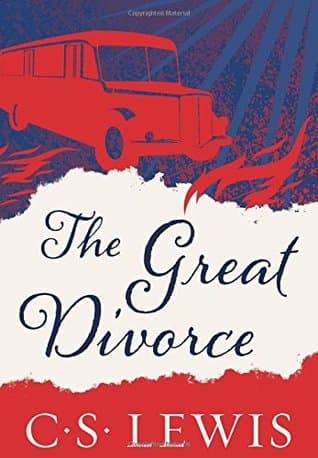
C.S. Lewis (2022)
Genre
Fantasy / Spirituality / Philosophy
Reading Time
180 min
Key Themes
See below
Sign in to track this book
A bus ride from a grey, self-imposed hell to the challenging foothills of heaven makes an extraordinary meditation on the choices that lock us in or set us free.
The Narrator awakens in a drab, grey town, perpetually raining and twilight. It is populated by a sparse collection of grumbling, argumentative, and self-absorbed 'ghosts.' Houses are deserted as soon as a new argument arises, leading to an ever-expanding, desolate metropolis. He observes the petty squabbles and the deep-seated misery of the inhabitants, who care more about their perceived injustices and grievances than with any joy or connection. Eventually, a bus arrives, a magnificent, glowing vehicle that offers a journey to a brighter place. Despite initial skepticism and fear among some, the Narrator, driven by a vague hope, decides to board the bus, along with a few other curious or desperate ghosts.
The bus embarks on an extraordinary journey, ascending rapidly through the dark, star-filled cosmos. The Narrator and his fellow passengers observe the earth shrinking beneath them, and the Grey Town becoming a tiny speck. As they travel, the bus driver, a silent but powerful figure, navigates them towards an increasingly bright and solid landscape. The passengers, still in their spectral forms, begin to feel a strange sensation as they approach their destination – a growing sense of solidity and an uncomfortable awareness of their own insubstantiality compared to the approaching reality. The journey is one of transition, physical and spiritual, preparing them for the encounters ahead.
The bus lands in a vibrant land of eternal morning, bathed in brilliant sunlight. However, for the ghostly passengers, this reality is agonizingly real. The grass is like diamond, piercing their insubstantial feet, and the water is like molten glass. The air is too sharp, the light too intense. They are mere specters in a world of overwhelming solidity and beauty, experiencing physical discomfort and an acute awareness of their own transparency and weakness. This initial experience is a stark, painful contrast between their accustomed ghostly existence and the robust, unyielding reality of Heaven, forcing them to confront their own spiritual state.
As the Narrator explores, he observes the first of many encounters between the 'ghosts' and the 'Bright Spirits' (saints) who have come to guide them. A well-fed, educated-looking 'Fat Ghost' is approached by a former colleague, a Bright Spirit named Dick. The Fat Ghost, full of intellectual pride, dismisses Heaven as 'unscientific' and 'primitive,' preferring his own complex, theological debates and criticisms of God. He believes himself to be morally superior and intellectually astute, unable to accept simple joy or submit to a higher truth. Despite Dick's patient explanations, the Fat Ghost refuses to shed his self-importance and ultimately retreats back towards the bus, unable to let go of his cherished grievances and intellectual vanity.
The Narrator witnesses a confrontation between a towering, aggressive 'Big Ghost' and a gentle, Bright Spirit named Len, whom the Big Ghost had murdered in his earthly life. Len offers unconditional forgiveness and urges the Big Ghost to accept the grace of Heaven, to allow the healing process to begin. However, the Big Ghost, consumed by self-pity and a perverse pride in his own 'toughness' and 'honesty' about his sins, refuses to acknowledge his need for forgiveness. He resents Len's humility and the idea of being 'pitied,' preferring to wallow in his defiant misery rather than surrender his pride. He, too, turns away from Heaven, unable to accept reconciliation.
An 'Artist Ghost,' obsessed with suffering for art's sake and the 'tragedy' of his own life, encounters a Bright Spirit who was a simple shoemaker in his earthly life. The Artist Ghost argues that true art requires the pain and struggle of the Grey Town, and that the perfection of Heaven would render his art meaningless. He believes his 'artistic temperament' justifies his misery and self-pity, and that finding joy would somehow betray his creative integrity. He cannot comprehend a beauty that doesn't rely on pain or a joy that is not rooted in his own self-expression, and so he retreats, unable to abandon his romanticized suffering.
One of the most vivid encounters involves a timid woman accompanied by a small, red lizard perched on her shoulder, constantly whispering temptations and complaints into her ear. This lizard represents her lust and incessant complaining. A powerful, Flaming Angel approaches her, offering to crush the lizard. The woman is terrified, both of losing the familiar voice and of the pain involved. After a wrenching internal struggle, she finally consents. The Angel crushes the lizard, which briefly transforms into a beautiful, white stallion. The woman, now radiant and free, mounts the stallion and rides off into the mountains, transformed from a timid, tormented soul into a joyful, liberated being. This scene shows the pain and ultimate reward of surrendering sin.
A mother ghost, consumed by a suffocating, possessive love for her deceased son, encounters a Bright Spirit who tries to explain that true love in Heaven is selfless and liberating, not demanding. The mother, however, views her son as her 'property' and her love as a justification for her self-pity and anger. She believes her suffering over his loss entitles her to special consideration and demands to see him, not for his joy, but to soothe her own grief and sense of injustice. Her love, twisted by selfishness, prevents her from accepting the unselfish love of Heaven, and she remains trapped by her own distorted affections.
The Narrator witnesses the arrival of 'Sarah Smith,' a radiantly beautiful and joyful Bright Spirit, accompanied by a celestial host. She was once married to a man who, in life, treated her poorly. Her former husband, now a ghost, watches from afar. A Bright Spirit explains that Sarah's love and humility transformed her into this glorious being, a 'great lady' of Heaven. Her husband, however, is too consumed by his own petty jealousy, resentment, and a desire to 'master' her even in Heaven. He cannot bear her glory or the idea of being loved without being able to control it. He refuses to approach her, clinging to his bitterness and turning away from reconciliation.
The Narrator encounters a ghost who was an actor named Frank. Even in the Grey Town, he constantly changes his personality and voice, unable to settle on a true self. He meets a Bright Spirit who encourages him to simply 'be' himself, to shed the masks. However, Frank is so accustomed to playing roles – a tragic hero, a humble servant, a cynical intellectual – that he no longer knows who he is without them. He believes that being 'real' would diminish him, and he fears the vulnerability of authenticity. He prefers the comfort of his performed identities over the terrifying simplicity of just being himself, and so he retreats, unable to abandon his theatrical existence.
Throughout his journey, the Narrator is guided and instructed by a revered Bright Spirit, revealed to be George MacDonald. MacDonald explains the fundamental truths: the Grey Town (Hell) is not a place of forced torment, but a state of being chosen by the ghosts themselves, whose wills have solidified into their sins. The gates of Hell are locked from the inside, meaning the ghosts choose to remain there by clinging to their pride, self-pity, and grievances. Heaven is the ultimate reality, and the journey is an offer of conversion – to shed the insubstantiality of sin and become solid and real in God's presence. There is no 'third way'; one must choose either Heaven or Hell, and the choice is always open.
As the day progresses, it becomes clear that most of the ghosts who boarded the bus choose to retreat back to the Grey Town. Each, in their own way, prioritizes their pride, their cherished grievances, their self-pity, or their distorted affections over the joy, humility, and self-surrender required to become solid in Heaven. They find the reality of Heaven too demanding, too painful, or simply undesirable compared to the familiar comfort of their misery. The Narrator observes their slow, reluctant return to the bus, a poignant example of free will and the tragic consequences of refusing grace.
As the last of the rejecting ghosts board the bus to return to the Grey Town, the Narrator feels a profound sadness and understanding. His guide, George MacDonald, reiterates the ultimate truth: the choice between Heaven and Hell is a daily, moment-by-moment decision. Suddenly, the entire vivid experience begins to fade. The Narrator awakens in his own bed, realizing that his journey was a dream. However, the dream has left an indelible impression, deepening his understanding of good and evil, free will, and the nature of grace and judgment. He carries the lessons of the Grey Town and the Valley of the Shadow of Life into his waking life, forever changed by the allegory.
The Protagonist
He begins as a bewildered observer and ends with a deeper understanding of spiritual truths, having witnessed the choices made by the other ghosts.
The Supporting
He remains a steadfast source of wisdom, guiding the Narrator and explaining the deeper meaning of the journey.
The Supporting
He clings to his intellectual pride and ultimately returns to the Grey Town, choosing his own self-congratulatory misery.
The Supporting
He rejects Len's offer of forgiveness, choosing his anger and pride, and returns to the Grey Town.
The Supporting
He refuses to abandon his romanticized suffering for the joy of Heaven, returning to the Grey Town.
The Supporting
After a difficult struggle, she allows the Angel to crush the lizard, leading to her transformation and entry into Heaven.
The Supporting
She rejects the concept of selfless love, clinging to her possessive grief, and returns to the Grey Town.
The Supporting
She has already undergone her transformation, serving as an example of ultimate glorification.
The Supporting
He refuses to shed his masks and find his true self, opting to return to the Grey Town.
The Supporting
He clings to his self-pity and grievance, ultimately returning to the Grey Town.
A central theme of 'The Great Divorce' is the absolute freedom of choice given to every soul. Lewis argues that the gates of Hell are locked from the inside, meaning the inhabitants choose their own misery by clinging to their sins, pride, and grievances. Each ghost's encounter with a Bright Spirit presents a clear choice: surrender their cherished vices and embrace Heaven, or retreat to the comfortable insubstantiality of the Grey Town. This theme is shown in every interaction, such as the Fat Ghost's refusal to abandon his intellectual pride or the Big Ghost's preference for his anger over forgiveness, illustrating that God does not force anyone into Heaven against their will.
“"There are only two kinds of people in the end: those who say, 'Thy will be done,' to God, and those to whom God in the end says, 'Thy will be done.' All that are in Hell, choose it. Without that self-choice there could be no Hell. No soul that seriously and constantly desires joy will ever miss it. Those who seek find. To those who knock it is opened."”
Lewis presents Heaven as solid, real, and joyful, while Hell (the Grey Town) is increasingly insubstantial, dreary, and self-chosen. Heaven is the ultimate reality, where love, humility, and joy are substantial. Hell is the logical conclusion of unrepented sin, leading to perpetual argument, isolation, and unreality. The painful experience of the ghosts in Heaven (the hard grass, the piercing light) symbolizes the discomfort of encountering ultimate truth and goodness when one is accustomed to sin. The book shows that Hell is not a place of arbitrary punishment but the natural, self-willed outcome of rejecting God's reality.
“"The choice of ways is before you. You must choose. Either the good in you will conquer all the rest, or the bad in you will conquer all the rest. And there is no third way."”
Pride, in its various forms, is a primary barrier to entering Heaven. The Fat Ghost's intellectual arrogance, the Big Ghost's defiant pride in his 'honesty,' the Artist Ghost's romanticization of his suffering, and the Possessive Mother's self-pity all come from an inability to humble themselves and surrender their self-importance. Lewis shows how pride makes souls cling to their grievances, their perceived injustices, and their own limited understanding, preventing them from accepting the grace and joy of Heaven. It is the root of the 'locked from the inside' metaphor.
“"Ye see it, then? There is no Hell save the Will itself."”
The book explores the difference between earthly, often selfish or possessive, love and the selfless, liberating love required in Heaven. The Possessive Mother's suffocating 'love' for her son and the husband's resentment of Sarah Smith's glorified love show how earthly affections must be purified and transformed. The episode of the Woman with the Lizard, whose lust is transformed into a pure, white stallion, shows the painful but ultimately rewarding process of surrendering distorted affections to God's love, allowing them to be redeemed and perfected.
“"There is no such thing as a 'natural' affection which is not also, in its own place, a spiritual one; and no spiritual affection which is not also, in its own place, a natural one. The one is the substance of the other."”
Lewis portrays sin not merely as 'bad deeds' but as a corrosive force that diminishes reality, making the sinner increasingly insubstantial and unreal. The Grey Town reflects this unreality. Redemption, conversely, is the process of becoming 'solid' and real in the presence of God. The encounters with the Bright Spirits offer the ghosts a chance to shed their sins and embrace reality, but many prefer the familiar unreality of their chosen vices. The transformation of the lizard into a stallion is a symbol of redemption, showing that even deep-seated sin can be redeemed and turned to good through grace.
“"I tell you, there is a real Heaven and a real Hell. The choice is yours. You cannot have both."”
The entire narrative functions as a symbolic representation of Christian theological concepts.
The Great Divorce is a classic allegory, where every character, place, and event symbolizes deeper spiritual truths. The Grey Town represents Hell, a state of self-willed misery and unreality. The Valley of the Shadow of Life (Heaven's foothills) represents Purgatory or the initial stages of Heaven, where souls confront their sins. The ghosts symbolize unredeemed souls, and the Bright Spirits represent saints or angels. The bus journey itself is an allegorical representation of the choice between eternal damnation and salvation, making complex theological ideas accessible through narrative.
The journey is presented as a dream experienced by the Narrator.
The entire narrative is framed as a dream experienced by the Narrator. This device allows Lewis to explore profound theological and philosophical concepts without requiring strict literalism or scientific explanation. By presenting it as a dream, Lewis can introduce fantastical elements, symbolic encounters, and direct instructional dialogue (through George MacDonald) in a way that feels natural within the narrative. The awakening at the end reinforces the allegorical nature of the journey, emphasizing that the lessons learned are spiritual, not necessarily literal events.
Concrete objects and creatures represent abstract spiritual states or sins.
Lewis employs vivid symbolism throughout the book. The most prominent example is the red lizard on the woman's shoulder, which symbolizes her lust and complaining nature. Its transformation into a white stallion after being crushed by the Angel symbolizes the redemption and purification of sin into a higher form of love and energy. Other symbols include the insubstantiality of the ghosts (representing their unreality in sin) versus the overwhelming solidity of Heaven (representing ultimate reality), and the perpetually grey, raining town (symbolizing the dreariness of unredeemed existence).
Conversations between ghosts and Bright Spirits reveal and challenge spiritual perspectives.
Much of the book's theological exploration occurs through the dialogues between the 'ghosts' and the 'Bright Spirits.' The Bright Spirits often use a Socratic method, guiding the ghosts to confront their own reasoning and the consequences of their choices. These conversations are not debates but rather attempts by the Bright Spirits to explain the nature of Heaven and the path to reality. The refusal of the ghosts to engage or accept the truth through these dialogues highlights their entrenched spiritual blindness and the power of their free will to reject grace.
“There are only two kinds of people in the end: those who say to God, 'Thy will be done,' and those to whom God says, in the end, 'Thy will be done.'”
— The narrator learns about the ultimate choice between surrender to God's will and self-will.
“Every poet and musician and artist, but for Grace, is drawn away from love of the thing he tells, to love of the telling till, down in Deep Hell, they cannot be interested in God at all but only in what they say about Him.”
— A spirit explains how even good pursuits can become idols if not oriented toward God.
“I do not think that all who choose wrong roads perish; but their rescue consists in being put back on the right road.”
— A discussion about redemption and the possibility of correction after death.
“The choice of every lost soul can be expressed in the words 'Better to reign in Hell than serve in Heaven.'”
— Referencing Milton's Paradise Lost to describe the prideful rejection of Heaven.
“There is no other day. All days are present now. This moment contains all moments.”
— A spirit explains the nature of time in Heaven versus the Grey Town.
“The whole difficulty of understanding Hell is that the thing to be understood is so nearly Nothing.”
— Describing how Hell is a state of diminishing reality and choice.
“If we insist on keeping Hell (or even Earth) we shall not see Heaven: if we accept Heaven we shall not be able to retain even the smallest and most intimate souvenirs of Hell.”
— A spirit explains the incompatibility between clinging to sin and entering Heaven.
“The gradual ruin is so slow that it feels like staying the same.”
— Describing how souls in Hell deceive themselves about their condition.
“Heaven is not a state of mind. Heaven is reality itself.”
— Correcting the narrator's misconception about the nature of Heaven.
“The question is whether she is a grumbler, or only a grumble.”
— A spirit discusses a soul who has become so identified with her complaining that she is barely a person.
“What concerns you is the nature of the choice itself: and that you can watch them making.”
— The narrator is told to observe how souls choose between Heaven and Hell.
“They say of some temporal suffering, 'No future bliss can make up for it,' not knowing that Heaven, once attained, will work backwards and turn even that agony into a glory.”
— Explaining how redemption can transform past suffering.
“The bus was full of light.”
— A simple description of the bus that travels from Hell to Heaven, symbolizing hope.
“You cannot take all luggage with you on the bus.”
— Metaphor for the need to let go of sins and attachments to enter Heaven.
Ready to see how well you understood this book? Take our interactive quiz with 10 questions.
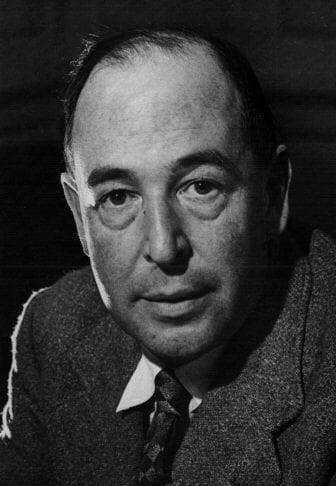
Clive Staples Lewis was a British writer, literary scholar, and Anglican lay theologian. He held academic positions in English literature at both Oxford University and Cambridge University. He is best known as the author of The Chronicles of Narnia, but he is also noted for his other works of fiction, such as The Screwtape Letters and The Space Trilogy, and for his non-fiction Christian apologetics, including Mere Christianity, Miracles, and The Problem of Pain.







