“Perhaps he was a king. But he was also a boy. And boys can be foolish.”
— Han reflects on his own impulsiveness despite his royal heritage.

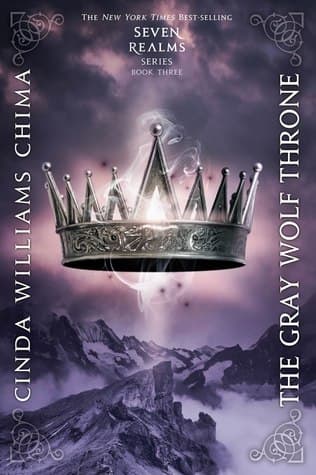
Cinda Williams Chima (2011)
Genre
Fantasy / Young Adult / Romance
Reading Time
12-15 hours
Key Themes
See below
Sign in to track this book
A street wizard, betrayed when his friend turns out to be the princess he's sworn to protect, must navigate court politics and assassination attempts to crown her queen, as their forbidden love grows in a kingdom on the verge of war.
Han Alister, still grieving Mari and his mother's deaths, searches the Spirit Mountains for answers. He finds Rebecca Morley, badly wounded. To save her, Han uses his new wizardry, drawing on a dangerous power that drains him. During her recovery, Han learns the truth: Rebecca is Raisa ana’Marianna, heir to the Queendom of the Fells. This shocks and angers him. He feels betrayed by her lie, and the class difference, made worse by his family's past with the monarchy, creates deep distrust. Despite his feelings, Han must protect Raisa and ensure she becomes queen, bound by an old deal with the Demon King, who now lives in his amulet.
Raisa ana’Marianna, recovered, returns to the royal court in Fellsmarch, no longer using her Rebecca Morley alias. She immediately faces a complex web of political plots and assassination attempts from groups against her rule. Her aunt, Queen Lorelei, is a main suspect, along with ambitious nobles like the Bayars and other families seeking power. Raisa must navigate dangerous social situations, relying on her intelligence and a few loyal allies, including Amon Byrne and her new, reluctant protector, Han Alister. The constant danger keeps her on edge, making her question who she can trust within the palace.
Bound by the Demon King's magic in his amulet, Han Alister must protect Raisa, much to his annoyance. He resents this duty, especially given his family's tragic past with the aristocracy. Despite his inner conflict, Han proves to be an effective guardian, using his street smarts and growing magic to stop several attempts on Raisa's life. He struggles with his conflicting feelings: his deep dislike for the nobility clashes with a growing concern for Raisa's safety. His past as a street lord and gang leader, combined with his new identity as a wizard, makes him an outsider in the royal court, further complicating his position.
Raisa and Han return to the Spirit Mountains, looking for answers about the ancient Gray Wolf line and the Demon King's power, which Han now controls. They meet the mysterious wizard, Cat, who tells them more about the Fells' history, the Gray Wolf line's magic connection, and the balance between human and spirit realms. This journey deepens their understanding of the magic at play and the destiny unfolding around them. The mountains hold old secrets, and their exploration begins to reveal the mysteries behind Raisa's lineage and Han's new abilities, hinting at a larger purpose for both.
Han explores the Demon King further, learning that the entity in his amulet is more complex and dangerous than he first thought. The Demon King offers power and protection but at a high cost, subtly guiding Han toward its own unclear goals. Han discovers that the Demon King is linked to the Fells' ancient history and the very source of its magic, a force dormant for centuries. This understanding makes Han re-evaluate his relationship with the amulet and how much he truly controls his own will, creating a constant inner fight against the entity's influence.
The powerful Bayar family, especially Lord Bayar and his daughter, Alyssa, remain strong opponents to Raisa becoming queen. They constantly plot to weaken her authority, spread rumors, and even try direct attacks. Alyssa, once a rival for Amon's affection, now poses a political threat, using her family's wealth and influence. Raisa must counter their plans with clever political moves and the steady loyalty of her few trusted supporters. The Bayars represent the established power of the aristocracy, resisting any change that might threaten their status, and their constant opposition makes Raisa's path to the throne difficult.
Captain Amon Byrne, Raisa's loyal guard and childhood friend, feels increasingly torn between his duty to protect her and his family's expectations, especially his father's. The political situation in Fellsmarch grows more unstable, and Amon's family pressures him to make good alliances, even if it means compromising his loyalty to the crown princess. He struggles with his changing relationship with Raisa, which has grown from childhood friendship to a more complex, unspoken affection. His inner conflict shows the personal sacrifices his position demands, as he tries to balance his personal desires with his professional duties in a kingdom on the edge.
Raisa begins to understand the full scope of the Gray Wolf prophecy and her role in it. She learns she is not just a queen, but a descendant of the ancient Gray Wolves, with a unique link to the land's magic and its spirit guardians. This revelation ties her destiny firmly to the Fells' fate and the old forces that control it. The prophecy suggests a time of great change and the need for a leader who can bridge the gap between human and magical worlds. This understanding empowers Raisa, giving her a deeper sense of purpose beyond just ruling, but also placing a huge burden of responsibility on her.
To secure alliances and stabilize the kingdom, Raisa is pressured into an arranged marriage, a common political tool among the nobles. This prospect weighs heavily on her, as she wants to marry for love and struggles with the idea of marrying only for duty, especially as her feelings for Han grow. The potential husband, a powerful lord, is chosen for strategic reasons, not personal compatibility. This forced union means sacrificing her personal freedom for the kingdom's good. Raisa must decide whether to accept this fate or defy tradition, possibly risking the Fells' stability for a chance at personal happiness and a true partner.
In a final conflict, Raisa and Han, with their allies, confront the forces trying to take the throne and disrupt the Fells' balance. This battle involves both political maneuvering and strong magic, as Han fully uses his wizardry and Raisa steps into her role as the Gray Wolf Queen. They must defeat not only human enemies but also the subtle manipulations of the Demon King and other ancient magical threats. Through their combined efforts and the reveal of their connected destinies, they secure Raisa's claim to the Gray Wolf Throne. This comes with significant personal cost and the realization of the challenges ahead for their kingdom.
The Protagonist
Raisa transforms from a somewhat naive princess trying to understand her kingdom to a determined, powerful queen embracing her magical destiny and leadership.
The Protagonist
Han evolves from a bitter, revenge-driven outcast to a powerful, responsible wizard who accepts his role in protecting the Fells and its queen.
The Supporting
Amon grapples with his unrequited love and professional duty, ultimately choosing to prioritize Raisa's safety and the stability of the Fells.
The Supporting
Cat serves as a catalyst for Han's magical growth and understanding, revealing crucial truths about the Fells' magic.
The Antagonist
Lorelei remains a consistent antagonist, attempting to maintain her power and influence against Raisa's ascension.
The Antagonist
The Demon King's influence grows, challenging Han's control and revealing its deeper connection to the Fells' magical history.
The Antagonist
Lord Bayar remains a consistent political and personal obstacle to Raisa's reign, representing the resistance of the old guard.
The Supporting
Alyssa continues to be a social and political rival, reflecting the challenges Raisa faces from within the aristocracy.
Raisa and Han both struggle with their identities, moving past their expected roles to embrace their true destinies. Raisa, as Rebecca Morley, learns about her kingdom from the ground up, which shapes her future as queen. Han, a former street lord, must reconcile his past with his new wizardry and his destined role as Raisa's protector. Their journeys are about understanding who they truly are and accepting the connected paths fate has laid out for them, often challenging societal expectations and personal desires. This shows when Raisa discovers her Gray Wolf lineage, and Han learns of his connection to the Demon King.
““You can’t run from who you are, Princess. And neither can I.””
The clear contrast between the aristocracy and the common people of the Fells is a main theme. Han's background as a street lord and his deep resentment of the nobles highlight the unfairness faced by the lower classes. Raisa's time as Rebecca among the commoners gives her a unique view, fueling her desire to bridge this gap and rule fairly. The novel explores the conflicts from a strict class system and the challenges of achieving social justice in a kingdom built on tradition and privilege. Han's internal struggle to protect Raisa, who represents the system he dislikes, is a good example of this.
““They live in their gilded cages, never knowing what it’s like to go hungry, or watch your family starve.””
Raisa faces great pressure as the heir to the throne, constantly dealing with political plots, assassination attempts, and her kingdom's expectations. She must make hard decisions that affect thousands of lives, often sacrificing her personal desires for the Fells' good. Han also struggles with the weight of his magic, understanding that great power brings great responsibility and potential danger from the Demon King's influence. This theme explores the isolation and difficult choices that come with significant power, whether royal or magical, and the sacrifices leaders must make.
““A crown is a heavy thing, child. It weighs on the head, but more so on the heart.””
The relationships in the novel are complex, showing the details of love, loyalty, and betrayal. Raisa and Han's relationship starts with distrust and betrayal (Raisa's lie, Han's resentment) but grows into deep loyalty and love. Amon's strong loyalty to Raisa is tested by his unrequited love and family pressures. The political scene is full of betrayal, with characters like Queen Lorelei and the Bayars constantly scheming. The story questions who can truly be trusted and what sacrifices people will make for those they love or for their sworn duties, often blurring the lines between these strong emotions.
““Loyalty is a blade, Princess. It can cut both ways.””
A magical artifact granting power but harboring a dangerous entity.
The amulet Han carries is a powerful magical artifact that grants him access to wizardry, but it also houses the spirit of the ancient Demon King, Weir. This device serves as a constant source of both power and temptation for Han, acting as a direct link to the magical world while simultaneously posing a threat to his free will. It is a classic 'cursed artifact' trope, driving much of Han's internal conflict and his magical development, and is crucial for understanding the larger magical history of the Fells and the Gray Wolf line.
An ancient prophecy foretelling the destiny of the Fells and its true queen.
The Gray Wolf Prophecy is an ancient, mystical prediction that speaks of a time of great change for the Fells and the rise of a true queen connected to the legendary Gray Wolves. This prophecy provides a framework for Raisa's destiny, giving her actions a larger, almost fated significance. It introduces elements of ancient magic, lineage, and a preordained path, often guiding characters' decisions and revealing deeper truths about the world. It serves as a narrative device to build suspense and foreshadow major events, highlighting Raisa's unique role.
Constant threats and schemes against Raisa's claim to the throne.
The recurring political intrigue and numerous assassination attempts against Raisa are central plot devices that drive the immediate action and create constant tension. These threats, orchestrated by various blueblood factions like the Bayars and potentially Queen Lorelei, force Raisa to be constantly vigilant and rely on her wits and allies. This device highlights the dangerous nature of royal power, the ruthlessness of court politics, and the constant struggle for survival in a kingdom rife with ambition. It also serves to push Raisa and Han closer together as they face these dangers.
“Perhaps he was a king. But he was also a boy. And boys can be foolish.”
— Han reflects on his own impulsiveness despite his royal heritage.
“Power is a hungry beast. It devours everything in its path, even the one who wields it.”
— A character warns of the corrupting nature of power.
“Sometimes the most dangerous enemies are the ones who wear the faces of friends.”
— A realization about betrayal and hidden adversaries.
“Love doesn't make you weak. It makes you human. And sometimes, that's the strongest thing of all.”
— A character defends the value of emotional connection.
“The past is a stubborn ghost. It clings to you, no matter how far you run.”
— Han grapples with the lingering effects of his past actions and identity.
“A crown doesn't make a king. It's the choices he makes, the burdens he bears.”
— A discussion about true leadership versus inherited title.
“Some wounds never truly heal. You just learn to live with the scars.”
— A poignant reflection on enduring pain and trauma.
“Hope is a fragile thing, easily crushed, but it's also the only thing that keeps us going.”
— Amidst despair, the importance of maintaining hope is emphasized.
“You can't save everyone, but you can choose who you fight for.”
— A character acknowledges limitations but affirms personal commitment.
“The world isn't fair. Never has been, never will be. But that doesn't mean you stop fighting for what's right.”
— A cynical but determined outlook on justice.
“Secrets are like poison. They fester and corrupt, until they destroy everything they touch.”
— The detrimental effects of hidden truths are discussed.
“It's easy to be brave when you have nothing to lose. True courage is when you risk everything.”
— A distinction between recklessness and genuine bravery.
“Sometimes the greatest strength lies in admitting your weaknesses.”
— A character learns the value of vulnerability and self-awareness.
“Destiny is not a road you walk, but a path you forge with your own choices.”
— A belief in free will over predetermined fate.
Ready to see how well you understood this book? Take our interactive quiz with 10 questions.

Cinda Williams Chima is a New York Times bestselling author of young adult fantasy novels. She is best known for her Seven Realms series, which includes "The Demon King" and "The Gray Wolf Throne," and her Heir series, featuring "The Enchanter Heir" and "Flamecaster." Chima's work is celebrated for its intricate world-building and compelling characters.







