“The goings-on in the kitchen were a source of continual, but unspoken, comment.”
— Describing Mary's early days and her gradual withdrawal from social interaction.

Doris Lessing (2012)
Genre
Literary Fiction / Historical Fiction
Reading Time
360 min
Key Themes
See below
Sign in to track this book
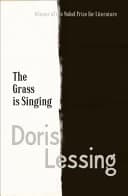
In the desolate Rhodesian veld, a white woman's descent into madness and her Black servant's silent resentment lead to a violent act that exposes colonial society's brutal realities.
The story opens with a newspaper report about the murder of Mary Turner, a white farmer's wife, by her Black houseboy, Moses, in Southern Rhodesia. The white community reacts with anger and demands quick justice, highlighting racial tensions. Authorities quickly arrest Moses. The focus shifts to understanding what led to such an act. Initial reports suggest a simple crime, but the investigation and the story's flashbacks show a more complex and troubling relationship between Mary and Moses, challenging the community's easy assumptions about race and power.
The story goes back to Mary's childhood in a poor, troubled white family in a small South African town. Her mother is sick and bitter, her father a weak, alcoholic clerk. Mary grows up without affection and constantly struggles for money. She is deeply ashamed of her family's poverty and social status, developing a strong dislike for domestic life and a fierce independence. Reading is her only comfort, offering a temporary escape from her dull life. This early hardship gives her a strong drive to improve her life and a deep fear of failure and social decline.
As an adult, Mary leaves her family and moves to the city, working as a typist. For the first time, she feels some freedom and independence. She enjoys friendships with her female colleagues, city life, and earning her own money. She makes casual friends and has fun social activities, avoiding deeper emotional connections. This is the happiest time in her life, a brief break from the anxieties and resentments of her childhood. However, this independence is fragile, always threatened by societal expectations for women to marry and settle down.
As Mary nears thirty, the social pressure to marry grows. Her friends marry, and she feels more isolated and judged as a 'spinster.' Despite her dislike for domesticity and her wish for independence, the fear of loneliness and social rejection eventually makes her consider marriage. She meets Dick Turner, a struggling white farmer, through an acquaintance. Dick is kind but naive and poor. Mary is not attracted to him and does not love him, but she sees him as her last chance to meet social expectations and find a husband, even if he offers little financial stability or romance.
Mary's marriage to Dick takes her to a remote, run-down farm in the veld, a stark contrast to the comfortable life she imagined. The farm is neglected, dirty, and isolated, a constant source of frustration and despair for Mary. She is completely unsuited to farm life, lacking the practical skills, toughness, and temperament needed. The isolation worsens her anxieties and quickly harms her mental health. She resents Dick's inability to provide a better life and his passive acceptance of their situation, further separating her from him and her new home.
The Turner farm slowly declines, reflecting Mary's worsening mental state. Dick's farming efforts mostly fail, and their financial situation becomes desperate. Mary withdraws further, neglecting the house, her appearance, and eventually her husband. She shows signs of depression and paranoia, becoming more withdrawn and hostile. The once neat city woman becomes disheveled, a source of gossip and pity among the few white neighbors. This period marks a deep loss of self for Mary, as despair and her inability to cope consume her.
Amidst their problems, Dick hires a new Black houseboy named Moses. Moses is intelligent, observant, and initially capable, standing out from other farm laborers. Mary, despite her racial biases, is at first interested in his competence. However, her deep anxieties and mental instability soon show in her interactions with him. She struggles with the power dynamics, switching between demanding obedience and an almost childlike dependence. This hiring is a turning point, as Moses becomes central to Mary's unstable world, an unwilling part of her psychological breakdown.
Mary's interactions with Moses become more erratic and troubling. She projects her fears and anxieties onto him, developing an irrational fear of him while also depending on his presence. She is both disgusted and fascinated by him, unable to maintain the strict racial boundaries expected of a white mistress. She often forgets her position, treating him with an inappropriate familiarity that confuses and unsettles Moses. This creates a tense atmosphere on the farm, a silent battle of wills and unspoken desires, as Mary's mental state continues to worsen, blurring the lines between master and servant.
The few white neighbors, especially Mrs. Slatter and the van Rensburgs, watch Mary's physical and mental decline with growing concern and disapproval. They are particularly bothered by her neglect of her home and her increasingly unusual behavior, especially with Moses. They see her lack of control over her servant as a dangerous breach of racial manners, a threat to the social order. Their gossip and attempts to interfere only isolate Mary further, reinforcing her paranoia and resentment, and making her even more deeply involved in her troubled relationship with Moses.
The tension between Mary and Moses becomes unbearable. Mary's mental state worsens, and her behavior towards Moses becomes more erratic, shifting between a demanding mistress and a vulnerable, almost childlike figure. She accidentally gives him a sense of power over her, a dangerous reversal of the racial hierarchy. Moses, subjected to her unpredictable moods and the unspoken, unsettling closeness of their relationship, reaches his breaking point. In a moment of intense frustration, fear, and perhaps a desperate attempt to escape the psychological entanglement, Moses murders Mary Turner with an axe, ending her tormented life and his own trapped existence.
After the murder, Moses is quickly caught and put on trial. The white community reacts with predictable outrage, demanding swift justice and seeing the crime as a simple case of a Black man murdering a white woman. They struggle to understand the complex psychological reasons behind the event, preferring to see it through racial stereotypes and colonial anxieties. The trial is a formality; Moses offers little defense, seemingly accepting his fate. The focus remains on the perceived threat to white authority rather than a deeper look at the societal and personal failures that contributed to Mary's tragic end.
The Protagonist
Mary's arc is one of profound decline, from a hopeful, independent city woman to a mentally broken, isolated farm wife, culminating in her murder.
The Antagonist/Catalyst
Moses's arc shifts from a silent, observant servant to an active, albeit desperate, agent in Mary's demise.
The Supporting
Dick remains largely static, a figure of well-meaning but ultimately ineffective masculinity, witnessing Mary's decline without being able to prevent it.
The Supporting
Mrs. Slatter remains a static representative of societal judgment and racial conservatism.
The Mentioned
Mary's mother's influence shapes Mary's initial motivations, though she does not have a direct arc.
The novel is set in colonial Southern Rhodesia, exploring widespread racial prejudices and power imbalances. The white community's strict adherence to social hierarchies and their fear of Black advancement are central. Mary's 'crime' is not just her mental breakdown, but her unintentional crossing of these racial boundaries, especially in her relationship with Moses. The murder is seen mainly through a racial lens by the white community, showing their inability to look past their prejudices to the complex human tragedy. For example, initial newspaper reports and community reactions immediately frame the event as a racial threat, ignoring Mary's mental state.
“''The crime was not one of passion, but of a black man breaking the rules.''”
Mary's life is largely shaped by societal expectations for women in the mid-20th century. Despite her intelligence and desire for independence, she is pressured to marry and fulfill domestic roles she dislikes. Her choices are limited: a dull office job or a stifling marriage. Her inability to fit the ideal of a 'good wife' and her rejection of domesticity are seen as failures, adding to her isolation and mental decline. Her eventual entrapment on the farm directly results from her societal role, showing how women, regardless of race, were often confined by their prescribed roles. Her brief period of independence in the city contrasts sharply with her married life.
“''It was her misfortune to be a woman, and so to have her life shaped by the needs of men.''”
Mary's story is a difficult journey into mental illness, caused by isolation, unfulfilled desires, and her inability to cope. The remote farm, without social interaction and stimulation, acts as a breeding ground for her anxieties and resentments. Her mental state steadily worsens, marked by depression, paranoia, and neglect of herself. The novel carefully details a character's internal breakdown, showing how outside pressures and inner weaknesses can lead to deep mental suffering. Her withdrawal from Dick and her neighbors, and her increasingly erratic behavior with Moses, clearly show her mind unraveling.
“''The veld was a vast, indifferent eye, watching her crumble.''”
The novel explores the complex and often reversed power dynamics between Mary and Moses. While Mary officially holds power as a white mistress, her mental fragility and dependence on Moses for basic tasks and even emotional interaction subtly shift the balance. Moses, despite his lower position, gains a strange psychological power over Mary, becoming both her tormentor and, in a twisted way, her only constant companion. This reversal of roles highlights the instability of colonial power structures when faced with individual human weakness and the psychological toll it takes on both the powerful and the powerless. Mary's fear of Moses, combined with her inability to fire him, shows this dynamic.
“''She was his mistress, but she was also his prisoner.''”
The story begins with the end, then flashes back to reveal the events leading up to it.
The novel opens with the shocking news of Mary Turner's murder, immediately establishing a sense of tragedy and suspense. The subsequent narrative then unfolds largely in flashback, tracing Mary's life from childhood to the fateful day. This device builds dramatic tension by allowing the reader to understand the ultimate outcome while slowly revealing the complex psychological and social forces that led to it. It also encourages a more analytical reading, as the 'why' becomes more important than the 'what'.
The physical setting reflects Mary's internal state and the harsh realities of colonial life.
The isolated, unkempt farm and the vast, indifferent veld serve as powerful symbols throughout the novel. The dilapidated farm mirrors Mary's own mental and physical deterioration, reflecting her inability to cultivate or maintain her life. The veld, initially a symbol of freedom for some, becomes for Mary a symbol of oppressive isolation and an unyielding, hostile environment that exacerbates her anxieties and contributes to her breakdown. It represents the untamed, unforgiving nature that ultimately consumes her.
Subtle hints and recurring motifs subtly predict Mary's tragic end.
Lessing employs subtle foreshadowing throughout the narrative, particularly in descriptions of Mary's early life and her increasingly unstable mental state. Her deep-seated fear of black men, her aversion to domesticity, and her growing paranoia all hint at the tragic conclusion. The initial framing of the story with the murder report itself is the ultimate act of foreshadowing, but within the flashback, smaller details, like Mary's inability to connect with people or her disproportionate reactions, build a sense of impending doom.
While largely omniscient, the narrative occasionally reflects Mary's distorted perception.
While the primary narration is omniscient, there are moments where the reader experiences events through Mary's increasingly distorted and paranoid perspective. This subtle unreliability allows the reader to understand her psychological state, even as it highlights her detachment from reality. For instance, her irrational fears concerning Moses or her exaggerated sense of threat from the environment are presented in a way that reveals her internal turmoil rather than objective truth, deepening the psychological realism of her breakdown.
“The goings-on in the kitchen were a source of continual, but unspoken, comment.”
— Describing Mary's early days and her gradual withdrawal from social interaction.
“She was not happy, but she was not unhappy. It was a state of being.”
— Reflecting on Mary's emotional state during her prolonged stay in the city.
“But a man must have a woman, and a woman must have a man.”
— The societal expectation that drives Mary and Dick to marry, despite their lack of true connection.
“The sun was a great, hot, yellow eye staring at the world.”
— A vivid description of the African landscape, emphasizing its harshness.
“It was impossible for her to imagine what sort of life people lived who were not poor.”
— Mary's limited worldview, shaped by her deprived upbringing.
“She had always been afraid of the dark, and now she was afraid of the light.”
— Mary's increasing paranoia and mental deterioration.
“The silence in the house was a living thing, full of unspoken thoughts and resentments.”
— The strained atmosphere in the Turner household, particularly between Mary and Dick.
“He was a black man, and she was a white woman. That was all. Everything else was commentary.”
— The stark reality of racial division that underpins the central conflict.
“She was afraid of him, and he knew it, and that was the bond between them.”
— The twisted dynamic that develops between Mary and Moses.
“The world was full of men who could not understand women, and women who could not understand men.”
— A general observation on the lack of understanding between the sexes in the novel.
“It was the slow, unhurried progress of disintegration that was terrifying.”
— Reflecting on Mary's gradual mental decline.
“He had wanted a wife, and he had got a problem.”
— Dick's disillusionment with his marriage to Mary.
“The grass was singing, a dry, whispering sound, full of heat and insects.”
— The evocative title phrase, symbolizing the pervasive, sometimes oppressive, natural world.
“It was not a question of good or evil, but of what was possible.”
— A philosophical reflection on the limitations and constraints faced by the characters.
“The black man was always there, a shadow, a presence, a fact.”
— The constant and unavoidable presence of Moses in Mary's life, and the broader context of racial hierarchy.
Ready to see how well you understood this book? Take our interactive quiz with 10 questions.
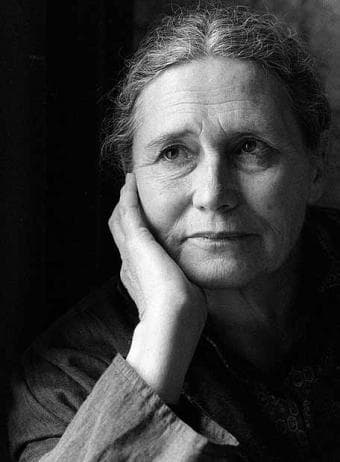
Doris May Lessing was a British-Zimbabwean novelist. She was born to British parents in Iran, where she lived until 1925. Her family then moved to Southern Rhodesia, where she remained until moving in 1949 to London, England. Her novels include The Grass Is Singing (1950), the sequence of five novels collectively called Children of Violence (1952–1969), The Golden Notebook (1962), The Good Terrorist (1985), and five novels collectively known as Canopus in Argos: Archives (1979–1983).







