“I'm learnin' one thing good. Learnin' it all the time. There ain't no sin and there ain't no virtue. There's just stuff people do.”
— Tom Joad reflecting on morality and human actions.

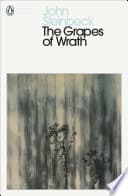
John Steinbeck (2001)
Genre
Historical Fiction
Reading Time
1200 min
Key Themes
See below
Sign in to track this book
After the Dust Bowl, the Joad family's difficult trip to California shows humanity's strong, but often broken, spirit against unfair systems and brief hope.
Tom Joad is released from McAlester State Penitentiary on parole after four years for homicide. He gets a ride with a truck driver and meets Jim Casy, a former preacher who has lost his religious faith but not his spiritual beliefs. Tom and Casy decide to go together to the Joad family farm near Sallisaw, Oklahoma. When they arrive, they find the farm empty and the house falling apart. Muley Graves, a neighbor, tells them that the Joads, along with many other tenant farmers, were forced off their land by the Bank of the West because of the Dust Bowl and economic problems. Muley refuses to leave and lives secretly on the land, hunting for food.
Tom and Casy find the rest of the Joad family—Ma, Pa, Granma, Grampa, Uncle John, Al, Rose of Sharon (Rosasharn) and her husband Connie Rivers, and the younger children Ruthie and Winfield—at Uncle John's house. They are getting ready to leave for California, attracted by flyers promising lots of work picking fruit. The family combines their small savings to buy an old Hudson Super Six truck, which Al, the son good with machines, helps fix. Even though it is hard to leave their family land, the family, led by Ma Joad, is determined to stay together and find a new life. Casy asks to join them, and Ma welcomes him.
The Joad family, with Casy, starts their hard trip west on Highway 66. The crowded truck, full of all their belongings, becomes their home. The first sad event happens when Grampa Joad dies of a stroke soon after they cross the Oklahoma border. The family buries him by the road with help from the Wilsons, a kind couple they meet at a camp. Later, Granma Joad also gets sick and dies as they cross the desert into California. Ma Joad, worried they would be sent back if her death was known, bravely keeps Granma's death a secret until they reach a border inspection station. This shows her strong will to keep the family moving.
When they arrive in California, the Joads find widespread poverty, unfriendliness, and too many desperate workers, which lowers wages. The promised land is very different from what they imagined. They meet many disappointed 'Okies' going back east, who warn them that their search is pointless. After a terrible stay in a squatter camp called a 'Hooverville,' where they see exploitation and violence, they eventually find a clean, organized, self-governing federal camp, the Weedpatch Government Camp (also known as the Arvin Sanitary Camp). Here, they have a short time of respect and community, free from threats from local police and landowners.
Life at Weedpatch Camp, while giving some temporary relief, does not provide steady work. Rose of Sharon's husband, Connie Rivers, overwhelmed by the harsh reality and the upcoming responsibility of being a father, leaves the family. This deeply hurts Rose of Sharon and adds to the family's problems. When work runs out at Weedpatch, the Joads have to leave the relative safety and respect of the government camp. They travel north, following rumors of peach-picking jobs, again facing the cycle of low wages, bad conditions, and the constant threat of hunger.
The Joads find work picking peaches at a big orchard, but the wages are very low, barely enough for food. They discover they are accidentally breaking a strike, as the landowners purposely created too many workers to stop a strike for better pay. Jim Casy, seeing the cruel exploitation and unfairness, gets more involved in organizing the workers. He is arrested for fighting a deputy during an argument at the peach orchard. Tom Joad, seeing the unfairness, helps Casy escape, but Casy chooses to stay and continue his activism, understanding the need for workers to stick together. The family has to move again.
The family finds work picking cotton, living in a boxcar camp. Tom Joad, still on parole, is always careful not to be recognized and arrested. One night, while looking for food, Tom finds Jim Casy, who is now a labor organizer, leading a strike for better wages. Casy is talking to a group of workers when deputies and vigilantes, including the man who had tried to arrest him before, arrive to break up the meeting. Casy is brutally killed, his head crushed by a pickaxe. In anger and sadness, Tom grabs the pickaxe and kills Casy's murderer, knowing he has now broken his parole and is a wanted man.
Tom Joad has to hide after killing Casy's murderer. He hides in a culvert near the boxcar camp, cared for by Ma Joad. Before he leaves, he has a serious talk with Ma. He realizes that individual action is not enough and that he must work for the good of everyone, inspired by Casy's ideas. He promises to be a spirit of justice for the oppressed, continuing Casy's new purpose. Meanwhile, heavy rains begin, causing bad flooding. The boxcar camp is flooded, and the Joads, with other families, have to leave, losing their few belongings again to the water.
The Joads, with the Wainwright family, take shelter in an abandoned barn as the floodwaters rise. Rose of Sharon, weak from hunger and the emotional pain of Connie leaving, goes into labor. Despite Ma Joad's help, Rose of Sharon gives birth to a stillborn baby. The baby, a symbol of the migrants' lost hopes, is simply buried by Uncle John, who puts the body into the floodwaters, hoping it will carry a message of injustice to the landowners. The tragedy further strengthens the family's bond and their shared suffering.
Trapped in the barn by the ongoing flood, the Joads and Wainwrights find a young boy and his very hungry father. The father is too weak to eat solid food. In a powerful and deeply moving moment, Ma Joad looks at Rose of Sharon, who, despite her own sadness and recent childbirth, understands what is needed. Rose of Sharon takes the starving man to a private part of the barn and breastfeeds him, giving him life-saving milk. This act of deep human kindness and unity, going beyond individual suffering, symbolizes the lasting spirit and shared strength of the migrants in the face of great despair.
The Protagonist
Transforms from an individualistic parolee to a selfless, morally driven activist for the exploited working class, embodying the 'oversoul' concept.
The Protagonist/Matriarch
Remains the steadfast anchor of the family, her strength and compassion growing to encompass humanity beyond her immediate kin.
The Supporting/Spiritual Guide
Transitions from a disillusioned preacher to a profound humanist and martyr for labor rights, influencing Tom Joad's transformation.
The Supporting/Patriarch
Experiences a profound loss of identity and authority, becoming increasingly reliant on Ma's strength and leadership.
The Supporting
Matures from a self-absorbed, pregnant girl into a woman capable of profound, life-giving compassion despite immense personal loss.
The Supporting
Remains somewhat self-focused but consistently uses his mechanical skills to aid the family, eventually finding his own path.
The Supporting
Carries his guilt and grief throughout the journey, finding a moment of symbolic release when he floats Rose of Sharon's stillborn baby down the river.
The Mentioned
Deserts his pregnant wife and the Joad family, unable to cope with the immense pressures of migrant life.
The Supporting
Remains on his land, a symbol of the tenant farmers' futile resistance against corporate power.
Despite great suffering, poverty, and being treated as less than human, the Joads and other migrants consistently show dignity, strength, and kindness. Ma Joad, especially, shows this through her strong will and dedication to keeping her family together. Even in the worst situations, like the exploitation in the peach orchards or Rose of Sharon's final act, characters maintain their moral goodness and ability to care. Steinbeck shows that real worth is not in money or status, but in the basic goodness and persistence of the human spirit when facing oppression.
““A fella ain’t got no right to be a-talkin’ like that. We’re the people that live. We ain’t gonna die out. We’re the people that live.””
The novel argues that people cannot survive alone; they need to act together and form communities. The Joads learn that their personal suffering is part of a larger, shared struggle, and that real strength comes from unity. The government camp at Weedpatch offers a brief, ideal view of what a self-governing community can do. Jim Casy's change into a labor organizer and Tom Joad's later commitment to the collective good reinforce this idea. The final scene, where Rose of Sharon gives her breast milk to a starving stranger, is the best example of human connection and the need for community support to survive.
““I ain’t gonna be able to help it. I’m gonna be in a fight. I’m gonna be a part of it.””
The novel strongly criticizes the unfair systems that migrant workers faced during the Great Depression. The Joads are victims first of environmental disaster (the Dust Bowl) and then of corporate greed and exploitation by banks and landowners in California. They are lured by false promises, met with hostility, and forced into a cycle of low wages, bad living conditions, and violence. The conflict between the 'owners' and the 'haves' versus the 'Okies' and the 'have-nots' is central. It shows the harsh economic realities and how those at the bottom of society are dehumanized. Casy's murder directly shows this cruel exploitation.
““The people in flight from the terror behind—men who had not yet attained a life pattern, who were not yet citizens of a community—these were the dangerous people.””
The Joads' journey is a constant fight against the dehumanizing effects of extreme poverty and displacement. They lose their land, their homes, their dignity, and even family members. The migrants are often called 'Okies' in a mean way, stripped of their individual identities and treated as just a workforce. The lack of sanitation, enough food, and steady jobs harms their physical and mental health. The novel clearly shows how economic hardship can wear away personal identity, family structure, and social rules, pushing people to their absolute limits.
““How can we live without our lives? How can we know it’s us without our past?””
For the Joads and other tenant farmers, the land is more than just property; it is deeply connected to their identity, history, and sense of well-being. Being forced off their Oklahoma farm because of the Dust Bowl and bank foreclosures is a deep trauma. It cuts off their connection to generations of their past. This loss of land leaves them without roots, searching for a new sense of belonging. The promise of fertile California land first offers hope, but the reality of not owning it and being exploited for it only deepens their feeling of displacement. This highlights how important land is for dignity and self-sufficiency.
““This land, this Red Land, is us.””
Short, non-narrative chapters that provide context and broaden the scope of the story.
Steinbeck intersperses the narrative chapters of the Joad family's journey with 'intercalary chapters' that offer broader social commentary, historical context, and symbolic insights into the migrant experience. These chapters shift perspective from the specific Joad story to the general plight of the 'Okies,' describing the Dust Bowl, the mechanics of eviction, the exploitative labor system, and the psychology of the landowners. They function to universalize the Joads' struggle, providing a macro-level understanding of the forces at play and reinforcing the novel's social and political critiques.
A symbol of family unity, resilience, and the arduous journey.
The dilapidated Hudson Super Six truck that carries the Joad family and their possessions to California is more than just a vehicle; it's a powerful symbol. It represents their collective hope, their struggle, and their unwavering determination to stay together. The truck constantly breaks down, requiring the family's pooled effort and Al's mechanical skill to keep it moving, mirroring their own resilience in the face of adversity. It becomes a mobile home, a sanctuary, and a testament to their perseverance, embodying the precariousness of their existence and the fragility of their dreams.
The idea that individual human spirits are part of a larger, collective consciousness.
Influenced by Transcendentalist thought, Steinbeck explores the concept of an 'oversoul' or collective human spirit. Jim Casy articulates this idea, suggesting that there is no individual soul, but rather a universal 'Holy Spirit' in which all humanity participates. This concept profoundly influences Tom Joad's transformation, as he realizes his individual struggle is part of a larger collective fight. It underpins the novel's emphasis on solidarity, community, and the idea that true strength and survival come from working together, rather than as isolated individuals. The ultimate act of compassion at the end of the novel exemplifies this collective spirit.
References to biblical stories and themes to elevate the migrants' struggle to an epic, moral scale.
Steinbeck frequently employs biblical allusions, transforming the Joads' journey into a modern-day exodus. California is presented as a false 'promised land,' much like Canaan. Jim Casy's initials (J.C.) and his ultimate sacrifice echo Jesus Christ's martyrdom, particularly when he is murdered while organizing workers. Rose of Sharon's final act of offering her breast milk to a starving man recalls the biblical story of 'Caritas Romana' (Roman Charity), portraying her as a Madonna-like figure. These allusions elevate the migrants' suffering and resilience to an epic, moral, and universally human scale, imbuing their struggle with profound spiritual significance.
A recurring symbol of resilience, perseverance, and the migrants' slow, arduous journey.
The turtle, introduced in an early intercalary chapter, serves as a powerful symbol throughout the novel. It struggles to cross the highway, facing obstacles and dangers, yet it continues its slow, determined progress. This creature directly parallels the migrants' arduous journey west, their slow but persistent movement in the face of overwhelming odds. Like the turtle, the Joads are vulnerable, often knocked off course, but they possess an innate, stubborn will to survive and keep moving forward, embodying the enduring spirit of the displaced and the oppressed.
“I'm learnin' one thing good. Learnin' it all the time. There ain't no sin and there ain't no virtue. There's just stuff people do.”
— Tom Joad reflecting on morality and human actions.
“A fella ain't got no right to be a-tall. He got a right to get hisself a job, an' he got a right to earn enough to live on, an' he got a right to his own land.”
— Ma Joad expressing fundamental human rights.
“The people in flight from the terror of the West, and their children who were not yet born, saw in the eyes of their parents the terror of the West, and they learned it.”
— Narration describing the lasting trauma of the migration.
“If you're in trouble or hurt or need—go to poor people. They're the only ones that'll help. The only ones.”
— Ma Joad's observation about mutual aid among the poor.
“How can we live without our lives? How will we know it's us without our past? No. We can't lose 'em.”
— The Joads confronting the loss of their home and identity.
“And the great owners, who must lose their land in an upheaval, saw the young men fighting for their lives, and of course they were not afraid.”
— Narration highlighting the indifference of the powerful to the suffering of the poor.
“I'll be ever'where—wherever you look. Wherever there's a fight so hungry people can eat, I'll be there.”
— Tom Joad's famous speech to Ma about his spiritual presence.
“The quality of owning freezes you forever in the past.”
— Narration discussing the detrimental effects of materialism and land ownership.
“Fear the time when the strikes stop while the great owners live on their farms. For if they have stopped, it is because the people are dead.”
— Narration warning about the ultimate consequence of suppressed dissent.
“A man got to do what he got to do.”
— Often said by various characters, reflecting a sense of duty and inevitability.
“The monster is growing, growing, growing.”
— Narration referring to the expanding power of corporate agriculture and banks.
“They were not farm men any more, but migrant men. And the thought, the planning, the long hopes of home were gone.”
— Narration describing the transformation and loss of identity among the migrants.
“Ma looked at Pa, and then her eyes went to Tom. She seemed to know that if she swayed, all her little world would go to pieces.”
— Ma Joad's role as the emotional anchor of the family.
“Twenty families became one family, the children were the children of all. The hungry people shared their infinitesimal food.”
— Description of the communal spirit formed among the migrants.
Ready to see how well you understood this book? Take our interactive quiz with 10 questions.
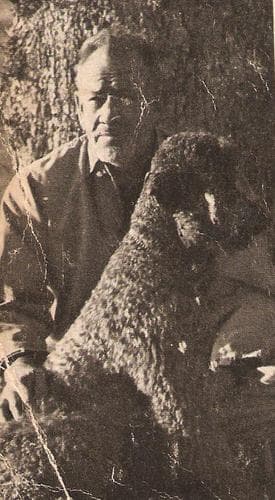
John Ernst Steinbeck was an American writer. He won the 1962 Nobel Prize in Literature "for his realistic and imaginative writings, combining as they do sympathetic humor and keen social perception". He has been called "a giant of American letters."







