“One could not be a Mr. Rivenhall for ever.”
— Sophy reflecting on her cousin Charles's rigid adherence to decorum.

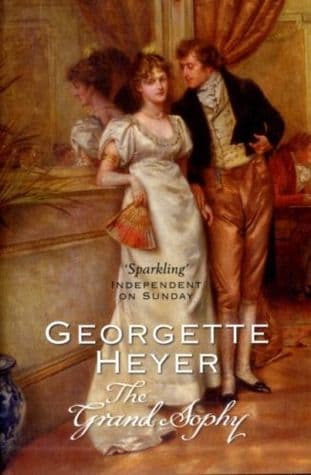
Georgette Heyer (1950)
Genre
Historical Fiction / Romance
Reading Time
6-7 hours
Key Themes
See below
Sign in to track this book
Sophy, a lively woman from the Continent, arrives at her London relatives' home, disrupting their proper but troubled lives with her charm and bold plans to solve everyone's problems, including her own romantic future.
Sophia Stanton-Lacy, known as Sophy, arrives in Berkeley Square from her travels abroad. She stays with her aunt, Lady Ombersley, while her father is in South America. Sophy's unusual arrival with her pets and unladylike manner immediately causes trouble in the Rivenhall house. She quickly notices the tense atmosphere: her cousin Charles Rivenhall, the oldest, is bossy and engaged to the dull Eugenia Wraxton; her cousin Cecilia is in love with the impractical poet Augustus Fawnhope; and her cousin Herbert is deep in debt. Sophy's cheerful directness and independence stand out against the family's strict manners, much to Charles's dislike and Lady Ombersley's worry.
Sophy quickly sees that Cecilia's engagement to Augustus Fawnhope will be a disaster. Fawnhope is a poor poet, with no common sense or way to support a wife, and his dramatic statements often annoy Charles. Cecilia, blinded by romantic ideas, refuses to see his flaws. Sophy, realizing the family cannot stop the match, decides to act. She starts by subtly showing Fawnhope's impracticality and self-absorption, inviting him to activities that highlight his unsuitability for a normal life, to the amusement of the younger Rivenhall children and Charles's quiet concern.
Sophy learns about Herbert's large gambling debts to a known money-lender, Mr. Goldhanger, which he has kept secret. Charles, despite his strictness, does not know the full extent of Herbert's problem. Sophy, instead of telling Charles directly, takes a more direct approach. She confronts Mr. Goldhanger herself, using charm, threats, and clever negotiation to get a better repayment plan for Herbert, even offering some of her own money. This bold action strengthens Sophy's reputation as a woman who ignores social rules but gets results, to Herbert's relief and Charles's eventual, reluctant respect.
To get money for Herbert's debts, Sophy, without asking Charles, arranges to sell some of Charles's valuable horses, including his fine bay stallion, for a good price. This bold act angers Charles, who sees it as an unforgivable intrusion and a clear disregard for his authority and property. He argues heatedly with Sophy, accusing her of meddling and recklessness. Sophy, however, calmly defends her actions, explaining that saving Herbert from ruin was more important than politely asking for his permission. This event marks a change in their relationship, showing their clashing personalities and Sophy's strong will.
Eugenia Wraxton, Charles's fiancée, is a self-important intellectual who constantly criticizes Sophy's unusual behavior and tries to control Charles and the household. Sophy finds Eugenia's pedantry and lack of warmth stifling and subtly begins to weaken her influence. She points out Eugenia's rigid social views and lack of real kindness, often through seemingly innocent comments or by comparing Eugenia's strictness with her own more relaxed way. Sophy also encourages the younger Rivenhall children to show their dislike of Eugenia, further exposing her cold manner and proving her unsuitability as a future mistress of the house.
Cecilia, led by romantic fantasy and Fawnhope's dramatic pleas, decides to run away with him. Sophy, finding out about their plans, acts quickly. With help from Charles's younger brother, Hubert, and some fast riding, she stops the eloping couple. Sophy confronts Fawnhope, exposing his cowardice and selfishness, and finally convinces Cecilia to see her mistake. The dramatic chase and confrontation make Charles recognize Sophy's quick thinking and resourcefulness, even as he is frustrated by her unusual methods. This event eventually ends Cecilia's crush on Fawnhope, clearing the way for a more suitable match.
Lord Charlbury, a rich and respected peer, becomes charmed by Sophy's liveliness and unusual appeal. He proposes marriage to her, offering her a stable and respected place in society. Sophy, while appreciating Charlbury's good nature, finds him a bit boring and does not love him. News of the proposal reaches Charles, who, despite his engagement to Eugenia, feels unexpectedly jealous and bothered by the idea of Sophy marrying someone else. This realization forces Charles to face his growing feelings for Sophy, which he has tried to hide because of his sense of duty and his disapproval of her methods.
The increasing tension and Charles's growing discomfort with Eugenia's personality, made worse by Sophy's subtle influence, finally lead him to break off their engagement. Eugenia, as expected, reacts with anger and self-pity, but Charles is firm in his decision. After this, Charles, now free from his mistaken commitment, confronts Sophy. He admits his initial disapproval of her, but confesses that her spirit, intelligence, and strong will have won him over. He tells her he loves her, recognizing that she is the only woman who truly challenges and understands him, despite their frequent arguments.
Sophy, who has secretly loved Charles despite their many arguments, accepts his proposal. Her acceptance brings joyful relief to the Rivenhall household, especially Lady Ombersley, who had long wished for a better match for her son. Sophy's engagement to Charles means not just a romantic union, but also a change in the family. Charles, having learned to value Sophy's unusual wisdom, is now willing to embrace her spirited nature, promising a more lively and less rigid future for the Rivenhall family. The book ends with the promise of a happy and unconventional marriage, where Sophy's 'grand' nature will continue.
The Protagonist
Sophy begins as a benevolent meddler, intent on fixing others' lives, and evolves to acknowledge her own vulnerabilities and capacity for love, ultimately finding her match in Charles.
The Love Interest / Antagonist (initially)
Charles transforms from a rigid, judgmental man into one who embraces spontaneity and acknowledges the value of unconventional wisdom, learning to love Sophy's unique spirit.
The Supporting
Lady Ombersley remains largely static, serving as a foil for Sophy's assertiveness and a gauge for the family's initial dysfunction.
The Antagonist
Eugenia remains static in her rigid beliefs, serving as the antagonist who must be overcome for Charles and Sophy to find happiness.
The Supporting
Cecilia learns to distinguish between romantic fantasy and genuine affection, moving past her infatuation with Fawnhope to find a more grounded happiness.
The Supporting
Herbert is rescued from his financial woes by Sophy, learning the consequences of his irresponsibility without having to face Charles's full wrath.
The Supporting
Fawnhope remains static, his flaws exposed by Sophy's interventions, ultimately losing Cecilia and fading from the narrative.
The Mentioned
Sir Horace's character remains off-stage, serving as the foundation for Sophy's independent spirit.
The Supporting
Lord Charlbury serves as a temporary rival, helping to clarify the romantic tension between Sophy and Charles.
This theme is central to the novel, shown by Sophy herself. She often goes against the strict social rules of Regency England, from her independent spirit and direct speech to her unusual ways of solving problems. The Rivenhall family, especially Charles and Eugenia, at first represent the stifling hold of societal expectations. Sophy's refusal to conform shows the hypocrisy and limits of these norms. It proves that real character and effective action often exist outside the established rules. Her success in solving the family's issues, because of her unusual approach, shows the book's idea that individuality, when paired with good intentions, is more valuable than strict adherence to old customs. For example, her selling of Charles's horses, while shocking, directly solves Herbert's financial crisis, something traditional methods could not.
““I have been accustomed to command,” said Sophy, “and I find it answers very well.””
Beneath the witty conversations and social criticism, the novel looks at the changing power of real love and affection. Charles's initial rigidity and duty-bound life slowly break down because of his growing love for Sophy. This forces him to face his own biases and become more open-minded. Sophy's actions, though unconventional, are always driven by a deep affection for her relatives and a wish for their happiness. The various romantic entanglements, from Cecilia's crush on Fawnhope to Charles's engagement to Eugenia, show that true love is not based on superficial looks, duty, or romantic illusions, but on real understanding, respect, and mutual challenge. The happy endings for Cecilia and Herbert also come from Sophy's caring help.
““You do not understand, Sophy,” he said, “what it is to be a man of honour. I am engaged to Eugenia. I cannot break my word.””
The Rivenhall family, despite looking respectable, is very dysfunctional before Sophy arrives. Lady Ombersley is timid, Charles is bossy, Cecilia is romantically naive, and Herbert is financially irresponsible. The family's inability to communicate well or deal with their problems directly creates unhappiness and chaos. Sophy acts as a catalyst and an outside helper, systematically taking apart the sources of their distress. Her role as a 'fixer' highlights the importance of clear thinking, decisive action, and a willingness to challenge established (and often ineffective) family ways to achieve real well-being. Her interventions, while disruptive, ultimately restore stability and happiness to the Rivenhall household.
““The whole family, it seems to me, is in a state of the most deplorable muddle.””
The novel subtly explores different kinds of authority. Charles tries to use authority through strictness, patriarchal control, and following social rules, but his methods often fail to get good results, leading to resentment and secret defiance within his family. Sophy, on the other hand, uses a different kind of authority – one based on natural leadership, intelligence, charisma, and a deep understanding of people. Her 'command' does not come from fear but from competence, wit, and real concern. The story suggests that true authority is earned through effective action and the ability to inspire trust and affection, rather than simply stated through position or strict adherence to tradition. Her ability to handle Mr. Goldhanger and manage the household finances shows this alternative form of power.
““I am not accustomed to being dictated to,” Charles said, stiffly. Sophy merely raised her brows. “Indeed? Then you must become so.””
Sophy's role as an outsider who resolves the family's internal conflicts.
Sophy embodies the 'fixer' archetype, an outsider who enters a stagnant or dysfunctional environment and, through unconventional means, resolves its inherent problems. Her foreign upbringing and lack of concern for English social strictures allow her to see the Rivenhall family's issues with clarity and act decisively where others are paralyzed by custom or timidity. This device allows for a rapid progression of plot points, as Sophy's interventions drive the resolution of multiple subplots simultaneously, from Herbert's debts to Cecilia's romantic folly, and ultimately Charles's own misguided engagement.
Characters who highlight the protagonist's qualities through contrast.
The novel effectively uses foil characters to emphasize Sophy's unique qualities. Eugenia Wraxton, with her rigid intellect and lack of warmth, serves as a direct contrast to Sophy's vibrant spirit and emotional intelligence. Augustus Fawnhope's impracticality and self-absorption highlight Sophy's grounded common sense and decisive action. Even Charles Rivenhall, in his initial autocratic and humorless state, acts as a foil, making Sophy's spontaneity and ability to bring joy even more pronounced. These contrasts not only develop Sophy's character but also underscore the novel's themes of individuality versus convention.
The humorous discrepancy between expectation and reality.
Situational irony is a frequent source of humor in 'The Grand Sophy'. The Rivenhall family expects a demure, conventional niece, but receives the spirited and unconventional Sophy. Charles's attempts to control Sophy invariably backfire or lead to outcomes he never anticipated, such as her selling his horses to solve a problem he was unaware of. The irony often stems from Sophy's calm and logical approach to situations that utterly fluster or infuriate the more conventional characters, highlighting the absurdity of rigid social expectations and the effectiveness of Sophy's unorthodox logic.
Sophy's continental education provides her with unique skills and perspectives.
Sophy's upbringing on the Continent, traveling with her diplomatic father, serves as a crucial plot device. This background explains her worldly wisdom, her fluency in languages, her equestrian skills, her lack of conventional English social inhibitions, and her ability to handle various types of people and situations with aplomb. It provides a plausible explanation for her 'grand' and unconventional nature, making her actions believable within the context of the Regency era. Her experiences abroad grant her a broader perspective that allows her to see solutions where her insular English relatives see only insurmountable problems.
“One could not be a Mr. Rivenhall for ever.”
— Sophy reflecting on her cousin Charles's rigid adherence to decorum.
“It is not a wife I require, but a housekeeper. Or, perhaps, a head clerk.”
— Charles Rivenhall's pragmatic, unromantic view of marriage.
“I do not think I have ever met anyone quite so delightfully improper.”
— Lord Ombersley's reaction to Sophy's unconventional behavior.
“One cannot be always thinking of what is proper.”
— Sophy's philosophy, contrasting with her cousin Charles's.
“A gentleman, my dear, is one who never gives offence unintentionally.”
— Sir Horace Stanton-Lacy's definition of a gentleman.
“I always say that a little dash of the unexpected is quite the thing to keep one's spirits up.”
— Sophy's reasoning for her often surprising actions.
“I hope you are not going to be a prig, Charles.”
— Sophy's blunt assessment of Charles's overly serious nature.
“Love, after all, is a matter of arrangement.”
— Mrs. Floore's cynical view of romantic relationships.
“There is nothing like a good scandal to enliven a dull season.”
— A character's observation on the social scene.
“You are quite the most alarming young woman I have ever encountered.”
— Charles Rivenhall's frequent reaction to Sophy's interventions.
“Happiness, my dear, is a state of mind, not a condition of fortune.”
— Sir Horace's philosophical advice.
“One must always be prepared for anything in this world.”
— Sophy's practical approach to life's uncertainties.
“I have never understood why people will insist on being so disagreeable.”
— Sophy's simple frustration with unnecessary conflict.
“The greatest joy in life is to be thoroughly mischievous.”
— Sophy's playful outlook on her own actions.
Ready to see how well you understood this book? Take our interactive quiz with 10 questions.

Biography coming soon.







