“How can you be free if you don’t have the courage to say no?”
— Kuni Garu's early rebellion against the Emperor.

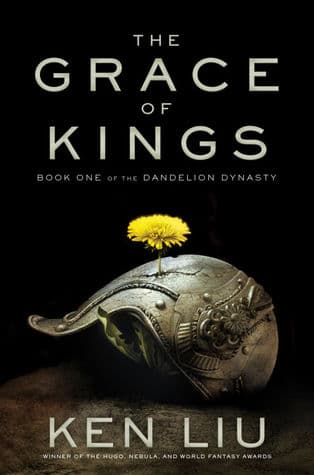
Ken Liu (2015)
Genre
Fantasy / Science Fiction
Reading Time
1280 min
Key Themes
See below
Sign in to track this book
A cunning bandit and a stern nobleman, once united in rebellion against an empire of silk-draped airships and shapeshifting gods, discover their friendship shattered by clashing visions of justice for the world they helped liberate.
The story begins with Kuni Garu, a charismatic, cunning bandit from Dara. He is known for clever escapes and Robin Hood-like actions, often outsmarting magistrates and tax collectors, gaining a reputation among common people. Meanwhile, Emperor Mapidéré of the Xana Empire conquers Dara's islands, uniting them under his oppressive rule. His military campaigns are brutal, using advanced technology like airships and siege weapons. Mapidéré's rule involves heavy taxation, forced conscription, and suppressing local cultures, causing widespread unhappiness and a growing rebellion. Kuni, initially focused on his survival and local mischief, becomes more involved in the empire's politics.
Elsewhere in Dara, Mata Zyndu, son of the deposed Duke of Zudi, studies and trains. He remembers his father's death and his family's humiliation by Emperor Mapidéré. Mata is a man of strong principles and physical strength. When his mother, Empress Dowager Ginzi, reveals Mapidéré's tyranny and the injustices their people suffered, Mata believes rebellion is necessary. Inspired by legends of heroes who overthrew despots, Mata dedicates himself to liberating Dara. He gathers a small, loyal following, preparing to challenge the Xana Empire, driven by duty and justice.
Kuni Garu, after daring escapes and deceptions, finds himself leading a rebel force, initially out of necessity. He meets Mata Zyndu when both are fighting Xana imperial forces. Their first major collaboration is a coordinated attack that shows Kuni's strategic mind and Mata's fighting skill. Despite their different personalities—Kuni is practical and adaptable, Mata is idealistic and rigid—they recognize each other's strengths and form a powerful, unlikely alliance. Their combined forces win several victories, capturing strongholds and inspiring more commoners and unhappy nobles to join their cause, starting the full rebellion against Emperor Mapidéré.
The war against Emperor Mapidéré grows more intense. Kuni Garu uses guerrilla tactics, psychological warfare, and clever deceptions to outmaneuver the larger, better-equipped Xana armies. He uses local terrain and social dynamics to his advantage, often turning the emperor's resources against him. Mata Zyndu, with his strong spirit and fighting skill, leads from the front, inspiring his troops and winning battles through force and courage. Dara's gods, though rarely intervening directly, show subtle favoritism towards the rebels, sometimes influencing events in their favor, like providing good weather or causing disruptions among imperial ranks. The rebellion becomes a formidable threat, slowly weakening Mapidéré's seemingly invincible empire.
After years of campaigning, Kuni and Mata's forces attack the imperial capital. The final assault shows their combined leadership, with Kuni planning the siege and Mata leading the charge. Emperor Mapidéré, isolated and facing overwhelming opposition, is defeated. His tyrannical reign ends, and Dara is liberated from Xana rule. The victory is celebrated, and Kuni and Mata are hailed as heroes. However, with the enemy gone, the question of who will rule the newly freed Dara and how it will be governed arises, setting up a new conflict between the two former allies. The unity from the rebellion begins to break as their different ideas become clear.
After Mapidéré's defeat, Dara is in chaos. Kuni Garu, practical, consolidates power by forming alliances with local leaders, promising stability and economic prosperity. He believes in flexible governance that prioritizes common people's welfare through practical means. Mata Zyndu, on the other hand, wants to return to Dara's ancient, noble traditions, based on strict moral codes, honor, and justice. He seeks to restore the old feudal order, believing in the nobility's right to rule responsibly. These fundamental differences in political philosophy and governing style cause growing friction. Their former friendship is strained as they each gather supporters and establish their own influence, preparing for an inevitable confrontation over Dara's future.
The political tension between Kuni and Mata escalates into localized skirmishes as their factions clash over resources, territory, and allegiance. Kuni, now calling himself the leader of the Han Empire, tries to unify the islands under a new, centralized government. Mata, leading the Zudi faction, refuses to acknowledge Kuni's authority, seeing his methods as a betrayal of old ways and the principles they fought for. Diplomatic efforts to reconcile their differences fail, mainly because of Mata's unyielding idealism and Kuni's refusal to compromise on his vision for a practical, unified state. Dara's islands become divided, with various lords and cities supporting either Kuni or Mata, setting the stage for a full civil war.
The civil war between Kuni's Han Empire and Mata's Zudi forces fully erupts. Both leaders show their military skill, but with different approaches. Kuni uses his ingenuity, new technologies, clever deceptions, and superior logistics to gain advantages. Mata, relying on his elite warriors' loyalty and his formidable combat skills, leads from the front in direct, honorable engagements. Battles are fought across Dara, with many casualties. One significant battle, the Battle of the Red Cliffs, shows Kuni's strategic genius as he uses environmental factors and psychological warfare to achieve a decisive victory against a larger, more traditional Zudi army, strengthening his position and weakening Mata's hold.
As the war continues, the political situation becomes more complex. Former allies of both Kuni and Mata must choose sides; some switch allegiances based on shifting power or personal gain. Kuni, good at cultivating loyalty and offering practical incentives, sways several neutral parties and even some of Mata's unhappy supporters to his side. Mata, however, struggles with political maneuvering and betrayal, seeing it as dishonorable. This period has several betrayals and unexpected alliances, further complicating the conflict and showing the moral ambiguities of war. The personal toll on both Kuni and Mata, who once fought together, becomes clear as their former bond breaks.
The war ends with the siege of Mata Zyndu's last stronghold, a citadel. Kuni Garu, having dismantled Mata's empire, uses his full military might. Despite overwhelming odds, Mata and his loyalists fight with desperate valor, embodying their ideals of honor and resistance. Mata, refusing to surrender or compromise his principles, makes a heroic but ultimately futile last stand. He is defeated, and his forces are routed. The civil war officially concludes with Kuni Garu as Dara's undisputed ruler. The victory is bittersweet for Kuni, who mourns the loss of his friend and the ideals they once shared, but he is now free to establish his new empire, the Han Dynasty, according to his vision.
With Mata Zyndu defeated, Kuni Garu consolidates his power and formally establishes the Han Dynasty, crowning himself Emperor. His reign includes practical reforms to improve common people's lives, rebuild infrastructure, and encourage economic growth. He introduces new laws, standardizes measurements, and promotes trade. However, peace has challenges. Kuni must deal with lingering resentment from Mata's former supporters, the large administrative task of governing a unified Dara, and the constant threat of internal dissent. He also grapples with the moral weight of his actions and sacrifices, especially the loss of his friendship with Mata. Kuni tries to be a benevolent and effective ruler, learning from past emperors' mistakes and trying to create a lasting legacy of stability and prosperity for Dara.
The Protagonist
Transforms from a local bandit to the founder and first emperor of the Han Dynasty, learning the heavy cost of leadership and the compromises required for peace.
The Protagonist/Antagonist
Rises as a noble rebel leader to challenge tyranny, but his unyielding idealism leads to conflict with his former ally and ultimately, his defeat.
The Supporting
Evolves from Kuni's clever wife to a respected empress and trusted political advisor, wielding significant influence behind the scenes.
The Antagonist
His tyrannical rule leads to his ultimate defeat and the collapse of his empire.
The Supporting
Incites her son to rebellion and remains a steadfast, guiding force for his traditionalist faction.
The Supporting
Serves as a steadfast and effective general, helping Kuni secure and maintain his emperorship.
The Supporting
Remains a fiercely loyal general to Mata Zyndu, fighting for his ideals until the very end.
The Supporting
Subtly influences events to aid Kuni Garu, reflecting the gods' chosen favor.
The Supporting
Changes allegiance from the Xana Empire to Kuni Garu, becoming a valuable asset in the rebellion.
The novel explores different leadership philosophies through Kuni Garu and Mata Zyndu. Kuni represents practical, adaptable governance focused on common people's welfare and needs, often through cunning and sometimes morally ambiguous means. Mata embodies idealistic, principled leadership rooted in honor, tradition, and justice, even if it means rigidity and resistance to change. Their conflict shows the tension between effective, stable rule and morally pure, traditional rule. The book questions whether a leader must be good or simply effective, and what sacrifices are necessary to build and maintain an empire. Kuni's eventual success suggests that practicality often triumphs in the messy reality of nation-building.
“"A good ruler does not need to be a good man, but a good ruler must make his people happy."”
At its core, the story is a tragic narrative of a friendship that becomes a bitter rivalry. Kuni and Mata, despite their differences, form a strong bond during the rebellion against Mapidéré, relying on each other's strengths. However, once the common enemy is gone, their different visions for Dara's future break that loyalty. The novel explores the pain of betrayal, the difficulty of maintaining personal bonds amid political ambition, and how ideological clashes can destroy strong friendships. Characters must choose sides, and many experience the agony of switching loyalties, showing how alliances shift in wartime and the deep emotional cost of conflict.
“"We fought side by side, Kuni. How could we come to this?"”
This theme is central to the conflict between Kuni Garu and Mata Zyndu. Mata represents unyielding ideals—honor, justice, tradition, and the right of noble rule. He refuses to compromise on his principles, even to his own detriment. Kuni, conversely, is practical, prioritizing practical solutions, the well-being of common people, and state stability, often through cunning, manipulation, and adapting to circumstances. The novel suggests that while ideals are inspiring, practicality is often more effective in the complex process of building and maintaining an empire. It explores the consequences of both approaches and the sacrifices each entails.
“"The world is not a poem, Mata. It is a battlefield, and sometimes you must get your hands dirty to win."”
While not overtly magical, Dara's gods play a subtle yet significant role, influencing events through omens, favorable weather, or small nudges of fortune. They are not all-powerful puppeteers but observers and occasional interveners, often favoring those who align with their mysterious will. The concept of fate is also explored, with characters often feeling destined for their roles. This theme adds a layer of mythical grandeur to the narrative, suggesting that human actions, while crucial, are sometimes guided or subtly influenced by forces beyond mortal comprehension. The gods' favoritism, particularly towards Kuni, subtly reinforces his eventual triumph.
“"The gods do not choose the strong, nor the righteous. They choose the one who will bring forth their will."”
The novel begins with a rebellion against the tyrannical Xana Empire, then concludes with a new empire and the potential for future conflicts. This shows how power can be cyclical: those who overthrow oppressors can become powerful figures whose own rule might be challenged. The book questions whether Kuni's new Han Dynasty will truly break the cycle of tyranny or if it is merely another iteration, though a more benevolent one. This theme encourages reflection on the enduring challenges of governance and the constant struggle to maintain peace and justice.
“"The emperor is dead. Long live the emperor."”
Narrative follows the intertwined but ultimately divergent paths of two main characters.
The story is primarily told through the perspectives of Kuni Garu and Mata Zyndu. This device allows for a comprehensive exploration of the rebellion and subsequent civil war from two distinct ideological viewpoints. It highlights their contrasting personalities, motivations, and leadership styles, creating a rich tapestry of conflict and character development. By presenting both men as protagonists, the narrative avoids simple good-versus-evil dichotomies, instead focusing on the complex moral ambiguities of war and nation-building, making the eventual clash between them particularly poignant and tragic.
Incorporation of a pantheon of gods and ancient legends that subtly influence the world and characters.
The world of Dara is populated by a pantheon of gods who, while not directly intervening in every battle, exert a subtle but pervasive influence. Characters often invoke their names, interpret omens, and sometimes receive indirect aid or hindrance (e.g., Kana's favor for Kuni). Ancient legends and prophecies also inform the characters' understanding of their world and their roles within it. This device adds a layer of epic fantasy, connecting the human struggles to a larger, divine narrative, and suggesting that fate and the will of the gods play a part in the rise and fall of empires, even in a world with evolving technology.
Depiction of advanced or unique technologies influencing military strategy and daily life.
Despite its fantasy setting, 'The Grace of Kings' incorporates significant technological elements that impact warfare and society. Emperor Mapidéré's Xana Empire utilizes advanced airships, powerful siege weapons, and sophisticated logistics. Kuni Garu, in turn, innovates by adapting existing technologies, developing new siege techniques, and employing clever engineering solutions (like the use of kites for communication or the adaptation of existing infrastructure for defense). This device grounds the epic battles in tangible, often ingenious, military science, making the strategic conflicts feel both grand and intellectually engaging, moving beyond mere sword-and-sorcery.
Exploration of classic archetypes through Kuni Garu and Mata Zyndu.
Kuni Garu embodies the 'trickster' archetype—cunning, adaptable, often operating outside traditional moral bounds, and using wit over brute force. He is a pragmatic survivor and innovator. Mata Zyndu, conversely, represents the classic 'hero' archetype—honorable, strong, principled, and driven by a clear sense of justice and duty. The novel uses these contrasting archetypes to explore different paths to leadership and the complexities of human nature, showing how both types of figures can inspire and lead, but also how their inherent differences can lead to inevitable conflict when their goals diverge.
Narrative style that mimics the sweep of historical epics, covering decades and multiple generations.
The novel adopts a narrative style reminiscent of classical historical epics, covering a vast span of time from the initial rebellion to the establishment of a new empire, and hinting at future generations. It focuses on the rise and fall of leaders, the forging of nations, and the long-term consequences of political and military decisions. This device gives the story a sense of weight and importance, positioning it as a foundational myth for the world of Dara, rather than just a personal tale. It allows for the exploration of large-scale societal changes and the lasting impact of individual actions on history.
“How can you be free if you don’t have the courage to say no?”
— Kuni Garu's early rebellion against the Emperor.
“The gods do not care if you live or die. They only care that you do not forget them.”
— Reflections on the nature of divinity in the world.
“A man's worth is not in his birth, but in his deeds.”
— Kuni Garu's philosophy as he gathers followers.
“Sometimes the only way to save a tree is to cut off a branch.”
— Decisions made during wartime, often involving sacrifice.
“The greatest weapon is not a sword, but an idea.”
— Reflecting on the power of Kuni's ideals.
“All men are equal under heaven, but some are more equal than others when it comes to holding the reins of power.”
— A cynical observation about the realities of leadership.
“To be truly free, you must first be willing to die.”
— Galu's understanding of the ultimate price of freedom.
“History is written by the victors, but the truth is whispered by the defeated.”
— A commentary on historical narratives and hidden truths.
“Love is a weakness when you lead an army, but a strength when you build a kingdom.”
— Emphasizing the different roles of emotion in war and peace.
“The ocean does not care for your plans; it will do what it wishes.”
— A metaphor for the unpredictable nature of larger forces and fate.
“A good ruler knows how to listen, even to his enemies.”
— Galu's approach to governance and diplomacy.
“You cannot make an omelet without breaking a few eggs, but you also don't need to break every egg in the basket.”
— A nuanced view on necessary sacrifices and collateral damage.
“What is courage but the will to act in the face of fear?”
— A definition of courage in various challenging situations.
“The past is a story we tell ourselves. The future is a story we hope to live.”
— Reflections on the subjective nature of time and narrative.
Ready to see how well you understood this book? Take our interactive quiz with 10 questions.
Biography coming soon.







