“I am Loki, and I will be your guide through this tangled web of gods and monsters.”
— Opening line of the novel, setting the narrative tone.

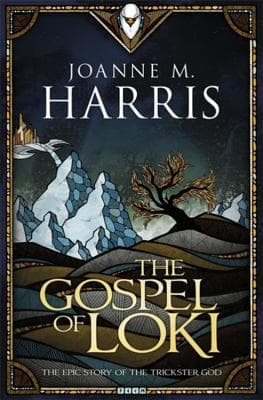
Joanne M. Harris (2014)
Genre
Fantasy / Historical Fiction
Reading Time
300 min
Key Themes
See below
Sign in to track this book
Through the eyes of Loki, the ultimate trickster, see the rise and fall of Asgard, where every divine triumph and betrayal is painted with a mischievous, self-serving brush.
Loki, born of primordial Chaos, exists in a fluid state until Odin, the All-Father, notices him. Odin, who wants to bring order to the nine worlds and establish his rule, offers Loki a place in Asgard as his 'blood brother.' He promises Loki power and a break from the formlessness of Chaos. Loki is interested in the idea of structure, identity, and the chance to observe and manipulate, so he accepts. The other Æsir gods, especially Thor and Baldr, initially view him with suspicion. These gods represent the order and purity Loki lacks. Loki quickly learns Asgard's customs and hierarchies. He keeps his chaotic nature hidden under a cooperative and witty exterior. He constantly evaluates the gods' weaknesses and the limits of their rigid world.
One of Loki's first and most important contributions to Asgard involves building its wall. A giant builder offers to build the wall quickly in exchange for the sun, the moon, and Freya's hand. The gods agree, sure he will fail. But the giant, helped by his magical stallion Svaðilfari, makes fast progress. As the deadline nears, the gods panic and demand Loki find a solution. Loki turns into a mare to distract Svaðilfari. This causes the giant to miss his deadline and lose his reward. This act saves Asgard. It also results in Loki giving birth to Sleipnir, Odin's eight-legged horse. This further solidifies his unusual and often inconvenient role among the gods.
Loki's mischievous nature often causes trouble for Asgard. On a journey with Odin and Hœnir, the giant Thiazi, disguised as an eagle, tricks them into giving him the best part of their meal. Thiazi later forces Loki to lure Idunn, the goddess of youth, and her golden apples (essential for the gods' immortality) out of Asgard. Thiazi kidnaps Idunn, and the gods begin to age fast. Loki realizes his mistake and faces the gods' anger. He uses Freya's magical falcon cloak to fly to Jotunheim. He turns Idunn into a nut and carries her back to Asgard. He barely escapes Thiazi's pursuit. Thiazi is killed by the gods upon his return.
Loki, always an instigator, makes a foolish bet with the dwarf Brokkr. He claims Brokkr's brother Sindri (Eitri) cannot create treasures as great as those made by the Sons of Ivaldi (who crafted Sif's golden hair, Skidbladnir, and Gungnir). This challenge leads to the creation of some of Asgard's most famous items: Gullinbursti (Frey's golden-bristled boar), Draupnir (Odin's arm-ring that drips eight new rings every ninth night), and Mjölnir (Thor's hammer). Loki tries to ruin the dwarves' work by turning into a fly and stinging them, but they succeed. Loki tries to back out of the bet, but Brokkr demands his head. Loki argues that his neck is not part of his head, saving himself. Brokkr stitches his lips shut as punishment, temporarily silencing the trickster.
Despite his life in Asgard, Loki's chaotic origins show through his family. With the giantess Angrboda, he fathers three monstrous children: Fenrisúlfr (the Fenris Wolf), Jörmungandr (the Midgard Serpent), and Hel (ruler of the underworld of the same name). The gods fear prophecies about these children and take drastic measures. Odin throws Jörmungandr into the ocean, sends Hel to rule the dead, and tries to raise Fenrisúlfr in Asgard. But the wolf grows too powerful. Loki also has two sons, Váli and Narfi, with his wife Sigyn, who stays loyal to him. These children, though often separated from him, represent Loki's link to destruction and the undoing of Odin's ordered world.
Fenrisúlfr grows to a huge size and strength. The Æsir become terrified of the prophecy that he will eat Odin during Ragnarok. They try to bind him with chains, but he breaks them easily. Finally, they ask the dwarves to make Gleipnir, a magical, thin ribbon made of impossible ingredients. Fenrisúlfr is suspicious. He agrees to be bound only if one of the gods places their hand in his mouth as a pledge of good faith. Tyr, the god of war, bravely sacrifices his hand. When Fenrisúlfr realizes he has been tricked and cannot break Gleipnir, he bites off Tyr's hand. The gods secure Fenris to a rock, placing a sword in his mouth to keep his jaws open. Loki sees this cruel act against his son. This deepens his anger and sense of betrayal by the gods who claim to be his family.
Baldr, the god of light and purity, has dreams of his own death. Frigg, his mother, gets promises from every living thing and object not to harm him, making him invulnerable. The gods entertain themselves by throwing weapons at him, watching them bounce off harmlessly. Loki feels more and more alienated and resentful of Baldr's universal adoration. He finds the one exception: mistletoe, which Frigg thought too small to bother with. Loki makes a dart from mistletoe. He tricks the blind god Hǫðr into throwing it at Baldr, killing him instantly. This act is the ultimate betrayal. It plunges Asgard into grief and marks an irreversible turn towards Ragnarok. Loki's role is quickly discovered. This increases the gods' hatred and their desire for revenge.
After Baldr's funeral, the gods gather for a feast hosted by Ægir, the sea giant. Loki, uninvited but wanting to cause trouble, crashes the banquet. He insults every god and goddess present. He exposes their hypocrisies, sexual indiscretions, and cowardice. He reminds Odin of his reliance on magic and his past mistakes. He accuses Freya of promiscuity. He taunts Thor about his lack of wit. His accusations are mostly true. They deeply sting the gods and show the rot under Asgard's polished surface. This public shaming is the final straw. It solidifies Loki's status as an unforgivable enemy of the Æsir. Thor, returning late, silences Loki, but the damage is done. The gods' patience is gone.
After the feast, Loki runs from the angry gods. He turns into a salmon and hides in a waterfall. But Thor and the other Æsir eventually catch him. They bring him to a cave. They brutally punish him for his crimes, especially Baldr's death. Loki's son, Váli, turns into a wolf and goes mad, tearing his brother Narfi apart. The gods then use Narfi's entrails to bind Loki to three rocks. Skadi places a poisonous serpent above his head. Its poison drips onto his face. His loyal wife, Sigyn, stays by his side. She holds a bowl to catch the venom. But whenever she empties it, the poison drips onto Loki, causing him great pain and violent shaking. This is said to cause earthquakes. This torturous imprisonment will last until Ragnarok.
Fimbulwinter, a harsh, unending winter, begins. It signals Ragnarok's approach. Loki breaks free from his bonds. He joins the forces of Chaos. He sails the ship Naglfar, made from the fingernails of the dead. He leads an army of giants and the inhabitants of Hel. He confronts the Æsir on the battlefield of Vígríðr. In the battle, Loki faces Heimdall, the guardian of the Bifrost. They duel, and both die. Loki, the trickster who brought both good and ill to Asgard, fulfills his destiny as a cause of its destruction. He returns to the Chaos from which he came, ending the age of the gods.
The Protagonist/Antagonist
Loki transitions from a curious outsider seeking a place in Asgard to a resentful betrayer who ultimately orchestrates the gods' downfall, embracing his chaotic nature.
The Antagonist/Supporting
Odin strives to maintain order and avert Ragnarok, only to see his efforts ultimately undone by the very forces he tried to control, including Loki.
The Supporting
Thor remains a steadfast protector of Asgard, ultimately facing Loki on the battlefield of Ragnarok.
The Supporting
Freya maintains her position and influence in Asgard, often a target of male desire and Loki's sharp wit.
The Supporting
Baldr's life is tragically cut short by Loki's machinations, serving as a critical turning point in the narrative.
The Supporting
Sigyn remains consistently loyal to Loki, enduring his final punishment alongside him.
The Supporting/Mentioned
Fenris is bound by the gods out of fear, only to break free at Ragnarok and fulfill his prophecy.
The Supporting
Heimdall maintains his role as watchful guardian, culminating in his fated duel and death with Loki at Ragnarok.
The Mentioned
Angrboda's role is primarily as the mother of key figures in Ragnarok, linking Loki to the forces of destruction.
Loki, born of Chaos, struggles with his identity as an outsider in Asgard. Despite being Odin's blood-brother, the Æsir never truly accept him. They view him with suspicion and contempt due to his heritage and nature. This theme shows in his constant testing of boundaries, his need for recognition, and his eventual embrace of his role as the ultimate outsider leading destruction. His story is a search for a place where he can truly be himself, whether that place is the chaotic realm he came from or his chosen opposition to Asgard.
“'And this is the story of how I, Loki, got my name – and how I found a place among the gods, though never quite one of them.'”
The novel's main conflict is the struggle between Asgard's structured, often hypocritical order (Odin and the Æsir) and Chaos's fluid, disruptive force (Loki and his monstrous offspring). Odin tries to impose order and prevent Ragnarok. Loki, by his nature, constantly tries to expose the flaws in that order, showing its instabilities and falsehoods. Loki argues that Chaos counters stagnation. His actions often strip away the gods' illusions of control and perfection, forcing change.
“'Order is the dream of the gods, but Chaos is the reality of everything else.'”
The novel is Loki's 'gospel,' a counter-narrative to the 'official' history written by the victors. Loki often questions memory's reliability and storytelling's biases. He says his version of events is 'at least as true' and 'more entertaining.' This meta-narrative theme shows how history is shaped by perspective and power. Loki challenges the reader to consider that the 'villain's' account might offer a more nuanced, if self-serving, truth about events and character motivations. It shows that every story has multiple sides.
“'Take it with a pinch of salt, but it’s at least as true as the official version, and, dare I say it, more entertaining.'”
The gods' fear of prophecies, especially those about Loki's children and Ragnarok, drives many of their cruel actions. Examples are the binding of Fenrisúlfr and the casting out of Jörmungandr and Hel. Ironically, these actions often start the events that fulfill the prophecies, creating a self-fulfilling cycle. Loki's resentment comes from seeing these injustices against his family. This fuels his desire for revenge and his role in Ragnarok. The book explores how trying to control fate often leads directly to it.
“'They feared my children, so they made them monsters. And then they wondered why the monsters came to them.'”
Loki's journey includes a deep sense of betrayal and growing resentment towards the Æsir. Despite his contributions and his status as Odin's blood-brother, they treat him as an outsider, a scapegoat, and a tool. The binding of Fenris, the gods' glee at his misfortunes, and their refusal to accept him accumulate into a strong desire for vengeance. His planning of Baldr's death is the ultimate betrayal, but it comes from years of feeling betrayed and undervalued by the gods he was supposed to serve.
“'They called me brother, but they never truly saw me as one of them. And that, dear reader, was their first mistake.'”
Loki's biased, witty, and self-serving account of Norse mythology.
The entire novel is told from Loki's perspective, allowing for an intimate, yet inherently biased, retelling of the Norse myths. Loki frequently breaks the fourth wall, directly addressing the reader and commenting on the 'official' versions of events. This unreliable narration is central to the book's charm and its thematic exploration of truth and narrative. It encourages the reader to question established lore and to empathize, however reluctantly, with the traditional villain, offering a fresh and often darkly humorous insight into the motivations and flaws of all characters.
Hints of Ragnarok and character fates woven throughout the narrative.
The impending doom of Ragnarok and the specific fates of many characters (e.g., Fenris devouring Odin, Loki killing Heimdall) are constantly foreshadowed throughout the narrative. Loki, as a being connected to Chaos and fate, often alludes to these future events, sometimes with a sense of inevitability, other times with a dark glee. This device builds suspense and imbues the seemingly episodic adventures with a larger sense of purpose and tragic destiny, emphasizing that the gods' attempts to avert fate often lead directly to its fulfillment.
Loki embodies the classic trickster figure, challenging norms and disrupting order.
Loki perfectly embodies the trickster archetype found in many mythologies. He is a master of deception, shape-shifting, and cunning, constantly challenging authority, breaking rules, and exposing hypocrisies. His actions, whether for good or ill, often lead to unexpected outcomes and force change. He serves as a catalyst, an agent of chaos necessary to prevent stagnation, and a figure who blurs the lines between hero and villain, good and evil. His wit and subversive humor are integral to his trickster nature.
Loki's cynical and humorous observations on the gods' flaws.
Loki's narrative is rich with ironic commentary. He frequently points out the hypocrisy, vanity, and short-sightedness of the Æsir, often through witty asides and sarcastic observations. This irony serves to undermine the traditional heroic image of the gods and highlights Loki's unique perspective as an outsider. It also provides much of the book's dark humor, allowing the reader to enjoy Loki's sharp intellect even as he commits increasingly destructive acts, making him a compelling, if morally ambiguous, protagonist.
“I am Loki, and I will be your guide through this tangled web of gods and monsters.”
— Opening line of the novel, setting the narrative tone.
“Trust is a fragile thing, easily broken, and once broken, never truly mended.”
— Loki reflecting on his relationships with the Aesir.
“Chaos is not the enemy of order; it is its necessary counterpart.”
— Loki explaining his role in the Norse cosmos.
“A lie is often more beautiful than the truth, and far more useful.”
— Loki justifying his deceptive nature.
“The gods built their halls on a foundation of lies, and called it Asgard.”
— Loki criticizing the hypocrisy of the Aesir.
“Freedom is an illusion, but it's an illusion worth fighting for.”
— Loki musing on his own desires and constraints.
“Every story needs a villain, and I was born to play the part.”
— Loki accepting his role in Norse mythology.
“Love is a weakness that even the gods cannot afford.”
— Loki reflecting on his relationships, particularly with Sigyn.
“The end of the world is not an event; it's a process, and we are all part of it.”
— Loki discussing Ragnarok and his role in it.
“I have been called many things: trickster, liar, monster. But never a god.”
— Loki expressing his outsider status among the Aesir.
“Power is not about strength; it's about knowing which strings to pull.”
— Loki explaining his approach to influence and manipulation.
“In the game of gods, the only rule is that there are no rules.”
— Loki describing the chaotic nature of divine politics.
“Sometimes, the greatest trick is to make them believe you have no tricks left.”
— Loki sharing a insight into his deceptive strategies.
“The world is built on stories, and I am the master storyteller.”
— Loki asserting his influence over myth and narrative.
Ready to see how well you understood this book? Take our interactive quiz with 10 questions.







