“The memory of the blood, the smell, the silence—it was all there, vivid as a fresh wound.”
— Yoo-jin's initial fragmented memories of the morning he finds his mother's body.

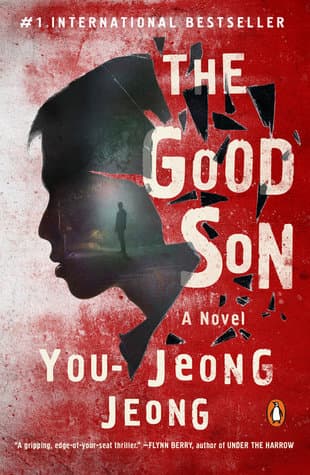
You-Jeong Jeong (2018)
Genre
Thriller / Mystery
Reading Time
360 min
Key Themes
See below
Sign in to track this book
A young man with fractured memories must piece together the bloody fragments of the night his mother was murdered, only to discover the most terrifying suspect might be himself.
Yu-jin, 26 and suffering from epilepsy and memory issues, wakes to a strange metallic smell and a phone call from his older brother, Yu-min, who mentions their mother tried to call him last night. Yu-jin finds his mother's room door ajar and the bed empty. Downstairs, he discovers his mother's body in a pool of blood, her throat slit. He has no memory of the previous night, only a vague impression of his mother's voice calling his name. Overwhelmed, Yu-jin struggles to process the horror and his own blankness about what happened.
Instead of calling the police, Yu-jin is overcome by an impulse to clean the scene. He mops up the blood, washes his mother's body, and places it in the bathtub. His actions are driven by a desperate need to control the situation and perhaps protect himself from an unknown truth. He then begins a frantic search for the murder weapon, believing it to be a knife from their kitchen. He recalls a conversation with his mother about a missing knife, further fueling his suspicion and fear about his own involvement.
Yu-min, concerned after not being able to reach their mother, arrives at the duplex. Yu-jin tries to act normal, claiming their mother went out early for a walk. However, Yu-min's persistent questions and observations begin to chip away at Yu-jin's composure. Yu-min notices the unusual cleanliness of the house and Yu-jin's agitated state. Tension between the brothers grows as Yu-min expresses his worry about their mother's absence, while Yu-jin tries to keep his gruesome secret hidden.
As Yu-jin struggles with his memory gaps, he experiences a vivid flashback to his childhood. He remembers a traumatic incident involving a dog and his mother's reaction, hinting at a history of violence and his mother's overprotective nature. These fragmented memories suggest a dysfunctional family dynamic and raise questions about his relationship with his mother. The flashbacks also highlight the unreliability of Yu-jin's memory, making it harder for him to distinguish between reality and his own distorted perceptions.
Unable to maintain the charade, Yu-jin confesses to Yu-min that their mother is dead. He reveals where he hid the body and his actions to clean the scene. Overwhelmed, Yu-min helps Yu-jin move the body out of the bathtub. Together, they create a story to tell the police: that their mother was murdered by an unknown assailant during a home invasion. This shared secret binds them, but also deepens the web of deceit, making it harder to uncover the truth of what really happened that night.
Detectives arrive and begin their investigation, quickly noticing inconsistencies in Yu-jin's and Yu-min's story. The lack of forced entry, the unusual cleanliness of the house, and Yu-jin's vague answers raise red flags. The police are suspicious of Yu-jin's memory loss and his calm demeanor, which conflicts with the image of a grieving son. Yu-jin feels pressure mounting as the detectives' questions become more pointed, forcing him to confront the possibility that they suspect him.
Yu-jin's aunt, his mother's sister, visits the duplex. During her visit, she shares details about his mother's difficult past, including her marriage to Yu-jin's father, who was abusive. The aunt also reveals that Yu-jin's father was killed in an accident years ago, an event shrouded in mystery. These revelations provide a piece of the family puzzle, suggesting a history of violence and trauma that has impacted Yu-jin and his mother, and potentially sheds light on the current tragedy.
Driven by the aunt's revelations, Yu-jin confronts Yu-min, demanding to know the full truth about their father's death. Yu-min, under pressure, finally reveals that their mother killed their abusive father in self-defense years ago, and they covered it up to protect her. This confession shatters Yu-jin's understanding of his family and his mother, revealing a past built on violence and secrecy. The truth about his father's death shifts Yu-jin's perception of his mother from victim to perpetrator, foreshadowing a similar dynamic in the present.
A series of intense seizures and fragmented memories finally come together, revealing the horrifying truth to Yu-jin. He remembers the events of the previous night with chilling clarity: an argument with his mother about his medication, his growing resentment, and a sudden, violent outburst where he slit her throat with a knife. The metallic smell, the missing knife, and his mother's final call for his name were all tied to his own actions. The realization that he is the murderer, and that his memory loss was a psychological defense mechanism, is devastating.
Yu-jin understands his motive. His mother, consumed by guilt and fear after killing his father, had become overly controlling. She manipulated his epilepsy, encouraging his dependence on her and preventing him from living an independent life, all under the guise of protection. Yu-jin's repressed rage, fueled by years of this psychological imprisonment and his mother's subtle reminders of his 'sickness,' finally erupted. He sees how his mother's actions, born from her own trauma, inadvertently led to his violent breakdown.
Yu-min is left to deal with the shocking truth about his brother. He realizes Yu-jin's memory loss was not a complete fabrication, but a genuine psychological block. He also understands his own role in enabling their mother's control and the family's cycle of secrets. Yu-min must now decide whether to protect his brother, who is clearly disturbed, or to let the truth come out. The aftermath leaves him in a moral dilemma, facing the destruction of his family and the devastating impact of their shared past.
With the truth fully revealed, Yu-jin faces the full weight of his actions. The facade of the 'good son' shatters, leaving him confronting the monster he has become. He understands the psychological impact of his epilepsy, his mother's overbearing love, and the family's dark secrets. He is left with the terrifying knowledge that he is capable of extreme violence, and that his own mind is dangerous and unreliable. The novel concludes with Yu-jin's bleak acceptance of his identity as a murderer and the irreversible consequences of his actions.
The Protagonist
Yu-jin transforms from a seemingly innocent, amnesiac son to a self-aware matricide, grappling with the devastating truth of his own actions and mental state.
The Victim/Antagonist
Her character is revealed retrospectively, shifting from a perceived victim to a psychologically manipulative figure whose past actions directly led to her tragic end.
The Supporting
Yu-min moves from a protective, complicit older brother to a character grappling with the devastating realization of his family's deep-seated dysfunction and his brother's true pathology.
The Supporting
Her character remains largely static, serving as a catalyst for revelation rather than undergoing significant personal change.
The Mentioned
His character's true nature and the circumstances of his death are revealed retrospectively, serving as a foundational element of the family's tragedy.
The Supporting
They remain consistent in their role as investigators, their arc tied to the progression of the case.
Yu-jin's epilepsy causes frequent memory gaps, making him an unreliable narrator of his own life and the events surrounding his mother's death. This theme is central as Yu-jin tries to piece together what happened, often misinterpreting flashbacks or having crucial details missing. The unreliable memory creates suspense and forces the reader to question Yu-jin's innocence, ultimately revealing that his amnesia is a psychological defense mechanism against a horrifying truth. For example, his initial inability to recall cleaning the crime scene or the actual murder is a manifestation of this theme.
“My memory was Swiss cheese, full of holes, and I was terrified of what might be lurking in the dark spaces.”
Yu-jin's mother, traumatized by her past, shows an intense, suffocating form of love towards him. She manipulates his epilepsy to keep him dependent, preventing him from living an independent life. This 'love' is born out of guilt and fear, but it ultimately cripples Yu-jin emotionally and psychologically, fostering resentment and rage. This theme is evident in how she subtly discourages his attempts to find a job or move out, always emphasizing his 'fragility' and need for her care, culminating in his violent outburst.
“She wanted me to be weak. She needed me to be weak, so she could be strong.”
The novel reveals a cycle of violence within the family. Yu-jin's father was abusive, leading to his mother killing him in self-defense. This act, and the subsequent cover-up, deeply impacted the mother, leading to her controlling behavior. This control, in turn, fuels Yu-jin's repressed rage, ultimately leading to him murdering his own mother. The trauma of the past is not resolved but passed down, resulting in new acts of violence. The revelation of the father's death and the mother's guilt exemplifies this theme.
“The past wasn't just behind us. It was inside us, a poison waiting to erupt.”
Yu-jin grapples with his identity throughout the novel, initially seeing himself as a victim of his condition and circumstances. His 'good son' persona is a facade, both for himself and for others. The gradual uncovering of the truth forces him to confront the dark aspects of his own nature and the capacity for evil within him. His initial denial and attempts to create an alternative narrative are examples of self-deception, which eventually shatters, leaving him with a horrifying, yet true, understanding of who he is.
“I had been living a lie, not just to others, but to myself. The monster wasn't out there; it was me.”
The novel explores whether evil is inherent or a product of circumstance and trauma. Yu-jin's actions are horrific, but the narrative looks into the psychological factors that contributed to his breakdown: his epilepsy, his mother's suffocating control, and the family's history of violence. The book suggests that evil can emerge from a combination of vulnerability, repression, and inherited trauma, blurring the lines between victim and perpetrator. Yu-jin's eventual understanding of his own motives, rather than a simple 'bad seed' explanation, highlights this complex theme.
“Was I born this way, or did she make me this way?”
Yu-jin's memory gaps and psychological state make him an untrustworthy source of information.
Yu-jin serves as the primary unreliable narrator. His epilepsy causes memory loss, and his psychological trauma leads to repression and self-deception. This device is crucial for building suspense and mystery, as the reader is constantly questioning Yu-jin's perceptions and recollections. It allows the author to slowly reveal the truth through fragmented flashbacks and Yu-jin's internal struggle, ultimately leading to a shocking twist when the narrator himself is revealed to be the perpetrator, having suppressed the memory of his crime.
Sudden, often disturbing, recollections that slowly piece together the past.
Throughout the novel, Yu-jin experiences vivid, yet incomplete, flashbacks to his childhood and the night of the murder. These fragmented memories are initially confusing and disorienting, but they serve as crucial clues that gradually unveil the family's dark history and Yu-jin's own role in the crime. They are triggered by sights, sounds, or even conversations, acting as a slow-motion reveal that builds psychological tension and allows the reader to experience Yu-jin's journey of discovery alongside him.
Misleading clues or information designed to divert attention from the true culprit.
The initial setup of the crime scene, Yu-jin's amnesia, and the fabricated story about an unknown assailant all function as red herrings. The narrative initially points towards an external killer or even Yu-min as a potential suspect, diverting attention from Yu-jin himself. The missing knife, initially sought as evidence against an 'outsider,' becomes a red herring that ultimately points back to Yu-jin. These diversions heighten the mystery and make the final revelation more impactful by challenging the reader's initial assumptions.
The audience knows more about the situation than some characters, especially Yu-jin himself.
Dramatic irony is subtly employed throughout the story, particularly in the early stages when Yu-jin is actively cleaning up the crime scene and hiding the body, while the reader may suspect his involvement even before he does. As Yu-jin struggles to remember, the reader gains an increasing sense of dread and suspicion about his actions, fueled by the inconsistencies and the context provided by other characters. This creates a powerful tension, as the reader anticipates Yu-jin's horrifying self-discovery.
“The memory of the blood, the smell, the silence—it was all there, vivid as a fresh wound.”
— Yoo-jin's initial fragmented memories of the morning he finds his mother's body.
“I was a good son. I always was. So why did I feel like a monster?”
— Yoo-jin's internal struggle with his identity and the unfolding horror.
“The truth was a beast, and it was gnawing at me from the inside.”
— Yoo-jin's growing desperation to uncover what truly happened, despite his own amnesia.
“Sometimes, the most dangerous lies are the ones you tell yourself.”
— A reflection on self-deception as Yoo-jin tries to reconstruct events.
“The world outside seemed to hum with a normal rhythm, oblivious to the chaos inside me.”
— Yoo-jin observing the everyday world while his own life is in turmoil.
“Fear was a cold hand gripping my throat, squeezing the air out of me.”
— Yoo-jin experiencing intense fear as he uncovers disturbing clues.
“Every secret was a brick in the wall I was building around myself.”
— Yoo-jin reflecting on the layers of secrets he's keeping or uncovering.
“My mother’s ghost wasn’t just in my head; it was in the house, in the walls, in the very air I breathed.”
— Yoo-jin's pervasive sense of his mother's presence and the crime scene.
“The monster wasn't under my bed; it was looking back at me from the mirror.”
— A chilling realization about his own potential involvement.
“You can't outrun what's inside you.”
— A thematic statement about confronting one's true nature.
“The silence of the house was more terrifying than any scream.”
— The oppressive atmosphere within the house after the discovery.
“I was a puppet, and someone else was pulling the strings, or maybe I was pulling my own.”
— Yoo-jin's confusion about his agency and who is controlling events.
“The past isn't just history; it's a living, breathing thing that can still bite you.”
— Yoo-jin grappling with how past events are impacting his present.
“Sometimes, the only way to find the light is to walk through the darkest parts of yourself.”
— A moment of deep introspection and the necessity of confronting inner demons.
Ready to see how well you understood this book? Take our interactive quiz with 10 questions.

Biography coming soon.







