“This was it. The Gollywhopper Games. The chance of a lifetime.”
— Rosie is about to enter the games, full of anticipation.

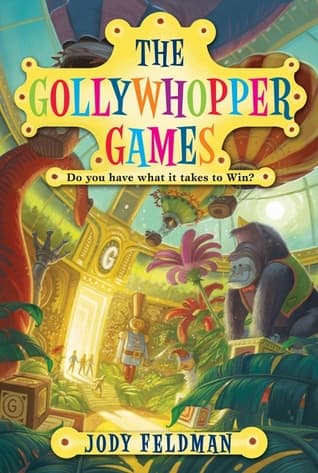
Jody Feldman (2013)
Genre
Fantasy / Children's / Young Adult
Reading Time
360 min
Key Themes
See below
Sign in to track this book
A televised competition at a toy company is Gil Goodson's only chance to escape his family's scandalous past and secure their future.
Gil Goodson and his family are shunned in their small town after 'The Incident,' a scandal involving Gil's father, a former toy inventor, and a patent dispute with the Golly Toy & Game Company. Gil's father, now a reclusive inventor, promises Gil that if he wins the Gollywhopper Games, a competition hosted by the Golly Company, they will finally move away and start fresh. Gil, weighed down by the social stigma and his father's broken dreams, feels great pressure to win. The Games are a televised event, adding more anxiety for Gil, who wants to escape the constant judgment.
Gil, with hundreds of other children, arrives at the Golly Toy & Game Company's headquarters, a large complex with fantastical contraptions. He is immediately overwhelmed by the size and strangeness of the place. Here, he meets his fellow competitors, a group of children from different backgrounds, each with their own reasons for winning. Among them are the very competitive Simone, the quiet Fiona, and the seemingly distant but smart Anthony. The initial atmosphere is a mix of excitement and worry as the children realize the size of the competition.
The first challenge of the Gollywhopper Games is the 'Gollycopter' challenge. Competitors are put into teams and must build a miniature flying machine using provided parts and limited instructions. Gil is on a team with Simone, who tries to lead, and another boy who struggles with the technical parts. Gil's mechanical ability, inherited from his father, starts to show as he helps his team. The challenge tests their engineering skills and their ability to work together under a strict time limit, all while cameras record them.
During a puzzle-solving round, Gil notices something strange in one of the games. Following a feeling, he finds a hidden message or symbol in the game's design, which seems out of place for a typical Golly product. This discovery makes him curious and wonder if there is more to the Golly Company and the Games than it seems. He starts to think that the Games might be connected to his father's past and 'The Incident,' making him more determined to win and uncover the truth.
The competitors are led into a large maze with riddles and physical obstacles. As Gil goes through the maze, certain parts and designs trigger memories of his father's past inventions and the details of the patent dispute with the Golly Company. He remembers his father's original designs and how they look like some of the mechanisms in the maze. This strengthens his growing suspicion that the Games are not just a competition but a deliberate setup designed to test his unique skills and possibly reveal a hidden plan.
Gil, feeling more and more alone with his suspicions, tells Fiona, who is a smart and trustworthy ally. Together, they start to carefully look at the clues Gil has found, comparing them with his memories of his father's work and the details of 'The Incident.' Fiona's observation skills and logical thinking go well with Gil's understanding of mechanical designs. They find that many of the challenges and puzzles in the Games include parts from his father's original, uncredited inventions, suggesting a deliberate pattern by the Golly Company.
The Games end with a final challenge that requires the remaining competitors to use a complex, multi-functional device. Gil immediately knows the device is an advanced version of his father's uncredited invention – a 'Gollywhopper' machine designed to create toys. He realizes the Golly Company not only stole his father's ideas but is now using them as the main part of their most famous competition. During this final challenge, Gil's knowledge of the machine, from his father's original blueprints, gives him an advantage. He feels a mix of victory and anger.
As the final challenge ends, Gil, with the evidence he and Fiona have found, confronts Mr. Golly, the founder of the Golly Toy & Game Company. He explains how the Games' challenges and the Gollywhopper machine are copies or changes of his father's original, uncredited work. Mr. Golly, at first dismissive, is surprised by Gil's detailed knowledge and the clear similarities. The confrontation is tense, with the weight of years of unfairness in the air, all shown live on national television.
On national television and faced with Gil's evidence, Mr. Golly admits to having stolen Gil's father's toy designs years ago, which led to 'The Incident' and the downfall of Gil's family. He says he is sorry, acknowledging the great unfairness. Because of this public confession, Mr. Golly offers a large payment to Gil's father, including proper credit and money for his inventions. The Gollywhopper Games end with a twist: Gil is recognized for his bravery and intelligence, his family's name is cleared, and their future, free from the past, looks brighter.
With the truth out and his father's name cleared, Gil's family can move forward. The public apology and payment from the Golly Company restore their reputation and give them the financial stability and peace of mind they needed. Gil's father, no longer burdened by the unfairness, finds new purpose and starts to openly follow his passion for invention. The family decides to stay in their town, as the reason for leaving is gone. Gil, having faced a corporate giant and won, is not just a game winner, but a hero who brought justice to his family, looking forward to a future free of the past's shadow.
The Protagonist
Gil transforms from a shy, burdened boy seeking escape into a courageous and intelligent truth-seeker who ultimately clears his family's name.
The Supporting
Fiona develops from an independent competitor into a loyal and instrumental partner in uncovering a corporate secret.
The Supporting
Simone learns to respect Gil's unique talents, moving beyond pure rivalry to a more nuanced appreciation of his character.
The Supporting
From a defeated and reclusive inventor, he finds vindication and renewed purpose after the truth of the Golly Company's actions is revealed.
The Antagonist
Initially a seemingly benevolent but secretly deceitful figure, he is forced to confront and confess his past transgressions, leading to a public apology and restitution.
The Supporting
Maintains his focused, strategic approach throughout the competition, serving as a consistent rival.
The Supporting
Remains a constant source of support for her family, ultimately finding peace when their name is cleared.
The main theme is Gil's effort to correct a past wrong and restore his family's honor. 'The Incident,' the patent theft by the Golly Company from Gil's father, affects the Goodson family for a long time. Gil's participation in the Gollywhopper Games is not just about winning a prize, but about finding the truth and getting justice for his father, which leads to the family's redemption and the clearing of their name. The Games become a stage for this moral battle, ending with Mr. Golly's confession and payment.
“He knew this wasn't just about the prize money anymore. This was about his dad. This was about clearing their name.”
The book explores how reputation, both individual and family, shapes one's identity and social standing. Gil's identity is first defined by 'The Incident,' leading to social exclusion and self-consciousness. He struggles with the whispers and judgments of his peers. The Games offer him a chance to redefine himself, not just as the son of a disgraced inventor, but as a smart and brave person. By the end, the family's reputation is restored, allowing them to be themselves again, free from the past.
“Everywhere they went, the whispers followed. The Incident. It was a brand on their family.”
This theme shows the difference between real creativity and stealing ideas. Gil's father represents true inventiveness, creating original toy designs. Mr. Golly and the Golly Company, however, show dishonesty by stealing and profiting from these designs. The Games themselves, while appearing to celebrate cleverness, are built on the stolen ideas of Gil's father's work. Gil's journey involves using his own cleverness, inherited from his father, to expose the dishonesty at the center of the Golly empire.
“It wasn't just a puzzle; it was a blueprint. His father's blueprint.”
The strong bond and support within the Goodson family are important to Gil's success. Despite difficulties, Gil's parents stay united, and Gil is motivated by his love and loyalty to them. His father's promise of a new start if Gil wins, and his mother's quiet strength, strengthen Gil's resolve. The goal is not individual victory, but the well-being and justification of his family. This theme shows the power of family ties in overcoming problems.
“He had to win. Not just for himself, but for his mom and dad. For a fresh start.”
A multi-stage, televised competition serving as the primary plot driver and setting.
The Gollywhopper Games themselves function as the central plot device. This elaborate, nationally televised competition provides the structure for the entire story, allowing Gil to showcase his skills while simultaneously serving as the vehicle through which he uncovers the truth about his father's past. Each challenge within the Games is designed not only to test the competitors but also to subtly (and eventually overtly) reveal elements of the Golly Company's deceit, culminating in the final confrontation. The competitive format keeps the pace engaging and provides clear stakes for Gil's journey.
A past scandal that serves as the inciting incident and central mystery.
'The Incident' refers to the undisclosed past event where Gil's father's toy designs were allegedly stolen by the Golly Company. This serves as a crucial backstory and a driving mystery throughout the novel. The ambiguity surrounding 'The Incident' at the beginning creates tension and motivates Gil's actions. As the story progresses, Gil gradually uncovers details about this past event, revealing it to be a deliberate act of corporate theft, which forms the core of the novel's conflict and resolution.
Embedded details within the Games that reveal the Golly Company's deception.
Throughout the Gollywhopper Games, Gil and Fiona discover subtle clues, anomalies, and specific design elements within the games and puzzles that are directly linked to his father's original, uncredited inventions. These hidden clues function as a breadcrumb trail, guiding Gil toward the truth about the Golly Company's past actions. This device enhances the mystery aspect of the plot, allowing Gil to actively 'solve' the larger injustice while participating in the competition. It highlights Gil's intelligence and his father's distinctive creative signature.
The constant surveillance and public nature of the Games.
The fact that the Gollywhopper Games are broadcast on national television is a significant plot device. It amplifies the pressure on Gil and the other competitors, adding a layer of public scrutiny to their every move. More importantly, it ensures that when Gil eventually uncovers and exposes Mr. Golly's deception, the revelation is made public, forcing accountability and ensuring widespread awareness of the injustice. This public platform is essential for the theme of redemption and the clearing of the Goodson family's name.
“This was it. The Gollywhopper Games. The chance of a lifetime.”
— Rosie is about to enter the games, full of anticipation.
“Sometimes the biggest obstacles aren't the ones you can see.”
— A general lesson learned during one of the less obvious challenges.
“Teamwork wasn't just about sharing work; it was about sharing strengths.”
— Rosie realizes the true value of collaboration during a group task.
“The rules were more like guidelines, and the spirit of the game was everything.”
— Contestants discover that strict adherence to rules isn't always the path to success.
“Every puzzle had a solution, even if it wasn't the one you expected.”
— Rosie is struggling with a particularly tricky brain teaser.
“Winning wasn't just about being first. It was about being smart, being fair, and being yourself.”
— A reflection on the true meaning of victory at the end of the games.
“The most valuable prize wasn't tangible; it was the lessons learned.”
— Rosie reflects on her journey after the games conclude.
“Fear was a choice, and bravery was the decision to act despite it.”
— Rosie faces a daunting challenge that tests her courage.
“Sometimes you had to lose a little to win big.”
— A strategic move during one of the games requires a temporary setback.
“The Gollywhopper Games weren't just a competition; they were a journey of discovery.”
— A narrator's insight into the broader purpose of the games.
“Trusting your gut was often more reliable than trusting what you were told.”
— Rosie encounters misleading information and learns to rely on her intuition.
“Every small detail could be a clue, or a distraction.”
— Contestants are sifting through various elements to solve a complex riddle.
“The real magic of the games was in the unexpected friendships forged.”
— Rosie reflects on the bonds she formed with other contestants.
“Imagination was the most powerful tool in any challenge.”
— A particularly creative solution is needed for a seemingly impossible task.
Ready to see how well you understood this book? Take our interactive quiz with 10 questions.







