BookBrief
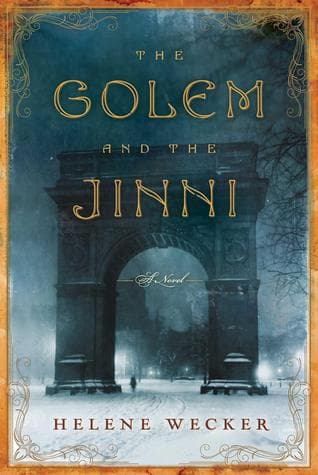
The Golem and the Jinni cover
Archivist's Choice

The Golem and the Jinni

Helene Wecker (2013)

Genre

Fantasy / Historical Fiction

Reading Time

10-12 hours

Key Themes

See below

Track Your Reading

Sign in to track this book

In 1899 New York, a clay golem and a jinni freed from an ancient flask form an unlikely, mystical bond amid immigrant life and hidden magic.

Synopsis

Chava, a golem, is brought to life in Poland to be a wife. Her master dies en route to New York City in 1899, leaving her adrift and without purpose. A kind rabbi takes her in, helping her integrate into the Jewish community. She struggles with her true nature and the constant influx of human emotions and thoughts. Meanwhile, Ahmad, a centuries-old jinni, is accidentally released from a copper flask in a tinsmith's shop in Little Syria. He is bound to a mortal existence, unable to fully use his powers or return to his desert home, struggling with his confinement and the human world. Chava and Ahmad, both supernatural beings navigating turn-of-the-century New York, sense a kinship and are drawn to each other. They form a deep friendship, finding solace and understanding in their shared otherness as they try to comprehend humanity and their places within it. However, their unique existences attract a malevolent sorcerer from Chava's past, who seeks to control her power. As the sorcerer's threat grows, Chava and Ahmad must confront their true natures and combine their abilities to protect themselves and the lives they have built, discovering a connection that transcends their individual origins.
Reading time
10-12 hours
Difficulty
Medium
Pacing
Moderate
Mood
Atmospheric, Mystical, Introspective, Melancholy, Hopeful
✓ Read this if...
You love rich, character-driven fantasy blended with historical fiction, exploring themes of identity and belonging.
✗ Skip this if...
You prefer fast-paced action over introspective character development and world-building.

Plot Summary

Creation and Arrival

In 1899 Poland, Rabbi Meyer creates Chava, a golem, for Otto Rotfeld, a young man seeking a wife. Meyer gives Chava the ability to sense emotions and obey commands. During the voyage to New York, Otto Rotfeld dies suddenly, leaving Chava without a master. She is now free from the compulsion to obey, but her golem nature prevents her from understanding this. Upon arrival in New York Harbor, Chava is found by an elderly rabbi, Rabbi Lanner, who recognizes her true nature and takes her in. He gives her a new identity as a human woman and work as a baker's assistant in the Lower East Side.

Ahmad's Release and Confinement

Meanwhile, in a Syrian village, a tinsmith named Saleh accidentally releases Ahmad, a jinni of the desert, from an ancient copper flask. Ahmad, a being of fire and desire, finds himself in the unfamiliar and restrictive human world of New York. His powers are diminished, and he must remain in human form and within a certain radius of the flask, which Saleh keeps. Ahmad struggles with his confinement and daily human life, working as a tinsmith's apprentice for Saleh, who, as his accidental liberator, unknowingly holds power over him.

First Meeting

Chava, working in the bakery, and Ahmad, working in Saleh's tinsmith shop, live near each other in the Lower East Side. One evening, Chava encounters Ahmad. Both instantly know the other is not human. Chava senses Ahmad's power and ancient presence, while Ahmad perceives Chava's clay essence and quiet strength. This first meeting is filled with mutual recognition and curiosity, setting the stage for their unusual friendship. They are drawn to each other as the only two beings of their kind in this foreign city.

Developing Friendship

Despite their different origins, Chava and Ahmad begin to meet regularly. Chava, who struggles to control her impulse to fix and help, finds a confidante in Ahmad, who understands her otherness. Ahmad, uncomfortable with human life, is fascinated by Chava's quiet strength and her unique view of humanity. They share stories of their pasts and their struggles, finding solace and understanding in each other's company, a connection unlike any they have with humans. Their bond grows into a deep friendship.

The Threat of the Sorcerer

Unknown to Chava, her creator, Rabbi Meyer, has tracked her to New York. Obsessed with reclaiming his creation and her power, Meyer, now known as the Sorcerer, begins to subtly manipulate events, leaving strange symbols and hints for Chava. He believes Chava holds a key to greater magical power and wants to control her. His presence creates a looming threat, a dark shadow over Chava's new sense of belonging and freedom, even if she is unaware of the specific danger.

Ahmad's Past and the Jinni's Flask

Ahmad continues to struggle with his confined existence. He often tells stories of his long, wild life in the desert, his interactions with ancient civilizations, and his desires. He resents Saleh's unwitting control over him via the flask and longs for true freedom. He learns more about the flask's origins and its magical properties, realizing that his release was not complete. His longing for his old life and his frustration often lead him to recklessness, but his connection with Chava provides a grounding influence.

The Sorcerer's Escalation

Rabbi Meyer's actions intensify. He begins to appear in Chava's dreams, trying to control her, causing her distress and confusion. He also uses his dark magic to influence people around Chava, creating situations that test her self-control and reveal her golem nature. Chava experiences growing anxiety and a sense of being watched, though she cannot identify the source. Ahmad, sensing a disturbance in the city's magical fabric, becomes protective of Chava, though he doesn't fully understand the threat.

The Attack and Discovery

The Sorcerer finally makes his move, directly attacking Chava, trying to reassert his mastery over her. During this confrontation, Chava's golem nature is fully revealed to those around her, including her human friends like Michael. Ahmad intervenes, using his limited jinni powers to protect her. Afterward, Chava must confront the truth of her creation and the dark power that seeks to control her. Ahmad fully understands the specific danger she faces and commits to helping her, recognizing the threat to his friend.

The Search for Answers and Allies

Realizing the seriousness of the situation, Chava and Ahmad seek knowledge and allies. They consult Rabbi Lanner, who, despite his reluctance to involve himself further in Kabbalah, provides insights into golem lore and the dangers of a rogue creator. Ahmad also seeks counsel from Saleh, who, though a simple tinsmith, understands ancient magic and the nature of jinn. They form a plan to confront the Sorcerer, understanding that his power is linked to the original act of creation.

The Confrontation

The final confrontation occurs in a tense, magical showdown. Rabbi Meyer, consumed by his dark ambitions, tries to re-enslave Chava, using powerful Kabbalistic spells. Chava resists him, drawing on her golem strength and her understanding of her own will. Ahmad, pushing his confined jinni powers, battles Meyer's magical constructs and helps protect Chava. The battle is fierce, testing their combined strength and resolve, with Chava's freedom at stake.

Victory and Aftermath

Through a combination of Chava's golem strength, her developed will, and Ahmad's jinni power, they defeat Rabbi Meyer. The Sorcerer's power is broken, and he is rendered harmless. Afterward, Chava is truly free, no longer bound to any master. Ahmad, however, remains partially bound by the flask. They reflect on their journey and the changes they have undergone. While the immediate threat is gone, they must now navigate their lives as unique beings in a human world, forever changed by their experiences and their bond.

New Beginnings

With the Sorcerer defeated, Chava embraces her freedom and continues to live among humans, finding a deeper sense of self and purpose. She learns to manage her golem impulses and uses her strength for good. Ahmad, while still desiring ultimate freedom, accepts his current limitations and finds peace in his friendship with Chava and his work. Their unique connection endures, a symbol of their shared otherness and the deep bond they formed. They continue to navigate their existence in New York, bound by their mystical connection.

Principal Figures

Chava

The Protagonist

From a subservient, unmoored being, Chava evolves into a self-aware individual who chooses her own path and embraces her unique identity.

Ahmad

The Protagonist

Ahmad learns to appreciate aspects of human connection and finds a grounding influence, though his desire for ultimate freedom remains.

Rabbi Lanner

The Supporting

Initially cautious, Rabbi Lanner becomes more actively involved in protecting Chava, confronting his fears of forbidden magic.

Saleh

The Supporting

Saleh gradually comes to understand the true nature of Ahmad and his own subtle power, becoming a more active guide.

Rabbi Meyer (The Sorcerer)

The Antagonist

Rabbi Meyer's ambition completely consumes him, leading to his eventual downfall.

Michael Levy

The Supporting

Michael's understanding of the world expands as he witnesses Chava's true nature, yet he retains his grounded humanity.

Fumie

The Supporting

Fumie's brief appearance serves as a catalyst for Ahmad to reflect on his past and present.

Rotfeld

The Mentioned

None, as he dies early in the narrative.

Themes & Insights

Identity and Belonging

Both Chava and Ahmad grapple with who and what they are, and where they belong in a world not made for them. Chava, a golem, struggles with her nature to serve versus her developing individual will, trying to pass as human while understanding her profound difference. Ahmad, a jinni, is confined to a human form, longing for his wild, ancient past and restless in the mundane. Their shared otherness allows them to find a sense of belonging with each other, a place where their true natures are understood and accepted, as seen in their quiet conversations in the park, away from human judgment.

What does a golem do when she has no master? What does a jinni do when he has nowhere to go?

Narrator

Freedom vs. Confinement

The novel explores various forms of freedom and confinement. Chava is born into servitude, then freed by chance, but her golem nature still imposes an internal confinement, compelling her to help others. Ahmad, a being of ultimate freedom, is trapped in a human body and bound to a specific location by his flask. Their journeys are defined by their struggles against these limitations. Chava's fight against Rabbi Meyer is a battle for her freedom, while Ahmad's internal conflict over his restricted powers highlights his longing for the boundless freedom of his past.

He was a creature of the desert, of the wide, open spaces, and this city was a cage.

Narrator about Ahmad

The Nature of Humanity

Through the eyes of two non-human characters, the book examines what it means to be human. Chava, programmed to emulate humanity, learns to understand its complexities—its kindness, cruelty, love, and loneliness—by experiencing them directly. Ahmad, initially disdainful of human weakness, gradually appreciates human resilience and the depth of their emotions. Their interactions with characters like Rabbi Lanner, Michael, and Saleh, highlight the beauty and fragility of human existence, prompting them to question their own perceptions of humanity and their place within it.

She was made of clay, but she was learning to feel like flesh.

Narrator about Chava

Connection and Solitude

Despite living in a bustling city, both Chava and Ahmad experience deep solitude because of their unique natures. They are fundamentally alone, unable to fully share their true selves with humans. Their unexpected connection becomes a vital lifeline, offering companionship, understanding, and a sense of shared experience that lessens their individual isolation. Their bond is a symbol of finding another being who truly sees and accepts you, even when you are fundamentally different from everyone else.

They were two creatures of earth and fire, bound by a secret that set them apart from the world.

Narrator

Plot Devices & Literary Techniques

The Flask

A copper flask that binds Ahmad to human form and a specific location.

The ancient copper flask is the physical vessel that imprisoned Ahmad for centuries. When accidentally opened by Saleh, it releases Ahmad but also serves to bind him. It restricts his powers, forces him into human form, and limits his geographical movement. The flask acts as a constant symbol of Ahmad's lost freedom and his current confinement. Its presence dictates much of his actions and desires, making his quest for its destruction or removal a central driving force for his character.

The Shem

A parchment with a sacred name, the life-giving essence for a golem.

The Shem is a small parchment inscribed with a sacred name of God, which is placed inside Chava's head to animate her. It is the source of her life and her golem nature. The Shem represents her programmed existence and her potential for subservience. Its removal or alteration could either grant her true freedom or destroy her. It is the core of her magical being and a focal point for Rabbi Meyer's attempts to control her, highlighting the fragility and power of her existence.

The Lower East Side Setting

The vibrant, diverse immigrant neighborhood of 1899 New York City.

The Lower East Side in 1899 serves as a microcosm of the immigrant experience, a melting pot where diverse cultures and languages converge. For Chava and Ahmad, it is a place of anonymity and opportunity, allowing them to blend in despite their unique natures. The bustling streets, crowded tenements, and distinct ethnic enclaves (Jewish, Syrian) provide a rich, atmospheric backdrop that emphasizes themes of identity, belonging, and adaptation. It is a world both foreign and familiar, reflecting their own struggles to find a place.

Dreams and Visions

Supernatural dreams and visions that convey information and foreshadow events.

Dreams and visions serve as a crucial plot device, especially for Chava, who can subconsciously access the memories and desires of those around her. Rabbi Meyer also uses dreams to try and reassert control over Chava. For Ahmad, visions often connect him to his past or hint at future dangers. These non-literal forms of communication allow for exposition, foreshadowing, and the exploration of the characters' internal states, blurring the line between reality and the supernatural and building suspense.

Critical analysis

Notable Quotes

“She was a golem, a creature of clay, molded by a rabbi who had breathed life into her. She was not born of woman, had no mother or father, no kin of any kind. She was a thing, a vessel, and now she was alone.”

Introducing Chava's origins and immediate state of being in New York.

“He was a jinni, a being of fire and smoke, born of a desert wind. He had no body, no fixed form, only the shape he chose to assume. He was ancient, powerful, and now he was trapped.”

Introducing Ahmad's origins and current predicament after being released from the flask.

“She had no desires of her own, only the desires of others that she absorbed and reflected back. Like a mirror, she showed people what they wanted to see.”

Describing the Golem's initial nature and her struggle with developing her own will.

“A jinni's mind was a vast, intricate landscape of thought and memory, but it was also a desert, lacking the gentle rains of human emotion.”

Ahmad reflecting on the differences between his own nature and human beings.

“The city was a cacophony of voices, each one a story, a hope, a fear, all woven together into a tapestry of noise that never ceased.”

Chava's sensory experience of New York City, overwhelmed by human thoughts.

“To be human was to be a collection of inconsistencies, a walking paradox, a creature of both light and shadow.”

Ahmad's observations about the complex and often contradictory nature of humans.

“She wanted to be more than a vessel. She wanted to be a person, with her own thoughts, her own feelings, her own life.”

Chava's growing desire for autonomy and individuality.

“Every human carried a small, secret garden within them, a place where their truest self resided, separate from the roles they played in the world.”

Ahmad's understanding of the inner life and individuality of humans.

“Fear was a powerful thing, a poison that could curdle the sweetest milk, turn the bravest heart to water.”

Reflecting on the pervasive nature and effect of fear.

“The world was full of small miracles, if one only knew where to look.”

A general observation about finding wonder and beauty in everyday life.

“He had spent centuries in the desert, seeing only sand and sky, and now he was surrounded by brick and stone, by the endless thrum of human lives.”

Ahmad's drastic change in environment from the desert to urban New York.

“Sometimes, the greatest strength was found in quiet endurance, in the ability to simply keep going, even when all hope seemed lost.”

A reflection on resilience and perseverance in difficult times.

“She was learning that loneliness was not simply the absence of others, but the absence of understanding, a chasm between her own experience and the world around her.”

Chava's evolving understanding of loneliness as a deeper emotional state.

“There was a shared language between them, a silent understanding that transcended words, born of their mutual otherness in a human world.”

Describing the unique bond and connection that forms between Chava and Ahmad.

Quiz

Test Your Knowledge

Ready to see how well you understood this book? Take our interactive quiz with 10 questions.

10
Questions
~5
Minutes
?
Best Score

Key Questions (FAQ)

Chava is created by Rabbi Yehudah Schaalman to be the wife of a young man named Otto, who sought a perfect, obedient spouse. However, Otto dies suddenly at sea during the voyage to America, leaving Chava 'unmoored' and without her intended master or purpose even before she reaches New York harbor.

About the author