“A great painting is a great painting no matter who painted it or what it's of.”
— Theo's internal reflection on art's intrinsic value beyond provenance.

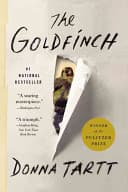
Donna Tartt (2015)
Genre
Literary Fiction / Creativity / Mystery
Reading Time
15-20 hours
Key Themes
See below
Sign in to track this book
Haunted by a tragic explosion and clutching a stolen Dutch masterpiece, a young orphan navigates the opulent drawing rooms of New York and the gritty underbelly of the art world, desperately seeking connection and redemption amidst a life spiraling into crime and obsession.
Thirteen-year-old Theodore Decker is at the Metropolitan Museum of Art with his mother, Audrey. They are seeing an exhibition of Dutch Masters. While Audrey admires Carel Fabritius’s 'The Goldfinch,' a bomb goes off, killing her and others. In the confusion, a dying old man, Welty, gives Theo a ring and tells him to take the painting. Stunned, Theo leaves with the small, valuable artwork wrapped in a plastic bag. He wanders New York City, dealing with his mother's death and the theft, which he keeps secret, feeling a deep connection to the painting as his last link to her.
With his father, Larry, absent, Theo is taken in by the wealthy Barbour family, parents of his school friend, Andy. He moves into their Park Avenue apartment, a stark contrast to his life with his mother. The Barbours are kind but formal and distant, leaving Theo feeling isolated. He struggles with his grief, the weight of his secret, and the Barbours' social world. He also develops a crush on Pippa, Welty’s niece, who was also hurt in the bombing and is recovering at the Barbours' home, sharing a silent understanding of their trauma.
After a short time with the Barbours, Theo looks for Welty's antique shop, believing he should deliver the ring and painting there. He meets James 'Hobie' Hobart, Welty's kind business partner, who becomes a father figure to Theo. Hobie, unaware of the painting's theft, offers Theo a room above the shop and an apprenticeship. Theo finds a sense of belonging among the beautiful, broken objects. He learns antique restoration and grows fond of Hobie, who shows honesty and integrity, a contrast to Theo's growing secrets.
Just as Theo settles in with Hobie, his estranged father, Larry, suddenly reappears with his new girlfriend, Xandra. Larry, a charming but unreliable alcoholic, takes Theo to Las Vegas, uprooting him from Hobie and New York. Life in the sprawling, unfinished housing development is bleak and lonely. There, Theo meets Boris Pavlikovsky, a wild Ukrainian boy with a troubled past. Boris introduces Theo to drinking, drugs, and petty crime. He becomes Theo's closest friend, though Theo still keeps 'The Goldfinch' hidden, even from Boris.
Larry Decker's reckless behavior worsens in Las Vegas, ending in a drunk driving accident that kills him. Theo is left alone and poor, with no legal guardian. He fears foster care and losing 'The Goldfinch,' which he hid in the desert. Desperate, he gets the painting and uses his little money to buy a bus ticket back to New York, returning to the only place he felt safe: Hobie's antique shop. This event strengthens his bond with the painting as his only constant.
Theo returns to Hobie, who welcomes him back without question. He resumes his life at the shop, continuing his apprenticeship and eventually becoming a partner. Over the years, Theo becomes skilled at identifying and restoring antiques. However, his life is also shadowed by his pill addiction, which started in Las Vegas with Boris, and the constant fear of discovery about 'The Goldfinch.' He keeps the painting locked away, a source of both comfort and great anxiety, its presence shaping many of his adult choices and isolating him emotionally.
Years later, Theo meets the Barbours again through social connections. He gets engaged to Kitsey Barbour, Andy's sister. This relationship is more about convenience and stability than true love. During this time, he also reconnects with Pippa, who now lives in London and works in music therapy. Their bond, formed in shared trauma, remains strong, and Theo realizes he is still deeply in love with her. Pippa, however, keeps him emotionally distant, acknowledging their connection but unable to return his romantic feelings, leaving Theo always longing.
Boris Pavlikovsky, now a successful but shady international operative, unexpectedly reappears in Theo's life. He reveals he knew about 'The Goldfinch' all along, having swapped the real painting for a fake when they were in Las Vegas. The real painting has been circulating in the criminal underworld. Boris, feeling he owes Theo, offers to help him get the painting back. This revelation shatters Theo's carefully built life and makes him face the true effects of his theft, pulling him into a dangerous world of art forgery and international crime.
Theo goes with Boris to Amsterdam, where they try to get 'The Goldfinch' back from dangerous art criminals. The operation fails, leading to a violent shootout and several deaths. Theo, deeply traumatized and feeling responsible for the bloodshed, is left with the recovered painting and a large sum of money from Boris, who arranged the recovery. He struggles with guilt, fear, and the moral uncertainty of his actions, understanding the high cost of his obsession. He must confront the dark side of his choices and their ripple effect.
After the events in Amsterdam, Theo uses the money Boris gave him to buy back other stolen and damaged artworks, anonymously returning them to their owners or institutions. He thinks deeply about his life, his mother's death, his addiction, and his obsession with 'The Goldfinch.' He comes to understand that true value is not just in owning a beautiful object, but in its ability to connect people, last through time, and offer comfort. He finally begins to find peace and a path toward redemption, realizing the painting's journey reflects his own search for meaning and belonging.
The Protagonist
Theo transforms from a traumatized, isolated boy into a man who grapples with his past, ultimately finding a fragile path towards redemption and self-acceptance by understanding the true meaning of art and connection.
The Supporting
Boris remains largely true to his chaotic nature but evolves from a survivalist street kid to a powerful, if morally compromised, operator who ultimately uses his skills to aid Theo.
The Supporting
Hobie remains a consistent symbol of goodness and integrity, his unwavering character serving as a moral compass for Theo throughout the novel.
The Mentioned
Though deceased, Audrey's influence on Theo remains constant, her memory driving his actions and shaping his emotional landscape.
The Supporting
Pippa remains a consistent, albeit distant, figure of idealized love and shared trauma for Theo, never fully engaging in a romantic relationship but always present in his emotional landscape.
The Supporting
Larry remains a destructive force, his presence and subsequent death further cementing Theo's isolation and self-reliance, while also highlighting the genetic predisposition to addiction.
The Supporting
Xandra's character remains consistent as a pragmatic survivor, offering a brief, challenging, but ultimately formative environment for Theo.
The Supporting
Kitsey remains a consistent character, representing the conventional life Theo attempts to adopt, highlighting his internal conflict between societal expectations and his true self.
The novel centers on Theo's deep loss of his mother. Her death in the museum bombing starts the story, and Theo's grief creates an enduring emptiness, a desire for connection, and an obsession with 'The Goldfinch' as a link to her. His inability to fully process his grief leads to self-destructive behaviors, including drug addiction and secrecy. The theme explores how unresolved trauma can shape a life, influencing choices and relationships, as seen in Theo's constant longing for Pippa, another survivor of the trauma. The painting becomes a substitute for his lost mother, a constant reminder of what he lost.
“And I add my own love to the history of people who have loved beautiful things, and looked out for them, and looked after them. And I love these things because they are the record of us at our best.”
Theo's life is tied to his obsession with Carel Fabritius's 'The Goldfinch.' The painting is more than a stolen object; it represents beauty, fragility, and his last physical connection to his mother. This obsession drives his actions, from hiding the painting for years to risking his life to get it back. The novel explores art's power to captivate, console, and even destroy. It looks at the ethics of art ownership and the commercialization of beauty, contrasting Hobie's pure love for restoring objects with the criminal underworld's exploitation of art. Theo's journey leads him to a more mature understanding of art's true value, beyond just owning it.
“A great painting is a great painting, whether it's on a wall or in a vault. But it's more than that. It's a way of looking at the world, a way of being in the world.”
Theo's identity constantly changes, shaped by his trauma, secrets, and the places he lives. He is a child of bohemian New York, then a guest in the formal Barbour household, an apprentice in Hobie's antique shop, and a delinquent in Las Vegas. He struggles to define himself apart from his past and his stolen secret. His drug addiction helps him escape his true self, while his work at Hobie's offers a chance for real self-expression. The novel shows how Theo creates different personas to navigate social worlds, highlighting the difficulty of forming a stable identity when burdened by guilt and a hidden life.
“I had a choice: I could be a good person, or I could be a person who stole a painting. I chose the latter.”
The novel questions whether Theo's life is predetermined or shaped by his choices. The museum bombing is a random, catastrophic event that sets his life on its new course. The theft of the painting, though an act of free will, feels almost fated. Boris often talks about 'karma' and the 'push and pull' of the universe, suggesting that events are connected beyond individual control. Theo grapples with the idea that his life is a series of accidents, yet he also makes choices that lead him deeper into the underworld. The ending suggests a mix of both, where Theo, having gone through his fated journey, finally chooses redemption.
“But if I've learned anything at all from my life, it's that there are no coincidences.”
Theo's drug addiction, mainly to pills, serves as a way to cope with his grief, anxiety, and the pressure of his secret. Starting in Las Vegas with Boris, his addiction offers a temporary escape, dulling his emotional pain and moral doubts. It isolates him further from real connection and contributes to his self-destructive path. The novel clearly shows addiction's cyclical nature, its hold on Theo's life, and the struggle for sobriety. It highlights how addiction can be a symptom of deeper trauma and a way to avoid difficult truths, hindering personal growth and keeping the cycle of secrecy going.
“And I knew, in that moment, that I would never be free of it. The painting, the pills, the lies. All of it was intertwined, a knot that could never be untangled.”
A priceless artwork that serves as the central MacGuffin and symbol of Theo's trauma and obsession.
The small Dutch Masterpiece, 'The Goldfinch' by Carel Fabritius, is the literal and symbolic heart of the novel. It is the catalyst for Theo's entire journey, stolen in the chaos of the museum bombing. For Theo, it represents his last tangible link to his dead mother, a source of comfort, and a profound burden. It functions as a MacGuffin, driving the plot forward and dictating Theo's choices, but also as a powerful symbol of beauty, loss, and the enduring power of art itself. Its presence, or absence, shapes Theo's identity and moral compass, leading him into both the art world and the criminal underworld.
A seemingly insignificant ring given to Theo by a dying man, connecting him to Hobie and the antique world.
In the immediate aftermath of the bombing, the dying Welty gives Theo a ring and instructs him to take it to a specific address, which turns out to be Hobie's antique shop. This small, seemingly insignificant object serves as a crucial plot device, directing Theo to his surrogate father and the world of antique restoration. It represents a thread of fate or coincidence that guides Theo's path, providing him with a safe haven and a new life. The ring is a symbol of connection, a tangible link between Theo, Welty, and Hobie, establishing the foundation for Theo's future.
Theo narrates his life story from an older, reflective perspective, imbuing the narrative with hindsight and philosophical musings.
The entire novel is narrated by Theo Decker as an adult looking back on his life, particularly the events surrounding 'The Goldfinch.' This narrative perspective allows for deep introspection, philosophical digressions, and a sense of dramatic irony as Theo recounts events with the benefit of hindsight. It enables the reader to understand Theo's internal struggles, his guilt, and his evolving understanding of art, fate, and morality. The retrospective voice colors the emotional landscape of the story, allowing Theo to comment on his younger self's actions and the profound impact of his choices, culminating in his final reflections on beauty and loss.
A desolate and transient landscape that reflects Theo's emotional state and introduces him to Boris and self-destructive habits.
The move to Las Vegas with his irresponsible father, Larry, is a significant shift in setting that profoundly impacts Theo. The unfinished housing development and the arid desert landscape mirror Theo's internal desolation and his feeling of being abandoned and adrift. This setting is where Theo meets Boris, his chaotic and influential best friend, and where he is introduced to drugs and petty crime. Las Vegas represents a period of moral ambiguity and self-destruction, a stark contrast to the cultured world of New York and the principled environment of Hobie's shop. It is a crucible for Theo's development into a more jaded and compromised individual.
“A great painting is a great painting no matter who painted it or what it's of.”
— Theo's internal reflection on art's intrinsic value beyond provenance.
“And the thing about chaos is that it can kill you. In fact, it's more likely to kill you than anything else.”
— Theo reflecting on the destructive nature of disorder and his own life.
“It had been a long time since I'd felt the simple, uncomplicated pleasure of being with another human being.”
— Theo's rare moments of genuine connection, often with Boris.
“But sometimes, no matter how much you try to control your life, it just takes off in a direction you never expected.”
— Theo's life spiraling after the museum bombing.
“Beauty is a gift, and it's a gift that's often misunderstood and misused.”
— Theo's observations on the nature of beauty, particularly in art and people.
“I had a moment of pure, unadulterated happiness. It was a fleeting thing, but it was real.”
— Theo experiencing rare joy amidst his troubled existence.
“There are some things you can't undo, no matter how hard you try.”
— Theo grappling with the irreversible consequences of his actions and the bombing.
“You can never get enough of what you don't need, because what you don't need can never satisfy you.”
— Theo's reflection on materialism and addiction.
“I hate being alone. I hate being alone more than anything.”
— Theo's recurring struggle with profound loneliness after his mother's death.
“Maybe it's good to be a little bit crazy. It keeps you from getting bored.”
— Boris's philosophical take on life and eccentricity.
“That's the thing about pain, it demands to be felt.”
— Theo's internal struggle with the emotional aftermath of trauma.
“It's a secret, you know. A secret that you carry around with you, like a precious object.”
— Theo's relationship with the stolen painting, 'The Goldfinch'.
“And I knew, in that moment, that I would never be entirely free of it. The past, the painting, the loss.”
— Theo's realization of the lasting impact of his experiences.
“But when you're a child, you don't know that. You think it's all just normal, whatever happens.”
— Theo reflecting on his childhood experiences and lack of awareness.
Ready to see how well you understood this book? Take our interactive quiz with 10 questions.
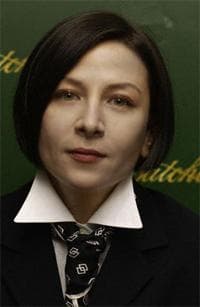
Donna Louise Tartt is an American novelist and essayist. Her work has been widely critically-acclaimed, and her novel The Goldfinch won the Pulitzer Prize for Fiction and has been adapted into a film.







