“The greatest magic is not in the spells you weave, but in the heart you bring to them.”
— Sulis's advice to Piaras about the true source of power.

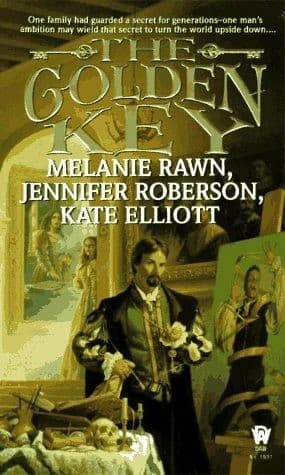
Melanie Rawn (2000)
Genre
Fantasy / Children's / Young Adult
Reading Time
1500 min
Key Themes
See below
Sign in to track this book
A young artist must confront his family's darkest secret when a master Grijalva warps their powerful gift for selfish, destructive ambition.
The story begins with the Grijalva family, whose magical painting abilities are a gift from the gods. The First Grijalva, a master artist, paints the Golden Key, a powerful artifact that can unlock and seal magical gateways and realities. This Key symbolizes their family's responsibility and power, entrusted to the Grijalva Firstborn. The Grijalvas maintain world balance through their art, ensuring magic is used for the kingdom's good and preventing dangerous forces from the 'Void' from intruding. Their art can alter existence, making them essential to the realm's stability.
Saranja Grijalva grows up in the Grijalva household, an orphan raised by her aunt and uncle, who are also master painters. From a young age, Saranja shows an astonishing natural talent for painting, surpassing her peers and mentors. Her paintings are not just beautiful; they have an undeniable, almost living quality, hinting at her dormant magic. This gift sets her apart, earning her admiration and some apprehension from her family, who recognize the immense power she could wield. She is tutored in Grijalva traditions, learning techniques and the responsibilities that come with their art.
Peralta Grijalva, Saranja's older cousin and a talented painter, grows frustrated with the Grijalva family's constraints and traditions. He believes their power is underused and dreams of using art for personal glory and control. His ambition twists into a darker desire for absolute power, leading him to reject the family's ethical guidelines. He eventually leaves the Grijalva compound, severing ties to pursue his own vision of art and power, free from their moral code. His departure casts a shadow over the family, who fear the misuse of his formidable artistic abilities.
Years later, a terrifying phenomenon plagues the land: the 'Unpainted.' These are areas, objects, and people drained of all color and vitality, becoming lifeless, monochrome husks. The Grijalva family realizes this is Peralta's work. He has developed a corrupted form of magical painting. Instead of adding to reality, his art subtracts from it, siphoning off color, life, and magic to fuel his creations and power. The Unpainted spread like a blight, threatening to consume the kingdom and plunge it into an eternal grey void. Peralta's influence grows as he gathers followers, promising them power and a new order.
With the Unpainted threat growing dire, Saranja, now a recognized master painter, realizes she must use her gifts to stop Peralta. She begins to actively counter his influence, using her vibrant, life-giving art to restore color and vitality to blighted areas. Her efforts bring her into direct conflict with Peralta's creations and his growing network of followers. During these initial encounters, Saranja experiences the destructive power of Peralta's art and the moral decay of his vision. She also begins to understand her Grijalva heritage and the responsibility of being the most gifted painter of her generation.
As the conflict escalates, both Saranja and Peralta understand the Golden Key's importance. The Key, traditionally passed to the Grijalva Firstborn, holds immense power, capable of opening and sealing not just physical spaces but also magical realities and dimensions. Peralta, having rejected his family, seeks to claim the Key to amplify his destructive art and gain ultimate control over existence. Saranja knows she must secure the Key to prevent its misuse and to potentially seal off the source of Peralta's power. The hunt for the Golden Key becomes a central struggle, leading both cousins on a perilous journey across the blighted lands.
During her quest, Saranja meets various characters, some of whom offer aid, recognizing her mission's importance. She forms alliances with other artists and individuals who still believe in the world's beauty and vitality. However, she also faces betrayals, as some are swayed by Peralta's promises of power or succumb to the despair brought by the Unpainted. These encounters force Saranja to mature quickly, discerning true allies from those who would hinder her. She learns to trust her instincts and the strength of her own art, even when faced with overwhelming odds and the defection of former friends or family members who choose Peralta's side.
Saranja eventually tracks Peralta to his hidden stronghold, deep within the most blighted lands, where the Unpainted are strongest. Here, Peralta has been experimenting with his dark art, twisting reality to his will. The confrontation is a clash of two opposing artistic philosophies. Peralta, powerful and consumed by his warped vision, unleashes his most devastating creations, attempting to drain Saranja of her life and color. Saranja, however, fights with the full force of her vibrant, life-affirming magic, painting reality back into existence even as Peralta tries to erase it.
The final battle is a spectacular display of magical art. Peralta attempts to use the Golden Key, which he has obtained, to open a gateway to the Void, intending to unleash its raw, formless power upon the world and remake it in his monochrome image. Saranja, using her own connection to the Golden Key and her Grijalva power, fights to prevent this. She paints intricate, vibrant counter-spells, weaving new realities to resist Peralta's destructive influence. The Key itself becomes a focal point of their struggle, its power resonating with both their wills, threatening to tear reality apart with the strain of their conflicting artistic visions.
In a climactic moment, Saranja realizes that simply defeating Peralta might not be enough to mend the damage he has wrought. She must make a sacrifice, using the Golden Key not just to seal Peralta's gateway to the Void, but to re-anchor reality itself. This act requires an immense expenditure of her life-force and artistic essence. Peralta is defeated, consumed by the Void he sought to unleash, or trapped within a reality of his own making. Saranja succeeds in restoring color and life to the world, though the scars of the Unpainted remain as a reminder of the conflict. The Golden Key is secured, and Saranja, though weakened, emerges as reality's true guardian.
Following Peralta's defeat, the world slowly recovers. The Unpainted areas gradually regain vibrancy, though some remain permanently altered, serving as stark reminders of Peralta's ambition. Saranja, having fulfilled her destiny, assumes her place as the Grijalva Firstborn and the guardian of the Golden Key. She dedicates herself to healing the world through her art, teaching future generations the importance of using their gifts responsibly. The Grijalva family, having faced its greatest challenge, reaffirms its commitment to protecting reality, with Saranja leading them into a new era of artistic stewardship and vigilance against future threats.
The Protagonist
From a prodigious young artist, Saranja evolves into a powerful guardian of reality, making immense sacrifices to defeat her cousin and restore balance.
The Antagonist
Peralta descends from a gifted but frustrated artist into a megalomaniacal force of destruction, ultimately consumed by his own warped power.
The Plot Device/Symbol
The Golden Key is a static object, but its role evolves from a family heirloom to the ultimate prize in the battle for reality.
The Supporting
They remain steadfast in their commitment to Grijalva traditions, providing guidance and support to Saranja.
The Mentioned
As a historical figure, the First Grijalva's arc is complete, serving as a beacon of the family's original purpose.
Art shapes reality. The Grijalva family's paintings create and alter existence. This power comes with great responsibility, a core Grijalva tradition. Saranja uses her art to bring life, color, and balance, restoring blighted landscapes and people. Peralta's art, driven by selfish ambition, drains life and color, creating the 'Unpainted' and threatening reality. The story explores the ethical implications of such power, showing that true mastery is not just skill, but moral intent, as Saranja's sacrifice to mend the world through art demonstrates.
“Our art is not merely to show what is, but to make what should be. With that power comes the greatest of burdens.”
This theme is the conflict between Saranja and Peralta. Saranja's art is life-affirming and generative, focused on adding beauty, vibrancy, and order to the world. She paints to heal and restore, seeing value in all existing things. Peralta, however, uses art as a tool of destruction and control. His 'Unpainted' creations negate, stripping away color, life, and individuality to impose his sterile, monochrome vision. The narrative positions creation as the path to harmony and destruction as the path to chaos, culminating in Saranja's efforts to rebuild and Peralta's self-destruction through his own destructive power.
“He paints to erase. I paint to remember, to make new, to insist that life persists.”
Peralta's character arc is a cautionary tale about unchecked ambition. Initially a talented artist, his desire for power and recognition eclipses his moral compass. He rejects the Grijalva family's ethics, viewing them as limitations, and seeks to use his gift for personal gain and control over reality. This ambition twists his art into a destructive force and isolates him, leading to tyranny and his downfall. His obsession with control and inability to see value beyond his own will highlight how ambition, untempered by responsibility and empathy, can lead to corruption.
“They call it ambition, but it is a hunger that devours everything, even the self.”
The Grijalva family's magical painting ability and the Golden Key are central to this theme. The story explores the weight of inheriting such a powerful legacy, both its gifts and responsibilities. Saranja embraces her inheritance, understanding the traditions and ethical obligations passed down through her lineage. Peralta, conversely, rejects the family's legacy, seeking to redefine it in his own destructive image. The narrative emphasizes that true inheritance is not just possessing power, but upholding the values and purpose for which that power was intended, and ensuring its continuity for future generations, as Saranja does after the conflict.
“The Key is not merely ours to wield, but ours to protect, for all who come after.”
A magical artifact that allows access to and manipulation of reality and other dimensions.
The Golden Key is the ultimate MacGuffin and a potent magical artifact. It serves as the physical embodiment of the Grijalva family's power and legacy. Its ability to open and seal realities, including the dangerous Void, makes it the primary object of desire for both Saranja and Peralta. For Saranja, it is a tool for protection and restoration; for Peralta, it's a means to absolute control. Its existence drives the central conflict, forcing the cousins into direct confrontation over who will control its immense power and, by extension, the fate of the world.
The Grijalva family's unique ability to alter reality through their artwork.
Magical painting is the core fantastical element of the story. It's not merely a talent but a supernatural ability that allows the Grijalvas to literally paint things into or out of existence, to heal or destroy. This device establishes the fantastical nature of the world and provides the means for both the conflict and its resolution. It visually represents the internal states and intentions of the characters: Saranja's vibrant, life-affirming art versus Peralta's draining, destructive 'Unpainted' creations. The rules and limitations of this magic define the narrative's possibilities and challenges.
A magical blight that drains color, life, and vitality from the world.
The Unpainted serve as the primary manifestation of Peralta's dark art and the encroaching threat to the world. This plot device creates a tangible, escalating danger that Saranja must confront. It visually demonstrates the destructive power of Peralta's ambition and the dire consequences if he is not stopped. The spread of the Unpainted not only drives Saranja into action but also creates urgency and a sense of encroaching despair throughout the kingdom, making the stakes of the conflict clear and immediate. They are both a symptom and a weapon of Peralta's power.
“The greatest magic is not in the spells you weave, but in the heart you bring to them.”
— Sulis's advice to Piaras about the true source of power.
“Sometimes, the hardest prison to escape is the one you build for yourself.”
— Piaras reflecting on his own self-imposed limitations and fears.
“A key is only as good as the lock it opens, and a lock is only as good as the secret it keeps.”
— Sulis explaining the interconnectedness of keys and secrets.
“Truth has a way of finding the light, no matter how deeply it's buried.”
— Discussing the inevitable revelation of hidden truths.
“You cannot truly understand a thing until you have seen it from all sides, even the ones you fear.”
— Piaras learning to confront uncomfortable perspectives.
“Hope is a fragile thing, but it is also the strongest, for it can survive where all else perishes.”
— The enduring power of hope in dire circumstances.
“What is broken can be mended, but it will never be exactly as it was before. Sometimes, that is a good thing.”
— Piaras realizing that change and healing don't mean a return to the past.
“The past is a river that flows through us, shaping who we are, but it does not have to drown us.”
— Sulis advising Piaras on dealing with the burdens of his lineage and history.
“Every choice you make, no matter how small, sends ripples through the fabric of the world.”
— Emphasizing the impact of individual actions.
“Courage is not the absence of fear, but the willingness to act in spite of it.”
— Piaras overcoming his anxieties to face a challenge.
“To truly see, you must look beyond what is obvious, beyond what you expect.”
— Sulis guiding Piaras to perceive hidden truths and magic.
“The greatest treasures are not always made of gold, but of the bonds we forge with others.”
— Piaras valuing friendship and connection over material wealth.
“Magic is not something you possess; it is something you become.”
— Sulis's profound statement on the inherent nature of magic.
“Sometimes, the only way to find your way home is to get lost first.”
— Piaras's journey of self-discovery through unfamiliar paths.
Ready to see how well you understood this book? Take our interactive quiz with 10 questions.







