“A man must be master of his own fate.”
— Ranofer's father's advice about taking control of one's life.

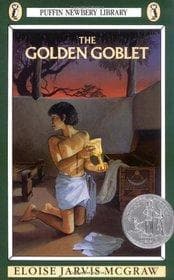
Eloise Jarvis McGraw (1961)
Genre
Children's / Historical Fiction / Young Adult
Reading Time
250 min
Key Themes
See below
Sign in to track this book
In ancient Egypt, a young orphan battles his villainous half-brother and uncovers a tomb-robbing plot to claim his rightful place as a master goldsmith.
The story begins with Ranofer, a young orphaned boy in ancient Egypt, living under the harsh care of his older half-brother, Gebu. Ranofer wants to become a master goldsmith, like his deceased father, but Gebu has apprenticed him to Rekh, a kind but struggling goldsmith. Gebu constantly abuses Ranofer, denying him proper food and clothing, and making him do menial tasks. Ranofer suspects Gebu is stealing gold from Rekh's shop, as Gebu always seems to have money despite claiming poverty. This suspicion grows when Gebu demands that Ranofer bring him small pieces of gold scrap, claiming they are for his own projects, but Ranofer notices the pieces are always from Rekh's workshop. Ranofer's life is one of fear and deprivation, and he dreams of escape and a better future.
Gebu's demands for gold become more urgent, forcing Ranofer to secretly take small pieces of gold from Rekh's workshop. Ranofer fears being caught, knowing the severe punishment for theft. One day, Rekh discovers a shortage of gold and, seeing Ranofer's nervous behavior and gaunt appearance, suspects the boy. Rekh confronts Ranofer, who is too afraid to betray Gebu and remains silent, further confirming Rekh's suspicions. Rekh, though kind, punishes Ranofer by assigning him to grind quartz, a tedious task. This act of being wrongly accused and punished for Gebu's crimes deeply hurts Ranofer, making him feel alone and trapped. He thinks about running away but has nowhere to go.
After the incident with the missing gold, Rekh, still suspecting Ranofer but also feeling pity, releases him from the goldsmith's apprenticeship. Gebu then apprentices Ranofer to his own stone-cutting shop, a place Ranofer dislikes. Here, Ranofer meets Heqet, a kind and observant foreman, and Qa-nefer, another apprentice. Heqet quickly notices Gebu's cruel treatment of Ranofer and begins to show him kindness, offering him food and friendship. Heqet also observes Gebu's suspicious movements, especially at night, and his secret talks with Ibni, a Babylonian porter. Ranofer, initially wary, slowly begins to trust Heqet, finding some comfort and companionship in his new, undesirable apprenticeship.
While on an errand for Gebu, delivering a packet to Ibni, Ranofer notices a strange, heavy scroll among Ibni's belongings. Later, while looking for food by the Nile, Ranofer meets an old, wise river hermit known as The Ancient. The Ancient lives alone with his donkey, and Ranofer, desperate for someone to confide in, shares his fears and suspicions about Gebu's secret activities and the gold he forces him to steal. The Ancient listens patiently, offering cryptic but encouraging advice, suggesting that Ranofer's 'spirit' knows the truth and urging him to keep his eyes and ears open. This encounter gives Ranofer a much-needed confidant and a sense that he is not entirely alone in his struggle against Gebu.
Heqet, having observed Gebu's suspicious behavior, starts to share his concerns with Ranofer. They notice Gebu's frequent night trips, his secrecy, and his continued association with Ibni. Ranofer tells about seeing the heavy scroll at Ibni's and the strange packets he delivers for Gebu. Together, they begin to suspect that Gebu is involved in something more serious than petty gold theft. They realize Gebu's stone-cutting shop is just a cover for his illegal activities. Heqet, a loyal and sharp-witted friend, becomes Ranofer's partner in uncovering the truth, offering both practical advice and emotional support to the frightened boy. Their combined observations slowly start to show a clearer picture of Gebu's criminal actions.
One night, unable to sleep due to hunger and anxiety, Ranofer overhears Gebu and his accomplices, Wenamon and Ibni, discussing a recent 'find.' Later, Ranofer sneaks into Gebu's room and discovers a magnificent golden goblet, clearly an artifact of great value and ancient craftsmanship, hidden beneath a loose floor tile. The goblet's exquisite design and royal markings immediately tell Ranofer that it could only have come from a pharaoh's tomb. The shocking realization comes to him: Gebu is not just a thief of gold scraps, but a grave robber, desecrating the sacred tombs in the Valley of the Kings. This discovery fills Ranofer with terror but also a desperate resolve to expose his brother.
Overwhelmed by his discovery, Ranofer tries to confide in Rekh, but his former master dismisses his tale of grave robbery, still holding a grudge over the earlier gold theft. Ranofer then shares his findings with Heqet and The Ancient. The Ancient, now understanding the seriousness of the situation, advises Ranofer to seek help from the royal palace, specifically from the Vizier. However, knowing the dangers of directly accusing Gebu without concrete proof, Ranofer, Heqet, and The Ancient make a plan: Ranofer will follow Gebu on his next trip to the Valley of the Kings to gather evidence. This plan is dangerous, but Ranofer feels it's the only way to stop Gebu and clear his own name.
On the night of Gebu's next raid, Ranofer, with a small knife and a waterskin, secretly follows his brother and his two accomplices, Wenamon and Ibni, as they go towards the desolate and forbidden Valley of the Kings. The journey is long and hard, filled with fear and uncertainty. Ranofer carefully stays a safe distance, using the rugged terrain and shadows for cover. He observes their furtive movements, their hushed conversations, and their knowledge of the secret paths leading into the burial grounds. The tension is clear as Ranofer gets closer to uncovering the full extent of Gebu's crimes, knowing that discovery means certain death.
Ranofer watches in horror as Gebu, Wenamon, and Ibni expertly find and break into a sealed tomb. He sees them remove treasures, including a beautifully crafted golden goblet, identical to the one he found in Gebu's room. As they prepare to leave, Ranofer, hidden inside the tomb, accidentally makes a noise. Gebu and Wenamon, believing it to be a ghost or an animal, reseal the tomb entrance, accidentally trapping Ranofer inside. Panic sets in as Ranofer realizes he is entombed alive with the ancient dead. He desperately tries to find an escape, his fear of Gebu now joined by the terrifying reality of his imminent death.
Driven by terror, Ranofer manages to find a small, overlooked crack in the tomb wall and, with great effort, squeezes through to freedom. He emerges just as Gebu and Wenamon are about to leave. Ranofer confronts Gebu, accusing him of grave robbery. A violent struggle follows, during which Ranofer manages to overpower Gebu and knock him unconscious. Exhausted but triumphant, Ranofer then races back towards the city, encountering the Vizier and his group who are on a hunting trip. Ranofer, covered in dust and blood, bravely explains the situation, leading the Vizier's guards back to the tomb where Gebu and Wenamon are caught.
With Gebu and Wenamon caught at the tomb, the evidence is clear. Ibni, the Babylonian porter, is also arrested. Ranofer's bravery and honesty are recognized. The Vizier, impressed by the boy's courage, brings him before Queen Tiy, the Great Royal Wife of Amenhotep III. Queen Tiy, grateful for the recovery of the stolen treasures and the prevention of further desecration, rewards Ranofer with a plot of land and a donkey. More importantly, she grants him his wish: to become a true apprentice to a master goldsmith, fulfilling his dream and setting him on a path towards a bright future, free from Gebu's control.
The Protagonist
From a fearful, abused orphan, Ranofer transforms into a brave hero who exposes grave robbers and secures his own future as a goldsmith.
The Antagonist
Gebu remains consistently evil, his greed and cruelty ultimately leading to his arrest and downfall.
The Supporting
Heqet's character is consistent, acting as a steadfast friend and moral compass for Ranofer.
The Supporting
The Ancient remains a consistent source of wisdom and support, guiding Ranofer towards his courageous actions.
The Supporting
Rekh learns the truth about Gebu and Ranofer's innocence, leading to a reconciliation and Ranofer's eventual return to his shop.
The Supporting
Ibni's arc is short, as he is exposed and arrested alongside Gebu and Wenamon.
The Supporting
Wenamon, like Ibni, is exposed and arrested with Gebu, facing punishment for his crimes.
The Mentioned
Queen Tiy's role is to deliver justice and reward Ranofer, completing his journey.
The Mentioned
Zau's character is static, serving as Ranofer's ultimate goal and a symbol of excellence.
The main theme is Ranofer's strong commitment to justice and his personal honesty in the face of great pressure and danger. Despite being abused and falsely accused, Ranofer refuses to go against his moral beliefs. His decision to expose Gebu's grave robbery, even at great personal risk, shows the importance of standing up for what is right. The recovery of the golden goblet and the punishment of the criminals show that justice wins, and Ranofer's reward by Queen Tiy confirms that honesty is recognized and rewarded.
“"He knew now that a man must stand by his own spirit, and not let fear twist him into a thing of shame."”
The story explores family dynamics, especially through Ranofer's relationship with his half-brother, Gebu. Gebu's failure to care for Ranofer, instead exploiting and abusing him, creates the main conflict. The theme shows how family ties can be ruined by greed and cruelty. Ranofer's struggle to see his brother as both family and criminal is a strong element, ultimately leading him to choose justice over misguided family loyalty. The lack of a loving family pushes Ranofer to seek companionship and trust in friends like Heqet and The Ancient.
“"Gebu was his brother, his only blood-kin, and yet Gebu was the source of all his misery."”
Ranofer's journey is one of self-discovery, as he tries to define himself away from Gebu's oppressive influence. His desire to become a master goldsmith, like his father, is central to who he is. Through his challenges, Ranofer discovers his own courage, resourcefulness, and moral strength. He learns to trust his instincts and to speak out against injustice. By taking action, he shows his own power and creates an identity as a brave and honorable person, finally achieving his dream and finding his place in the world, free from his brother's shadow.
“"He was no longer a frightened boy, but a doer, a man who had chosen his own path."”
In a world where Ranofer feels isolated and betrayed by family, the friendships he forms with Heqet and the mentorship he receives from The Ancient are important. Heqet offers companionship, practical help, and loyalty, giving Ranofer the support he needs. The Ancient, with his wisdom and detached perspective, is a moral guide, encouraging Ranofer to trust his inner voice. These relationships show the power of chosen family and the importance of having trusted allies and mentors to face difficult challenges, helping Ranofer achieve his goals.
“"It was a good thing, he thought, to have friends, men who would listen and believe."”
The novel is full of the culture and beliefs of ancient Egypt, especially regarding death, the afterlife, and the sacredness of tombs. Grave robbers desecrating royal tombs is shown as a terrible crime, not just against the living pharaoh but against the gods and the deceased. Details of daily life, apprenticeships, crafts like goldsmithing and stone-cutting, and social hierarchies are carefully woven into the story, providing an authentic setting. The respect for the dead and the importance of preserving their resting places drives the urgency of Ranofer's quest and highlights the cultural meaning of the stolen artifacts.
“"To rob a tomb was to steal from the gods themselves, to defile the eternal sleep of the pharaohs."”
A symbolic object representing the core conflict and the stakes of the story.
The golden goblet serves as a central symbol and a key plot device. Initially, it is the tangible proof of Gebu's grave-robbing activities, discovered by Ranofer in Gebu's room. Its exquisite craftsmanship and royal markings immediately reveal its illicit origin, raising the stakes from petty theft to sacrilege. The goblet motivates Ranofer to take action, providing him with the undeniable evidence he needs. Its recovery is a major turning point, symbolizing the triumph of justice and the restoration of sacred order. It also serves as a direct link between the stolen treasures and Gebu's guilt.
The forbidden and dangerous setting for the grave robberies.
The Valley of the Kings is not merely a setting but a crucial plot device that establishes the immense danger and sacrilege of Gebu's crimes. Its reputation as the sacred burial ground of pharaohs, forbidden to commoners, heightens the suspense and the moral gravity of the grave robberies. Ranofer's journey into the Valley is a perilous rite of passage, forcing him to confront his deepest fears. The physical act of entering and escaping the tomb within the Valley symbolizes Ranofer's descent into the underworld of crime and his triumphant emergence as a hero.
A narrative structure that shapes Ranofer's journey and growth.
Ranofer's successive apprenticeships—first to Rekh the goldsmith, then to Gebu the stone-cutter, and finally back to a goldsmith after his reward—serve as a significant plot device. Each apprenticeship marks a distinct phase in his journey. The goldsmith apprenticeship represents his dream and his father's legacy, while the stone-cutting apprenticeship under Gebu symbolizes his oppression and the forced detour from his true path. The apprenticeships provide opportunities for Ranofer to observe, learn, and form crucial relationships (with Rekh and Heqet), ultimately leading to his self-discovery and the fulfillment of his ambition.
Ranofer's intellectual tools for uncovering the truth.
Ranofer's keen powers of observation and deduction are critical plot devices. From noticing the specific types of gold missing from Rekh's shop to observing Gebu's secretive movements, his ability to piece together small clues drives the plot forward. Heqet's similar observational skills complement Ranofer's, and together they form a detective duo. This device highlights Ranofer's intelligence and resourcefulness, demonstrating that courage isn't just physical strength but also the ability to think critically and connect disparate pieces of information to solve a complex mystery. It empowers the young protagonist against powerful adversaries.
“A man must be master of his own fate.”
— Ranofer's father's advice about taking control of one's life.
“Gold is a hard master, but a good servant.”
— Reflecting on the allure and dangers of gold in ancient Egypt.
“I will not be a donkey for my brother any longer.”
— Ranofer's declaration of independence from his abusive half-brother Gebu.
“The truth is like the sun; you cannot shut it out forever.”
— Ranofer realizing that secrets and lies cannot be hidden indefinitely.
“A craftsman's hands are his fortune.”
— Emphasizing the value of skill and hard work in ancient Egyptian society.
“Fear is a prison of one's own making.”
— Ranofer overcoming his fears to confront Gebu.
“In the darkness, even a small light can show the way.”
— Ranofer finding hope and guidance in difficult times.
“A thief steals more than gold; he steals peace.”
— Commenting on the moral and emotional consequences of theft.
“The river Nile gives life, but it also takes it away.”
— Reflecting on the dual nature of the Nile in Egyptian life.
“A brother should be a shelter, not a storm.”
— Ranofer's lament about Gebu's abusive behavior.
“To dream of gold is to wake to dust.”
— Warning against the empty pursuit of material wealth.
“The heart knows what the eyes cannot see.”
— Ranofer trusting his instincts about Gebu's wrongdoing.
“In the furnace of adversity, character is forged.”
— Ranofer's growth through his struggles.
“A secret shared is a burden halved.”
— Ranofer confiding in his friend Heqet.
Ready to see how well you understood this book? Take our interactive quiz with 10 questions.

Biography coming soon.

Dan Gemeinhart
4.5

Kate O'Hearn
4.4

Jeanne Birdsall
4.4

Jen Wang
4.4

Wendelin Van Draanen
4.3

John Marsden
4.3

Chris Van Allsburg
4.3

Jennifer A. Nielsen
4.2