“The only way to be happy is to be good.”
— Maggie Verver's simple yet profound belief.


Henry James (2020)
Genre
Literary Fiction / Historical Fiction
Reading Time
416 min
Key Themes
See below
Sign in to track this book
In a gilded cage of Edwardian society, an American heiress subtly manipulates her father and adulterous husband to preserve her marriage and family, all while knowing the truth of a flawed golden bowl.
Prince Amerigo, an Italian nobleman, arrives in London to marry Maggie Verver, the only child of the wealthy American art collector, Adam Verver. Though charming, Amerigo is poor, a contrast to Maggie's fortune. In London, he unexpectedly meets Charlotte Stant, an American friend of Maggie's and, unknown to Maggie, Amerigo's former mistress from his time in Rome. Their past relationship ended because Charlotte lacked wealth. They go out to find a wedding gift for Maggie, visiting a shop and considering an antique gilded crystal bowl. Amerigo, however, does not buy it, sensing a hidden flaw, which hints at future imperfections in their relationships.
After marrying Prince Amerigo, Maggie Verver worries about her father, Adam Verver, who has been a widower for years and shares an unusually close bond with her. Fearing his loneliness now that she is married, Maggie subtly encourages Adam to consider marrying again. She helps connect her father and her friend, Charlotte Stant. Adam, drawn to Charlotte's spirit and intelligence, proposes to her, and Charlotte accepts. This arrangement, seemingly meant to ensure everyone's happiness and maintain the close Verver family dynamic, unintentionally places Amerigo and Charlotte close together within the new, complex family structure.
After Maggie marries Prince Amerigo and Adam Verver marries Charlotte Stant, a strange dynamic appears. Maggie and Adam, used to their deep father-daughter connection, continue to prioritize their bond, often leaving their spouses feeling left out. This neglect creates a space that Amerigo and Charlotte, both feeling somewhat isolated in their new marriages, are drawn to fill. Their shared past and current situation lead them to spend more time together. The emotional closeness quickly grows, and they eventually begin an adulterous affair, rekindling their past romance and forming a secret alliance that weakens both marriages within the Verver-Amerigo household.
Maggie Verver, increasingly unsettled by the subtle changes in her household, begins to suspect something is wrong between Prince Amerigo and Charlotte Stant. By chance, she visits the same shop where Amerigo and Charlotte had looked for her wedding gift. Maggie is drawn to the same antique gilded crystal bowl that Amerigo had rejected, and despite its high price, she buys it. Soon after, the shopkeeper, feeling bad about the high price he charged, visits Maggie to confess his overcharge. In her home, he sees photographs of Amerigo and Charlotte. Recognizing them, he tells Maggie about the private conversation he overheard between them, spoken in Italian, during their visit to his shop on the eve of Maggie's wedding, confirming her growing suspicions.
With the shopkeeper's revelation, Maggie Verver's suspicions are confirmed, and the fragile peace of her world shatters. In an emotionally charged moment, Maggie confronts Prince Amerigo about his relationship with Charlotte. The golden bowl, symbolizing the beautiful yet flawed appearance of their lives, is important in this scene, either breaking or serving as a metaphor for the broken trust. Faced with Maggie's directness and the evidence she has, Amerigo confesses his affair with Charlotte. This confession changes Maggie, moving her from naive ignorance to painful awareness and a quiet resolve to reclaim her marriage.
After Amerigo's confession, Maggie Verver begins a complex and private effort to end the affair without telling her father, Adam Verver, or directly confronting Charlotte. She becomes skilled at subtle manipulation and delicate diplomacy, keeping an outward appearance of friendship with Charlotte and devotion to Amerigo. Her plan involves carefully watching their interactions and arranging social situations to gradually separate Charlotte from Amerigo. Maggie's intelligence and new determination make her a strong, though outwardly calm, force, working to restore her marriage and family through indirect means.
As Maggie Verver's subtle effort continues, Charlotte Stant, though unaware of Maggie's full knowledge of the affair, begins to feel increasingly uneasy and isolated. Maggie's gentle but persistent actions create an atmosphere where Charlotte finds fewer chances to be alone with Amerigo. Maggie's presence, though seemingly harmless, becomes a constant, watchful force, subtly asserting her claim on Amerigo and her place in the family. Charlotte, once confident in her secret affair, finds herself increasingly trapped, her affair becoming harder to maintain as Maggie skillfully controls the social environment around them. The psychological pressure on Charlotte grows, forcing her to face the uncertainty of her position.
Maggie Verver, continuing her quiet effort, focuses on her father, Adam Verver. She gently and persistently suggests returning to America, subtly emphasizing cultural differences, the call of their homeland, and benefits for Adam's art collecting. While never stating her true reasons, Maggie skillfully appeals to Adam's sense of duty and his American identity. Adam, though hesitant at first, begins to seriously consider the idea, influenced by Maggie's understated arguments. This move is a crucial step in Maggie's plan to physically separate Charlotte from Amerigo, ending their affair and restoring order to her life.
The culmination of Maggie Verver's intricate and emotionally draining efforts arrives as Adam Verver and Charlotte Stant prepare to depart for America. The decision, subtly guided by Maggie, means a permanent separation for Charlotte and Prince Amerigo. The atmosphere is tense with unspoken feelings, especially between the two women. Charlotte, though outwardly calm, is aware of the end of her affair and the loss of her place in the English social circle. Adam remains largely unaware of the emotional currents, believing he is choosing for his own happiness and interests. This departure physically ends the illicit relationship that threatened to destroy Maggie's marriage.
After Adam and Charlotte's departure, Prince Amerigo's view of Maggie Verver changes greatly. He sees her remarkable strength, her subtle yet effective diplomacy, and her firm resolve in handling the complex emotional situation. What he once saw as Maggie's naivety and immaturity gives way to an appreciation for her depth and intelligence. In a key moment, Amerigo declares his renewed devotion to Maggie, saying he can 'see nothing but' her, and embraces her. This affirmation means his return to their marriage, acknowledging Maggie's strong influence and the shift in their relationship, now built on a more mature understanding and respect.
The Protagonist
Maggie transforms from a naive, dependent daughter and wife into a highly intelligent, self-possessed woman capable of intricate emotional manipulation to protect her marriage and family.
The Major Character
Amerigo moves from a state of moral compromise and emotional detachment to a profound admiration and renewed devotion for his wife, Maggie, recognizing her true strength.
The Major Character
Charlotte begins as a confident, independent woman who seeks security and love, but ultimately becomes trapped and isolated by the consequences of her affair and Maggie's strategic maneuvering.
The Major Character
Adam remains largely static, his character defined by his wealth, his art collection, and his intense bond with Maggie, which ultimately leads him to return to America with Charlotte.
The Supporting
Fanny's understanding deepens as the plot unfolds, evolving from a hopeful matchmaker to a resigned observer of human folly and complex relationships.
The Supporting
Colonel Assingham remains a consistent, pragmatic character, primarily serving as an audience for his wife's more nuanced observations.
The Mentioned
The shopkeeper's role is limited to a single, significant interaction that propels the plot forward.
The novel explores the complexities and compromises in marriage, especially when influenced by wealth, social status, and past relationships. It examines the psychological impact of adultery not just on the unfaithful partners but, more deeply, on the betrayed spouse. The affair between Amerigo and Charlotte, born from neglect and a rekindled past, shows the fragile limits of marital loyalty. Maggie's quiet struggle to reclaim her husband without exposing the scandal illustrates the social pressures and personal sacrifices involved in keeping the appearance of a successful marriage, even when its foundations are deeply damaged.
“It was as if she had come into a fortune, or had, by some other stroke, acquired a new social standing; and that it was a fortune which, by the same token, could be neither spent nor shared.”
A main theme is Maggie Verver's journey from sheltered innocence to a deep, and often painful, understanding of human experience and moral uncertainty. Initially naive and almost childlike, Maggie's discovery of the affair forces her to face the darker parts of human nature and the complexities of adult relationships. Her transformation into a master strategist, capable of intricate manipulation, shows a loss of innocence but a gain in self-possession and strength. The novel contrasts her initial naivety with the worldliness of characters like Amerigo and Charlotte, exploring how shattered innocence leads to a more complex understanding of life.
“She had to know, and she was knowing; but there were two ways of knowing, and the one that was like a knife in her flesh was the one that was working now.”
The novel examines various forms of possession: Adam Verver's possessiveness of his daughter, Maggie's possessiveness of her marriage, and the symbolic possession of art objects. Adam treats Maggie almost as a prized possession, like his art collection, which subtly undermines her independence. Maggie, in turn, exercises a different kind of control, carefully arranging events to regain possession of her husband and her family's integrity. The characters often see each other as objects to be acquired, arranged, or controlled, reflecting the power dynamics in their relationships and the influence of wealth on personal freedom. The golden bowl itself symbolizes a beautiful object that is flawed, reflecting imperfections in human 'possessions' and relationships.
“He had wanted the world to be a garden for her, and he had wanted to be the gardener.”
Henry James explores the difference between outward appearances and inner realities. The Verver-Amerigo household maintains an appearance of perfect harmony and happiness, especially for Adam, who largely remains unaware of the emotional turmoil beneath the surface. Maggie's entire effort to save her marriage relies on maintaining this deceptive appearance, never revealing her knowledge of the affair to her father or openly confronting Charlotte. This theme highlights social conventions that demand a look of propriety, even when lives are filled with betrayal and secret passions. The 'gilded' golden bowl, beautiful on the outside but flawed within, is a strong metaphor for this central difference.
“The thing was to live the lie, to live it hard, to live it so it should become the truth.”
The novel explores the cultural clash between American innocence and European sophistication, wealth, and old lineage. The Ververs, with their immense American wealth and perceived moral purity, encounter the established, often morally ambiguous, world of European aristocracy, represented by Prince Amerigo. While the Americans bring financial power, the Europeans offer a long history and a certain world-weariness. This dynamic is central to the marriages, where American money marries European titles. The narrative also touches on the 'American invasion' of Europe, with Adam Verver collecting not just art but also a European son-in-law and a British social circle, highlighting the cultural exchange and inherent tensions between the two worlds.
“It was the American way, the American law, that you should not be too much interested in anything.”
A symbolic object representing flawed beauty and hidden truths.
The antique gilded crystal bowl serves as the central symbolic object in the novel. Initially rejected by Amerigo due to a suspected flaw, it is later purchased by Maggie. Its eventual role in exposing the affair, through the shopkeeper's confession, solidifies its function as a symbol of the beautiful but ultimately flawed facade of the relationships within the Verver-Amerigo family. The bowl embodies the hidden imperfections, betrayals, and the fragile nature of the characters' carefully constructed lives, ultimately shattering to reveal the underlying truth.
The narrative's deep focus on the consciousness of the main characters.
Henry James employs a limited omniscient point of view, primarily delving deep into the consciousness of Maggie Verver, and to a lesser extent, Prince Amerigo. This intense focus allows the reader to experience the characters' intricate thoughts, perceptions, and emotional struggles with obsessive detail. The narrative often filters events through their subjective interpretations, creating a sense of psychological realism and claustrophobia. This device is crucial for understanding Maggie's internal transformation and her complex, unspoken strategies, as much of the plot unfolds within her mind rather than through overt action.
The withholding of explicit information, forcing reader interpretation.
James frequently uses ambiguity and leaves much unsaid, particularly regarding the characters' true motives and the precise nature of their emotional states. The affair itself is never explicitly described in detail, and Maggie's knowledge of it is conveyed through subtle cues and indirect revelations. This device forces the reader to actively interpret gestures, glances, and unspoken words, reflecting the characters' own struggles to decipher each other. This ambiguity enhances the psychological intensity and allows for multiple interpretations of events, particularly the ending, which leaves some questions about the true nature of Amerigo's renewed devotion.
The unspoken rules governing public behavior and personal interactions.
The rigid social conventions and elaborate etiquette of the English upper class play a crucial role in shaping the characters' actions and interactions. The characters are constantly aware of maintaining appearances, particularly Maggie, who meticulously navigates social situations to avoid scandal. The unwritten rules of propriety prevent direct confrontation, forcing characters to communicate through subtle hints, veiled remarks, and strategic silences. This device highlights the pressure to conform to societal expectations, even at the cost of personal honesty, and underscores the psychological burden of living a double life within a highly scrutinized social sphere.
“The only way to be happy is to be good.”
— Maggie Verver's simple yet profound belief.
“Everything's terrible, cara, in this dreadful, dreadful time.”
— Charlotte Stant's dramatic lament.
“It was as if she had been made to find out, and had found out.”
— Maggie's dawning realization about her husband and Charlotte.
“He saw his wife, in a word, as a created being, a being to be dealt with, to be made to do things.”
— Prince Amerigo's view of Maggie early in their marriage.
“She had to choose, and she chose.”
— Maggie's difficult decision regarding her father.
“The beauty of the thing was that it was a question of taste.”
— Reflecting on the subtleties of social interaction and moral judgment.
“It was wonderful how they could all sit there and pretend.”
— Maggie observing the elaborate social charade.
“To be right was to be simple, and to be simple was to be good.”
— Maggie's internal moral compass.
“He was a great collector, and he collected his daughter.”
— Adam Verver's possessive love for Maggie.
“The golden bowl, as it had now become to her, was what she was to live with.”
— Maggie's acceptance of her complex reality.
“They were wonderful, these people, for not knowing what they were doing.”
— A comment on the characters' often unwitting complicity.
“It was as if the cup of her life had been suddenly filled to the brim.”
— Maggie's feeling of overwhelming emotion and realization.
“He had a conscience, but he had also a convenience.”
— Describing Prince Amerigo's moral flexibility.
“The perfection of their union was not in the absence of a flaw, but in the power to bear it.”
— A deep insight into the nature of true partnership.
Ready to see how well you understood this book? Take our interactive quiz with 10 questions.
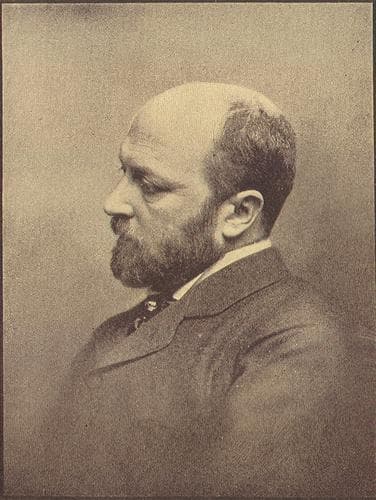
Henry James was an American-British author. He is regarded as a key transitional figure between literary realism and literary modernism, and is considered by many to be among the greatest novelists in the English language. He was the son of Henry James Sr. and the brother of philosopher and psychologist William James and diarist Alice James.







