“And the rockets went up, and they came down, and they went up again. And the world was new again.”
— From 'Rocket Summer,' describing the hopeful, recurring cycle of space travel.

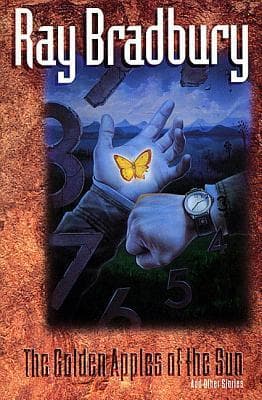
Ray Bradbury (1953)
Genre
Fantasy / Science Fiction
Reading Time
338 min
Key Themes
See below
Sign in to track this book
This collection of Bradbury's imaginative tales takes readers into a world where time travel shatters history, ancient sea monsters seek companionship, and the human spirit faces wonder and terror among the stars and in everyday life.
McClure and Johnny, two lighthouse keepers, work a remote fog horn on a desolate coast. For years, the horn's sound has echoed across the sea. One night, a giant sea creature, the last of its kind, comes from the deep. It is drawn by the familiar, but misleading, sound of the fog horn. It thinks the sound is another of its species. The creature, a huge dinosaur, circles the lighthouse, its ancient loneliness clear. When the fog horn stops, the creature realizes its mistake. Feeling deep isolation, it lets out a sad roar that shakes the lighthouse before going back into the ocean. The men are disturbed by its situation.
Leonard Mead is a writer in a future city in 2053. Every evening, he walks alone through the empty streets. This habit is very unusual in a society where everyone stays inside, watching television. One night, a robotic police car, the only one working in the city, stops Mead. The car questions him, finding his job (writer) and activity (walking) old-fashioned and pointless. Mead cannot give a good reason for his walks. He is then called a regression and a threat to society. He is taken to the 'Psychiatric Center for Research on Regressive Tendencies.' His simple act of walking is an act of rebellion in a sterile, conformist world.
Cecy, a young witch, can live inside animals, plants, and even objects. But she wants the warmth and complexity of human life. Her aunts warn her not to interact with mortals, fearing she will lose her powers. Despite their warnings, Cecy is drawn to the human world. One spring night, she watches a young girl, Ann Leary, getting ready for a dance. Cecy feels a strong desire to experience love and human connection. Using her magic, Cecy enters Ann's body. She goes to the dance and experiences the joy of dancing with a boy named Tom. She feels love for the first time, but her time is short. She must eventually return to her own form, leaving Ann with a bittersweet memory of a strange, magical night.
Eckels, a rich hunter, pays for a time-travel safari to the prehistoric past to hunt a Tyrannosaurus Rex. Travis, the guide, carefully warns the hunters about the 'Path' – a floating track meant to prevent any contact with the past. He emphasizes that even a small change could have huge effects on the future. During the hunt, Eckels panics and steps off the Path. He accidentally crushes a small butterfly. When they return to the present, they find small, but unsettling, changes: the air smells different, the sign for Time Safari, Inc. is misspelled, and politics have changed greatly. Travis, angry, realizes the damage Eckels has done. The story ends with Travis raising his rifle, a sound of thunder echoing, suggesting Eckels's death.
Captain Cross and his crew begin a mission on the 'Apollo,' a rocket designed to go into the sun's corona. Their goal is to 'dip' into the sun and collect a sample of its fire, a mythical 'golden apple,' to bring back to Earth. The journey is dangerous, both physically and mentally. The extreme heat, radiation, and the huge task test the crew's sanity and endurance. As they near the sun, the ship is damaged, and the men feel great awe and terror. They manage to reach their goal, briefly going into the solar flames to get a sample. The story ends with their successful, but deeply changed, return. They have faced the ultimate unknown and brought back a piece of the cosmos.
In ancient China, Emperor Yuan receives a new invention: a man who has built a machine that lets him fly. The inventor shows his creation, flying gracefully through the sky. The Emperor is at first amazed by the machine's beauty and cleverness. However, his amazement quickly turns to fear. He imagines a future where such inventions could lead to spying, social chaos, and the fall of his organized empire. Despite the inventor's plea that his creation is only for beauty, Emperor Yuan prioritizes his kingdom's stability over individual brilliance. He orders the flying machine and its inventor destroyed, ensuring such a disruptive innovation will never threaten his realm.
Albert Brock is driven to madness by the constant noise and demands of modern technology. Radios, televisions, telephones, and other electronic gadgets control every part of life, always disturbing his peace and privacy. He starts destroying every electronic device he finds, beginning with his own wrist radio. His actions lead to his arrest and a mental evaluation. During questioning, Brock calmly explains why he did it. He calls the devices 'murderers' of quiet, thought, and real human connection. He argues he is defending his sanity and the importance of silence in a world overwhelmed by technology, asserting his right to be undisturbed.
Timothy, a young boy, feels always invisible and ignored by his busy, self-absorbed parents. He spends his days in an old house, creating an imaginary friend named John. John, however, is not an ordinary imaginary companion; he is a sign of Timothy's deep loneliness and desire for friendship. As Timothy's longing grows, John becomes more real, visible and interactive. The parents, who first thought John was a child's fantasy, eventually face his unsettling reality. John, representing Timothy's neglected inner world, is a sad symbol of the emotional emptiness in the boy's life. This shows the results of parents not paying attention and the power of a child's imagination.
Pablos, a humble Mexican man, lives a simple, happy life, finding joy in the sun's warmth and his village's daily rhythms. His peaceful life is disrupted by an American film crew, who want to film 'authentic' Mexican life for a movie. The director, Mr. Braling, and his crew are arrogant and demanding. They treat the villagers as props and ignore their culture and dignity. They try to force Pablos to stand in a specific spot, under a harsh, artificial light, for a scene. Pablos values his freedom and the sun's natural warmth more than their demands. He stubbornly refuses, preferring to stay in the shadow. His quiet defiance shows the conflict between cultural values and the exploitative nature of outsiders.
Willie, a boy who looks ten years old, is cursed or blessed with eternal youth; he never ages. To avoid suspicion and questions about his unchanging appearance, he and his parents must move every few years. They leave behind towns and friends. Each move is a heartbreaking goodbye for Willie. He makes new friends, only to leave them as they grow older and he stays the same. The story focuses on one such departure, as Willie says goodbye to his current friends, knowing he will never see them again. It is a sad look at loneliness, the bittersweet nature of short connections, and the burden of immortality, seen through a child who never grows up.
Two elderly men, Bill and Sam, sit on a porch, recalling a big event from their youth: 'The Great Fire.' This is not a real fire that burned a town, but a symbolic fire of passion, energy, and destructive fun that defined their generation. They remember days of wildness, of boys running free, setting off fireworks, and doing harmless mischief. In their nostalgic story, these things become epic. The 'fire' represents a time when life felt more alive, less restricted, and full of raw, untamed energy. Their talk is a sadness for a past era, a celebration of young energy, and a subtle comment on how time and society tame the human spirit.
In a dark, future world, a garbage collector does his daily routine, collecting the trash of a society that seems to have fallen into apathy and despair. The job is not just about physical waste; it is about collecting the thrown-away pieces of human hope and dignity. The collector sees the dirt, the people's indifference, and the sheer amount of useless junk in their lives. He struggles with his work's meaning, wondering if he is just cleaning up a dying civilization's mess or if his actions have a deeper meaning. The story is a somber thought on societal decay, environmental neglect, and the quiet despair of those who see humanity's decline.
John and Mary live a simple, happy life in a beautiful, hidden meadow. They seem untouched by the outside world. Their life is peaceful, filled with nature's sounds and the quiet joy of their company. The meadow itself feels magical, a living thing that supports them. However, their peace is broken by the sounds of machines and the distant sight of construction. This signals civilization's unavoidable expansion. They realize their safe place is temporary, and they must soon leave. The story is a sad song for lost innocence and natural beauty, exploring the conflict between humanity's desire for progress and the preservation of wild places, as the couple prepares to leave their paradise.
Three elderly women sit on a porch, carefully embroidering, as the world faces coming destruction. They know the end is near, a global disaster, but they face it with calm, almost detached acceptance. Their conversation is quiet, filled with observations about humanity's foolishness and their unavoidable fate. They discuss the beauty of the world they are about to lose and the pointlessness of human ambition. The act of embroidery becomes a symbol of their quiet dignity and their attempt to create beauty and order in chaos. The story is a quiet, thoughtful reflection on death, the end of civilization, and the lasting human spirit even in ultimate despair.
Mr. Ramirez and his family, who have lived in the United States for years, are suddenly gathered by immigration officials and face immediate deportation to Mexico. The story is from the perspective of their young son, who struggles to understand the sudden change. His biggest worry is his friend, Tommy, an American boy he played with daily. As the family is driven away, the boy tries hard to see Tommy one last time, pressing his face against the window. The final image is of the boy's hand waving, a sad and useless goodbye. The story shows the human cost of immigration policies, the pain of forced separation, and a child's innocence caught in adult decisions.
The Protagonist
Captain Cross begins as a driven leader and ends as a man forever changed by his encounter with the sun, bearing the weight of a profound, almost divine experience.
The Protagonist
Mead remains steadfast in his individuality, willingly accepting his fate rather than abandoning his unique way of life.
The Protagonist
Cecy momentarily fulfills her desire for human experience, gaining a deeper understanding of both its beauty and its limitations.
The Protagonist/Antagonist
Eckels's initial confidence gives way to panic and ultimately leads to his irreversible destruction of the timeline and his own demise.
The Protagonist
Pablos maintains his dignity and cultural integrity in the face of exploitation, choosing his own values over the demands of others.
The Protagonist
Willie's arc is a cycle of making and losing friends, a perpetual state of longing and farewell, never truly developing beyond his youthful appearance.
The Protagonist
The boy experiences a sudden, traumatic separation, which marks a painful transition from childhood innocence to the harsh realities of displacement.
The Supporting
The creature's brief appearance highlights its eternal loneliness, which remains unchanged, making its story a poignant vignette.
Many stories look at the possible negative sides of uncontrolled technology and societal pressure to fit in. In 'The Pedestrian,' Leonard Mead is arrested for simply walking. This shows a future where technology and passive consumption suppress individuality. 'The Murderer' takes this further, with Albert Brock fighting against the constant noise of electronic devices, arguing they 'murder' quiet and thought. These stories warn against a future where human connection and personal freedom are lost for convenience and sameness, leading to feeling distant and losing important human experiences.
“What are you doing out?”
A common theme is deep loneliness and the strong human (and non-human) desire for connection. 'The Fog Horn' has a giant sea creature, the last of its kind, drawn to a fog horn, thinking its sound is a companion. 'Invisible Boy' shows Timothy's deep neglect, creating an imaginary friend who becomes real from pure loneliness. 'Hail and Farewell' sadly shows Willie's eternal youth as a curse, forcing him to constantly leave new friends, living a life of endless goodbyes. These stories highlight the basic human need for belonging and the pain of being alone.
“One day you will be alone, alone in the world. And it is the most terrible thing of all.”
The idea that even small actions can have huge, unexpected results is clearly shown, especially in 'A Sound of Thunder.' Eckels's seemingly small act of stepping off the path and crushing a butterfly in the past greatly changes the present. This shows the delicate balance of time and cause and effect. This theme stresses the responsibility that comes with power and the possibility of lasting damage when one interferes with natural order. It is a warning about human arrogance and how everything is connected across time.
“A tiny thing, a butterfly, but it changed a world.”
Many stories show the conflict between nature or old ways of life and the constant advance of technology or society. 'The Flying Machine' shows Emperor Yuan destroying a beautiful invention because he fears it will disrupt his ordered society. 'Sun and Shadow' pits the simple, sun-loving Pablos against an intrusive American film crew, showing cultural clashes and the exploitation of tradition. 'The Meadow' mourns the loss of a perfect natural sanctuary to expanding civilization. This theme explores the cost of progress, often at the expense of beauty, peace, and cultural identity.
“There are times when we must sacrifice beauty for the sake of peace.”
Bradbury often highlights how imagination affects things, sometimes blurring the lines between what is real and what is not. In 'The April Witch,' Cecy's desire lets her briefly live in a human body and experience life. This shows the power of will and longing to go beyond physical limits. 'Invisible Boy' shows Timothy's neglected imagination creating a friend so real that he becomes tangible. These stories suggest that inner worlds and desires can appear in strong ways, shaping how we see things and sometimes even reality itself. Imagination is both a refuge and a changing force.
“If you wish hard enough, you can be anything.”
The book itself is a collection of diverse, self-contained short stories.
The entire book 'The Golden Apples of the Sun' is a collection of previously published short stories. While each story is independent, they collectively explore recurring themes and stylistic elements characteristic of Bradbury's work. This structure allows for a wide range of settings, characters, and speculative concepts to be presented without the need for a single overarching narrative, offering readers a varied tapestry of human experience and imagination. It showcases Bradbury's versatility across different subgenres of fantasy and science fiction.
Hints of future events or consequences are subtly woven into the narrative.
In 'A Sound of Thunder,' Travis's meticulous warnings about the 'Path' and the potential for catastrophic changes to the timeline heavily foreshadow Eckels's disastrous mistake. The increasing dread and subtle environmental shifts upon their return to the present further build tension before the full realization of the altered future. Similarly, in 'The Fog Horn,' the gradual descriptions of the creature's immense size and ancient loneliness build anticipation for its appearance and the poignant realization of its plight, creating a sense of inevitability and tragedy.
Natural elements like the sun, fog, and animals carry deeper thematic meanings.
Bradbury frequently employs natural elements as powerful symbols. The 'golden apples of the sun' themselves symbolize ultimate knowledge, power, and the mythical quest. In 'The Fog Horn,' the fog and the horn represent loneliness and a desperate, deceptive call for connection. The butterfly in 'A Sound of Thunder' symbolizes the delicate balance of life and the immense impact of even the smallest alteration. The sun in 'Sun and Shadow' represents freedom, natural beauty, and cultural identity, contrasting with artificial light and foreign intrusion.
Contrasting elements are placed side-by-side to highlight differences and themes.
Bradbury frequently uses juxtaposition to emphasize thematic conflicts. In 'The Pedestrian,' the vibrant, imaginative mind of Leonard Mead is sharply contrasted with the sterile, automated, and conformist society he inhabits. 'Sun and Shadow' places the simple, dignified life of Pablos directly against the arrogant, artificial demands of the film crew. This device effectively highlights disparities in values, lifestyles, and the clash between individuality and conformity, or nature and artificiality, making the thematic messages more impactful.
“And the rockets went up, and they came down, and they went up again. And the world was new again.”
— From 'Rocket Summer,' describing the hopeful, recurring cycle of space travel.
“We are a bridge across forever, a rainbow of light, a promise of things to come.”
— From 'The Rocket Man,' reflecting on humanity's drive to explore the stars.
“The wind was a warm, sweet, lazy hand on his cheek. It smelled of fields and faraway towns and the sea.”
— From 'The Fog Horn,' setting a nostalgic, sensory atmosphere.
“It was a good morning, with a good wind blowing. It was a day to be alive and to feel the sun warm on your face.”
— From 'The Golden Apples of the Sun,' conveying a sense of vitality and simple joy.
“There was a smell of autumn in the air, a smell of smoke and burning leaves and the faint, sweet scent of rotting apples.”
— From 'The Autumn People,' evoking the distinct sensory experience of autumn.
“He knew that he would go on, because there was nothing else to do. He would go on because he was alive, and the only way to be alive was to go on.”
— From 'The Pedestrian,' reflecting on the protagonist's solitary defiance.
“The past is a graveyard, the present a nightmare, the future a horror.”
— From 'The Veldt,' a dark reflection on the consequences of unchecked technology.
“We've got to get away from Earth. We've got to get away from the atomic bomb and the wars and the madness.”
— From 'The Rocket Man,' expressing a desire for escape from earthly troubles.
“Some nights, in the middle of the night, you can hear the whole world dreaming.”
— From 'The Golden Apples of the Sun,' a poetic observation on the quiet life of the world.
“He wanted to go home, but he had no home. He wanted to run, but there was nowhere to run.”
— From 'The Fox and the Forest,' illustrating a character's feeling of being trapped.
“It was a dark, stormy night, and the wind blew like a hungry beast, rattling the windows and moaning down the chimney.”
— From 'The Fog Horn,' setting a dramatic and foreboding scene.
“Space is a sea without a shore, a sky without a limit, a mirror of all our dreams and nightmares.”
— From 'The Rocket Man,' a broad philosophical statement about the nature of space.
“The children were screaming. The lions were roaring. The nursery was alive.”
— From 'The Veldt,' a chilling description of the nursery's dangerous autonomy.
“And the sun was a great, golden apple, warm and ripe and ready to be plucked.”
— From 'The Golden Apples of the Sun,' a metaphorical description of the sun.
Ready to see how well you understood this book? Take our interactive quiz with 10 questions.
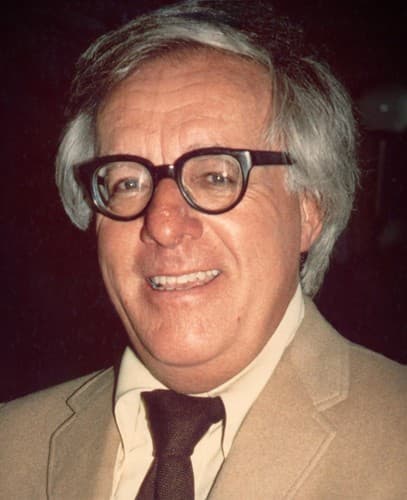
Ray Douglas Bradbury was an American author and screenwriter. One of the most celebrated 20th-century American writers, he worked in a variety of modes, including fantasy, science fiction, horror, mystery, and realistic fiction.







