“Music is the sound of the human spirit. It is the sound of what it is to be alive.”
— Early in the novel, as David struggles with his artistic passion.

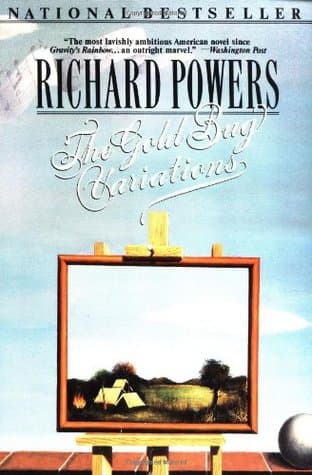
Richard Powers (1991)
Genre
Literary Fiction / Romance
Reading Time
15-20 hours
Key Themes
See below
Sign in to track this book
A reclusive molecular biologist and a data entry clerk find their lives, and the mysteries of love, music, and science, linked by a forgotten computer program and the ghost of Bach.
Stuart Ressler, a brilliant geneticist who mysteriously abandoned his groundbreaking research on DNA, arrives at the Center for the Study of Western Thought in Illinois. He has been hired to catalog the vast collection of videotapes belonging to the Center's founder, the eccentric and recently deceased P.A. Kesten. Ressler is a man haunted by his past, particularly his failed marriage and a scientific breakthrough he couldn't complete. His new, seemingly mundane task of organizing tapes is a deliberate retreat from the high-stakes world of scientific discovery, a way to escape his own brilliance and the pressures that came with it. He hopes to find a quiet existence, away from the expectations and disappointments that have shaped his life.
As Stuart explores Kesten's video collection, he quickly realizes it is far from a straightforward cataloging job. The tapes are a chaotic, seemingly random assortment of lectures, documentaries, home movies, and Kesten's own philosophical musings, all without any apparent order. Kesten, a polymath obsessed with patterns and connections across disciplines, left behind an archive that seems to defy logic. Stuart's initial attempts at organization are met with frustration, but he also begins to perceive a hidden structure, a potential 'code' within the apparent chaos, mirroring his own past work with genetic sequences. This challenge intrigues him, hinting at a deeper mystery.
Stuart's work with the tapes frequently triggers flashbacks to his intense and intellectual relationship with Liz, a fellow scientist and his former wife. Their connection was deeply intertwined with their shared passion for music, particularly Johann Sebastian Bach's Goldberg Variations. This complex piece of music, with its intricate patterns and variations on a simple theme, served as a metaphor for their scientific pursuits and the variations of life itself. Stuart recalls their discussions about the nature of information, creation, and the search for fundamental truths, both in biology and in art. Liz's ghost, both literal and metaphorical, permeates his thoughts as he navigates Kesten's collection, drawing parallels between the tapes and the musical structure they both admired.
Stuart meets Lena, a bright and inquisitive young woman who is also working at the Center, albeit on a different project. She is fascinated by Kesten's life and work, and quickly recognizes the depth of the puzzle Stuart is trying to solve. Lena, unlike Stuart, is optimistic and eager to find meaning in Kesten's chaotic legacy. Their interactions, initially professional, slowly evolve into a partnership as they begin to share theories and discoveries about the tapes. Lena's fresh perspective helps Stuart to look beyond his own cynical interpretations and consider the possibility of a grander design, reigniting a spark of intellectual curiosity he thought he had lost.
As Stuart and Lena continue to sift through the tapes, they notice a recurring, subtle motif: references to Edgar Allan Poe's short story 'The Gold Bug.' This tale, famously about cryptography and the search for hidden treasure, becomes a crucial clue in understanding Kesten's methodology. They realize that Kesten was not merely collecting information; he was creating a complex, encrypted message, a treasure hunt for knowledge. This discovery electrifies Stuart, reminding him of the thrill of scientific decipherment. The 'Gold Bug' motif suggests that Kesten's collection is not random, but a deliberate puzzle designed to be solved, a challenge that speaks directly to Stuart's own past as a code-breaker of life's blueprints.
Driven by the 'Gold Bug' clue, Stuart and Lena begin to analyze Kesten's tapes with a new lens, searching for patterns and hidden connections. Their discussions expand to encompass the nature of information itself — how it is encoded in DNA, the language of life; how it is structured in music, particularly the Goldberg Variations; and how Kesten might have applied these principles to his own vast archive. Stuart draws heavily on his geneticist background, seeing parallels between nucleotide sequences and the seemingly disparate elements of Kesten's collection. Lena, with her keen literary insight, helps to bridge the gap between the scientific and the artistic, suggesting that Kesten's project is a grand synthesis of human knowledge.
As they explore deeper, Stuart and Lena unearth evidence of Kesten's obsession with Bach's Goldberg Variations. Kesten viewed this musical masterpiece not just as art, but as a blueprint for understanding the universe, a perfect example of how complex beauty can emerge from simple rules and variations. They find Kesten's extensive notes and lectures on the variations, revealing his belief that the piece held the key to unlocking the fundamental patterns of existence, from biology to human thought. This obsession provides a critical framework for interpreting the chaotic tapes, suggesting that Kesten was attempting to create his own 'Goldberg Variations' of human knowledge, a systematic exploration of all possible variations on a theme.
Through Kesten's tapes and writings, Stuart begins to see striking parallels between the deceased founder's life and his own. Kesten, like Stuart, was a brilliant polymath who wrestled with the nature of information, pattern, and the search for unifying theories. Both men experienced periods of intense intellectual pursuit and personal isolation. Stuart realizes that Kesten's project, in its ambition and its ultimate inscrutability, reflects his own unfinished work in genetics and his struggle to reconcile scientific rigor with the messiness of human experience. This recognition creates a sense of kinship with Kesten, transforming the cataloging task into a deeply personal quest for self-understanding.
The memories of Liz become more vivid and poignant for Stuart as he continues his work. He grapples with the lingering pain of their separation and her subsequent death, re-evaluating the nature of their love, which was so intertwined with their intellectual pursuits. He recalls their shared passion for science and music, but also the pressures and expectations that ultimately strained their relationship. Through Kesten's philosophical musings on connection and variation, Stuart finds a framework to process his grief, understanding that love, like a complex biological system or a musical variation, is a constantly evolving and sometimes unpredictable force, capable of both immense joy and profound sorrow.
After months of dedicated work, Stuart and Lena come to a realization: Kesten's grand project, much like the search for a definitive answer to life's mysteries, might be inherently unsolvable. The 'treasure' isn't a single, definitive answer or a hidden truth, but rather the process of the search itself, the act of connecting disparate pieces of knowledge, and the beauty found in the variations. Kesten's legacy is not a static solution, but a dynamic, ever-unfolding exploration of human thought and creativity. This understanding brings a sense of peace to Stuart, allowing him to accept the ambiguity of life and the inherent incompleteness of knowledge, echoing the endless variations of a musical theme.
With the understanding that Kesten's project is a journey rather than a destination, Stuart begins to find a new sense of purpose. He is no longer haunted by his past failures but inspired by the ongoing quest for knowledge and connection. His relationship with Lena has deepened significantly, evolving from a professional partnership into something more. They share an intellectual and emotional bond, a mutual respect born from their shared exploration of Kesten's world. The novel concludes with Stuart embracing the present, ready to continue his own variations on the theme of life, science, and love, with the possibility of a future alongside Lena, embodying the ongoing nature of creation and discovery.
The Protagonist
Stuart moves from a state of intellectual and emotional retreat, haunted by past failures, to finding renewed purpose and the potential for new connection.
The Supporting/Love Interest
Lena's arc is less about personal transformation and more about facilitating Stuart's growth and finding a fulfilling intellectual partnership.
The Mentioned/Catalyst
Liz's arc is presented retrospectively, showing her as a catalyst for Stuart's initial intellectual passion and later his profound grief.
The Supporting/Posthumous Mentor
Kesten's 'arc' is revealed retrospectively, showing his lifelong quest for synthesis and meaning.
The novel blurs the lines between scientific inquiry and artistic creation. Stuart's genetic research is paralleled with the intricate structure of Bach's Goldberg Variations, which Kesten views as a blueprint for understanding the universe. The search for patterns in DNA, music, and Kesten's tapes all represent a human drive to find order and meaning. This theme is evident in Stuart and Liz's shared passion for both fields, and Kesten's entire life's work is an attempt to synthesize all knowledge into a grand, unified theory, much like a complex musical composition. The book suggests that both disciplines are ultimately variations on the same quest for truth and beauty.
“What was the difference between an organism and a composition? What was the difference between a gene and a theme?”
A central theme is the exploration of how information is encoded, transmitted, and interpreted across different domains. Stuart, as a geneticist, understands DNA as a complex code. Kesten's video archive is presented as another form of encrypted information, a 'gold bug' puzzle waiting to be deciphered. The Goldberg Variations themselves are a masterclass in musical information, with a simple theme undergoing endless, intricate transformations. The characters are constantly searching for underlying patterns and structures, whether in genetic sequences, musical phrases, or the seemingly random content of Kesten's tapes. The novel suggests that understanding these patterns is key to unlocking the secrets of existence and human consciousness.
“Information, he knew, was the only true currency, the only thing that lasted.”
Stuart's emotional journey is deeply intertwined with his memories of Liz and their intense, intellectual love. The novel explores how love can be both a source of connection and pain, especially in the face of loss. Stuart's grief and his inability to move past his past failures are central to his initial retreat. As he processes Kesten's legacy, he also processes his own emotional history, understanding that love, like a complex system, involves variations, harmonies, and dissonances. The novel ultimately suggests that while loss is inevitable, the capacity for love and connection remains, offering a path towards healing and new beginnings, as seen in his developing relationship with Lena.
“Love was a feedback loop, a series of variations on a theme that could never exhaust itself.”
The novel examines the human drive to understand the world, the ambition to create grand unifying theories, and the limitations of this pursuit. Stuart's initial scientific 'failure' and Kesten's lifelong, ultimately 'unsolvable' project highlight the idea that some mysteries may not have definitive answers. The search itself, the process of inquiry and connection, is often more valuable than a final, conclusive solution. The characters grapple with the vastness of knowledge and the inherent incompleteness of any single understanding, finding beauty and meaning in the ongoing exploration rather than a static endpoint. This theme challenges the notion of absolute truth, embracing instead the richness of variations.
“The truth was not a single note, but an entire fugue of variations, each one deepening the original theme.”
Bach's musical masterpiece serves as a pervasive structural and thematic metaphor.
The Goldberg Variations by J.S. Bach is not merely a recurring motif but a foundational structural metaphor for the entire novel. Its theme and 30 variations mirror the novel's exploration of variations in genetics, human relationships, and Kesten's sprawling archive. The intricate, self-referential nature of the music, where complex beauty emerges from a simple core, provides a framework for understanding the interconnectedness of all knowledge and the idea that life itself is a series of variations on fundamental themes. It suggests that the 'solution' to Kesten's puzzle, and perhaps to life, lies in appreciating the variations rather than seeking a singular answer.
Edgar Allan Poe's story provides a literal and metaphorical key to Kesten's archive.
The recurring references to Edgar Allan Poe's 'The Gold Bug' function as a crucial plot device, providing both a literal clue and a powerful metaphor. Poe's story, which involves cryptography and the decipherment of a hidden message to find treasure, directly inspires Stuart and Lena to view Kesten's video collection as an encrypted puzzle. Metaphorically, it underscores the novel's central theme of finding hidden patterns and meaning within apparent chaos, whether in scientific data, artistic compositions, or the complexities of human experience. It transforms the cataloging task into a thrilling intellectual treasure hunt.
Stuart's memories of Liz and his past are interwoven with the present narrative.
The novel employs extensive flashbacks and a non-linear narrative structure, constantly interweaving Stuart's present work at the Center with vivid memories of his past relationship with Liz and his groundbreaking genetic research. This device allows for a deeper exploration of Stuart's character, revealing his motivations, his intellectual passions, and the source of his emotional wounds. It also creates a sense of thematic resonance, as Stuart's past experiences and intellectual pursuits directly inform his understanding of Kesten's work and his developing relationship with Lena, highlighting the cyclical nature of discovery and personal growth.
Kesten's vast, chaotic collection of videotapes serves as the central enigma and catalyst.
P.A. Kesten's sprawling and seemingly disorganized video archive is the primary plot device that drives the narrative. It is the physical manifestation of Kesten's life's work and his grand, unifying project. The chaotic nature of the tapes forces Stuart and Lena to search for patterns, connections, and underlying structures, mirroring the scientific search for order in nature. The archive is not just a collection of information, but a puzzle, a code, and ultimately a reflection of Kesten's own mind. Its decipherment becomes the central quest, allowing the characters to explore themes of knowledge, art, science, and the human condition.
“Music is the sound of the human spirit. It is the sound of what it is to be alive.”
— Early in the novel, as David struggles with his artistic passion.
“The past is not a foreign country; it is a room in your own house, and the door is always ajar.”
— Reflecting on the enduring presence of past events and relationships.
“Love, like music, is a structure of variation built on a simple theme.”
— Exploring the complexities and recurring patterns within romantic love.
“Every human life is a collection of variations on a theme of a few notes.”
— A central metaphor linking human experience to musical structure.
“The greatest art is the art of paying attention.”
— Discussing the importance of observation and detail in creation and appreciation.
“We are all just trying to find the melody in the noise.”
— David's internal struggle to find meaning and order in chaotic experiences.
“The heart, like a good fugue, can be understood only by following all its voices at once.”
— Describing the intricate and multi-layered nature of human emotion.
“To forget is to make a choice, even if an unconscious one.”
— Exploring the active nature of memory and forgetting.
“There are only two kinds of people in the world: those who love Bach, and those who haven't heard him yet.”
— A playful but profound statement about the universal appeal of J.S. Bach's music.
“The world is full of invisible connections, if only we knew how to listen for them.”
— A reflection on hidden patterns and relationships in the world, mirroring musical structure.
“Every story is a variation on every other story.”
— Considering the archetypal nature of narratives and human experience.
“The only true immortality is in the work we leave behind.”
— Discussing the legacy of artists and the lasting impact of creation.
“We spend our lives trying to compose the perfect symphony, only to realize that life itself is the improvisation.”
— A poignant reflection on the interplay between planning and the unpredictable nature of life.
“The brain is a vast, echoing chamber, where old songs play on loop.”
— Describing the persistent nature of thoughts, memories, and internal monologues.
Ready to see how well you understood this book? Take our interactive quiz with 10 questions.
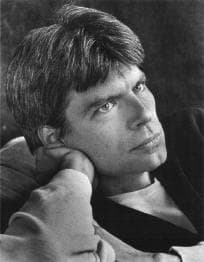
Richard Powers is an American novelist whose works explore the effects of modern science and technology. His novel The Echo Maker won the 2006 National Book Award for Fiction. He has also won many other awards over the course of his career, including a MacArthur Fellowship. As of 2023, Powers has published thirteen novels and has taught at the University of Illinois and Stanford University. He won the 2019 Pulitzer Prize for Fiction for The Overstory.







