“I am a very old man, and the only thing I have learned in life is that it is a fool's game to try to understand the ways of the gods.”
— Spoken by the ancient Thark Tars Tarkas to John Carter.

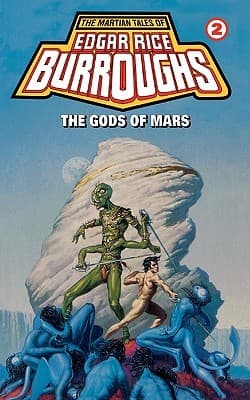
Edgar Rice Burroughs (1918)
Genre
Fantasy / Science Fiction
Reading Time
190 min
Key Themes
See below
Sign in to track this book
Stranded in a dangerous Martian 'Eden' where no one survives, John Carter must navigate new alliances and old mysteries to rescue his vanished love, Dejah Thoris, and reclaim his destiny on the red planet.
After ten years on Earth, John Carter is suddenly sent back to Barsoom (Mars) by an unknown force. He appears in the Valley Dor, a feared region known as the 'Lost Sea of Korus,' said to be the resting place of Martian dead and guarded by plant-men. Carter immediately faces these creatures and a large white ape, barely surviving. He discovers a system of waterways leading to a large underground river, the River Iss, believed to carry Martian souls to their final reward. Carter, always an adventurer, follows this river, hoping it will lead him to civilization and Dejah Thoris.
Following the River Iss, John Carter reaches the Temple of Issus, a huge, rich building within a hidden city. He learns the city's inhabitants are the Therns, white-skinned, blonde-haired humanoids who run a large religious fraud. They prey on Martians who pilgrimage to the Valley Dor, believing it is a spiritual journey to the 'heaven' of Issus. The Therns capture these pilgrims, enslaving some and sacrificing others to the plant-men and white apes they control. Carter sees these cruelties and, driven by his sense of justice and hope of finding Dejah Thoris, decides to expose their deception and rescue the captives.
While imprisoned by the Therns, John Carter makes a discovery: his son, Carthoris, the Jed (prince) of Helium, is also a captive. Carthoris, having followed Dejah Thoris and Thuvia (princess of Ptarth) into the Valley Dor, was also caught by the Therns. Their reunion is both happy and sad, as they are in trouble. Together, they escape their captors and plan to free themselves and expose the Thern plot to Barsoom. Their combined strength and fighting skills are strong against the Therns, who have become overconfident in their long deception. They also find Thuvia, which further complicates their escape.
John Carter, Carthoris, and Thuvia escape the Therns, moving through dangerous underground passages. They soon meet the Black Pirates of Barsoom, also called the First Born, black-skinned Martians who also live underground. At first, the Pirates are hostile, but Carter, by showing strength and diplomacy, forms an uneasy alliance with their leader, Xodar. Xodar, a disappointed Jeddak (king) of the First Born, reveals his people are also victims of Thern deceit, often forced into service. This alliance gives Carter needed military support and a way to navigate the underworld's complex politics.
As the alliance with the Black Pirates grows, John Carter learns the truth about Dejah Thoris. She is alive but held by the Therns, meant to be sacrificed to their 'goddess,' Issus. Carter discovers Issus is not a god but an old, weak Thern queen, kept alive artificially and worshipped by her people as an immortal deity. This news increases Carter's anger and determination. He realizes the full extent of the Therns' manipulative power and their disrespect, as they use Barsoom's most sacred beliefs for their own evil plans. His mission is clear: rescue Dejah Thoris and destroy the cult of Issus.
John Carter, leading his new allies – Carthoris, Thuvia, and the Black Pirates under Xodar – attacks the Temple of Issus. The battle is fierce, as the Therns, despite their overconfidence, defend their city with fanaticism. Carter's strategic mind and fighting skill are clear as he leads the charge, fighting through Thern warriors and their monsters. The Black Pirates, seeking revenge for generations of deceit, fight with equal ferocity. The temple, once a symbol of divine power, becomes a battleground, its rich halls stained with the blood of both deceivers and avengers. The goal is clear: reach Issus and free Dejah Thoris.
After a brutal fight, John Carter and his forces break into the inner sanctum of the Temple of Issus. Carter confronts Issus, a withered, old woman far from the god she pretends to be. She is surrounded by her guards and a few fanatical priests. Xodar, the Jeddak of the Black Pirates, reveals his secret: he is the true Jeddak of the First Born, and his people have been enslaved by the Therns for thousands of years. He uses this chance to get revenge, personally ensuring Issus's death. Her death breaks the Therns' spiritual power and sends their society into chaos. Dejah Thoris is found, but the victory is short-lived.
With Issus dead and the Therns in chaos, John Carter believes his mission is done. However, the chaos allows a new, immediate threat to appear. The Green Martians, led by the ruthless Jeddak Matai Shang, who was a high priest among the Therns, take control. They had secretly allied with the Therns, benefiting from pilgrims who wandered into their land. Matai Shang, clever and cruel, now seeks to gain power in the Valley Dor, taking Dejah Thoris and Thuvia captive again, along with other high-ranking Therns he now controls. Carter realizes the battle is not over, and a new, more dangerous enemy has emerged.
John Carter, trying to rescue Dejah Thoris and Thuvia from Matai Shang, is captured. He is thrown into a gladiatorial arena, a cruel show run by the Green Martians and their new Thern allies. His opponents are the fierce plant-men of the Valley Dor, powerful creatures now controlled by Matai Shang. Carter, despite his strength and skill, faces overwhelming odds. This trial shows his resilience and fighting spirit, as he battles for survival for himself and for the hope of freeing his loved ones. The arena symbolizes the brutality still present in parts of Barsoom.
While John Carter is held captive, his son, Carthoris, takes a leadership role. With Xodar and the Black Pirates, Carthoris rallies the remaining allied forces, including disappointed Therns and other freed captives. He shows his strategic brilliance and courage, stepping out of his father's shadow to lead a counter-attack against Matai Shang and his Green Martian allies. Carthoris's leadership is important for keeping morale up and coordinating different groups. He becomes the Jeddak of Jeddaks, uniting various Martian races to fight for freedom and justice, proving himself a worthy successor to his father.
Carthoris, leading the combined forces, manages to rescue Dejah Thoris and Thuvia. However, the victory is brief. Matai Shang, expecting their move, sets a trap. He seals off the fortress where Dejah Thoris and Thuvia were held, trapping John Carter, Carthoris, Dejah Thoris, Thuvia, and their closest allies inside. The fortress is designed to be impenetrable from outside and inescapable from within, with little air and food. This situation creates a race against time, as the heroes must find a way to escape before they starve or suffocate. The ending leaves them in a dangerous cliffhanger, their fate unknown.
The Protagonist
Carter returns to Mars, facing new deceptions and threats, and eventually unites diverse factions against a common enemy, solidifying his role as a leader and liberator.
The Supporting
Dejah Thoris endures repeated captivity, showcasing her resilience and providing the emotional core for Carter's relentless pursuit.
The Supporting
Carthoris evolves from a captive son to a respected leader, stepping into his father's shoes to command armies and fight for justice.
The Supporting
Thuvia endures captivity and develops a strong bond with Carthoris, solidifying her place among the heroes.
The Antagonist
Matai Shang rises to power amidst the chaos, becoming the new, more immediate threat, demonstrating the persistence of evil.
The Supporting
Xodar transitions from a suspicious potential enemy to a loyal and powerful ally, finding redemption and justice for his people.
The Antagonist
Issus is exposed as a mortal fraud and ultimately killed, her myth shattered, leading to the collapse of the Thern's spiritual authority.
The Antagonist
The Therns' long-held deception is exposed and their power structure dismantled, leading to their downfall and subsequent subjugation by new powers.
The Mentioned
The Plant-Men remain a constant, terrifying force, shifting allegiance from the Therns to the Green Martians, embodying the persistent danger of the Valley Dor.
A main theme is the large religious fraud carried out by the Therns. They use Martians' beliefs about the River Iss and the journey to Issus, creating a false paradise that is actually a death trap. This deception lasts for generations, enslaving and sacrificing many pilgrims. John Carter's quest is to expose this lie and free Barsoom from its spiritual bonds. The revelation that Issus is a mortal, old queen (Scene 7) shatters this false religion, showing how powerful groups can use faith for their own evil purposes.
“For ages they have preyed upon the honest superstitions of a planet, and grown fat and powerful upon the murder of countless millions of innocents.”
John Carter is a hero, driven by courage, honor, and a desire to protect the innocent and his loved ones. His journey is full of danger, but he never gives up. This theme is also seen in characters like Xodar, who seeks to make up for his people's long service under the Therns by allying with Carter and fighting for freedom. Carthoris also rises to the occasion, showing his own heroism by leading forces when his father is unable. The heroes fight not just for themselves, but for the freedom and truth of a planet.
“I was John Carter, Warlord of Mars, and I was going to carve a path to my love through the hearts of a million foes if need be.”
Even after the Therns and the false goddess Issus are defeated, a new enemy, Matai Shang, quickly appears, taking power and continuing the cycle of tyranny in a different form. This shows that while specific evils can be overcome, the desire for power and control can quickly return. The fight against oppression is never truly over, as one tyrant often replaces another. The ending, with the heroes trapped by Matai Shang, highlights this repeating nature, suggesting the fight for freedom is ongoing, even if the oppressors change.
“One tyrant falls, and another rises to take his place. It is ever the way of Barsoom.”
Family and loyalty are strong motivators throughout the story. John Carter's main goal is to find and rescue his wife, Dejah Thoris, and later, his son, Carthoris. The reunion between father and son (Scene 3) is a strong moment, showing the importance of family. Carthoris, in turn, is driven by his loyalty to his mother and his growing love for Thuvia. These personal connections raise the stakes of the larger conflict, making the fight against the Therns and Matai Shang not just a battle for justice, but a personal quest to protect family.
“For Dejah Thoris, for our son, and for the freedom of Barsoom!”
John Carter's inexplicable return to Mars.
John Carter's sudden and unexplained return to Barsoom after ten years on Earth serves as a classic *deus ex machina*. This device immediately thrusts him back into the narrative, bypassing any need for a detailed explanation of his transport or the intervening years. It allows the story to begin *in medias res* with Carter already on Mars, ready to face new challenges. While convenient, it is a hallmark of Burroughs's style, prioritizing adventure and immediate action over scientific plausibility for the sake of pacing and plot progression.
The primary object of desire that drives the plot.
Dejah Thoris serves as a classic MacGuffin, especially in the early parts of the novel. Her disappearance and subsequent captivity are the primary drivers of John Carter's actions and the overarching quest. While she is a developed character, her role as the 'object to be rescued' is central to propelling Carter through the dangerous Valley Dor and into conflict with the Therns. Her constant imperilment ensures continuous motivation and raises the stakes for the protagonist, even as she herself contributes to the narrative's emotional depth.
The widespread belief in the River Iss and the goddess Issus.
The legend of the River Iss leading to the divine Issus is a powerful plot device. It is a widely held belief across Barsoom, driving countless pilgrims to their doom and providing the Therns with their means of control. This prophecy creates the entire setting and conflict of the Valley Dor. The eventual subversion of this prophecy, revealing Issus as a mortal fraud, is a major turning point, dismantling a societal pillar and exposing the true nature of the antagonists' power. It sets up the grand deception that Carter must uncover.
The protagonists trapped in an inescapable fortress.
The novel concludes with a dramatic cliffhanger: John Carter, Dejah Thoris, Carthoris, Thuvia, and their allies are trapped in a sealed fortress by Matai Shang, facing certain death by asphyxiation or starvation. This device is used to build suspense and ensure reader engagement for the next installment in the series. It leaves the protagonists in a seemingly insurmountable predicament, highlighting the ongoing nature of their struggle and promising further adventures and resolutions in the subsequent books. It's a classic pulp fiction technique to compel continued readership.
“I am a very old man, and the only thing I have learned in life is that it is a fool's game to try to understand the ways of the gods.”
— Spoken by the ancient Thark Tars Tarkas to John Carter.
“For countless ages the Therns have ruled Mars, and for countless ages they have been a blight upon its face.”
— John Carter's realization about the false religion of the Therns.
“There are no gods but those of our own making.”
— John Carter challenging the established religious beliefs of Barsoom.
“To die for love is a glorious thing; but to live for love, that is the greatest glory of all.”
— John Carter contemplating his love for Dejah Thoris amidst danger.
“It is not the size of the body that counts, but the size of the heart.”
— A general sentiment about courage, often reflected in the actions of smaller characters.
“Fear is the greatest enemy of all, for it robs a man of his reason and leaves him a helpless prey to his own imaginings.”
— John Carter's internal monologue about facing overwhelming odds.
“The greatest battles are not fought with swords and spears, but within the hearts of men.”
— A reflection on the moral and emotional struggles of the characters.
“Even in the face of certain death, hope is a weapon that can turn the tide of battle.”
— John Carter rallying his allies in a desperate fight.
“There is no evil so great that it cannot be overcome by the will of a righteous man.”
— John Carter's determination to defeat the Therns and their allies.
“The truth, like water, will always find its way to the surface, no matter how deeply it is buried.”
— The gradual unveiling of the Thern deception.
“To die fighting for what you believe in is a far greater honor than to live a slave to a lie.”
— John Carter's philosophy when facing the Thern priests.
“A man's worth is not measured by the power he wields, but by the justice he serves.”
— John Carter's actions consistently demonstrate this principle.
“The universe is filled with wonders far beyond the grasp of mortal understanding, and it is in seeking these wonders that we truly live.”
— A broader philosophical reflection on exploration and knowledge.
“Sometimes the greatest strength lies in knowing when to surrender to a higher power, or a greater love.”
— John Carter's complex relationship with Dejah Thoris and his destiny.
Ready to see how well you understood this book? Take our interactive quiz with 10 questions.
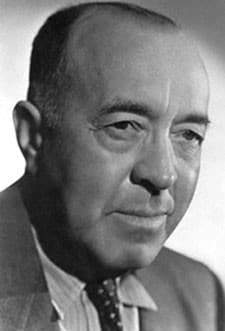
Edgar Rice Burroughs was an American writer, best known for his prolific output in the adventure, science fiction, and fantasy genres. Best-known for creating the characters Tarzan and John Carter, he also wrote the Pellucidar series, the Amtor series, and the Caspak trilogy.







