“I'm gonna make him an offer he can't refuse.”
— Vito Corleone, explaining his method of persuasion.

Mario Puzo (2002)
Genre
Thriller / Historical Fiction / Mystery
Reading Time
12-15 hours
Key Themes
See below
Sign in to track this book
Beneath the veneer of legitimate business, the Corleone family navigates a brutal world of loyalty, betrayal, and bloody power struggles to protect their empire and legacy.
The novel opens on the wedding day of Connie Corleone, daughter of Don Vito Corleone, the head of the powerful Corleone crime family in New York City. According to Sicilian tradition, no Sicilian can refuse a request on his daughter's wedding day. Don Corleone, known as 'The Godfather,' holds court in his office, receiving petitioners who seek his justice outside the law. Among them are Amerigo Bonasera, a mortician seeking vengeance for his daughter's assault, and Johnny Fontane, Don Corleone's godson and a famous singer, who needs the Don's influence to secure a movie role that will revive his career. The scene establishes Don Vito's power, his family's loyalty, and the web of obligations and favors that define his world. Michael Corleone, the Don's youngest son, a war hero, attends with his non-Italian girlfriend, Kay Adams, initially trying to distance himself from the family's criminal enterprise.
Virgil 'The Turk' Sollozzo, backed by the Tattaglia family, approaches Don Vito with a proposal to enter the narcotics trade. He offers a cut of the profits and protection. Don Vito, despite the potential wealth, refuses, deeming drug dealing too dangerous and morally corrupting, especially for his political connections. He fears it will alienate his allies and expose his family to greater risks. This refusal is seen as an insult and a challenge to Sollozzo and the Tattaglias. Shortly after, Don Vito is ambushed and shot multiple times while buying fruit, critically wounding him. His eldest son, Sonny Corleone, an impulsive man, takes temporary control of the family, plunging them into a brutal gang war.
With Don Vito recuperating, Sonny, Fredo, and Tom Hagen struggle to navigate the escalating violence. Sollozzo, believing Don Vito's death would clear the way for his drug operation, tries to broker a peace meeting with Michael, promising safe passage. However, it's revealed Sollozzo is working with Captain McCluskey, a corrupt NYPD officer on Sollozzo's payroll. Michael, previously an outsider, volunteers to kill Sollozzo and McCluskey, arguing it's the only way to end the war and ensure his father's safety. During a tense dinner meeting at an Italian restaurant, Michael retrieves a hidden gun and fatally shoots both Sollozzo and McCluskey. This act draws Michael into the family business and marks a turning point in his character.
Following the assassinations, Michael is smuggled to Sicily to escape retribution and allow the situation to cool down. He lives under the protection of Don Tommasino, an old friend of his father's. While there, Michael falls in love with a local girl, Apollonia Vitelli, and they marry. Michael begins to embrace his Sicilian heritage and finds a brief period of peace and happiness. However, the violence of his past catches up to him. An assassination attempt, intended for Michael, results in Apollonia's death when a car bomb, planted by Fabrizio (one of Michael's bodyguards turned traitor) explodes. This tragedy hardens Michael further, cementing his resolve and commitment to the family's way of life.
Back in New York, the gang war intensifies under Sonny's command. His impulsive nature and lack of caution make him a target. After beating his brother-in-law, Carlo Rizzi, for abusing Connie, Sonny receives a call from Connie claiming Carlo is attacking her again. Rushing to her aid, Sonny drives alone and is ambushed at a toll booth, riddled with bullets by rival gunmen. His death is a devastating blow to the Corleone family. Don Vito, still recovering, learns of Sonny's murder. Realizing the cost of the war, he calls a meeting of the Five Families to negotiate a truce, acknowledging that Sonny's death was a sacrifice to end the bloodshed and allow for the return of Michael.
After several years in Sicily, Michael returns to New York. His father, Don Vito, has brokered a fragile peace with the other families, promising not to pursue vengeance for Sonny's death in exchange for Michael's safe return. Michael reunites with Kay Adams and, despite her initial reservations about his involvement with the family, they marry and start a family. Don Vito begins to groom Michael as his successor, recognizing his intelligence, cunning, and ruthlessness, qualities that Sonny lacked. Michael slowly begins to take over the day-to-day operations, learning from his father and quietly planning the family's future, including a strategic move of their operations to Nevada.
Michael outlines his long-term plan to legitimize the Corleone family's business by moving their operations to Nevada and investing in casinos, severing ties with their criminal past in New York. This plan is met with resistance from some of the old guard, including Clemenza and Tessio, who are comfortable with the traditional ways. Don Vito, now semi-retired, continues to advise Michael, sharing his wisdom and warning him about potential betrayals. Don Vito eventually dies peacefully in his garden while playing with his grandson, Anthony. His death marks the official transition of power to Michael, who now fully embodies the role of the Godfather, ready to execute his vision for the family.
On the day of Connie and Carlo Rizzi's son's baptism, for which Michael is the godfather, he orchestrates a planned series of assassinations. While Michael publicly renounces Satan during the ceremony, his men simultaneously eliminate the heads of the rival Five Families (Barzini, Tattaglia, Cuneo, Stracci, and Bocchicchio), as well as Moe Greene, who was obstructing the Nevada casino deal. He also orders the execution of Salvatore Tessio, who betrayed the family, and Carlo Rizzi, who conspired with Barzini to set up Sonny's murder. This bloody purge consolidates Michael's power, eliminates all threats, and establishes him as the undisputed, ruthless new Godfather. Kay, unaware of the full extent of his actions, becomes increasingly isolated.
Following the purge, Connie, distraught and enraged by Carlo's death, confronts Michael, publicly accusing him of murdering her husband. Michael denies it, but his cold demeanor and the family's unwavering support for him leave no doubt. Kay, witnessing Michael's transformation and the family's omertà, confronts him directly about Carlo's death. Michael initially lies, swearing on the souls of their children that he was not responsible. However, she later sees Clemenza kiss Michael's hand, addressing him as 'Don Corleone,' and overhears a conversation confirming Michael's responsibility for the killings. This moment shatters Kay's illusions about Michael and the family, revealing the terrifying extent of his power and his moral corruption.
With all his enemies eliminated and his power solidified, Michael Corleone fully embraces his role as the Don. He has successfully moved the family's operations towards legitimacy in Nevada, although the means by which he achieved this were brutal and absolute. He is now a figure of immense power, fear, and respect, even more ruthless and calculating than his father. His relationship with Kay is irrevocably damaged, as she grapples with the man Michael has become and the dark world he inhabits. The ending leaves Michael isolated, sitting alone in his office, the new, unchallengeable head of the Corleone family, a symbol of his ambition and the tragic cost of power.
The Protagonist/Patriarch
From a powerful, almost untouchable Don, he experiences a near-fatal attack and the loss of his eldest son, ultimately choosing peace and preparing his youngest son, Michael, to inherit his legacy.
The Protagonist/Successor
Begins as an idealistic war hero wanting nothing to do with the family business, but is slowly drawn in by circumstances, eventually becoming a more ruthless and effective Don than his father.
The Supporting/Antagonist (in terms of temperament)
Serves as the acting Don during his father's recovery, demonstrating his unsuitability for leadership through his impulsiveness, and ultimately pays the price with his life.
The Supporting/Consigliere
Remains a steadfast and loyal consigliere, adapting his counsel to the changing leadership from Don Vito to Michael, even as the family's methods grow more ruthless.
The Supporting
Starts as an outsider in love with an 'American' Michael, but slowly becomes an isolated and fearful insider as she watches Michael transform into a ruthless mob boss.
The Supporting
Struggles with feelings of inadequacy and a desire for respect, leading to a betrayal of his brother Michael and his ultimate demise.
The Supporting
Remains a steadfast and loyal capo throughout the transitions of power, serving both Don Vito and Michael, embodying the traditional ways of the family.
The Supporting/Antagonist
A long-standing loyal capo who, in the transition of power, succumbs to ambition and betrays Michael, leading to his execution.
The central theme explores the conflict between an individual's moral compass and their loyalty to their family, especially within the Corleone crime family. Michael Corleone's journey shows this, as he initially tries to distance himself from his family's criminal activities but is drawn in, ultimately sacrificing his personal morality for the family's survival and power. The novel questions whether true loyalty can exist without complete moral compromise, especially when the family's 'business' demands violence and deception. The family code, 'omertà,' binds them together, often at the expense of individual conscience.
“A man who doesn't spend time with his family can never be a real man.”
The novel shows how power, especially absolute power, corrupts. Don Vito, while ruthless, operates with a certain code and a desire for justice, however skewed. Michael, however, surpasses his father in ruthlessness and cold calculation. His ascent to power is marked by increasing moral decay, culminating in the systematic elimination of his enemies and even betraying his own brother. The pursuit and maintenance of power transform him from an idealistic war hero into a solitary, feared figure. This highlights how the demands of leadership in a criminal empire erode humanity and empathy. His isolation at the end reflects the ultimate cost of his reign.
“He spent his life trying to be a good man, but he failed. Not because he was a bad man, but because he was a man of power.”
The Corleone family, like many immigrant families, seeks to achieve the American Dream – wealth, influence, and a better life for their children. However, they pursue this dream through illegal means, creating a parallel society that mirrors and exploits the legitimate one. Don Vito's efforts to 'legitimize' the family business and Michael's ambition to move them into respectable enterprises reveal a desire for acceptance and a legacy beyond crime. Yet, the novel suggests that the 'dream' remains an illusion, as the family's violent foundations and the sacrifices made for power prevent true peace or integration, perpetuating a cycle of violence and moral compromise across generations.
“I believe in America. America has made my fortune.”
The conflict between old-world Sicilian traditions and the changing modern America is a significant theme. Don Vito represents the traditional, honor-bound, and somewhat constrained approach to organized crime, valuing loyalty and personal relationships. Michael, on the other hand, embodies a more modern, calculated, and ruthless approach, willing to break old rules and eliminate traditional figures (like Tessio) to consolidate power and adapt to new business ventures like casinos. The generational shift highlights the evolution of the Mafia, from a family-centric 'protection' racket to a more corporate, cold, and expansive criminal enterprise, reflecting societal changes and the pursuit of profit.
“My father is no different than any other powerful man, any man who's responsible for other people, like a senator or a president.”
The unwritten code of silence and absolute loyalty within the Mafia.
Omertà is a crucial plot device that enforces secrecy and loyalty within the Corleone family and the wider criminal underworld. It dictates that members do not cooperate with authorities and handle disputes internally. This code explains why characters like Bonasera come to Don Vito for justice instead of the police, and why Kay struggles to get honest answers from Michael. It creates an impenetrable barrier between the family's world and the outside, heightening tension and isolating characters like Kay who are not fully initiated, thus driving much of the internal conflict and external danger.
The system of reciprocal obligations and debts that solidifies Don Vito's power.
The system of favors is a fundamental mechanism through which Don Vito maintains his immense power and influence. By granting requests for justice, protection, or assistance, he creates an unbreakable bond of debt and loyalty. This device is established early with Bonasera's request and Johnny Fontane's plea, showing how the Don operates outside the law and builds his empire not just on fear, but on gratitude and obligation. These favors are not freely given; they are investments that can be called upon at any time, shaping alliances and betrayals throughout the narrative.
A symbolic juxtaposition of sacred ritual with profane violence.
The baptism scene is a powerful plot device that serves as the climax of Michael's consolidation of power. While Michael acts as godfather to his nephew, publicly renouncing Satan, his men simultaneously carry out a series of brutal assassinations that eliminate all his enemies and betrayers. This juxtaposition of a sacred rite with cold-blooded murder highlights Michael's absolute ruthlessness, his complete immersion in the underworld, and the extent of his moral corruption. It is a visually and thematically rich moment that underscores the novel's themes of hypocrisy, power, and the cost of leadership.
A recurring visual motif foreshadowing violence and death.
Throughout the novel, oranges often appear in scenes immediately preceding or during moments of violence and death, serving as a subtle but persistent foreshadowing device. Don Vito buys oranges just before he is shot; the heads of the Five Families sit around a table with oranges before the meeting that leads to Sonny's death; and oranges are present when Don Fanucci is killed. This recurring motif subtly signals impending doom, adding a layer of ominous tension and a sense of inevitability to the violent events that unfold, linking them visually in the reader's mind.
“I'm gonna make him an offer he can't refuse.”
— Vito Corleone, explaining his method of persuasion.
“A man who doesn't spend time with his family can never be a real man.”
— Vito Corleone, advising Johnny Fontane.
“Friendship is everything. Friendship is more than talent. It is more than government. It is almost the equal of family.”
— Vito Corleone, reflecting on the importance of relationships.
“Italians are taught to feel shame when they are not strong. And if you have a family, you have to be strong. You have to be strong for your family.”
— A general observation on Italian culture and family responsibility.
“Never hate your enemies. It clouds your judgment.”
— Michael Corleone, offering strategic advice.
“Revenge is a dish best served cold.”
— A proverb often quoted or implied in the Corleone family's actions.
“The strength of a family, like the strength of an army, is in its loyalty to each other.”
— A recurring theme demonstrating the Corleone family's unity.
“For justice, we must go to Don Corleone.”
— Amerigo Bonasera, seeking help after his daughter is attacked.
“When they come, they come at what you love.”
— Tom Hagen, explaining the vulnerability of those in power.
“Power wears out those who don't have it.”
— A reflection on the corrosive nature of powerlessness.
“I believe in America.”
— Amerigo Bonasera's opening line, highlighting his disillusionment with the legal system.
“Don Corleone had a constitution that was as strong as a bull's, and a mind that was as sharp as a razor.”
— Narration describing Vito Corleone's formidable qualities.
“He made his decision, he didn't care about anything else. He would go to the mattresses.”
— Referring to Sonny Corleone's impulsive decision to go to war.
“Behind every great fortune there is a crime.”
— A cynical observation on the origins of wealth.
“Finance is a gun. Politics is knowing when to pull the trigger.”
— A perspective on the intertwining of money and power.
Ready to see how well you understood this book? Take our interactive quiz with 10 questions.
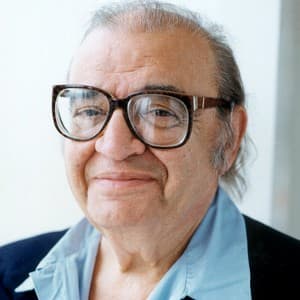
Mario Francis Puzo was an American author and screenwriter. He wrote crime novels about the Italian-American Mafia and Sicilian Mafia, most notably The Godfather (1969), which he later co-adapted into a film trilogy directed by Francis Ford Coppola. He received the Academy Award for Best Adapted Screenplay for the first film in 1972 and for Part II in 1974. Puzo also wrote the original screenplay for the 1978 Superman film and its 1980 sequel. His final novel, The Family, was released posthumously in 2001.







