“The wind was a living thing, whispering secrets through the long grass, carrying the scent of dust and wild sage.”
— Describing the African landscape and its sensory impact.

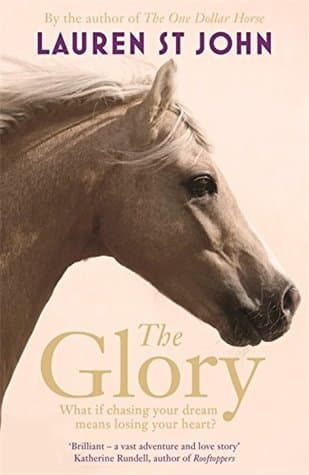
Lauren St. John (2015)
Genre
Young Adult / Romance
Reading Time
6-7 hours
Key Themes
See below
Sign in to track this book
A headstrong girl and a determined boy race horses from Colorado to Oregon, outriding danger and outsmarting pursuers, all while their hearts and horses race for glory.
The story begins with Will Best, a skilled rider, and his mustang, Glory, escaping Colorado. Will is a fugitive, falsely accused of murdering his stepfather, Frank. He heads west to Oregon, seeking safety and a new life. Glory, a wild and spirited horse Will shares a deep bond with, is his only companion. They face challenges like harsh weather and the constant threat of being caught by authorities who believe Will is dangerous. Will's journey is driven by a desire to clear his name and protect Glory, who represents his last link to freedom.
During his journey, Will finds a remote ranch where he meets Gwyneth 'Gwyn' Price and her Appaloosa, Blaze. Gwyn is initially hostile, seeing Will as an intruder. She is independent and dedicated to her horse and the upcoming 'Glory Race.' Their meeting is tense, marked by clashing personalities and an immediate rivalry, especially when Gwyn sees Glory's speed. Despite the friction, a spark of respect begins to form between them, even as their paths seem to diverge.
Will learns about the 'Glory Race,' a cross-country endurance competition from Colorado to Oregon. The race offers a large prize and, for Will, a legitimate reason to travel west without suspicion. Though hesitant to compete in a high-profile event while on the run, he realizes it might be his only chance to reach Oregon safely with Glory. The prize money could also help him start a new life. He decides to enter, knowing he will compete against experienced riders like Gwyn and under the watchful eye of the law.
The Glory Race begins, and Will, using a false name, quickly proves himself a strong competitor with Glory. He and Gwyn often ride neck and neck, pushing their horses to their limits. During the race, Will fears being recognized by law enforcement, who are present along the trail. He makes choices to avoid checkpoints and blend in, relying on his instincts and the remote trail. The race's physical demands are immense, testing both riders and horses, and the pressure on Will grows with every mile as his past threatens to catch him.
During a dangerous part of the race, with harsh weather and difficult terrain, Will and Gwyn must rely on each other. A shared ordeal, perhaps a near-miss, leads to a temporary truce in their rivalry. They work together to overcome challenges, showing their strengths and a surprising compatibility. This shared experience deepens their understanding, blurring the lines between competitors and revealing a mutual respect that grows into something more. Despite the race's tension, a tentative bond forms between them.
As the race continues, Will learns that Detective Miller, a determined lawman, is actively pursuing him, convinced he murdered Frank. Miller is closing in, using the race to track him. This news makes Will anxious, forcing him to take greater risks to avoid detection. He must balance winning the race and reaching Oregon with staying hidden. The pressure mounts, and Will realizes he can no longer just run; he must confront his past or risk losing everything, including Glory and his new connection with Gwyn.
Cornered, Will finally tells Gwyn the truth: his abusive stepfather, Frank, and the false murder accusation. He explains his innocence and his desperate flight. Gwyn is shocked but sees the sincerity in Will's story. Her admiration for his riding and her growing feelings for him lead her to believe him. She promises to help him, risking her own race and reputation. This moment solidifies their bond, turning their rivalry into a partnership built on trust and a shared goal of clearing Will's name.
With Detective Miller pursuing them, Will and Gwyn plan for the final stages of the Glory Race. They realize winning the race might be their only way to gain enough attention to expose the truth about Frank's death. They plan how to use the race's finish line and media attention to their advantage. They push their horses, Glory and Blaze, to their limits, knowing the stakes are higher than a prize; they are racing for Will's freedom and their future. The tension is high as they approach the finish line, with Miller closing in.
As Will and Gwyn cross the finish line, Detective Miller confronts Will. Evidence emerges, perhaps from a witness Will contacted or information Gwyn helped uncover, that clears Will. It is revealed that Frank's death was not murder by Will, but an accident or an act of self-defense, possibly even suicide or caused by another party connected to Frank's shady dealings. The truth comes out, exposing Frank's character and clearing Will's name, to Miller's surprise and eventual acceptance.
With Will's name cleared, the threat of arrest is gone. He is no longer a fugitive, and the Glory Race ends in a victory for his horsemanship and his freedom. The bond between Will and Gwyn, forged through shared hardship and competition, becomes a deep and lasting love. They celebrate their victory, both in the race and in overcoming Will's past. The story ends with Will and Gwyn, along with Glory and Blaze, looking forward to a future together in Oregon, free from the past.
The Protagonist
Will transforms from a hunted, isolated fugitive into a free man who finds love and clears his name, learning to trust others and fight for justice.
The Supporting/Love Interest
Gwyn evolves from a competitive individualist to a compassionate ally, learning to trust and support Will, ultimately finding love.
The Supporting
Glory remains a constant, unwavering source of strength and loyalty for Will, proving her mettle throughout the race.
The Supporting
Blaze showcases his incredible endurance and loyalty throughout the demanding race.
The Antagonist
Miller begins as an unwavering pursuer but eventually shifts to accepting the truth and clearing Will's name.
The Mentioned
Frank's character is static, serving as the initial catalyst for Will's flight and the central mystery.
The main theme is Will's desperate flight from a false murder accusation. He is a good person wrongly called a killer, forcing him to live as a fugitive. This theme is shown through his constant fear of discovery, his attempts to clear his name, and the eventual truth. The story shows the impact of injustice and the lengths one goes to prove innocence, as Will risks everything by entering the Glory Race, hoping to use its visibility to expose the truth.
““He wasn’t running from what he’d done, but from what they thought he’d done.””
This theme is shown by Will and his mustang, Glory. Will is physically free but mentally trapped by his past and the threat of arrest. Glory, a wild horse, represents true freedom. Their journey west is a pursuit of both literal and emotional freedom—from the law, his past, and emotional scars. The vast open spaces of the American West symbolize this desire for liberation, a contrast to the 'cage' of his false accusation. The Glory Race itself is a test of endurance and a path to a new, free life.
““With Glory, he was free. Without her, he was just a boy on the run.””
Initially isolated, Will struggles to trust anyone. His bond with Glory is his only constant. The growing relationship with Gwyn explores this theme. Despite their early rivalry, Gwyn's belief in Will's innocence and her decision to help him show a strong act of trust. This connection changes Will from a solitary fugitive to someone who can rely on another, highlighting how human connection provides support and hope. Their shared journey in the race deepens this bond.
““He hadn’t realized how much he’d needed someone to believe him until Gwyn did.””
The novel's setting and the Glory Race evoke the challenging spirit of the American West. The vast landscapes, reliance on horses, and endurance needed for the journey all recall a pioneering spirit. The race is a modern test of grit and self-reliance, mirroring historical challenges faced by those who settled the West. It celebrates the enduring connection between humans and horses in a demanding environment, where survival often depends on skill and courage.
““The trail was a ribbon of history, demanding everything they had, just as it had from those who rode it before.””
A cross-country endurance race that serves as the central plot mechanism.
The Glory Race is the primary vehicle for the plot, driving Will's journey and providing a structured framework for his escape. It allows him to travel across states without immediate suspicion and offers a tangible goal (winning) that could provide resources for a new life. More than just a race, it's a crucible that tests Will's skills, resilience, and moral character, while also forcing him into contact with Gwyn and the authorities. It's a race against time, not just for the prize, but for Will's freedom and life.
The inciting incident that propels the protagonist into flight.
The false accusation of murder against Will is the catalyst for the entire story. It immediately establishes high stakes, creates dramatic tension, and justifies Will's desperate actions. This device introduces the core conflict of injustice and sets Will on his journey for survival and vindication. It also allows for the exploration of themes like trust, truth, and the fallibility of initial perceptions, as characters (and the reader) must decide if they believe Will's innocence.
The deep, almost telepathic connection between riders and their horses.
This device is central to the emotional core of the novel, particularly between Will and Glory, and Gwyn and Blaze. It highlights the profound connection, understanding, and mutual reliance between the characters and their equine partners. The horses are not merely tools for the race but sentient beings with personalities, offering comfort, loyalty, and strength. This bond is often portrayed as stronger and more reliable than human relationships, especially in Will's isolated state, and is crucial for their survival and success in the grueling race.
“The wind was a living thing, whispering secrets through the long grass, carrying the scent of dust and wild sage.”
— Describing the African landscape and its sensory impact.
“Sometimes the bravest thing you can do is to just keep breathing, even when every breath hurts.”
— A moment of quiet reflection on resilience during hardship.
“He looked at her as if she were the sunrise, and he hadn't seen one in a very long time.”
— Describing the intense connection and admiration between the main characters.
“The past is a stubborn ghost, but it doesn't have to define your future.”
— A character offering advice on overcoming past traumas.
“There are some places in the world that just get under your skin, and Africa was one of them for her.”
— Reflecting on the protagonist's deep connection to the African continent.
“Love isn't always easy, and it certainly isn't always convenient, but it's worth fighting for.”
— A character's realization about the nature of true love.
“The silence out here wasn't empty; it was full of the pulse of the earth, the rustle of unseen creatures.”
— Contrasting urban noise with the rich silence of the wild.
“Every scar tells a story, and some stories are too important to forget.”
— Discussing the significance of physical and emotional scars.
“Sometimes you have to break down completely to build yourself back up stronger.”
— A moment of profound emotional vulnerability leading to growth.
“The stars were a blanket of diamonds, so close you felt you could reach out and pluck them from the velvet sky.”
— Describing the breathtaking night sky in the African wilderness.
“Fear can be a powerful motivator, but hope is an even stronger one.”
— A character's internal struggle between despair and optimism.
“He had a laugh that sounded like the sun breaking through clouds after a long storm.”
— A vivid description of a character's infectious joy.
“The future was a wide, open road, and for the first time in a long time, she felt ready to walk it.”
— The protagonist feeling a sense of renewed purpose and hope.
“Home isn't just a place; it's the people who make you feel safe enough to be yourself.”
— Reflecting on the true meaning of home and belonging.
Ready to see how well you understood this book? Take our interactive quiz with 10 questions.