“All children are born wild, but some are born wilder than others.”
— Reflecting on the nature of children, particularly those who defy convention.

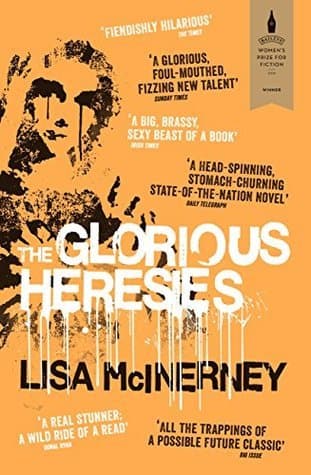
Lisa McInerney (2016)
Genre
Literary Fiction / Mystery
Reading Time
8-10 hours
Key Themes
See below
Sign in to track this book
In post-crash Cork, an accidental murder by a returning matriarch starts a chain reaction, connecting a teenage drug dealer, a gangster, and a prostitute in the city's dark, funny underworld.
Maureen Phelan, an older woman recently back in Cork after forty years, faces a difficult situation when Robbie breaks into her house. Startled, Maureen instinctively hits the intruder with a holy stone, killing him. Panicked, she calls her son, Jimmy Phelan, a known Cork gangster, for help. Jimmy quickly disposes of the body, burying it in an unmarked grave. This act immediately pulls Maureen into the criminal world she tried to leave, and it starts a chain of events that reveals hidden connections in Cork's society. Maureen feels guilty and wants to make amends, believing she has committed a grave sin.
Ryan Cusack, a fifteen-year-old living in the Cork flats, deals drugs for his uncle, Jimmy Phelan. He is ambitious and smart but constantly lives under the shadow of his alcoholic father, Tony, and the poor conditions at home. Ryan sees his mother, Bridie, and younger siblings struggle daily. He is determined to escape the cycle of poverty and addiction that defines his family. He questions the morality of his actions, trying to keep his identity amidst the violence and despair of his surroundings. His interactions with other dealers and customers show the harsh economic realities of post-crash Ireland and his limited options.
Tony Cusack, Ryan's father, is an unemployed alcoholic whose life centers on drinking and his growing obsession with his neighbor, Georgie. Georgie, a prostitute who sometimes pretends to convert to religion for clients, represents a forbidden attraction for Tony. He spends his days watching her, fantasizing, and neglecting his family. This obsession creates constant tension in the Cusack household, increasing Bridie's despair and fueling Ryan's anger. Tony's erratic behavior and inability to support his family highlight common issues of addiction and poverty. His actions unintentionally pull the family deeper into the world of Jimmy Phelan, Georgie's pimp.
Georgie, a young prostitute, lives next door to the Cusack family. Jimmy Phelan manages her, offering her some protection and stability in exchange for her earnings. Georgie is practical and resourceful, often using her wit and charm to navigate her dangerous job. She sometimes fakes religious conversions for specific clients, which ironically comments on faith and desperation. Tony Cusack's obsessive behavior becomes a nuisance and a threat, forcing Georgie to ask for Jimmy's help. Her daily life involves constant negotiations of power, personal safety, and the moral compromises needed to survive on the edge of society.
Jimmy Phelan is Cork's crime boss, a ruthless and calculating figure who controls much of the city's drug trade and prostitution. He is also Maureen's son, which complicates and grounds his life. Jimmy maintains a respectable image through various businesses, but his real power comes from his loyal enforcers and his willingness to use violence. He is fiercely protective of his mother, despite her past abandonment, and readily handles the body she accidentally creates. Jimmy's life balances his brutal business and his attempts to maintain order and loyalty within his family and criminal enterprise.
Haunted by Robbie's accidental killing, Maureen is consumed by guilt and a strong need for forgiveness. She believes she has committed a serious sin and seeks spiritual comfort, visiting churches and confessing her perceived wrongdoings. Her search for absolution connects with her desire to reconnect with her son, Jimmy, and understand the life he has built. Maureen's actions are often clumsy and ill-advised, threatening to expose Jimmy's criminal activities and disrupt his empire. Her attempts to 'do good' often have unintended and dangerous results, drawing more attention to the secrets she and Jimmy try to bury.
As Maureen continues her quest for forgiveness, details about Robbie, the man she killed, slowly emerge. It is revealed that Robbie was not a random intruder but had a connection to Jimmy Phelan and his past. This discovery adds another layer to the murder, suggesting Maureen's accidental act might have had deeper effects within Cork's criminal underworld. The informal investigation into Robbie's disappearance begins to stir up old secrets and rivalries, threatening to expose Jimmy's illegal activities and his network of corruption. The truth about Robbie's past further links the lives of Maureen, Jimmy, and the Cusack family.
Ryan's involvement in Jimmy's drug dealing grows, and he becomes more skilled at navigating the dangerous Cork underworld. He sees firsthand the violence and ruthlessness needed to survive, strengthening his resolve to escape. Meanwhile, Tony's obsession with Georgie intensifies, leading to more erratic and confrontational behavior that puts both his family and Georgie at risk. Bridie, tired and disappointed, struggles to keep her family together amidst the chaos. The rising tensions within the Cusack household and the growing pressures on Ryan reflect the instability of their lives and Jimmy Phelan's criminal empire's widespread influence.
Maureen's persistent attempts to atone and her naive interference in Jimmy's life lead to a direct confrontation between mother and son. Jimmy, frustrated by her meddling and afraid she will expose his operations, tries to control her, but Maureen remains committed to her spiritual quest. During these confrontations, old resentments and the painful history of their relationship resurface, especially Maureen's abandonment of Jimmy as a child. These emotional exchanges reveal the deep pain and complex love that binds them, despite their different lives. The effects of Maureen's actions begin to spread through Jimmy's organization, causing instability and attracting unwanted attention.
The various plot threads come together in a violent climax. The truths about Robbie's past, Jimmy's operations, and Maureen's accidental murder are fully revealed, leading to a brutal confrontation that affects all main characters. Ryan must make difficult choices about his future, seeing the full extent of violence in his uncle's world. Tony's obsession reaches a breaking point, with tragic results. Maureen, despite her good intentions, finds herself caught in the crossfire of the criminal world she stumbled into. The aftermath leaves Cork's underworld shaken, and the lives of the Phelan and Cusack families are permanently changed, forcing them to face the results of their choices and the societal forces that shaped them.
The Protagonist
Maureen initially seeks atonement through traditional religious means, but ultimately finds a different kind of redemption through her complicated relationship with her son and a deeper understanding of her own agency.
The Antagonist/Supporting
Jimmy struggles to maintain his criminal empire while simultaneously dealing with his mother's disruptive quest for atonement, forcing him to confront his past and the vulnerabilities of his position.
The Protagonist
Ryan navigates the dangerous world of drug dealing, slowly realizing the true cost of his choices and seeking a path to break free from his family's cycle of dysfunction and crime.
The Supporting
Tony's obsession with Georgie spirals out of control, leading to a devastating climax that exposes his vulnerabilities and the tragic consequences of his addiction.
The Supporting
Georgie strives for agency and safety within her precarious life, ultimately seeking a way to escape the control of Jimmy and the dangers of her profession.
The Supporting
Bridie endures the hardships of her life with quiet strength, constantly trying to protect her children from the destructive forces around them, ultimately finding a fragile hope for their future.
The Mentioned
N/A (character is deceased at the start of the novel, but his past is gradually revealed)
The novel explores the human need for salvation and forgiveness, especially through Maureen Phelan's actions. After accidentally killing Robbie, Maureen feels guilty and starts a desperate search for spiritual absolution, seeking comfort in confession and good deeds. Her journey questions traditional ideas of sin and redemption, suggesting that true atonement might come not just from religious rituals, but from facing one's past and building real connections. This theme contrasts with Jimmy Phelan's practical, almost amoral world, where power and control offer a different kind of 'salvation.' It also contrasts with Ryan's struggle to find moral clarity in his criminal activities. Maureen's attempts to atone often cause more trouble, showing the complexities of 'doing good' in a morally unclear world, as when her meddling threatens Jimmy's empire.
“She hadn't gotten a look at his face before she flaked him with the Holy Stone and she couldn't bring herself to turn him over.”
The Glorious Heresies examines the lasting effects of Ireland's twentieth-century views on sex, family, and social norms. Maureen's past, particularly her forced relinquishment of Jimmy as a child due to society's judgment of unmarried mothers, is a key example of this theme. This historical repression directly shapes Jimmy's hardened character and his rise to power. The shame linked to illegitimacy and sexual transgression continues to affect the characters, influencing their choices and relationships. Georgie's act of faking religious conversion for clients further highlights the hypocrisy and strong influence of religious dogma on personal lives, even in a supposedly more modern Ireland. The novel suggests that the 'heresies' are not just personal acts of defiance, but also the hidden truths that challenge a sanitized version of Irish history.
“Ireland had been a peculiar place for a woman of her appetites, and she’d been a peculiar woman for Ireland.”
The novel shows the harsh realities of poverty and limited social mobility in post-crash Ireland, especially through Ryan Cusack and his family. Ryan's desire to escape the cycle of addiction, unemployment, and squalor that defines his father, Tony, drives much of his ambition. Dealing drugs for Jimmy Phelan, though dangerous, is one of the few perceived paths to advancement or even survival in his environment. The dilapidated Cork flats, the widespread alcoholism, and the lack of legitimate opportunities highlight the systemic issues that trap individuals in a cycle of desperation. The characters' struggles are not just personal failures but reflect broader societal neglect and economic inequality, where criminal enterprises often fill the gap left by legitimate opportunities.
“He wanted out of this, out of the smell of piss and stale beer and the grey light that never quite reached the corners of their flat.”
Family relationships, often broken and dysfunctional, form the novel's emotional core. The complex dynamic between Maureen and her estranged son, Jimmy, is central, exploring the pain of abandonment, the weight of unspoken history, and the lasting, if complicated, bonds of kinship. The Cusack family, plagued by Tony's alcoholism and Ryan's involvement in crime, shows the destructive potential of domestic dysfunction and Bridie and Ryan's desperate attempts to maintain some family unit. The idea of 'family' extends beyond blood, including the loyalty within Jimmy's criminal network, which acts as a twisted support system. The characters often feel dislocated, either physically (like Maureen's exile) or emotionally, struggling to find their place within their families and society.
“He didn’t know what a son was supposed to feel for a mother who had abandoned him, but he knew he’d kill for her.”
A seemingly innocuous object that becomes a weapon and a symbol of misplaced faith.
The holy stone is the literal murder weapon, used by Maureen to accidentally kill Robbie. Beyond its function as a plot catalyst, it symbolizes Maureen's misplaced or misunderstood faith and her desire for protection. It's an ironic object – meant for spiritual solace or defense against evil, it instead becomes an instrument of death, directly leading to her profound guilt and quest for atonement. The stone underscores the novel's exploration of the complexities of religion, morality, and the unpredictable consequences of human actions, especially when driven by fear or a distorted sense of righteousness.
A chance event that triggers the entire narrative and exposes deep-seated connections.
The accidental murder of Robbie by Maureen serves as the inciting incident for the entire novel. This chance event immediately throws Maureen into Jimmy Phelan's criminal world and sets off a chain reaction that unravels long-buried secrets and connects the seemingly disparate lives of the main characters. The accidental nature of the murder highlights themes of fate, unintended consequences, and the butterfly effect. It is not a premeditated act, which emphasizes Maureen's moral dilemma and her journey for atonement, while also providing a natural, organic way to pull the various narrative threads together.
Multiple character perspectives that gradually reveal a connected, complex world.
The novel employs multiple, shifting perspectives, primarily focusing on Maureen, Ryan, Jimmy, Tony, and Georgie. Each character's storyline initially appears distinct but gradually reveals intricate connections to the others, often through Jimmy Phelan's influence or the ripple effects of Maureen's murder. This device allows the author to build a comprehensive picture of Cork's social strata, from the criminal underworld to the impoverished flats, and to explore how individual lives are shaped by shared circumstances and historical legacies. The converging narratives emphasize the interconnectedness of society, where even seemingly isolated acts have far-reaching consequences, creating a rich tapestry of human experience.
The use of wit and irony to highlight the absurdities and harsh realities of life in Cork.
Dark humor and biting satire are woven throughout the narrative, particularly in the dialogue and character observations. This device serves to lighten the tone of an otherwise grim story, making the harsh realities of poverty, crime, and moral decay more palatable, while also emphasizing their absurdity. For example, Georgie's practice of feigning religious conversions for clients, or Maureen's naive attempts at atonement, inject a layer of ironic commentary on faith and desperation. The humor often arises from the characters' resilience, their unique ways of coping, and the stark contrast between their internal lives and the external circumstances they face. It allows the novel to critique societal issues without becoming overly didactic.
“All children are born wild, but some are born wilder than others.”
— Reflecting on the nature of children, particularly those who defy convention.
“The past is a country you can never really leave, even if you burn all the bridges behind you.”
— Characters grappling with their past actions and their enduring consequences.
“There's a certain kind of freedom in having nothing left to lose.”
— Maureen reflecting on her situation after a lifetime of difficult choices.
“God forgive us for the sins we commit in the name of love.”
— A character contemplating the morally ambiguous actions taken for loved ones.
“Some secrets are like stones; the longer you carry them, the heavier they become.”
— Exploring the burden of hidden truths on the characters.
“You can't outrun your own shadow, no matter how fast you go.”
— A character realizing the inescapable nature of their identity and past.
“The city has a way of swallowing you whole if you're not careful.”
— Describing Cork's oppressive or transformative effect on its inhabitants.
“It's a strange thing, how the dead can still hold so much power over the living.”
— Characters dealing with the lingering influence of deceased loved ones or enemies.
“Sometimes the only way to get through it is to pretend you're someone else.”
— A character adopting a persona to cope with hardship or danger.
“Every family has its ghosts, some just hide them better than others.”
— Highlighting the hidden dysfunctions and histories within families.
“Justice is a luxury few can afford, and even fewer receive.”
— A cynical view on the availability and fairness of justice, especially for the marginalized.
“There's a fine line between a miracle and a catastrophe, and sometimes it's hard to tell the difference.”
— Reflecting on the unpredictable nature of events and their outcomes.
“The things we do to protect our own, even when they don't deserve it.”
— Exploring the fierce loyalty and morally questionable acts committed for family.
“Forgiveness is a tricky business. Sometimes you give it, sometimes you take it, and sometimes it just happens.”
— Characters struggling with the concept and act of forgiveness.
Ready to see how well you understood this book? Take our interactive quiz with 10 questions.

Biography coming soon.







