BookBrief
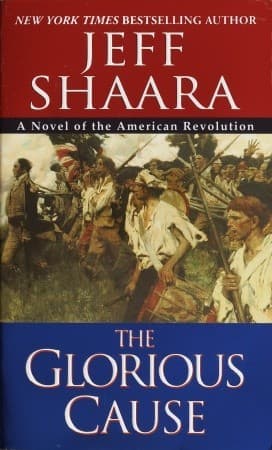
The Glorious Cause cover
Archivist's Choice

The Glorious Cause

Jeff Shaara (2002)

Genre

Historical Fiction

Reading Time

15-20 hours

Key Themes

See below

Track Your Reading

Sign in to track this book

George Washington's desperate crossing of the Delaware ignites the American Revolution, showing America's fight for freedom from its worst defeats to the surrender at Yorktown.

Synopsis

The Glorious Cause follows the American Revolutionary War, from the retreat from Long Island to the siege of Yorktown. General George Washington, a leader often under pressure, works to keep his Continental Army together against stronger British forces led by General Charles Cornwallis. The story unfolds through different viewpoints, including Washington's strategies and struggles, Cornwallis's military plans, and the roles of American figures like Nathaniel Greene and the Marquis de Lafayette. Readers experience the defeats at Brooklyn and Manhattan, the crossing of the Delaware for the victory at Trenton, the winter at Valley Forge, and the alliance with France. The war moves to the South, showing Greene's command and the 'Race to Virginia,' ending in the final siege of Yorktown and the British surrender, which changed global history. The novel shows the major battles and decisions, as well as the personal sacrifices and political dealings, from Benjamin Franklin's diplomacy to Benedict Arnold's betrayal, celebrating the determination of a people fighting for freedom.
Reading time
15-20 hours
Difficulty
Medium
Pacing
Moderate
Mood
Epic, Patriotic, Gritty, Historical, Inspiring
✓ Read this if...
You enjoy detailed, character-driven historical accounts of military campaigns and the American Revolutionary War, especially if you appreciate multiple perspectives of key figures.
✗ Skip this if...
You prefer fast-paced thrillers or are not interested in military history and detailed battle descriptions.

Plot Summary

The Retreat from Long Island

In August 1776, General George Washington and his Continental Army are on Long Island, expecting a British attack. General William Howe, leading a stronger British force, outmaneuvers Washington, flanking his positions and causing many casualties. Washington, seeing his army almost destroyed, decides to evacuate. Under fog and darkness, his entire army and supplies are ferried across the East River to Manhattan, barely escaping Howe's forces. This early defeat tests the morale of the American troops and their commander, showing the difference in training and resources between the two armies.

Loss of Fort Washington and the March Through New Jersey

After the retreat from Long Island, the Continental Army faces more problems in battles for Manhattan. The worst is the loss of Fort Washington in November 1776, where thousands of American soldiers are captured. General Washington is forced into a long retreat across New Jersey, pursued by General Charles Cornwallis and his British and Hessian troops. The American army shrinks due to desertions, expiring enlistments, and disease. Morale is very low, and the fight for independence seems about to end, with many questioning Washington's leadership and the Revolution's future.

Crossing the Delaware and Battle of Trenton

Facing severe problems and the imminent collapse of the Continental Army, General Washington plans a surprise attack on the Hessian garrison at Trenton, New Jersey, on Christmas night, 1776. Despite bad weather, including a snowstorm and icy river, Washington's forces cross the Delaware River. The Hessians, surprised after their holiday celebrations, are overwhelmed. The Battle of Trenton results in an American victory, with hundreds of Hessians captured and almost no American casualties. This triumph greatly boosts American morale and secures crucial re-enlistments, giving new life to the Revolution.

Battle of Princeton and Morristown Encampment

After Trenton, General Cornwallis quickly moves his British forces to confront Washington, trapping the Americans at Assunpink Creek. However, Washington, showing clever tactics, plans another daring move. Leaving a small group to keep campfires burning and deceive Cornwallis, he secretly marches his main army around the British flank during the night. The Continental Army then attacks the British rear guard at Princeton, winning another unexpected victory in January 1777. Washington then leads his tired but victorious troops to winter quarters at Morristown, New Jersey, ending the British campaign in the north for the season and solidifying the American comeback.

Philadelphia Falls and Brandywine Creek

In 1777, General William Howe focuses on capturing Philadelphia, the American capital. Washington tries to stop Howe's advance at the Battle of Brandywine Creek in September. Despite a strong defense, the Americans are again outflanked by Howe's forces, led by General Cornwallis. The Continental Army suffers another defeat, and Philadelphia falls to the British. Though a strategic loss, the American army largely escapes destruction, keeping its fighting capability. The fall of the capital is a blow to American prestige but does not cripple the Revolution, as the Continental Congress simply moves.

Winter at Valley Forge

After losing Philadelphia, the Continental Army settles into winter quarters at Valley Forge, Pennsylvania, from December 1777 to June 1778. The winter is very harsh, with severe cold, little food, poor clothing, and widespread disease. Thousands of soldiers die or desert. Morale drops, and the army's existence is uncertain. However, under Baron von Steuben, a Prussian drillmaster, the surviving troops train hard, changing from a loose militia into a disciplined, professional fighting force. Valley Forge helps build the American army's resilience and skill.

Alliance with France and Monmouth Courthouse

The American victory at Saratoga (not detailed here but important) convinces France to formally recognize American independence and form an alliance in early 1778. This brings much-needed financial aid, supplies, and naval support. With French help and the newly trained army from Valley Forge, Washington's forces confront the British at the Battle of Monmouth Courthouse in June 1778. The battle is a tactical draw, but it shows the improved fighting ability of the Continental Army and the leadership of figures like General Charles Lee, though his actions are debated. The British retreat to New York, and the war's focus shifts.

The War in the South and Greene's Command

As the war stalls in the North, the British change their strategy, believing loyalist support is stronger in the Southern colonies. General Cornwallis leads a successful campaign, capturing Charleston, South Carolina, and defeating American forces, especially at Camden. In response, General Washington appoints Nathanael Greene, a former Quaker with no prior military experience, to command the Southern Department. Greene, known for his logistics and strategic thinking, uses Fabian tactics, avoiding direct fights with Cornwallis's stronger forces while harassing British supply lines and wearing down their army through skirmishes and retreats.

Guilford Courthouse and the Race to Virginia

General Greene's strategy culminates in the Battle of Guilford Courthouse in March 1781. Though a tactical victory for the British, Cornwallis's army suffers heavy casualties, more than the Americans'. Greene uses the terrain to his advantage, making Cornwallis pay a high price for his victory. Tired and weakened, Cornwallis decides to leave the Carolinas and march his army north into Virginia, hoping to join other British forces and resupply. This decision is a turning point, placing his army in a vulnerable spot that Washington and the French will soon use.

The Road to Yorktown

Upon learning of Cornwallis's move into Virginia and his encampment at Yorktown, General Washington, with French General Rochambeau and the French fleet under Admiral de Grasse, sees an opportunity. Washington makes a feint towards New York to trick General Henry Clinton, then quickly marches his combined American and French armies south from New York to Virginia. At the same time, the French fleet blocks the Chesapeake Bay, trapping Cornwallis's army at Yorktown and cutting off any escape or reinforcement by sea. The stage is set for the war's decisive engagement.

Siege of Yorktown and British Surrender

In September and October 1781, the combined American and French forces besiege Yorktown. The allied artillery bombards the British defenses, and joint American-French assaults capture key positions. With no hope of relief by sea or land, and his position unsustainable, General Charles Cornwallis is forced to negotiate surrender. On October 19, 1781, the British army marches out to formally surrender to the allied forces, ending the major fighting of the American Revolutionary War. The surrender at Yorktown is a monumental victory for the Americans and their French allies, securing American independence.

Aftermath and Treaty of Paris

After the surrender at Yorktown, peace talks begin. Although minor skirmishes continue for a time, the British Parliament, tired of the costly war, votes to stop offensive operations. Benjamin Franklin, John Adams, and John Jay negotiate the Treaty of Paris, signed in September 1783. This treaty formally recognizes the United States of America as an independent nation, gives vast territories to the new republic, and establishes boundaries. General Washington, after an emotional farewell to his officers, resigns his commission, showing his commitment to civilian rule and setting a strong example for American democracy.

Principal Figures

George Washington

The Protagonist

Washington evolves from a sometimes-overwhelmed general learning on the job to a masterful strategist and an iconic figure whose leadership is indispensable for American independence.

Charles Cornwallis

The Antagonist

Cornwallis progresses from a highly successful field commander to the general whose surrender at Yorktown effectively ends the war, facing the bitter reality of defeat.

Nathanael Greene

The Supporting

Greene transforms from a quartermaster into an indispensable field commander, demonstrating exceptional strategic acumen that saves the Southern campaign.

Marquis de Lafayette

The Supporting

Lafayette matures from an eager but inexperienced foreign volunteer into a respected American general and a key figure in securing French military support.

Benjamin Franklin

The Supporting

Franklin's diplomatic efforts in France culminate in the signing of the Treaty of Alliance, making him a pivotal figure in securing international support for the American cause.

William Howe

The Supporting

Howe's initial successes are overshadowed by his strategic indecisiveness, leading to his eventual resignation and replacement.

Henry Clinton

The Supporting

Clinton takes command of a war that is increasingly difficult to win, ultimately overseeing the final major British defeat.

Baron von Steuben

The Supporting

Von Steuben's arrival and training at Valley Forge mark a pivotal moment in the professionalization of the Continental Army.

Benedict Arnold

The Mentioned

Arnold's arc is one of a celebrated hero falling into infamy as a traitor, a tragic figure driven by ambition and grievance.

Themes & Insights

Leadership and Resilience

The novel explores leadership, especially George Washington's steady resolve. Facing great odds, constant defeats, and a collapsing army, Washington's ability to keep morale up, make daring decisions (like Trenton), and endure immense personal pressure is central. The resilience of American soldiers at Valley Forge, becoming a disciplined force despite starvation and disease, shows this theme. The book illustrates how effective leadership and the endurance of ordinary men are vital for survival and victory.

''If we are to have a future, it will be because we refuse to give up, no matter the cost.''

George Washington

The Brutality and Cost of War

Shaara shows the harsh realities of 18th-century warfare. The narrative describes the suffering of soldiers from hunger, disease, and poor supplies, especially during the winter at Valley Forge. The high casualty counts, the desperate retreats, and the personal toll on both American and British combatants highlight the human cost. The psychological impact of long conflict, fear, and the constant threat of death are always present, reminding readers that war is not glorious.

''The cold, the hunger, the constant threat of the redcoats... it changes a man. It takes something from him.''

Continental Soldier (implied)

The Idealism vs. Reality of Revolution

The book contrasts the ideals of liberty and independence that started the Revolution with the difficult realities of fighting for it. While figures like Washington and Lafayette are driven by these ideals, the daily struggle involves logistical problems, political infighting, and the hard grind of war. The disillusionment of soldiers, the constant struggle for supplies, and the slow pace of diplomatic efforts (Franklin in France) show the gap between the dream of a new nation and the bloody, long effort needed to achieve it. It shows the power of those ideals that they last through such hardship.

''We fight for an idea, but we bleed in the mud. The idea is worth it, but the mud is real.''

Nathanael Greene

Strategic Ingenuity and Adaptation

A repeating theme is the need for both sides, especially the Americans, to always adapt their strategies. Washington's daring moves at Trenton and Princeton, Greene's Fabian tactics in the South, and the overall shift from traditional battles to harassing tactics show remarkable strategic flexibility. The British, initially relying on more numbers and training, also adapt, but often too slowly or with misjudgments. The novel emphasizes that victory often comes not just from strength, but from outthinking and outmaneuvering the enemy through innovative and sometimes desperate means.

''To beat them, we must not play their game. We must play our own, and surprise them at every turn.''

George Washington

Plot Devices & Literary Techniques

Multiple Perspectives

The narrative shifts between the viewpoints of key historical figures.

Shaara employs a multiple-perspective narrative, primarily focusing on the internal thoughts and experiences of George Washington, Charles Cornwallis, Nathanael Greene, Marquis de Lafayette, and Benjamin Franklin. This device allows readers to gain a comprehensive understanding of the strategic considerations, personal dilemmas, and emotional tolls on both sides of the conflict. It humanizes historical figures and provides insight into the motivations and challenges faced by different leaders, from the battlefield to the diplomatic stage, creating a rich tapestry of the war.

Dramatic Irony

The reader knows the ultimate outcome, while characters face uncertainty.

As a historical fiction novel, *The Glorious Cause* inherently uses dramatic irony. Readers know the American Revolution will succeed, but the characters within the story frequently face moments of profound doubt, despair, and near defeat (e.g., Valley Forge, the retreat through New Jersey). This creates tension and highlights the immense challenges the historical figures overcame, making their struggles and triumphs more poignant and emphasizing the precariousness of their situation without the benefit of hindsight.

The Crucible of Valley Forge

A specific historical event used as a transformative turning point for the American army.

Valley Forge functions as a powerful plot device, serving as the ultimate test and transformation point for the Continental Army. It is depicted as a period of immense suffering and near collapse, but also as the forge where the army's discipline, resilience, and professional identity are hardened under Baron von Steuben's training. This allows for a dramatic contrast between the ragtag force that enters the winter and the more capable army that emerges, ready to face the British on more equal terms, directly impacting subsequent battles like Monmouth.

The French Alliance as a Catalyst

A crucial external intervention that shifts the balance of power.

The French Alliance, primarily secured through Benjamin Franklin's diplomatic efforts, acts as a pivotal plot device. It introduces a decisive external factor into the narrative, shifting the balance of power in favor of the Americans. The arrival of French financial aid, military supplies, troops, and crucially, naval support (as seen at Yorktown), transforms the war from a desperate struggle for survival into a viable path to victory. This alliance provides the resources and strategic advantage necessary to trap Cornwallis and secure independence.

Critical analysis

Notable Quotes

These are the times that try men's souls. The summer soldier and the sunshine patriot will, in this crisis, shrink from the service of their country; but he that stands by it now, deserves the love and thanks of man and woman.

Thomas Paine's words, read aloud to Washington's troops before the Battle of Trenton.

Victory or Death!

George Washington's password and countersign for the Battle of Trenton, reflecting his desperate determination.

I have not yet begun to fight!

John Paul Jones's defiant reply when asked if he was surrendering during the battle between Bonhomme Richard and HMS Serapis.

I only regret that I have but one life to lose for my country.

Nathan Hale's famous last words before being executed by the British as a spy.

The fate of unborn millions will now depend, under God, on the courage and conduct of this army. Our cruel and unrelenting enemy leaves us no choice but a brave resistance, or the most abject submission. We have, therefore, to resolve to conquer or to die.

George Washington addressing his troops before the Battle of Long Island, emphasizing the stakes.

It is not the size of the dog in the fight, it's the size of the fight in the dog.

A general reflection on the spirit of the Continental Army against the larger British forces.

We must all hang together, or assuredly we shall all hang separately.

Benjamin Franklin's quip to John Hancock at the signing of the Declaration of Independence, highlighting the danger and necessity of unity.

The people cannot be all, and always, well informed. The part which is by them generally the least understood is the conduct of foreign affairs.

A reflection on public opinion and the complexities of governance during the war.

To be prepared for war is one of the most effective means of preserving peace.

A strategic observation made by Washington, anticipating future needs even amidst current conflict.

The harder the conflict, the more glorious the triumph.

A motivational thought, often attributed to Paine, reflecting on the struggle for independence.

There is a dignity in danger, and a glory in suffering.

A sentiment expressed by soldiers enduring the harsh conditions of Valley Forge.

It is not in the power of any man to command success; but you have done more, you have deserved it.

A compliment paid to General Washington for his leadership and perseverance despite setbacks.

The tree of liberty must be refreshed from time to time with the blood of patriots and tyrants.

Thomas Jefferson's powerful metaphor on the necessity of sacrifice for freedom, though not directly a battle cry, it encapsulates the spirit.

We have no choice left but to fight for our freedom, or become slaves forever.

A stark realization among the colonists and soldiers about the ultimate stakes of the revolution.

Quiz

Test Your Knowledge

Ready to see how well you understood this book? Take our interactive quiz with 10 questions.

10
Questions
~5
Minutes
?
Best Score

Key Questions (FAQ)

Following significant losses in New York, General Washington makes the desperate yet strategic decision to cross the Delaware River and launch a surprise attack on the Hessian forces at Trenton. This bold move, executed during the harsh winter, yields a crucial victory that reinvigorates the morale of the Continental Army and the struggling Patriot cause.

About the author






