“The glass remembers the fire, even when it is cool to the touch.”
— A recurring theme about the enduring impact of experience and passion on the craft.

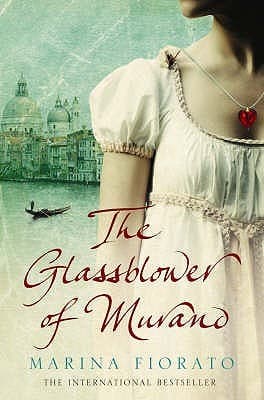
Marina Fiorato (2009)
Genre
Historical Fiction / Creativity / Mystery / Romance
Reading Time
420 min
Key Themes
See below
Sign in to track this book
In 17th-century Venice, a glassblower betrays his city's secret to protect his daughter. His act creates a legacy that his modern descendant uncovers while seeking a new life and love in Murano.
Leonora Manin, feeling uninspired by her life in London, decides to move to Venice. She is drawn to the city because of her family's connection to Murano glassblowers. Leaving a stagnant relationship and a job she dislikes, Leonora arrives in Venice wanting to learn glassblowing, a craft she feels a strong connection to. She moves into an apartment and starts learning about the city's culture and history, especially Murano, where her ancestors, the Manins, were once glass masters. This move shows her search for identity and a more meaningful life, connecting her to her family's past.
As Leonora starts her glassblowing apprenticeship on Murano, she learns about her family's history, especially Corradino Manin, a glassblower from the 17th century. Corradino was known for his skill and mirror-making techniques, which made Venetian mirrors valuable. She also finds hints of a darker side to his story, suggesting his talent came at a personal cost and involved forbidden secrets. Historical records and local stories show a man who was both celebrated and feared, caught in the strict politics of Venice's glass industry, where the Council of Ten guarded its secrets.
The story moves to 1681, showing Corradino Manin's life. Despite strict laws forbidding Murano glassblowers from leaving Venice or sharing their secrets, Corradino falls in love with a French noblewoman, Isabelle de Fiennes, who visits Venice. Their affair leads to a daughter, whom Corradino tries to keep secret from Venetian authorities, especially the Council of Ten. Having a child with a foreign mother, and the chance of his glassblowing knowledge leaving Venice, puts Corradino in a difficult spot. He is torn between his love for Isabelle and their daughter, and his fears within Venice.
To keep his secret daughter safe, Corradino Manin makes a dangerous decision. He secretly agrees to a deal with the French king, Louis XIV, who wants to end Venice's mirror monopoly. Corradino promises to teach the French his techniques for making Venetian mirrors, in exchange for his daughter's protection and a new life for her in France. Venice considers this industrial espionage treason, punishable by death. Corradino's reason is love for his daughter, leading him to betray his homeland and the laws of the Council of Ten to secure his child's future.
The Council of Ten eventually discovers Corradino's dealings with the French and sends enforcers to arrest him. Knowing he will die and fearing for his daughter, Corradino plans. He arranges for his daughter to be smuggled out of Venice to France, making sure she carries a hidden message or clue about his techniques. Corradino faces the results of his actions, dying to ensure his daughter's escape and the continuation of his legacy, though in a hidden way. His death becomes a mystery, hidden by the Council's justice.
In the present, Leonora focuses on learning glassblowing. She struggles with the difficult art, often feeling frustrated by her lack of natural talent compared to her ancestor. However, she finds a mentor in an older glass master on Murano who sees her dedication. During this time, she meets a Venetian man and they start a relationship. Their growing romance provides comfort amid her artistic challenge and her growing interest in her family's past, adding personal happiness to her new life.
As Leonora looks more into Corradino's history, she finds clues and old documents suggesting her ancestor did not simply give away his secrets. Instead, she believes Corradino encoded his glassblowing techniques, especially for mirror-making, within a series of objects or documents, intending for a descendant to find them. She becomes determined to find these lost secrets, believing they hold the key to his talent and the truth about his life and death. This search connects her current goals with the historical mystery, driving her research through Venetian archives and family heirlooms.
Through her research, Leonora learns about the rivalry between Corradino Manin and another Murano glass master, Giacomo. This rivalry was professional, for prestige and money, and personal. Giacomo, driven by envy, played a role in exposing Corradino's betrayal to the Council of Ten. The historical accounts show the competitive nature of the 17th-century Murano glass industry, where innovation was guarded and betrayal had fatal results, showing the dangerous world Corradino lived in.
After much searching and deciphering clues, Leonora realizes Corradino's glassblowing secrets are not in a scroll or book, but subtly encoded in a specific type of glass object he made. She focuses on understanding the symbolic language and technical details of Corradino's works, especially a mirror or a glass design. This realization helps her understand his technical talent, his artistic mind, and how he cleverly tried to preserve his legacy beyond his enemies. The glass itself becomes his final message.
Through study, experimentation, and a connection to the material, Leonora deciphers Corradino's hidden techniques. She understands the compositions, temperatures, and manipulation methods he used to create his mirrors. With her new knowledge and her mentor's guidance, Leonora tries to recreate a 'Manin Mirror' using her ancestor's methods. This act is the peak of her journey, connecting past and present, and proving her skill as a glassblower. Making the mirror is a success, honoring Corradino's legacy and securing her place in the Manin line.
Having found and replicated Corradino's lost techniques, Leonora feels a sense of accomplishment and connection to her ancestor. She has found her purpose in glassblowing and solved the mystery of Corradino's life. Her journey has changed her from a lost Londoner to a confident Murano glassblower, rooted in her heritage. With her craft established, her romance growing, and a new sense of belonging, Leonora embraces her new life in Venice, continuing the Manin legacy while making her own path in the ancient art of glass. She finds peace and happiness in her chosen home and job.
The Protagonist
Transforms from a lost, uninspired Londoner to a confident, skilled glassblower deeply rooted in her Venetian heritage, finding purpose and love.
The Historical Protagonist/Ancestor
From a celebrated master to a desperate father who sacrifices his life and reputation to secure his daughter's future and preserve his legacy.
The Supporting
Remains a steady and supportive presence, growing in his relationship with Leonora as she finds her place in Venice.
The Supporting
A brief but impactful historical figure whose love for Corradino sets in motion the central conflict of the past.
The Antagonist
Remains a bitter rival, ultimately contributing to Corradino's downfall but not achieving lasting triumph.
The Antagonist (Collective)
Remains a consistently powerful and unyielding force, representing the unchanging, rigid authority of the Venetian state.
The Supporting
Provides consistent guidance and wisdom, helping Leonora develop her skills and confidence as a glassblower.
The Mentioned
Represents a static historical ambition that drives significant plot points in the past.
Leonora's journey to Venice is about self-discovery. She leaves a life where she feels unfulfilled to find a deeper connection to her heritage and purpose through glassblowing. By learning about Corradino Manin, she finds her family's past and her own identity as an artist. Her mastery of glassblowing shows her new confidence and belonging, changing her from a lost person to someone rooted in her ancestry and home.
“"Venice was not just a city; it was a mirror reflecting her own unformed self, waiting for the light to catch and reveal the true image within."”
The book explores the cost of great talent, especially through Corradino Manin's story. His skill in glassblowing makes him valuable but also a prisoner of Venice. His betrayal—sharing Venetian secrets with France—is driven by love for his daughter, but it leads to his death. This theme shows how talent can be both good and bad, and how pursuing greatness or protecting loved ones can require difficult choices with severe results, affecting generations.
“"A secret shared was a life risked, especially when that secret was worth more than gold to the Republic."”
The idea of legacy is central, connecting Leonora's present to Corradino's past. Leonora's goal is to understand and finish her ancestor's work, ensuring his talent is not lost. The 'glass' acts as a way for this legacy to travel, carrying messages and art across centuries. The book shows how ancestors' lives and choices shape our own, and how honoring that heritage can lead to personal fulfillment and self-understanding.
“"The glass held more than light; it held history, secrets, and the very soul of the Manin family."”
The book is deeply involved in the art of glassblowing, showing it as a demanding craft. It details the techniques, the passion needed, and the transformation of sand into objects. Corradino's talent and Leonora's dedication show the beauty and difficulty of mastering this art. Descriptions of the furnaces, blowing, and shaping of glass highlight the beauty and fragility of creation, making the craft itself a main part of the story.
“"The breath of the glassblower, the fire of the furnace – it was alchemy, turning sand into shimmering beauty, a magic that defied logic."”
Both historical and modern stories show love and sacrifice. Corradino's love for his daughter leads him to commit treason against Venice, costing him his life. His sacrifice ensures her safety. In the present, Leonora's journey is a form of sacrifice, leaving her familiar life for an uncertain future to pursue her passion and connect with her family. Her relationship with Dante also shows the power of love, offering her stability and happiness in her new home.
“"What was a man's life, if not spent in protecting the ones he loved, even if it meant betraying all else?"”
Alternating chapters between present-day Leonora and 17th-century Corradino.
The novel employs a dual timeline, switching between Leonora's contemporary journey in Venice and Corradino's historical narrative in 17th-century Murano. This device allows the reader to simultaneously uncover the past alongside Leonora, building suspense and drawing parallels between the characters' experiences. It effectively intertwines the mystery of Corradino's life with Leonora's quest for identity, revealing how historical events directly impact and inform the present-day plot, enhancing the sense of continuity and destiny.
A symbolic and literal object containing Corradino's hidden secrets.
The 'Manin Mirror' or Corradino's unique glass creations serve as both a central mystery and a potent symbol. Literallly, these objects contain the encoded secrets of Corradino's glassblowing techniques. Symbolically, the mirror represents truth, reflection, and identity—Leonora looks into her family's past to understand herself. It also symbolizes the fragility and beauty of both life and art, and the enduring nature of a craftsman's legacy beyond their physical existence, becoming the ultimate conduit for Corradino's genius.
A historical antagonist representing oppressive authority and danger.
The Council of Ten functions as a powerful, ever-present antagonist in the historical timeline. They are not a single character but a collective, almost mythical, force representing the ruthless and secretive power of the Venetian Republic. Their role is to guard the state's secrets and maintain its monopolies, creating immense tension and danger for Corradino. They symbolize the oppressive forces that creativity and individual freedom often confront, and their actions drive the historical plot's conflict and Corradino's ultimate sacrifice.
Leonora's intuitive draw to glassblowing and her ancestor's story.
Leonora's immediate and almost inexplicable connection to glassblowing and her ancestor, Corradino, suggests an 'inherited memory' or ancestral pull. This device lends a mystical quality to her journey, implying that her destiny is intertwined with her family's past. It justifies her profound dedication and her ability to intuitively grasp clues that others might miss, suggesting that her bloodline carries not just a name, but also a talent and a purpose that transcends generations, making her the rightful inheritor of Corradino's legacy.
“The glass remembers the fire, even when it is cool to the touch.”
— A recurring theme about the enduring impact of experience and passion on the craft.
“Murano was not just an island; it was a secret whispered on the wind, a brilliance captured in sand.”
— Describing the mystique and unique nature of Murano and its glassblowing tradition.
“To truly see, you must look beyond the surface, beyond the shimmer and the gleam.”
— Emphasizing the importance of deeper understanding in art and life.
“Love, like glass, can be fragile, beautiful, and if mishandled, shatter into a thousand pieces.”
— A reflection on the delicate nature of relationships.
“Every breath blown into the molten glass is a piece of the glassblower's soul.”
— Highlighting the personal investment and artistry in glassblowing.
“The past is not a burden to be carried, but a foundation upon which to build.”
— A philosophical outlook on history and personal growth.
“Secrets are like glass, beautiful and transparent until they are broken.”
— Exploring the nature of secrets and their eventual revelation.
“Even in darkness, a single flicker of light can reveal the most exquisite beauty.”
— A hopeful sentiment about finding beauty and resilience in difficult times.
“The greatest art is not merely seen, but felt, deep within the heart.”
— Defining the true impact and emotional resonance of powerful art.
“To create something new, you must first be willing to let go of the old.”
— A principle of innovation and artistic evolution.
“Venice was a city of shadows and light, of beauty and decay, a place where dreams could be spun from water and air.”
— Describing the evocative atmosphere of Venice, a key setting.
“Sometimes, the most valuable treasures are not those that glitter, but those that hold the deepest stories.”
— A reflection on the true worth of objects and experiences beyond their material value.
“A woman's strength is not always in her fists, but often in the resilience of her spirit.”
— Showcasing the inner strength and determination of the female characters.
Ready to see how well you understood this book? Take our interactive quiz with 10 questions.







