“Every step of our life, insofar as it is a truly living step, is a step into the unknown.”
— Reflecting on the nature of existence and discovery within the Castalian order.


Hermann Hesse (2002)
Genre
Fantasy / Science Fiction / Philosophy
Reading Time
1100 min
Key Themes
See below
Sign in to track this book
In a post-apocalyptic future, an elite order of intellectuals masters the Glass Bead Game, a synthesis of human knowledge. Its most brilliant player then questions the foundation of their cerebral utopia.
The story begins with an introduction to Castalia, a secluded intellectual province in a distant future, revered as the spiritual and intellectual center of the world. This autonomous order dedicates itself to knowledge, art, and the Glass Bead Game (Glasperlenspiel). The Game is a sophisticated synthesis of all human knowledge—music, mathematics, philosophy, and science—played by an elite group of scholars. The narrator details Castalia's history, its strict hierarchy, and the rigorous training required for its members, especially those destined to play the Game. The text emphasizes the reverence for intellect and the detached, contemplative life led by the Castalians, who are seen as guardians of culture against the superficiality of the outside world.
The story then focuses on Josef Knecht, a gifted and introspective boy discovered by Castalian authorities and brought into their rigorous educational system. From a young age, Knecht shows exceptional aptitude for learning, a deep sense of responsibility, and a natural affinity for the Glass Bead Game. He excels in various disciplines, including music and classical languages. His early education in Castalia's elite schools, such as Waldzell, involves intense study, disciplined living, and the formation of close bonds with fellow students and mentors. This period establishes Knecht's intellectual prowess and his growing understanding of the Castalian ideal.
A period in Knecht's development is his mentorship under the wise and gentle Music Master, an influential figure within Castalia. The Music Master, also a Glass Bead Game player, teaches Knecht not only the intricacies of music but also the deeper philosophical and spiritual dimensions of the Game. He emphasizes the importance of harmony, balance, and the integration of intuition with intellect. Through this relationship, Knecht learns to appreciate the aesthetic and contemplative aspects of life and the Game, which complements his already strong analytical skills. The Music Master helps shape Knecht's character, instilling in him humility and a broader perspective on knowledge.
As Knecht matures, he forms two relationships that influence his perspective. The first is with Plinio Designori, a brilliant but more worldly student from a prominent family outside Castalia. Plinio criticizes Castalia's isolation and its perceived detachment from real-world problems, constantly challenging Knecht's assumptions about the province's purpose. The second is with Father Jacobus, a Benedictine monk and historian, whom Knecht encounters during a period of study outside Castalia. Jacobus provides Knecht with a different perspective on history, spirituality, and engagement with the suffering world, contrasting sharply with Castalia's intellectual purity. These relationships expose Knecht to alternative ways of thinking and living, sowing seeds of doubt about Castalia's absolute validity.
Knecht's intellectual and spiritual growth leads to his appointment as Magister Ludi, the highest office in the Glass Bead Game hierarchy. This position makes him the spiritual and administrative leader of the Game, responsible for its integrity, evolution, and the training of future players. The selection process is rigorous, and Knecht's appointment signifies his mastery of the Game and his deep understanding of Castalian ideals. As Magister Ludi, Knecht is at the pinnacle of Castalian intellectual life, embodying its highest aspirations. He dedicates himself to his duties, further refining the Game and fostering intellectual excellence among his students.
Despite achieving the highest honor within Castalia, Knecht experiences internal doubts about the purpose and sustainability of the province. He increasingly feels that Castalia's intellectual purity and isolation have made it sterile and irrelevant to the broader human experience. His conversations with Plinio Designori and Father Jacobus, along with his own reflections, lead him to believe that Castalia, while preserving culture, fails to contribute actively to the world's practical and ethical challenges. He struggles with the tension between the ideal of pure intellect and the demands of real-world engagement, sensing a growing responsibility to bridge this gap.
After much contemplation and struggle, Knecht makes the radical and unprecedented decision to resign from his esteemed position as Magister Ludi. He articulates his reasons in a letter to the Castalian leadership, arguing that the province's excessive focus on intellectual purity has led to a dangerous detachment from life and a potential for stagnation. He believes that Castalia needs to reconnect with the outside world and that its members should engage more directly with practical human affairs. This decision shocks the Castalian hierarchy, as no Magister Ludi has ever voluntarily stepped down before. Knecht's resignation represents a rejection of the system he once epitomized.
Following his resignation, Josef Knecht leaves Castalia to pursue a new path. He accepts a position as a tutor to Tito, the rebellious and independent son of a prominent government official, in a more 'worldly' setting. This marks a departure from the sheltered, intellectual life he has always known. Knecht views this new role as an opportunity to apply Castalian principles to practical life and to engage directly with the challenges and complexities of the outside world, rather than observing them from a distance. His departure is a symbolic act, representing his commitment to a life of active service and a rejection of passive intellectualism.
As a tutor to Tito, Knecht tries to guide the young man, who is strong-willed, emotionally volatile, and deeply connected to nature and instinct rather than intellect. Knecht attempts to impart the Castalian ideals of discipline, contemplation, and harmony, but he struggles to connect with Tito's passionate and untamed spirit. He finds himself in a position where his intellectual training is not always sufficient to navigate the complexities of real human emotions and relationships. This experience forces Knecht to confront the limitations of pure intellect and to develop a greater understanding of empathy, human nature, and the unpredictable forces of life outside the ordered world of Castalia.
One morning, while out with Tito, Knecht goes for a swim in a cold mountain lake, despite warnings about the water's temperature. He is overcome by the cold and drowns. His death is sudden and seemingly accidental, but it carries symbolic weight. While tragically cut short, Knecht's life and his decision to leave Castalia leave an impact. Tito, affected by Knecht's selflessness and ultimate sacrifice, begins to show signs of maturity and a greater appreciation for the values Knecht tried to impart. Knecht's actions also prompt a reassessment within Castalia, leading to a potential re-evaluation of its role in the world and a greater emphasis on engagement and practical application of knowledge.
The book concludes with three fictional 'Lives' or prose poems attributed to Josef Knecht himself, presented as his youthful exercises. These 'Lives' explore different historical periods and alternative destinies for a character named Knecht, each illustrating a particular philosophical or spiritual journey. They comment on the themes of identity, reincarnation, and the search for meaning beyond a single lifetime. The 'Lives' include 'The Rainmaker,' 'The Confessor,' and 'The Indian Way,' each depicting a figure grappling with spiritual and ethical dilemmas, further enriching the novel's philosophical depth and suggesting that Knecht's journey was part of a larger, timeless quest for truth and service.
The Protagonist
Knecht transforms from an ideal Castalian scholar to a seeker of practical engagement, ultimately sacrificing his life for a greater purpose beyond pure intellect.
The Supporting
Remains a steadfast embodiment of Castalian wisdom, providing a foundational influence on Knecht's development.
The Supporting
Remains a consistent voice of external critique, serving as a catalyst for Knecht's internal questioning.
The Supporting
Serves as a static, wise figure who provides a contrasting philosophical and historical viewpoint for Knecht.
The Supporting
Starts as a wild, undisciplined youth and begins a subtle transformation towards maturity and reflection after Knecht's influence and sacrifice.
The Supporting
Remains a static symbol of Castalian tradition, providing the framework from which Knecht deviates.
This central theme explores the tension between the pursuit of pure intellectual and aesthetic ideals (represented by Castalia and the Glass Bead Game) and the messy, unpredictable demands of real-world engagement, suffering, and human relationships. Josef Knecht's entire journey is a manifestation of this conflict. Initially, he fully embraces Castalia's detached intellectualism, becoming its highest exponent as Magister Ludi. However, his interactions with Plinio Designori (representing the outside world's pragmatism) and Father Jacobus (representing historical and spiritual engagement) gradually lead him to question the value of knowledge divorced from active service. His eventual resignation and departure from Castalia symbolize his decision to bridge this gap, even at the cost of his life, demonstrating that true wisdom requires both contemplation and action.
“For the first time it became clear to him what a tremendous burden and responsibility he had taken upon himself, by leaving the game and its security for a life in the world.”
The novel explores different forms of spirituality and the role of knowledge in achieving enlightenment or meaning. Castalia's spirituality is intellectual and aesthetic, finding transcendence in the intricate patterns of the Glass Bead Game and the harmonious synthesis of all human thought. However, Knecht's journey suggests that this form of spirituality, while profound, can become sterile if it lacks connection to ethical action and human suffering. Father Jacobus introduces a more traditional, historically grounded, and ethically demanding spirituality. Knecht's ultimate path, leading to his death, can be interpreted as a form of spiritual sacrifice, where knowledge is not merely accumulated but actively embodied and applied in service, suggesting a more integrated and holistic understanding of spiritual truth.
“No knowledge can be acquired that is not already present in the soul.”
Hesse examines the purpose and responsibilities of an intellectual elite and the nature of education. Castalia represents an ideal educational province, dedicated to preserving and advancing culture through rigorous discipline and the Glass Bead Game. It aims to cultivate individuals of the highest intellectual and moral caliber. However, the novel also critiques the potential pitfalls of such an elite: isolation, arrogance, and irrelevance to the broader society. Knecht's departure signifies his belief that an elite's true purpose lies not in self-preservation or detached contemplation, but in active engagement and service to the world it seeks to understand. The novel implicitly asks what kind of education best prepares individuals for meaningful lives.
“Castalia was a school, a community of scholars and teachers, a place where culture and intellect were preserved and cultivated.”
This theme explores the tension between an individual's calling and the demands or expectations of a larger community or institution. Josef Knecht is initially a perfect product of the Castalian community, embodying its ideals and rising to its highest office. However, his deepening self-awareness and moral conscience lead him to question the institution's limitations. His decision to resign and leave Castalia is an act of individual assertion, prioritizing his personal conviction about active service over the security and prestige offered by his community. The novel suggests that while institutions provide structure and preserve knowledge, true progress and individual fulfillment often require stepping outside their confines.
“A man who gives up a secure and honored position for the sake of an idea… that is a man to be respected.”
The novel suggests a cyclical view of history, where cultures rise, flourish, decline, and are eventually reborn or transformed. Father Jacobus, the historian, articulates this perspective, emphasizing that Castalia itself is a product of historical necessity, a 'spiritual ark' meant to preserve culture during a period of decline. The 'Three Lives' of Josef Knecht at the end of the book further underscore this theme, showing different manifestations of a similar spiritual quest across various historical epochs. This cyclical view implies that no institution or cultural phase is permanent, and that adaptation and transformation are essential for survival and renewal, echoing the larger arc of Knecht's own life.
“Every culture has its rise, its peak, its decline, and its end.”
An intricate, symbolic game synthesizing all human knowledge, representing Castalian ideals.
The Glass Bead Game is the central metaphorical and literal device. It is an elaborate intellectual game played by the Castalian elite, synthesizing music, mathematics, philosophy, and art into a complex, abstract language. It serves as a symbol of pure intellect, aesthetic harmony, and the culmination of human culture. As a plot device, it initially represents the ultimate goal for Knecht, embodying Castalia's highest aspirations. However, as the story progresses, it also becomes a symbol of Castalia's potential for sterility and detachment, prompting Knecht to question its ultimate value when divorced from practical life. The Game's abstract nature highlights the tension between theoretical knowledge and real-world application.
The utopian intellectual province, serving as both a sanctuary and a prison of the mind.
Castalia is a fictional autonomous province dedicated solely to intellectual and spiritual pursuits, providing a stark contrast to the 'outside world.' As a plot device, it functions as a utopian ideal, a sanctuary for culture and knowledge in a post-apocalyptic future. It embodies the concept of an elite intellectual community. However, it also acts as a kind of gilded cage for Knecht, its isolation eventually becoming a source of spiritual and moral discontent. Castalia represents the dilemma of preserving culture versus engaging with the world, and its eventual re-evaluation is a key outcome of Knecht's actions. It provides the structured environment against which Knecht's personal rebellion is measured.
The recurring theme of guidance and influence from older, wiser figures on the protagonist's development.
Mentorship is a crucial plot device throughout Knecht's journey. Figures like the Music Master and Father Jacobus serve as pivotal mentors, each imparting distinct forms of wisdom that shape Knecht's worldview. The Music Master guides Knecht in the aesthetic and spiritual dimensions of the Game, while Father Jacobus introduces him to historical perspective and worldly engagement. These mentorships are not merely educational; they challenge Knecht's assumptions and facilitate his intellectual and spiritual evolution. They provide the necessary external catalysts for Knecht's internal questioning and eventual transformation, illustrating how personal growth is often fostered through meaningful intergenerational guidance.
Fictional biographical sketches exploring alternative destinies and philosophical concepts.
The 'Three Lives' are short, fictional biographies presented at the end of the novel, attributed to Knecht's youthful writings. These serve as a powerful literary device, expanding the novel's philosophical scope beyond Knecht's singular narrative. They explore themes of reincarnation, the cyclical nature of human experience, and the recurring quest for meaning and service across different historical contexts. By showing variations of a 'Knecht' figure in diverse roles (rainmaker, confessor, Indian guru), they reinforce the idea that the core spiritual and ethical dilemmas are timeless and transcend individual identity, offering a broader commentary on destiny and the individual's place in the cosmic order.
“Every step of our life, insofar as it is a truly living step, is a step into the unknown.”
— Reflecting on the nature of existence and discovery within the Castalian order.
“The only reality is the one within you. All else is an illusion.”
— A core philosophical tenet often discussed in the context of inner truth and external perception.
“The Glass Bead Game is a way of playing with the entire content and all the values of our culture.”
— Describing the essence and purpose of the titular game.
“Truth is lived, not taught.”
— A fundamental belief about the acquisition of wisdom and understanding within the Castalian system.
“To be able to think, it is necessary to be able to doubt.”
— Exploring the prerequisites for genuine intellectual inquiry and critical thought.
“Only the man who has outlived his youth, and has seen his dreams turn to ashes, is truly adult.”
— A reflection on maturity and the often painful process of growth and disillusionment.
“The game was born from the need to make a synthesis of all knowledge, all art, and all experience.”
— Further elaborating on the ambitious origins and scope of the Glass Bead Game.
“But the path to the stars is not a path of flowers.”
— A metaphorical statement about the arduous nature of achieving greatness or profound understanding.
“We Castalians live in a world of spirit, a world of beautiful forms and thoughts, a world of pure music.”
— Describing the idealized and intellectual existence within the Castalian province.
“The highest goal of education is to teach one to know oneself.”
— A core principle guiding the educational philosophy within the Castalian order.
“No one can understand the game unless he has devoted himself to it for many years.”
— Highlighting the profound complexity and dedication required to master the Glass Bead Game.
“Every life is a journey of discovery, and the greatest discovery is the discovery of oneself.”
— A broader philosophical statement on life's purpose and personal growth.
“The world outside Castalia, the 'profane' world, was not as simple and manageable as it appeared from the Castalian perspective.”
— Reflecting on the sheltered nature of Castalian life and the complexities of the outside world.
“He who wants to live in peace and harmony must not be afraid to leave his comfort zone.”
— A call to embrace change and challenges for personal growth and societal improvement.
“The highest art is to live well.”
— A concise philosophical statement equating a well-lived life with the ultimate form of artistry.
Ready to see how well you understood this book? Take our interactive quiz with 10 questions.
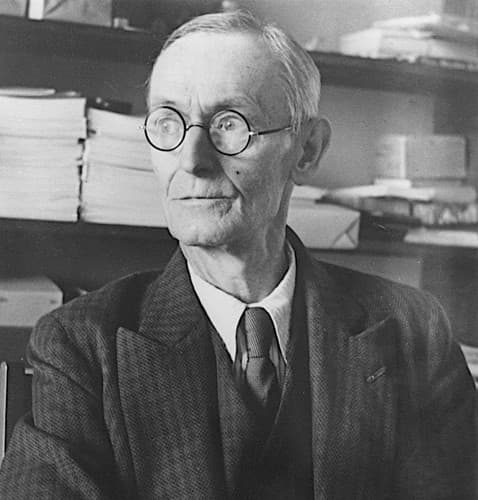
Hermann Karl Hesse was a German-Swiss poet, novelist, and painter. His best-known works include Demian, Steppenwolf, Siddhartha, and The Glass Bead Game, each of which explores an individual's search for authenticity, self-knowledge and spirituality. In 1946, he received the Nobel Prize in Literature.







