“The worst part of holding the memories is not the pain. It's the loneliness of it. Memories need to be shared.”
— The Giver explains to Jonas the burden of carrying memories alone.

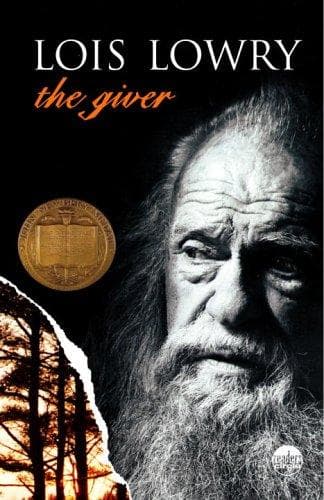
Lois Lowry (1993)
Genre
Fantasy / Children's / Science Fiction / Young Adult
Reading Time
150 min
Key Themes
See below
Sign in to track this book
In a world where everyone is the same, a young boy named Jonas learns about true memory, forcing him to see the cost of his community's peaceful ignorance.
Jonas, an eleven-year-old, lives in a very organized community where everyone is alike. As the annual Ceremony of Twelve approaches, he feels worried, sensing he is different from his friends, Asher and Fiona. The community controls everything, from families to jobs. At the Ceremony of Twelve, children get their jobs for life. Jonas thinks about past ceremonies, like naming new babies and the Ceremony of Nine, when bikes are given. His parents tell him not to worry, but he still feels his job will be unusual. He has also had brief, strange moments of 'seeing beyond' — flashes of color in a world without it.
During the Ceremony of Twelve, all of Jonas's friends get their jobs, like Caretaker of the Old or Instructor of Threes. But when it is Jonas's turn, the Chief Elder skips him, causing public embarrassment and confusion. After a long, quiet moment, she says Jonas has not been assigned, but 'selected' to be the next Receiver of Memory. This is a very important and lonely job. There is only one Receiver, and the last one failed badly. The Chief Elder explains that Jonas has four qualities: intelligence, integrity, courage, and the 'Capacity to See Beyond.' This further separates him from his friends and family.
Jonas starts training with the current Receiver, a tired, old man Jonas calls 'The Giver.' The Giver explains his job is to hold all memories of the past, both good and bad, so the community does not have to. His first memory transfer is of snow and sledding. This is a completely new and exciting feeling for Jonas because the community has removed snow, hills, and even color for the sake of Sameness. Jonas also gets the memory of sunshine, feeling warmth and joy. These first memories are nice, but The Giver warns him that the real weight of the memories will soon become clear, hinting at the pain he must face.
As Jonas continues training, The Giver gives him more intense memories. Jonas learns about colors, realizing his community only sees in black and white. He gets memories of love, family, and animals, things not in his own sterile world. But he also feels deep pain, including a scary memory of war, where he sees death and suffering. These memories are overwhelming, causing him physical and emotional distress. They also give him a growing understanding of the rich human experience his community has given up. He starts to feel more and more separate from his family and friends, who cannot understand his new reality.
Jonas's new knowledge makes his daily life difficult. He tries to share the memory of color with Asher and Fiona, but they cannot see it. He also asks his parents about love, but they are confused and gently tell him off. During his training, The Giver gives him the memory of loneliness and deep sadness. Jonas learns about 'release' for the elderly and new babies, which he first thinks is a gentle move to Elsewhere. However, after watching a video of his own father 'releasing' a baby twin, Jonas realizes with horror that 'release' means lethal injection and death. This truth destroys his understanding of his community's morals.
Jonas is devastated by the truth of 'release' and refuses to go home. The Giver, also burdened by the community's lack of awareness, tells Jonas about his past and the failure of the previous Receiver, Rosemary. Together, they make a plan: Jonas will escape the community and travel to Elsewhere. If Jonas leaves, the memories he holds will return to the community, hopefully waking them up. The Giver, too old and weak to go, will stay to help the community deal with the rush of memories. But their plan speeds up when Jonas finds out that the baby, Gabriel, whom his family has been caring for, is scheduled for release the next morning.
Driven to save Gabriel, Jonas makes a quick escape, taking Gabriel with him on his bike. They travel at night to avoid being seen, enduring hunger, cold, and fear. Jonas uses memories of warmth and food from The Giver to keep both himself and Gabriel going, sometimes giving a memory directly to the baby to calm him. The journey is hard, with close calls from search planes and constant hunger. As they leave the structured community, Jonas starts to see colors more clearly and feels a deep sense of freedom, even as the physical difficulties grow. He sees the vastness and beauty of nature, a strong contrast to his sterile upbringing.
As Jonas and Gabriel continue, the land changes, becoming wild. They face rain, snow, and increasingly difficult terrain, pushing Jonas to his limit. He shares memories of warmth and comfort with Gabriel, keeping the baby alive and relatively happy. Jonas's strength fades, and he starts to doubt if he can reach Elsewhere, but the thought of Gabriel's survival keeps him going. He remembers the memory of sledding, the first one The Giver gave him, and uses it as a sign of hope and a guide. He starts to see things differently, sensing something beyond his community's borders.
Finally, through a swirling snowstorm, Jonas sees a tall, snow-covered hill, just like in his first memory. With his last bit of strength, he climbs it, carrying Gabriel. At the top, he finds a sled, a familiar item from the memories. As he starts to sled down the hill, he hears music, faint at first, then stronger — a sound he has never heard. He sees lights in the distance, showing a community, lively and full of life, unlike the one he left. The book ends in an open way, with Jonas feeling hope and love, believing he has reached Elsewhere and brought Gabriel to a place where memories, colors, and music are free.
The Protagonist
Jonas transforms from an innocent, rule-abiding child into a courageous, empathetic rebel who challenges the very fabric of his society.
The Supporting
Initially resigned to his solitary burden, The Giver finds renewed hope and purpose in Jonas, inspiring him to take action and ultimately facilitating Jonas's escape.
The Supporting
Gabriel remains an infant throughout, but his vulnerability and impending 'release' are the primary catalyst for Jonas's final, decisive action.
The Supporting
Asher remains largely unchanged, representing the unawakened majority of the community.
The Supporting
Fiona remains largely unchanged, representing the unawakened majority of the community.
The Supporting
Her character remains static, embodying the community's limitations.
The Supporting
His character remains static, embodying the community's limitations and the chilling normalcy of its practices.
The Mentioned
Her story is told retrospectively and serves as a tragic example of the Receiver's burden.
The Supporting
Her character remains static, embodying the community's authority.
The novel looks at the struggle between being an individual and the community's forced 'Sameness.' Jonas's journey as the Receiver makes him face what it means to be a person with unique experiences and feelings. This is very different from his community's hiding of differences. The 'Capacity to See Beyond' makes Jonas stand out, leading him to question a world where everyone is the same and individuality is removed for order. His final act of rebellion shows the importance of his individual self and unique human experience.
“''We don't dare to let people make choices of their own.'”
A main theme is how important memory is in shaping human experience and understanding. The community gives up collective memory for comfort and control, leading to a shallow life. The Giver explains that memories, both happy and painful, are needed for wisdom, progress, and true emotion. Without them, the community is bound to repeat past mistakes and live without depth. Jonas's struggle to carry the memories shows their great power and the deep loss caused by their absence.
“''If you don't have the memories, you can't make the choices.'”
The book shows a society that has traded individual freedom and the richness of human experience for complete safety and comfort. By removing choice, emotion, and memory, the community has achieved a life free from pain, war, and suffering, but also from love, joy, and color. Jonas's journey makes the reader think about the cost of such a trade-off. His escape represents choosing the uncertain, dangerous freedom of a world with true emotions over the sterile, predictable safety of Sameness.
“''We gained control of many things. But we had to let go of others.'”
Lowry looks at how pain and suffering are needed as parts of being human. The community's attempt to remove pain has also removed true joy and empathy. Jonas's experience of traumatic memories, like war and hunger, is agonizing but also teaches him compassion and deepens his understanding of life. The Giver says that without pain, one cannot truly appreciate pleasure or gain wisdom. Being willing to face suffering is shown as a brave act needed for a full, meaningful life.
“''It's the choosing that's important, isn't it?'”
The novel compares the manufactured, superficial 'family units' of the community with real love and family connections. Jonas's parents show affection in a ritual, set way, unable to understand his question about whether they 'love' him. Through memories, Jonas feels the deep, unconditional love of real families. His desperate act of saving Gabriel is driven by a strong, natural love. This shows that real emotional connections are basic to human nature and cannot be fully hidden, even in a controlled society.
“''Do you love me?' Jonas asked. There was an awkward silence for a moment. 'Jonas. You, of all people. Precision of language, please!'”
Narrative focused solely on Jonas's internal and external experiences.
The story is told primarily through Jonas's perspective, allowing readers to experience his growing awareness and confusion alongside him. This narrative choice effectively builds suspense and mirrors Jonas's isolation as he gains knowledge that no one else possesses. By limiting the reader's information to what Jonas knows, the narrative slowly reveals the dark truths of the community, making the revelations more impactful and personal. The reader directly feels Jonas's apprehension, wonder, and ultimately, his horror.
A ritualistic event that defines each child's future and drives the initial plot.
This annual ceremony is a crucial plot device that establishes the highly structured nature of the community and acts as the inciting incident for the main conflict. By assigning lifelong roles, it highlights the lack of individual choice. Jonas's unique 'selection' for Receiver of Memory, rather than an 'assignment,' immediately sets him apart and signals that his path will deviate significantly from his peers, directly leading to his training with The Giver and the unraveling of the community's secrets.
The primary mechanism through which Jonas learns about the past and emotions.
The process of memory transfer from The Giver to Jonas is the central magical realism element and a key plot device. It allows Jonas, and by extension the reader, to experience a vast range of human history, emotions, and sensory details that are absent from his current life. This device not only educates Jonas but also serves as a catalyst for his emotional and intellectual development, driving his questioning of the community and ultimately leading to his decision to escape and return the memories.
Misleading terms used by the community to obscure harsh realities.
The community uses euphemisms like 'release' for death, 'Stirrings' for puberty, and 'Sameness' for control. This linguistic manipulation is a powerful device that reveals the extent of the community's deception and its efforts to sanitize reality. By using gentle, innocuous terms for horrifying acts, the community maintains its facade of perfection and prevents its citizens from understanding the true nature of their world. Jonas's realization of the true meaning of 'release' is a pivotal moment that shatters his innocence.
Jonas's innate ability to perceive color and, metaphorically, deeper truths.
This unique ability, initially manifesting as fleeting glimpses of color in a monochromatic world, serves as a symbolic and literal plot device. It signifies Jonas's inherent difference and his potential to transcend the limitations of his community. Metaphorically, 'seeing beyond' represents his capacity for insight, empathy, and understanding truths that are hidden from others. It is a key quality that qualifies him as the Receiver and enables him to perceive the depth of the memories he receives.
“The worst part of holding the memories is not the pain. It's the loneliness of it. Memories need to be shared.”
— The Giver explains to Jonas the burden of carrying memories alone.
“If everything's the same, then there aren't any choices! I want to wake up in the morning and decide things!”
— Jonas expresses frustration with the lack of freedom in his society.
“The life where nothing was ever unexpected. Or inconvenient. Or unusual. The life without color, pain, or past.”
— Narrator describes the controlled, emotionless world of the community.
“He knew that there was no quick comfort for emotions like those. They were deeper and they did not need to be told. They were felt.”
— Jonas experiences deep emotions through memories from The Giver.
“For the first time, he heard something that he knew to be music. He heard people singing.”
— Jonas discovers music through a memory, something absent in his society.
“It's the choosing that's important, isn't it?”
— The Giver discusses the value of making choices, even painful ones.
“They have never known pain, he thought. The realization made him feel desperately lonely.”
— Jonas reflects on how his community is sheltered from suffering.
“He was free to enjoy the breathless glee that overwhelmed him: the speed, the clear cold air, the total silence, the feeling of balance and excitement and peace.”
— Jonas experiences the joy of sledding down a hill in a memory.
“We gained control of many things. But we had to let go of others.”
— The Giver explains the trade-offs made to create a stable society.
“I feel sorry for anyone who is in a place where he feels strange and stupid.”
— Jonas empathizes with others who feel out of place, like Gabriel.
“There could be love.”
— Jonas realizes the possibility of love, a concept absent in his world.
“He wept because he was afraid now that he could not save Gabriel. He wept because he was angry and helpless, and he was weeping.”
— Jonas cries from a mix of fear, anger, and helplessness while fleeing.
“It was a sound of rage and grief and it seemed to never end.”
— Jonas hears a disturbing sound in a memory of war.
“The community was so meticulously ordered, the choices so carefully made.”
— Narrator describes the highly controlled nature of the society.
Ready to see how well you understood this book? Take our interactive quiz with 10 questions.

Biography coming soon.







