“Don't you want to know why I asked you all those questions? Why I needed to know what you were like, before I could let you move in?”
— Edward Monkford's initial, intrusive questions to Jane, hinting at the house's peculiar nature.

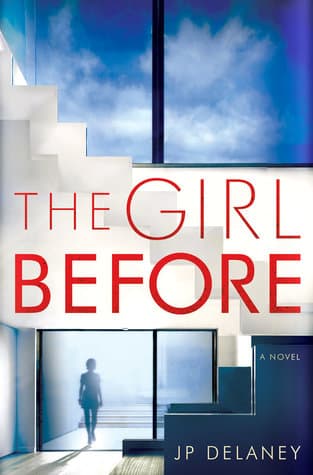
J.P. Delaney (2017)
Genre
Thriller / Mystery
Reading Time
9 hours 59 minutes
Key Themes
See below
Sign in to track this book
A minimalist house designed by a reclusive architect forces two women, years apart, to face their pasts and question their minds as they uncover the truth behind the previous tenant's death, which mirrors their own lives.
The story moves between Emma Matthews, three years ago, and Jane Cavendish in the present. Emma, recovering from a home invasion, looks for a safe apartment. She finds One Folgate Street, a minimalist house designed by Edward Monkford, offered at a low rent. The catch: strict rules, including no personal items, and a long psychological questionnaire. Emma, desperate, agrees. Similarly, Jane, grieving a stillborn baby, seeks a fresh start. She also finds One Folgate Street and is drawn to its beauty and the challenge of its rules. Both women are interviewed by Monkford and pass his selection process, moving into the unique property.
Emma and Jane find their lives changed by the house and Edward Monkford. The house's minimalist design forces them to confront their attachment to possessions and past traumas. Edward's control extends beyond the physical space; he monitors their behavior through an AI system and frequent check-ins. Both women, despite initial doubts, are drawn to Edward's intelligence, leading to romantic relationships with him. Emma, at first resistant, eventually gives in to his charm and the house's power. Jane, intrigued by the house and its creator, also falls for Edward, despite his controlling nature and the unsettling atmosphere.
As Jane settles into One Folgate Street, she learns about the previous tenant, Emma Matthews, who died in the house. She is told Emma fell down the stairs, a tragic accident. However, Jane discovers that Emma was her age, looked similar, and moved in under similar circumstances. This coincidence sparks Jane's curiosity. She finds a hidden phone belonging to Emma, containing messages and photos, which suggests Emma's death might not have been an accident. Jane becomes focused on understanding Emma's life and the circumstances of her death, seeing parallels between Emma's experiences and her own.
Emma's timeline details her life before and during her tenancy. She was in a long-term relationship with Simon, which was struggling before the break-in that prompted her move. Simon is possessive and struggles with Emma's independence and her growing attachment to Edward and the house. Emma's relationship with Edward is passionate but also marked by his controlling tendencies and psychological games. She begins to feel isolated from her former life and friends, increasingly dependent on Edward and the unique environment of One Folgate Street, even as she starts to question his motives and the house's true nature.
Driven by her suspicions, Jane contacts Detective Sergeant Miller, who first investigated Emma's death. Miller dismisses her concerns, stating the case was closed as an accident. Undeterred, Jane finds Emma's best friend, Carol, and Emma's ex-boyfriend, Simon. Both provide pieces of the puzzle, revealing Emma's growing paranoia and fear in the weeks before her death. Simon, still grieving and bitter, is convinced Edward was responsible. Jane also learns about Edward's history of controlling relationships and the mysterious circumstances of his previous wives and the house's original construction, strengthening her belief that Emma's death was not accidental.
Edward's character is shown through both timelines. He is brilliant, charismatic, and deeply controlling. He designs the house to change its inhabitants, but his methods are manipulative. He tests his tenants, pushes their limits, and creates a sense of dependence. Emma finds herself increasingly isolated and emotionally involved with him, struggling to maintain her own identity. Jane, despite warnings from Emma's past, also falls under his spell, drawn to his intellect and the promise of a new life. However, she also experiences his intense jealousy and possessiveness, especially when she starts to investigate Emma's past, mirroring Emma's own experiences.
As Jane continues her investigation, the similarities between her life and Emma's become clear. She finds herself in similar situations, making similar choices, and even interacting with the same people in the same ways. Edward's behavior towards her mirrors his behavior towards Emma. Jane realizes she is reliving Emma's final months. This realization increases her sense of urgency and danger, making her question not only Emma's death but also her own safety in One Folgate Street. She feels trapped, knowing too much but unable to escape Edward's influence or the house's grip.
The story reveals the truth about Emma's death. It was not a simple accident. Emma, feeling trapped and terrified by Edward, had planned to leave him. Simon, still obsessed with Emma, broke into One Folgate Street on the night of her death, intending to confront Edward and take Emma away. In a struggle with Edward at the top of the stairs, Emma fell. Edward, in a moment of panic and to protect his image and the house, made the scene look like an accident, and possibly even pushed her or failed to prevent her fall, leaving her to die. Simon fled, terrified, believing he was responsible.
Armed with the full truth, gathered from Emma's phone, Simon's confession, and her own deductions, Jane confronts Edward. She reveals she knows about Emma's death and his involvement. Edward, cornered, tries to manipulate her, but Jane remains firm. She records their conversation, gathering evidence. Jane realizes she cannot stay in the house or with Edward. She understands that the cycle of control and tragedy will continue unless she breaks it. She uses her knowledge to ensure Edward faces consequences, not necessarily legal, but a shattering of his world. Jane makes a choice to leave One Folgate Street and Edward behind, prioritizing her own well-being and the life of her unborn child.
In the aftermath, Jane is pregnant with Edward's child. She chooses to keep the baby, seeing it not as a continuation of Edward's control, but as a new beginning. She uses the experience to write a book about One Folgate Street and Emma's story, exposing Edward's methods and the house's dark history. This act allows her to reclaim her narrative and find closure. Jane chooses to live a life with personal possessions and warmth, rejecting the minimalist ideology that nearly consumed her and Emma. She makes choices that actively differ from Emma's, breaking the pattern and forging her own path, demonstrating true freedom from Edward's influence.
The Protagonist
Jane moves from passive grief to active investigation, ultimately breaking free from a dangerous pattern and choosing a future on her own terms.
The Protagonist (past timeline)
Emma's journey is a descent from seeking safety to becoming a victim of psychological manipulation and ultimately, a tragic figure.
The Antagonist
Edward remains largely static in his controlling nature, but his carefully constructed world is ultimately exposed and threatened by Jane.
The Supporting
Simon transitions from a jealous boyfriend to a guilt-ridden, grieving man seeking justice for Emma, eventually confessing his role to Jane.
The Supporting
Carol, initially a worried friend, becomes a source of vital information for Jane, helping to expose the truth.
The Supporting
Miller's initial dismissal of Emma's case shifts to a grudging re-evaluation as Jane uncovers more evidence.
The Supporting
Maria remains a steadfast and somewhat mysterious figure, a silent enabler of Edward's control.
The Supporting
Ben serves as a constant, supportive figure, representing Jane's connection to a healthier external world.
The novel explores control, mainly through Edward Monkford and his house, One Folgate Street. Edward's rules, questionnaires, and surveillance systems aim to control his tenants. He manipulates both Emma and Jane, isolating them and making them dependent on him and the house. This theme appears in Emma's growing paranoia and Jane's realization that she is being molded into a 'perfect' tenant, mirroring Emma's fate. The house itself is a tool of control, dictating how its inhabitants live and think, as seen in the rule against personal belongings.
“You never truly own the house. The house owns you.”
Both Emma and Jane are introduced in states of grief and trauma. Emma is recovering from a violent home invasion, leading to a need for security. Jane is mourning her stillborn child, seeking a fresh start and an escape from pain. One Folgate Street initially seems to offer a solution for both, a blank slate for healing. However, the novel shows how unprocessed grief can make people vulnerable to manipulation. Jane's journey shows a more active form of healing, where confronting the truth of Emma's death and her own situation allows her to move past grief and embrace a future, rather than giving in to trauma.
“Perhaps the house was not just a house, but a carefully constructed mirror, reflecting back what you most needed to see.”
The minimalist design of One Folgate Street and Edward's philosophy aim to remove superficiality and change its occupants. Both Emma and Jane experience a shift in their identities while living there. Emma, at first resistant, gradually conforms to the house's demands, losing parts of her former self. Jane, too, finds herself changing, questioning her attachments and perceptions. The novel explores whether this transformation is genuine self-improvement or a form of conditioning. Ultimately, Jane's ability to reclaim her identity by rejecting Edward's influence and making her own choices marks her escape from the house's intended 'transformation'.
“The house would not just change her circumstances; it would change her.”
Obsession is a theme that drives the actions of several characters. Edward Monkford is obsessed with architectural purity and creating the 'perfect' tenant, leading to his manipulative behavior. Simon is obsessed with Emma; his possessive love contributes to the tragic events. Jane, in turn, becomes obsessed with uncovering the truth about Emma's death, a necessary but dangerous obsession that mirrors Emma's own paranoia. The novel shows how obsession, whether from love, control, or a quest for truth, can lead to destructive outcomes and blur the lines between healthy passion and dangerous fixation.
“He didn't just want to live in your head. He wanted to live in your soul.”
Alternating chapters between two protagonists, Emma (past) and Jane (present).
The novel employs a dual narrative, alternating between Emma's story three years prior and Jane's in the present day. This structure creates a powerful sense of dramatic irony and suspense. Readers witness Emma's descent into psychological manipulation, knowing her tragic fate, while simultaneously following Jane's investigation as she unwittingly retraces Emma's steps. This device highlights the parallels between the two women's experiences and allows the reader to piece together the mystery alongside Jane, while also seeing the full picture through Emma's tragic timeline.
Both Emma and Jane's perspectives are influenced by their emotional states and Edward's manipulation.
Both Emma and Jane, while protagonists, exhibit traits of unreliable narrators. Emma's narrative is colored by her trauma, her growing paranoia, and her emotional entanglement with Edward. Jane's perspective is influenced by her grief, her suspicions, and her own developing relationship with Edward. This unreliability forces the reader to constantly question what is real and what is a product of psychological manipulation or emotional distress, adding layers of ambiguity and heightening the thriller aspect of the story. The truth is gradually pieced together through inconsistencies and external evidence.
One Folgate Street is an active, influential entity that shapes the lives of its inhabitants.
One Folgate Street functions almost as a character itself. Designed by Edward Monkford with a specific, transformative purpose, its minimalist rules, integrated technology, and stark aesthetic exert a profound influence on Emma and Jane. It acts as both a sanctuary and a prison, a tool for psychological manipulation, and a silent witness to the events within its walls. The house's design actively strips away personal identity, forcing its occupants to confront themselves, and its pervasive presence is central to the novel's themes of control, identity, and transformation. It is not merely a setting, but a catalyst for the plot.
Hints of Emma's fate and Jane's similar experiences are woven throughout the narrative.
The novel heavily utilizes foreshadowing and parallels, primarily through the alternating timelines. Jane's discovery of Emma's story constantly foreshadows the dangers she herself faces. The similarities in their appearances, their reasons for moving into the house, their relationships with Edward, and even the minor events in their lives, all serve to build tension and suggest that Jane is walking the same path as Emma. This device creates a sense of impending doom and compels the reader to anticipate how Jane will either succumb to or break free from the patterns established by Emma's tragic fate.
“Don't you want to know why I asked you all those questions? Why I needed to know what you were like, before I could let you move in?”
— Edward Monkford's initial, intrusive questions to Jane, hinting at the house's peculiar nature.
“The house demands a certain kind of occupant. Someone who can appreciate its minimalism, its purity. Someone who won't corrupt it.”
— Edward explaining his strict criteria for tenants, revealing his possessive attitude towards One Folgate Street.
“It’s not just a house. It’s a way of life. A philosophy, almost.”
— Jane reflecting on the profound impact One Folgate Street has on its inhabitants.
“Every time you choose something, you’re not choosing a hundred other things. You’re choosing to give them up.”
— A philosophical musing, often attributed to Edward, about the nature of choice and sacrifice.
“She was me. Or I was her. It was getting harder to tell the difference.”
— Jane's growing obsession with Emma's life, blurring the lines between their identities.
“The house doesn't just watch you. It changes you.”
— Jane feeling the transformative, and unsettling, effects of living in One Folgate Street.
“There are no accidents. Only choices we don't want to admit we've made.”
— Another of Edward's profound, and often chilling, statements about human agency.
“It was designed to be perfect. And perfection, by its very nature, is unforgiving.”
— Jane contemplating the demanding and inflexible nature of the minimalist house.
“Sometimes the safest place is the one you least expect.”
— A thought that surfaces as the characters grapple with danger and perceived security.
“He didn't want a tenant. He wanted a muse. A subject for his grand experiment.”
— Jane realizing the true extent of Edward's intentions with his female tenants.
“We all have our secrets. The question is, how far are we willing to go to keep them?”
— A general reflection on the hidden lives of the characters and the lengths they go to.
“The house tests you. It pushes you to your limits. And if you're not strong enough, it breaks you.”
— Jane's internal monologue about the psychological toll of living in the minimalist dwelling.
“You can never truly know someone, no matter how close you think you are.”
— A recurring theme as Jane uncovers more about Emma and Edward's hidden depths.
“Every object tells a story. And this house, it had so many stories to tell.”
— Jane considering the history and memories embedded within the seemingly sterile environment.
Ready to see how well you understood this book? Take our interactive quiz with 10 questions.







