“Perhaps that is what it means to be a human being, to feel yourself split into a thousand pieces and then to try and put yourself back together again.”
— Philip ponders the nature of identity and struggle after a significant event.

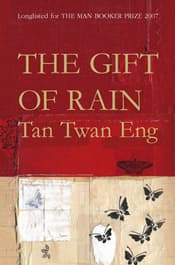
Tan Twan Eng (2007)
Genre
Literary Fiction / Historical Fiction
Reading Time
900 min
Key Themes
See below
Sign in to track this book
During the 1939 Japanese occupation of Penang, a young man's martial arts training pulls him into a web of love, betrayal, and devastating loyalty that challenges his identity.
The novel opens with an elderly Philip Hutton living alone in his family's dilapidated Penang mansion. He often visits the beach, haunted by memories. One day, while practicing karate, he meets a mysterious Japanese man, Hayato, who introduces himself as a sensei. Hayato offers to teach Philip, a mixed-race boy of English and Chinese heritage, aikido. Philip, drawn to Hayato's grace and discipline, accepts. This meeting begins a complex relationship that will shape Philip's life, connecting his fate with the approaching World War II and the Japanese occupation of Malaya.
Philip's aikido training with Hayato grows. He learns physical techniques and the philosophy of the martial art, focusing on harmony and redirecting an opponent's energy. Hayato becomes a father figure to Philip, offering him a sense of belonging and purpose he sometimes feels is missing from his own large, diverse family. Philip's European father, a successful merchant, is initially wary of the Japanese sensei, but Philip's dedication eventually earns acceptance. As the war in Europe escalates, the political climate in Penang becomes tense, with the Japanese presence growing more noticeable to the British colonialists.
The Hutton family, a reflection of Penang's multi-ethnic society, discusses the coming war. Philip's older brother, William, a strong supporter of the British, expresses anti-Japanese views, creating tension with Philip's loyalty to Hayato. Philip, torn between his family and his sensei, feels increasingly isolated. His sister, Isabel, an artist, observes these tensions. British authorities prepare for a potential Japanese invasion, and the carefree days of colonial Penang give way to fear. Philip struggles to reconcile his love for Hayato with the growing perception of the Japanese as an enemy.
The Japanese invasion of Malaya begins quickly and brutally. Penang falls fast, and the British colonialists flee, leaving the local population vulnerable. During the chaos, Philip's family is threatened by Japanese soldiers. To protect them, Philip uses his connection to Hayato. However, to save his family, he must publicly align himself with the Japanese, a decision that labels him a traitor to many, including his own brother. This act of perceived betrayal becomes the central tragedy of Philip's life, changing his relationships and his sense of self. The Japanese establish a brutal occupation, and Philip's position as Hayato's protégé places him in a precarious and morally compromising situation.
Under the Japanese occupation, Philip must serve as an interpreter and liaison for Hayato, who holds a significant position within the Japanese administration. This role forces Philip to see, and sometimes participate in, the atrocities committed by the Japanese against the local population. He learns information and sees events that horrify him, yet his bond with Hayato and the desire to protect his family keep him from open rebellion. He tries to reduce harm where he can, but his actions are often seen as complicity. His family, especially William, views him with disdain and suspicion, increasing his isolation and guilt.
During the occupation, Philip develops a complex and intimate relationship with Kon, a young Japanese woman who also works for the Japanese administration. Their connection gives Philip a fleeting sense of comfort and understanding amidst the brutality. However, tragedy strikes his family. His brother, William, involved in the resistance, is captured and executed by the Japanese. Philip is haunted by the knowledge that his own position, however unwillingly, contributed to his brother's death. The loss of William and the constant threat to his remaining family weigh heavily on Philip, intensifying his internal conflict and questioning his choices.
Despite his public alignment with the Japanese, Philip secretly begins to help the local resistance movement. He uses his access and knowledge to pass on vital information, helping to save lives and sabotage Japanese efforts. This double life is dangerous and morally ambiguous. He maintains his close relationship with Hayato, a bond that is both a source of comfort and a constant reminder of his betrayal. The emotional toll of this deception is immense, as he constantly fears discovery and the repercussions it would have on himself and those he is trying to protect.
As the war ends, the Japanese forces face defeat. The atomic bombs are dropped, and Japan surrenders. The occupation of Malaya ends, leaving a devastated land and a population scarred by war. Philip immediately faces the consequences of his wartime choices. He is labeled a collaborator by the returning British and many locals. Hayato, following his samurai code, prepares for his own fate. Philip must make a final, agonizing decision about his sensei, a decision that will forever define their relationship and Philip's understanding of loyalty and sacrifice.
After the war, Philip is put on trial for collaboration by the British authorities. Despite his attempts to explain his complex role and his secret aid to the resistance, public opinion largely condemns him. The emotional and psychological toll of the trial is immense, as he must relive the horrors of the occupation and confront accusations of betrayal. Though he is eventually acquitted, the stigma of collaboration remains. Devastated and ostracized, Philip retreats from society, choosing a life of self-imposed exile within his family home in Penang, haunted by his past and the ghosts of those he lost.
Decades later, the elderly Philip Hutton lives alone, reflecting on his youth. He continues to practice aikido, a constant reminder of Hayato and their bond. He records his memories, trying to understand the choices he made and the moral compromises forced upon him by war. His grand-niece visits him, unaware of the full extent of his past, bringing him old photographs. These encounters stir his memories, prompting him to finally confront the lingering questions of loyalty, betrayal, and the nature of love and sacrifice during wartime. He seeks, not absolution, but understanding.
In his final years, Philip decides to fully document his story, revealing the true complexities of his actions during the war—his secret work for the resistance, his loyalty to Hayato despite the cost, and the love and loss he experienced. He aims to leave a truthful account, not to justify himself, but to provide context and understanding for future generations. His narrative becomes a reflection on the difficult choices demanded by war. He finds some peace in unburdening himself, hoping his story will serve as a reminder of the grey areas of morality.
The Protagonist
Philip transforms from an innocent, impressionable boy into a complex, morally conflicted man burdened by the choices he made during the war, eventually seeking peace through truth-telling.
The Antagonist/Mentor
Hayato remains steadfast in his personal code of honor and duty, even as his role shifts from peaceful sensei to wartime administrator, ultimately accepting his fate with stoicism.
The Supporting
William's character remains consistent in his anti-Japanese stance, leading to his tragic end as a resistance fighter.
The Supporting
Isabel's arc is one of quiet endurance and artistic reflection, processing the war's impact through her creative lens.
The Supporting
Kon's arc is brief but impactful, providing Philip with a moment of human connection before succumbing to the harsh realities of wartime.
The Supporting
Edward's arc shows the diminishing power and eventual helplessness of the colonial elite in the face of invasion.
The Supporting
Ah Lian's arc highlights the resilience and quiet suffering of the local population during wartime.
The Mentioned
Her brief appearance facilitates Philip's final reckoning with his past, absorbing his story.
This theme is central to Philip's experience, as he must constantly choose between conflicting loyalties: to his family, to his country, and to his sensei, Hayato. His decision to publicly align with the Japanese to save his family is seen as a betrayal by his brother, William, and the wider community. Yet, his secret work for the resistance shows a deeper, hidden loyalty. The novel explores the ambiguity of these concepts, suggesting that in wartime, 'betrayal' can be a subjective and painful necessity for survival. Philip's lasting loyalty to Hayato, despite the atrocities committed by the Japanese, shows the complex nature of human bonds.
““There are no good and bad people, only good and bad actions.””
Philip, as a Eurasian, struggles with his identity from a young age, feeling neither fully English nor fully Chinese. His relationship with Hayato and his immersion in Japanese culture further complicate this. The war makes this struggle worse, as he must adopt a public persona that conflicts with his internal self. He is labeled a 'traitor' by one side and an 'outsider' by another. The theme explores how war can shatter one's sense of self and community, and how individuals navigate belonging when their world is torn apart. His solitary old age reflects his inability to fully reconcile these fractured identities.
““I was a half-caste, a half-breed, a half-thing. I was not whole.””
The novel shows the cruelty of the Japanese occupation, from executions to widespread fear. However, it also explores the moral grey areas that war creates. Philip's actions, while seemingly collaborative, are driven by a desire to protect his family and, secretly, to aid the resistance. Hayato, though a ruthless officer, is also shown as a man of honor and deep personal conviction. The story challenges simple ideas of 'good' and 'evil,' showing how ordinary people are forced into impossible choices, blurring the lines between victim, perpetrator, and survivor. The trauma of war leaves lasting scars on all characters.
““War is not about who is right, but who is left.””
Various forms of love are explored: the family love between Philip and his family, the bond between student and master (Philip and Hayato), and the romantic love between Philip and Kon. Each of these loves demands sacrifice. Philip sacrifices his reputation and peace of mind to protect his family and to maintain his loyalty to Hayato. William sacrifices his life for his beliefs. Hayato makes the ultimate sacrifice, adhering to his code. The novel examines the depths of human connection and the often-painful choices individuals make out of love, showing how these sacrifices shape destinies and leave lasting impacts.
““Love, I learnt, could be a prison, a cage built by your own hands.””
The story is told retrospectively by an elderly Philip Hutton.
The novel employs a framing device where the entire story is recounted by an elderly Philip Hutton, looking back on his life during and after the war. This allows for a reflective, often melancholic, tone. The older Philip's perspective provides insights into the long-term psychological impact of trauma and moral compromise, and offers a sense of wisdom and understanding that the younger Philip lacked. It also creates dramatic tension, as the reader knows from the outset that Philip survived, but not the full extent of his journey or the specific choices he made.
The martial art of aikido represents balance, harmony, and the redirection of conflict.
Aikido is not merely a martial art in the novel; it is a profound symbol. Initially, it represents a path to discipline, inner peace, and a connection to a different culture for Philip. As the war progresses, its philosophy of blending with and redirecting an opponent's force takes on a deeper, metaphorical meaning for Philip's own survival strategy: adapting to the Japanese occupation while secretly resisting. It symbolizes his attempt to find harmony in chaos and to navigate conflict without direct confrontation, reflecting his morally ambiguous position.
Philip's family home serves as a symbol of colonial decline and personal memory.
The Hutton family mansion in Penang is more than just a setting; it's a powerful symbol. Before the war, it represents the grandeur and stability of the British colonial era. During the occupation, it becomes a space of vulnerability and confinement. In Philip's old age, its dilapidated state mirrors his own internal decay and the fading memories of a bygone era. It acts as a repository of his past, a physical manifestation of his isolation and the weight of his history, a constant reminder of both loss and endurance.
The title itself acts as a recurring metaphor for cleansing, renewal, and divine intervention.
The 'gift of rain' is a recurring motif and the title's central metaphor. Rain in the novel carries multiple meanings: it can symbolize cleansing and renewal, washing away the horrors of war and regret. It can also represent sorrow and tears, mirroring the characters' grief. In a deeper sense, it alludes to the Buddhist concept of karma and the idea that all experiences, even painful ones, can be seen as 'gifts' or lessons bestowed by fate. It suggests that even in suffering, there is a potential for growth and understanding, a final absolution.
“Perhaps that is what it means to be a human being, to feel yourself split into a thousand pieces and then to try and put yourself back together again.”
— Philip ponders the nature of identity and struggle after a significant event.
“The past is a country we all visit, but few are brave enough to make their home there.”
— Sensei Yoshikawa reflects on the difficulty of confronting one's past.
“To understand, you must first forget what you think you know.”
— Sensei Yoshikawa imparts wisdom to Philip during his training.
“Rain cleanses everything, even the stains of war.”
— Philip observes the aftermath of a storm, finding a semblance of peace.
“There are some things you cannot unsee, some things you cannot unfeel. They become part of you, like a scar.”
— Philip struggles with traumatic memories.
“A man without a past is like a tree without roots. He will fall at the first strong wind.”
— Sensei Yoshikawa emphasizes the importance of understanding one's history.
“Love is not a gift, it is a choice. And sometimes, it is the most difficult choice of all.”
— Philip reflects on his complex relationships.
“Silence can be a weapon, and sometimes, it is the most effective one.”
— Philip observes the nuanced power dynamics during the war.
“We carry our histories in our bones, even when we try to bury them.”
— Philip considers the enduring impact of personal and collective history.
“The greatest battles are not fought with swords, but within the heart.”
— Sensei Yoshikawa teaches Philip about inner struggle and self-mastery.
“Sometimes, the hardest thing to forgive is yourself.”
— Philip grapples with guilt over his actions during the war.
“The world is not just black and white, Philip. There are shades of grey, and sometimes, those shades are where truth resides.”
— Sensei Yoshikawa offers a nuanced perspective on morality and judgment.
“A true warrior does not seek conflict, but is always prepared for it.”
— Sensei Yoshikawa defines the essence of martial arts and readiness.
“The gift of rain is not just water, but the promise of new life, even after the greatest drought.”
— Philip finds hope and renewal amidst despair.
Ready to see how well you understood this book? Take our interactive quiz with 10 questions.
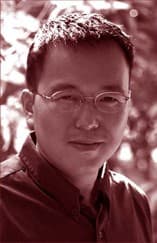
Biography coming soon.







