“Art is not a contest.”
— Nathan Zuckerman reflects on his literary aspirations and the competitive nature of writing.

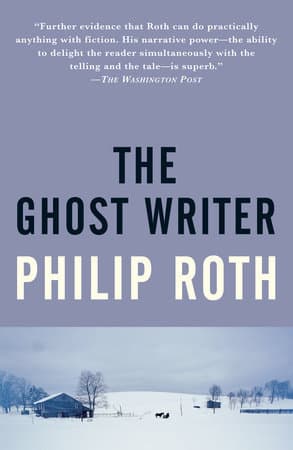
Philip Roth (1979)
Genre
Historical Fiction / Mystery
Reading Time
180 min
Key Themes
See below
Sign in to track this book
A young writer's idolization of a literary master unravels into a mystery when he meets a beautiful, enigmatic woman in the secluded Lonoff home, sparking his imagination to weave a dramatic, secret history.
In the winter of 1956, Nathan Zuckerman, a twenty-three-year-old Jewish writer, visits the New England home of his literary hero, E. I. Lonoff. Nathan has recently published short stories and seeks Lonoff's guidance, especially after his parents strongly disapproved of a story they called anti-Semitic. Lonoff, a reclusive and respected Jewish author, lives in a modest house with his wife, Hope. Nathan, full of awe and anxiety, carefully observes Lonoff's every gesture and word, hoping to learn from the master. Their initial conversations are awkward, as Nathan struggles to express his ambitions and Lonoff remains reserved.
During his visit, Nathan glimpses a young woman through a closing door – dark-haired, elegant, and beautiful. He learns her name is Amy Bellette, a former student of Lonoff's from Radcliffe, now living in their home. Her presence immediately interests Nathan, who tries to understand her role in the Lonoff household. Is she a secretary, a protégé, or something more personal? The mystery around Amy, combined with Lonoff's distant attitude towards her, fuels Nathan's imagination, leading him to create scenarios about her identity and relationship with the older writer. Her quiet presence contrasts with the ordinary life of the Lonoff home.
The evening dinner shows the strained dynamics within the Lonoff household. Hope Lonoff, seemingly unwell, speaks little, often deferring to her husband or making subtle, almost passive-aggressive remarks. Amy Bellette, though present, remains mostly silent, appearing melancholic and reserved. Nathan, highly observant, notices the subtle glances, unspoken tensions, and carefully chosen words, trying to piece together the unspoken story. He learns bits of Amy's background – her European origins, her family's tragic fate during the Holocaust – which deepens her mystique and fuels Nathan's romantic and literary fantasies about her. Lonoff himself remains somewhat detached, discussing literature and his writing process.
Overwhelmed by Amy's beauty, her European Jewish background, and her secretive manner, Nathan's imagination creates an extraordinary fantasy: Amy Bellette is Anne Frank. He develops an intricate backstory for this imagined reality, where Anne, having miraculously survived Bergen-Belsen, chose to live anonymously to escape the burden of her famous diary and public expectations. He envisions her seeking refuge with a revered Jewish writer like Lonoff, who, in this fantasy, would be protecting her identity. This elaborate fabrication becomes a desperate attempt for Nathan to give Amy deep significance, connect her to a larger historical tragedy, and elevate his own narrative aspirations by association.
Later in the evening, Lonoff tells a story about a moment in his own life, a moment of artistic sacrifice and moral compromise. He describes an instance where he chose not to intervene in a potentially scandalous situation involving a student, prioritizing his writing and privacy over direct involvement. This anecdote, delivered with Lonoff's understated seriousness, is a cautionary tale about the isolating demands of a literary life. Nathan listens intently, seeing parallels to his own struggles with family disapproval and the need for artistic independence. Lonoff's story highlights the cost of dedication to art and the choices writers make, influencing Nathan's understanding of his own path.
While Lonoff is briefly out of the room, Hope Lonoff, in a moment of vulnerability, confides in Nathan about her husband's past affair with a young woman. This revelation shatters Nathan's idealized image of Lonoff as a saintly, purely intellectual figure. The domestic discord and human frailty exposed by Hope's confession force Nathan to confront the reality that even his literary hero is flawed. The affair, though long past, still wounds Hope, and her sharing of this secret further complicates Nathan's perception of the Lonoff household, adding another layer of human messiness beneath the literary sanctity.
The next morning, Nathan wakes to find that Amy Bellette has left during the night. Her sudden, unexplained absence only confirms her enigmatic status in Nathan's mind. He searches for clues, but there are none, leaving him to grapple with questions about her true identity and purpose. Her departure feels like a confirmation of her transient nature, further feeding his Anne Frank fantasy. The Lonoffs offer no real explanation, maintaining their reserve. Amy's silent exit leaves a void in the house and in Nathan's imagination, ensuring her continued presence in his thoughts long after he leaves.
Before his departure, Nathan defends his controversial story, 'Higher Education,' to Lonoff, explaining his artistic intentions and the pressure from his parents. Lonoff listens patiently and then advises Nathan to be 'pitiless' in his writing, to pursue his artistic vision without bowing to external pressures, especially from family. He tells Nathan that a writer must be willing to sacrifice personal comfort and even familial approval for the sake of truth and art. This counsel, coming from his revered master, deeply affects Nathan, affirming his belief in the necessity of artistic courage and independence, even if it means alienating those closest to him.
Nathan leaves Lonoff's New England home, his mind full of the past twenty-four hours. The experience has been an unsettling initiation into the complexities of the literary life. He carries with him Lonoff's advice, the haunting image of Amy Bellette, and the shattered pieces of his idealized hero. The visit has deepened his understanding of the sacrifices required for art and exposed the human frailties even among esteemed figures. Nathan leaves with a renewed, though more complicated, sense of his own artistic path and the challenges ahead, forever changed by his encounter with the reclusive master and his enigmatic muse.
As Nathan travels home, he continues to think about his 'Anne Frank' fantasy, recognizing both its appeal and its absurdity. He understands that this elaborate construction shows his own anxieties about his Jewish identity, his artistic ambition, and his desire for deep connection. He grapples with the ethical implications of using historical tragedy for his own creative purposes. The encounter with Lonoff and the mystery of Amy have pushed him to confront the complexities of truth, fiction, and the responsibilities of a writer. He acknowledges the immense pressure to live up to his own potential, and the loneliness that often comes with pursuing art, leaving him to ponder the next steps in his literary journey.
The Protagonist
Nathan begins as an idealized, somewhat naive admirer but matures into a more nuanced understanding of artistic life, accepting its complexities and personal costs.
The Supporting
Introduced as an idealized figure, Lonoff is gradually revealed as a complex human being with past flaws and a life of quiet compromise, becoming more relatable.
The Supporting
Amy remains an enigma throughout the narrative, serving primarily as a catalyst for Nathan's internal journey and literary fantasies.
The Supporting
Hope remains largely static, serving as a revelation of Lonoff's human failings and the domestic toll of his artistic life.
The Mentioned
They remain off-stage, serving as a constant external pressure on Nathan, defining the initial conflict that drives him to Lonoff.
The novel explores the sacrifices required to pursue a life devoted to art. Lonoff's reclusive existence and his story of choosing not to intervene in a student's scandal highlight the dedication and detachment necessary for a writer. Nathan deals with this theme as he faces his parents' disapproval of his story, 'Higher Education,' and receives Lonoff's advice to be 'pitiless' in his writing. This suggests that true artistic integrity often demands a solitary path, possibly alienating family and personal connections for the sake of truth and creative vision.
““The professional hazard of the writer, Nathan, is that he is born to look and not to be. He has to be a witness, not a participant.””
Nathan Zuckerman's journey is about forging his own identity as a writer, separate from family and societal expectations. His fantasy about Amy Bellette being Anne Frank is a manifestation of this theme. By projecting such a historical identity onto Amy, Nathan tries to elevate his own narrative and connect his personal struggles to a larger, more significant Jewish history. The novel questions the line between authentic selfhood and the constructed identities we create for ourselves and others, especially within artistic creation.
““To be a Jewish writer, it seems, is to be condemned to a perpetual defense of one’s right to be a Jewish writer.””
The Holocaust influences the narrative, especially through Amy Bellette's European Jewish background and Nathan's 'Anne Frank' fantasy. This theme explores how historical trauma and collective memory shape individual identities and artistic expression. Nathan's imaginative leap to connect Amy with Anne Frank is a way for him to engage with the weight of Jewish history and find personal meaning within it. The novel suggests that for Jewish writers, confronting and interpreting this history is an unavoidable, though often difficult, part of their creative process.
““I had made her into a character. I had made her into a story. And the story was this: Anne Frank, still alive, having somehow survived the camps, chose to live in anonymity.””
Nathan's initial admiration of E. I. Lonoff is a central driving force. He approaches Lonoff with reverence, seeking a pure, unblemished literary hero. However, as the visit progresses, Lonoff is revealed to be a flawed human being, with a past affair and a life of quiet compromises, especially through Hope's confession. This gradual disillusionment forces Nathan to confront the reality that even his heroes are imperfect, challenging his romanticized view of artistic greatness and pushing him towards a more mature understanding of human complexity.
““He was not God. He was not even a saint. He was a man. A man who wrote books.””
Nathan Zuckerman's subjective and highly imaginative perspective shapes the entire narrative.
Nathan Zuckerman serves as an unreliable narrator, constantly filtering events through his own literary ambitions, anxieties, and fantasies. His detailed observations are often intertwined with his internal monologues, elaborate speculations, and creative projections, most notably his conviction that Amy Bellette is Anne Frank. This device highlights the subjective nature of perception and the way a writer's mind constructs narratives, even in real-time. It compels the reader to question the 'truth' of the events, emphasizing the power of imagination over objective reality and blurring the lines between fact and fiction within Nathan's experience.
Amy Bellette serves as a projected alter ego for Nathan's literary and historical anxieties.
Amy Bellette, particularly in Nathan's 'Anne Frank' fantasy, functions as a form of doppelgänger or alter ego. Nathan projects onto her his anxieties about Jewish identity, artistic responsibility, and the burden of history. By imagining her as Anne Frank, he attempts to give his own nascent writing a profound historical weight and moral urgency. She becomes a vessel for his literary aspirations and a mirror for his own internal struggles, embodying the silenced voices of history that he, as a writer, feels compelled to articulate, even if through a fabricated connection.
The entire story is presented as a recollection or early experience of the established writer, Nathan Zuckerman.
While not explicitly a frame narrative within *The Ghost Writer* itself, the novel functions as an origin story for the character of Nathan Zuckerman, who becomes a recurring alter ego for Philip Roth in later novels. This device implies that the events of this story are being recounted or reflected upon by an older, more established Nathan. It imbues the youthful Nathan's experiences with a sense of retrospective significance, suggesting that this pilgrimage to Lonoff and the encounter with Amy Bellette were foundational moments in his development as the prominent, often controversial, writer he would become.
E. I. Lonoff serves as the archetypal wise, reclusive mentor for the aspiring artist.
E. I. Lonoff embodies the classic mentor figure in the narrative. He is the established, revered master whom the young protagonist, Nathan Zuckerman, seeks out for guidance and validation. Lonoff's reclusiveness, his austere lifestyle, and his carefully dispensed wisdom position him as an authority figure whose words carry immense weight for Nathan. He provides both inspiration and a cautionary tale about the sacrifices of an artistic life, ultimately pushing Nathan towards a more independent and 'pitiless' approach to his craft. His presence is crucial for Nathan's artistic and personal awakening.
“Art is not a contest.”
— Nathan Zuckerman reflects on his literary aspirations and the competitive nature of writing.
“The very thing you're trying to escape is what defines you.”
— Nathan grapples with his family's disapproval of his writing and the inescapable influence of his background.
“Imagination, not memory, is the mother of the muse.”
— Nathan considers the source of creative inspiration, prioritizing invention over direct experience.
“You can't be a serious writer and be loved by your family.”
— This is a paraphrase of a sentiment expressed by E.I. Lonoff to Nathan, highlighting the conflict between art and domestic harmony.
“To be a writer, you must be a spy in your own house.”
— Nathan's father expresses his disapproval of his son's writing, feeling exposed by it.
“All great literature is a kind of gossip.”
— Nathan considers the nature of storytelling and its relationship to real life and personal revelation.
“The greatest danger for a writer is to be loved too much.”
— A thought that underlies the tension between Nathan's desire for recognition and his need for artistic freedom.
“What is the difference between a life lived and a life imagined?”
— Nathan contemplates the blurred lines between reality and fiction, particularly in his encounter with Amy Bellette.
“One writes not to be understood, but to understand.”
— Nathan's internal reflection on the personal motivation behind his artistic endeavors.
“The moral burden of the artist is to invent truth.”
— Nathan grapples with the responsibility of a writer to create meaning and insight, even through fabrication.
“To be an artist is to be an outsider.”
— Nathan feels alienated from his family and community due to his artistic pursuits and unconventional lifestyle.
“Every writer is a ghost writer, of a sort.”
— A reflection on the way writers channel or interpret other voices and experiences, even their own past selves.
“The past is a foreign country; they do things differently there.”
— While not a direct quote from the book, the sentiment about the inaccessibility and strangeness of the past resonates with Nathan's attempts to understand the lives of E.I. Lonoff and Amy Bellette.
“The greatest freedom is to be unknown.”
— Nathan, as a young, aspiring writer, experiences a sense of liberation in the anonymity of Lonoff's secluded home.
Ready to see how well you understood this book? Take our interactive quiz with 10 questions.
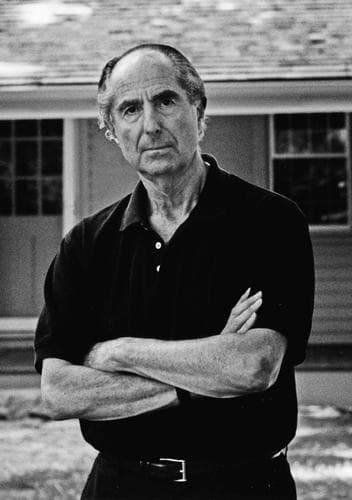
Philip Milton Roth was an American novelist and short story writer. Roth's fiction—often set in his birthplace of Newark, New Jersey—is known for its intensely autobiographical character, for philosophically and formally blurring the distinction between reality and fiction, for its "sensual, ingenious style" and for its provocative explorations of American identity. He first gained attention with the 1959 short story collection Goodbye, Columbus, which won the U.S. National Book Award for Fiction. Ten years later, he published the bestseller Portnoy's Complaint. Nathan Zuckerman, Roth's literary alter ego, narrates several of his books. A fictionalized Philip Roth narrates some of his others, such as the alternate history The Plot Against America.







