“The wind howled a mournful tune around the old house, as if the very air remembered the tragedies that had unfolded within its walls.”
— Describing the atmosphere of the old Graylock mansion.

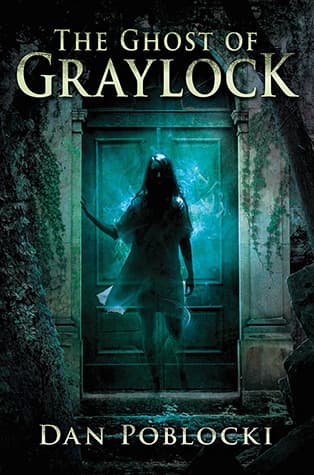
Dan Poblocki (2012)
Genre
Fantasy / Children's / Mystery / Young Adult
Reading Time
250 min
Key Themes
See below
Sign in to track this book
A new kid explores an abandoned asylum, accidentally releasing a haunting that follows him home, blurring the line between curiosity and dread.
Neil Cady and his younger sister, Bree, move to Graylock after their father's job relocation. Neil, a new photographer and a bit of an outsider, quickly becomes interested in the local legend of Graylock Hall. This former psychiatric hospital for children was abandoned decades ago after several mysterious patient deaths. Townspeople whisper about it being haunted, especially by the ghost of a girl named Margaret. Neil's new friend, Wesley, who lives next door, adds to his curiosity with stories of the asylum and its tragic history, setting up their eventual exploration.
Curiosity and a desire for adventure lead Neil and Wesley into the woods to find Graylock Hall. They break in and begin exploring the old building, taking photos. Inside, they find decaying patient rooms, medical equipment, and unsettling items from its past. As they go deeper, they feel cold spots, hear strange noises, and sense a general unease. Neil captures some blurry, unexplainable images on his camera but dismisses them as dust or equipment problems. They leave feeling shaken but also intrigued, unaware that something has followed them.
Soon after their visit to Graylock Hall, strange things start happening in the Cady family's new house. Neil hears whispers, sees shadows, and experiences objects moving on their own. His sister, Bree, who is more sensitive and artistic, is especially affected. She draws disturbing images and claims to see a pale girl with dark hair. The hauntings grow, with doors slamming, temperatures dropping, and a constant feeling of being watched. Neil initially tries to explain these events, but their frequency and intensity make it impossible to ignore the possibility of a supernatural presence.
Disturbed by the growing events, Neil begins to research Graylock Hall more seriously. He visits the local library and historical society, looking through old newspaper articles and town records. He finds information about Dr. Carman, the head psychiatrist, and learns about several patients who died there. These include a girl named Margaret, known for her art, and another patient, a boy named Andrew. Neil starts to connect the strange events in his house to specific details from Graylock's past, especially themes of art and confinement, which match Bree's experiences.
Bree's connection to the ghost, whom Neil now believes is Margaret, grows stronger. Bree's drawings become more detailed and disturbing, showing scenes from Margaret's life and her time in Graylock Hall. Through these drawings and Bree's increasingly clear experiences, Neil puts together Margaret's story. Margaret was a talented but troubled artist who was unfairly confined and mistreated at the asylum. The ghost seems to be trying to communicate something specific through Bree, not just to scare them, but to reveal a truth hidden for years.
Neil's research increases, focusing on the mysterious deaths at Graylock. He learns that Andrew, another patient, disappeared from Graylock Hall, and his body was never found. Digging deeper, Neil finds evidence of Dr. Carman's cruel and experimental treatments, especially his use of a drug called 'Nocturne' to suppress patients' creativity. It becomes clear that Dr. Carman was a tormentor, not a healer. Margaret and Andrew were victims of his unethical practices. This discovery paints a darker picture of the asylum's history.
Believing Margaret's ghost is trapped and seeking help, Neil, with Wesley and a hesitant Bree, returns to Graylock Hall. This time, the haunting is much more aggressive and direct. They experience full poltergeist activity, disembodied voices, and terrifying apparitions. Bree, acting as a link, is overwhelmed by Margaret's presence. The ghost seems to guide them, trying to show them something specific inside the asylum walls. This suggests that the key to her peace lies within the building itself, perhaps a hidden truth or object.
Guided by Margaret's persistent spiritual signs and Bree's intuition, the children find a hidden room inside Graylock Hall. This secret space contains Dr. Carman's personal records and a collection of confiscated patient artwork, including Margaret's and Andrew's. They find Andrew's journal, which describes Dr. Carman's horrific experiments and the truth about Andrew's death: Carman killed him in a rage after Andrew tried to expose him. The journal also reveals that Margaret saw Andrew's murder and was then silenced and left to die, her spirit trapped by the injustice.
With Andrew's journal and the confiscated artwork as proof, Neil, Wesley, and Bree understand that Margaret's spirit was not evil but seeking justice. They bring the evidence to the authorities, exposing Dr. Carman's long-hidden crimes. The town finally acknowledges Graylock Hall's dark history. With the truth revealed and justice served, Margaret's restless spirit finds peace. The hauntings in Neil's house stop, and Bree's disturbing visions fade, bringing calm and closure to the Cady family and the town.
After the truth about Graylock Hall comes out, the town begins to heal. Neil's experiences have changed him; he is no longer just an observer but someone who actively seeks truth and helps others. His bond with Bree grows stronger. The Cady family finally feels at home, free from the lingering supernatural presence. The story ends with Neil reflecting on the power of memory, truth, and the lasting impact of past injustices, suggesting that while the ghosts are gone, the lessons learned will stay with them.
The Protagonist
Neil transforms from a skeptical observer into a brave and empathetic advocate for justice, learning to trust his instincts and protect his sister.
The Supporting
Bree learns to manage her sensitivity and use her unique connection to the spiritual world for good, becoming a key figure in solving the mystery.
The Supporting
Wesley grows from a thrill-seeker into a reliable and supportive friend, understanding the serious implications of their actions.
The Antagonist/Supporting
Margaret's journey is from a tormented, vengeful spirit to one finding peace after her story is finally told and justice is served.
The Antagonist
Dr. Carman's legacy of cruelty is ultimately exposed, bringing posthumous justice to his victims.
The Mentioned/Supporting
Andrew's posthumous arc is one of his truth finally being revealed, contributing to the ultimate justice for the victims of Graylock Hall.
The Supporting
They learn to trust their children's experiences, moving from skepticism to understanding and support.
The main theme is that truth, even if hidden for decades, will eventually come out and bring justice. Margaret's ghost is not evil but a desperate plea for her and Andrew's stories to be heard. Neil's investigation, driven by a desire to understand and help, uncovers Dr. Carman's crimes, allowing the spirits to find peace. This is clear when Neil and Bree find Andrew's journal, which is the proof needed to expose the past and bring closure to the victims.
“Sometimes, the truth needs a voice, even from beyond the grave.”
The novel examines the dangers of power without oversight, especially in institutions meant to care for vulnerable people. Dr. Carman's time at Graylock Hall shows this, as he abuses his authority to conduct cruel experiments and cover up his wrongdoings, leading to the deaths of innocent children. The asylum, once a place of healing, becomes a symbol of corruption and neglect. The tragic stories of Margaret and Andrew, silenced and victimized by the system meant to protect them, highlight this theme.
“A hospital is supposed to heal, not to hurt. But Graylock Hall did both.”
The story shows the deep connection that can form between people, even across life and death. Bree's artistic sensitivity allows her to empathize with Margaret's suffering, becoming an important link for the ghost's message. Neil also moves from fear to empathy as he understands Margaret's tragic story, seeing her actions not as malice but as a desperate cry for help. This theme stresses the importance of listening to and validating others' experiences, whether living or dead, to build understanding and healing.
“She wasn't trying to hurt us. She was trying to tell us something. She needed help.”
The novel explores how past traumas and injustices continue to affect the present for both individuals and communities. Graylock town carries the unspoken burden of the asylum's dark history, shown in whispers and legends. The Cady family's new home is directly affected by Graylock Hall's unresolved past. Only by confronting and exposing the truth of the past can the characters and the town begin to heal and move forward. The end of the haunting symbolizes freedom from this historical burden.
“Some secrets don't stay buried. They linger, waiting for someone to find them.”
A dilapidated former psychiatric hospital serving as the central setting and source of the haunting.
Graylock Hall is the primary setting and catalyst for all the supernatural events. Its decaying state, filled with remnants of past patients and medical equipment, creates an inherently eerie atmosphere. It functions as a physical manifestation of the town's dark history and the psychological trauma inflicted within its walls. The asylum is not just a location but a character in itself, holding the secrets and the trapped spirits, driving the protagonists to uncover its past.
Bree's artistic talent allows the ghost to communicate visually and provide clues.
Bree's drawings serve as a crucial plot device. Her sensitivity makes her a magnet for Margaret's ghost, and her artistic ability allows Margaret to manifest clues and reveal her story through Bree's artwork. These drawings are initially disturbing but progressively become more specific and informative, guiding Neil's investigation. Without Bree's unique connection and artistic expression, the full truth of Margaret's and Andrew's fates might never have been uncovered, making her an indispensable element in solving the mystery.
Andrew's journal provides the definitive evidence of Dr. Carman's crimes.
Andrew's journal, discovered in the hidden room within Graylock Hall, is the ultimate plot device for revealing the truth. It contains a first-hand account of Dr. Carman's unethical experiments, the abuse of patients, and the details of Andrew's own murder. This tangible evidence provides the concrete proof Neil needs to expose the long-buried crimes, moving the story from a supernatural mystery to a quest for justice. It serves as the climax of the investigation, bringing resolution to both the living and the dead.
“The wind howled a mournful tune around the old house, as if the very air remembered the tragedies that had unfolded within its walls.”
— Describing the atmosphere of the old Graylock mansion.
“Sometimes, the things you don't want to believe are the most real.”
— One of the characters contemplating the existence of ghosts.
“A secret is like a seed; if you keep it buried too long, it grows into something you can't control.”
— A character reflecting on the dangers of hidden truths.
“The past isn't always behind you. Sometimes, it's waiting just around the corner.”
— Hinting at how past events influence the present mystery.
“Fear has a way of making you see things that aren't there, and ignoring the things that are.”
— A character discussing the effects of their fear.
“Even in the darkest places, a flicker of light can show you the way.”
— A moment of hope amidst the frightening events.
“The silence in this house isn't empty; it's full of unspoken stories.”
— Observing the eerie quietness of Graylock.
“Sometimes, the only way to move forward is to look back, no matter how much it scares you.”
— Encouraging a character to confront the past.
“Ghosts aren't just spirits; they're memories that refuse to fade.”
— A philosophical take on the nature of the supernatural.
“The truth is rarely simple, especially when it's been hidden for a long time.”
— As the characters begin to unravel the complex mystery.
“It's hard to be brave when your heart is pounding like a drum in your chest.”
— A character admitting their fear during a scary moment.
“Every old house has its secrets, but some houses hold onto them tighter than others.”
— Reflecting on the unique history and secrets of Graylock.
“You can't run from your past forever, especially when it's still haunting the halls.”
— Emphasizing the inescapable nature of the Graylock's history.
Ready to see how well you understood this book? Take our interactive quiz with 10 questions.







