“The living and the dead have their own places, and it is best not to cross the boundaries.”
— Li Lan's initial reluctance and fear about the ghost marriage proposal.

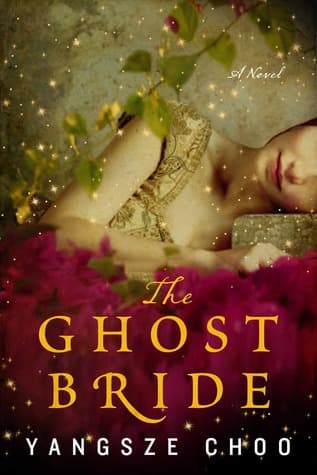
Yangsze Choo (2013)
Genre
Fantasy / Historical Fiction / Romance
Reading Time
7-8 hours
Key Themes
See below
Sign in to track this book
In colonial Malaya, a young woman's desperate choice to become a ghost bride for a wealthy, deceased heir plunges her into a perilous afterlife of vengeful spirits, ancient customs, and a forbidden earthly romance.
In 1890s colonial Malacca, Li Lan, a young woman from a once-wealthy but now struggling family, receives an unusual offer from her father. The powerful Lim family, whose only son, Lim Tian Ching, recently died, wants Li Lan to become his ghost bride. This old custom is meant to appease a restless spirit and would give Li Lan's family a comfortable future, though it means she would never marry a living man. Li Lan is initially put off by the idea, especially after a chilling visit to the Lim mansion where she feels an unsettling presence and hears about Tian Ching's reputation for being unpleasant. Her father, however, sees it as their only option.
Soon after the proposal, Li Lan starts having vivid, unsettling dreams. Lim Tian Ching, the deceased Lim son, appears to her, demanding her hand in marriage and acting possessive and childish. These dreams are more than just imagination; Li Lan finds herself physically transported to the Chinese afterlife, a world with spirits, monstrous officials, and ghost cities that mirror the living world. She experiences the horrifying results of unappeased spirits and sees the complex, often chaotic, workings of the underworld. Her nightly trips into this spirit world become more dangerous and harder to escape.
During her dangerous journeys into the spirit world, Li Lan meets Er Lang, a charming, powerful, and mysterious guardian spirit. Er Lang often appears in disguise, sometimes as a human, sometimes as a celestial being, and offers cryptic advice and occasional help. He seems interested in Li Lan's situation, though his reasons are unclear. He warns her about the dangers of the underworld and the true nature of Lim Tian Ching, encouraging her to find out the truth behind Tian Ching's death before she is permanently tied to him through the ghost marriage.
Amidst her supernatural ordeal, Li Lan feels drawn to Lim Tian Bai, Tian Ching's handsome and kind living cousin, who has recently returned from his studies abroad. Tian Bai is the new heir to the Lim family fortune, and Li Lan finds herself developing forbidden feelings for him. Their interactions are brief but important, offering Li Lan a glimpse of a potential future in the living world that would be denied to her if she accepts the ghost marriage. This growing affection makes her already difficult situation more complicated, increasing her desire to escape Tian Ching's hold.
Driven by a desperate need to avoid the ghost marriage and uncover the truth, Li Lan begins to investigate the circumstances of Lim Tian Ching's death. She gathers clues from both the living and spirit worlds, putting together pieces of information from conversations, observations, and her own spirit encounters. She learns that Tian Ching was widely disliked, known for his cruelty and bad behavior. Many believed he died from an illness, but Li Lan suspects there is more to the story, especially as Tian Ching's hauntings become more aggressive and his demands more insistent.
As Li Lan looks deeper, she uncovers the dark secrets of the Lim family. She learns about Tian Ching's abusive nature, especially towards his concubine, Yan Hong, and the maid, Amah. The family, especially Mrs. Lim, was desperate to keep up appearances and protect their reputation, often ignoring Tian Ching's wrongdoings. Li Lan realizes that the family's outward prosperity hides a web of deceit and suffering, and that Tian Ching's death may not have been as simple as first presented. The secrets of the living world connect with the mysteries of the dead.
Li Lan eventually confronts Yan Hong, Tian Ching's concubine, who is now living in poverty. Yan Hong, at first hesitant, eventually tells the full truth. She reveals that she, in a desperate act to save herself after years of abuse and fearing for her life, poisoned Tian Ching. Her confession is a key moment, confirming Li Lan's suspicions and providing the evidence needed to challenge the ghost marriage. Yan Hong's story shows the oppressive conditions faced by women in that era and the extreme actions they might take to find freedom.
Armed with Yan Hong's confession, Li Lan, guided by Er Lang, makes a dangerous journey to the underworld courts. She plans to present the evidence of Tian Ching's murder, hoping to prove he is not a worthy suitor for a ghost marriage and that his spirit should be punished, not appeased. The underworld bureaucracy is vast and intimidating, filled with stern judges and endless paperwork. Li Lan must navigate this complex system, facing challenges and obstacles from vengeful spirits, including Tian Ching's own persistent attempts to claim her.
In the underworld court, Li Lan successfully presents her case, proving Tian Ching was murdered and is therefore a 'hungry ghost' not deserving of a ghost bride. Tian Ching is condemned to a harsh fate, facing cycles of reincarnation and suffering. With Tian Ching's claim gone, Li Lan is finally free from the ghost marriage. However, her long time in the spirit world has changed her. She realizes she cannot simply return to her old life as if nothing happened. She makes the choice to remain in the spirit world, not as a trapped ghost, but as an assistant to Er Lang, using her unique abilities to help other spirits.
Li Lan chooses to stay in the spirit world, working alongside Er Lang. Her decision is not just about duty; it is also a recognition of her growing feelings for Er Lang, whose true nature as a powerful deity has been revealed. Their relationship grows from mentor and student to something deeper, a partnership built on mutual respect and affection. While she leaves behind her mortal life and the possibility of a future with Tian Bai, Li Lan finds purpose, belonging, and love in this new, unexpected existence, forever connecting the living and the dead.
The Protagonist
From a hesitant, somewhat naive girl, Li Lan transforms into a brave, resourceful woman who actively shapes her own destiny, eventually choosing a life in the spirit world.
The Supporting/Love Interest
Er Lang's character deepens as he allows himself to become more emotionally invested in Li Lan, revealing his true nature and finding companionship.
The Antagonist
Tian Ching's arc is one of unmasking and ultimate judgment, as his true nature and the circumstances of his death are revealed, leading to his condemnation in the underworld.
The Supporting/Love Interest
Tian Bai remains largely static, serving as a foil and a symbol of a life Li Lan might have had.
The Supporting
Amah remains a steadfast source of support, her character emphasizing loyalty and the wisdom of tradition.
The Supporting
Yan Hong moves from a state of fear and silence to bravely revealing the truth, finding a measure of peace through her confession.
The Supporting
His arc reflects the tragic consequences of societal pressures and financial ruin on individual choices.
The Supporting
Mrs. Lim remains largely static, representing the unyielding force of tradition and social standing.
The novel clearly shows the Chinese belief that the spirit world is not separate but a parallel, bureaucratic, and often chaotic mirror of the living world. Li Lan's nightly journeys blend the lines between reality and dream, showing how the past (and the dead) continue to affect the present (and the living). The customs of ghost marriages, ancestral worship, and funeral offerings have real impacts on both realms, affecting characters' choices and futures. The afterlife is not a static heaven or hell, but a dynamic place with its own politics, dangers, and even chances, as seen when Li Lan ultimately chooses to live there.
“The gates of the underworld, it turned out, were not so different from any other gates, just old and heavy and made of dark wood.”
Li Lan's main struggle is her fight for control in a society that offers women few choices. She is initially a pawn in her family's financial struggles, almost forced into a ghost marriage. Her journey is about gaining more self-control, as she actively investigates Tian Ching's death and eventually makes a big choice about her own future, breaking free from both earthly and spiritual limits. This theme also shows in Yan Hong's desperate act of defiance against her abuser, highlighting the limited options available to women and the extreme actions taken to regain freedom.
“I had always thought that my life was a path laid out by my parents, but now I saw that it was a path I had to forge for myself.”
The novel explores the conflict between seeking truth and justice, and society's focus on keeping up appearances and reputation. The Lim family, especially Mrs. Lim, goes to great lengths to hide Tian Ching's true character and the details of his death to protect their standing. Li Lan's search for truth exposes the hypocrisy and corruption that lie beneath the surface of wealth and tradition. Her successful appeal in the underworld courts ultimately brings justice to Tian Ching, showing that even in death, one cannot escape the results of one's actions, and that truth will eventually win.
“Sometimes, the darkest secrets are kept in the wealthiest homes.”
The story features different forms of love and the sacrifices made for them. Li Lan's initial problem involves sacrificing her life for her family's financial security through the ghost marriage. Her growing affection for Tian Bai represents a more conventional, earthly love she must ultimately give up. However, the most deep exploration is of her changing relationship with Er Lang. Their connection goes beyond the boundaries of life and death, requiring Li Lan to sacrifice her mortal existence for a deeper, more meaningful partnership in the spirit world. This shows that love can be found in unexpected places and forms, requiring deep commitment.
“Perhaps love was not about finding the perfect person, but about finding someone who made you feel perfectly yourself, flaws and all, even if that self resided in the land of the dead.”
A traditional, rarely practiced Chinese custom to appease a restless spirit by marrying it to a living person.
The ghost marriage serves as the central inciting incident and conflict. It is a traditional custom that drives the entire plot, forcing Li Lan into the spirit world and initiating her quest. It acts as a ticking clock, as Li Lan must solve the mystery of Tian Ching's death before she is irrevocably bound to him. The concept also allows for a deep exploration of cultural beliefs surrounding death, family honor, and the role of women in society.
Li Lan's ability to physically journey into the spirit world while asleep.
This supernatural ability is the primary mechanism through which Li Lan interacts with the afterlife. It allows her to gather clues, meet characters like Er Lang, and experience the dangers and wonders of the spirit world firsthand. It blurs the lines between dreams and reality, making her predicament more urgent and terrifying. The physical toll of these nightly journeys emphasizes the real danger she faces, even while 'asleep'.
The afterlife is depicted as a complex, often absurd, administrative system.
The portrayal of the spirit world as a bureaucratic entity, complete with courts, judges, and paperwork, adds a unique and often darkly humorous layer to the fantasy elements. It grounds the supernatural in a relatable, if exaggerated, human construct. This bureaucracy creates obstacles for Li Lan's quest for justice, highlighting the difficulties of navigating official systems, even in death. It also serves as a critical setting for the novel's climax, where Tian Ching's fate is decided.
Er Lang's guidance and protection of Li Lan in the spirit world.
Er Lang acts as a classic supernatural mentor figure, providing Li Lan with crucial information, protection, and enigmatic advice as she navigates the dangerous afterlife. His presence allows Li Lan to survive her encounters and learn the rules of the spirit world. This device not only facilitates plot progression but also develops their unique relationship, which evolves from student-teacher to romantic partners, adding depth to the narrative's emotional core.
“The living and the dead have their own places, and it is best not to cross the boundaries.”
— Li Lan's initial reluctance and fear about the ghost marriage proposal.
“A girl's beauty is her only fortune, and it must be carefully guarded.”
— A common societal belief regarding women's value and marriage prospects.
“The past is never truly gone, it merely waits for us to remember it.”
— Li Lan reflecting on the mysteries surrounding the Lim family and her own past.
“Even in the land of the dead, there are rules, and those who break them pay a price.”
— Er Lang explaining the order and dangers within the Underworld.
“Love, it seemed, was a disease that could afflict both the living and the dead.”
— Li Lan's observations on the various relationships she encounters.
“Sometimes, the only way to find your own path is to get lost first.”
— Li Lan's journey of self-discovery amidst the chaos of the ghost marriage and the Underworld.
“The dead can be very tenacious, especially when they have unfinished business.”
— Referring to Lim Tian Ching's persistent presence and demands.
“There are many kinds of hunger, and not all of them can be satisfied with food.”
— Li Lan's yearning for truth, freedom, and a meaningful life.
“A promise made to the dead is a sacred thing, not easily broken.”
— The gravity of the ghost marriage contract and its implications.
“The most beautiful things often hide the greatest dangers.”
— Li Lan's experience with the deceptive beauty of the Underworld and its inhabitants.
“Fear is a powerful master, but hope can be even stronger.”
— Li Lan's internal struggle and eventual resilience in the face of adversity.
Ready to see how well you understood this book? Take our interactive quiz with 10 questions.







