“Being dead didn't make me any less of a girl, and being dead certainly didn't mean I had to be invisible.”
— Alona's internal thought about her ghostly existence and desire for more.

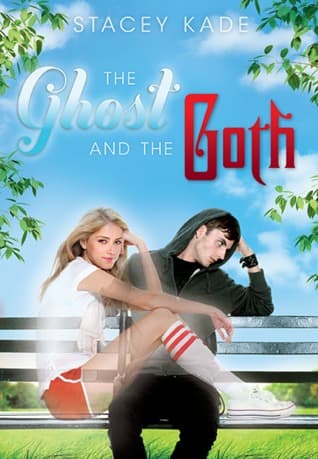
Stacey Kade (2010)
Genre
Fantasy / Young Adult / Romance
Reading Time
150 min
Key Themes
See below
Sign in to track this book
A deceased, self-absorbed popular girl finds an unlikely ally in a living outcast who can see ghosts, as they navigate the chaotic afterlife and the perils of high school.
Alona Dare, the popular Homecoming Queen, dies an embarrassing death when a band-geek bus runs her over. Confused, she cannot understand her new ghostly life. She quickly learns that being dead is not glamorous; she cannot interact with the living, and her friends and boyfriend, Brad, move on quickly. Alona is horrified to hear their true, often unflattering, opinions of her, which shatters her self-image. Her ghostly form also flickers, a terrifying phenomenon she cannot explain.
Will Killian, a loner at Northgate High, has a terrifying secret: he can see, hear, and touch ghosts. This ability has isolated him from his peers and causes constant anxiety, especially since his father's suicide, which Will believes was linked to the same gift. He tries to hide his powers, fearing ridicule and psychiatric help. However, his life complicates when a new, malevolent ghost, a 'seething cloud of negative energy,' relentlessly pursues him, causing chaos and making it impossible for Will to act normal. His mother worries, his shrink grows suspicious, and his principal looks for reasons to expel him.
While haunting Northgate High, Alona sees Will Killian tormented by the malevolent ghost, which she later learns is 'The Shadow.' To her shock, Will reacts to The Shadow and acknowledges Alona's presence, though he initially mistakes her for another menacing spirit. This means Alona is not entirely alone. She confronts Will, initially with her usual demanding attitude, but soon realizes he is her only link to understanding her new reality and finding peace. Will, however, does not want to help the ghost of the girl who made his high school life terrible.
Alona, desperate to stop flickering and understand her ghostly existence, realizes Will is her only hope. Using her knowledge of his school struggles and her ability to indirectly influence objects (by causing air disturbances), she blackmails him into helping her. She promises to leave him alone and possibly help him with his own ghost problem if he assists her in uncovering the mystery behind her death and her fading. Will, though repulsed by Alona's personality, is intrigued by the possibility of help against The Shadow and reluctantly agrees, forming an uneasy alliance between the former queen bee and the school outcast.
Their investigation begins with Alona recounting her death, which Will helps piece together. They learn that ghosts often linger due to unfinished business or a violent, unexpected death. Alona's fading is particularly concerning, suggesting a more complex problem. They look for clues at the accident scene and in her former life, with Will acting as her go-between to the living world. This forces them together, leading to uncomfortable but revealing conversations where Alona starts to see Will as more than a 'goth freak,' and Will begins to understand the vulnerability beneath Alona's polished exterior.
As Alona and Will spend more time together, The Shadow's attacks on Will increase. The malevolent entity, which feeds on negative energy, seems drawn to Will, possibly sensing his fear and the burden of his gift. The Shadow throws objects, whispers threats, and physically assaults Will, making his life a nightmare. These escalating incidents put Will at risk of being institutionalized, as his mother and therapist attribute the strange occurrences to a mental breakdown. Alona sees these attacks and, despite her initial self-centeredness, begins to worry about Will's safety, realizing the true danger he faces.
Through their combined efforts, Alona and Will uncover shocking evidence: Alona's death was not an accident. They piece together clues, including a strange note and the unusual behavior of certain individuals, to realize she was deliberately pushed in front of the bus. The culprit is Brittany, a former friend of Alona's who was tired of being overshadowed and mistreated. This revelation deeply affects Alona, forcing her to confront her own behavior and the animosity she caused, adding another layer to her unfinished business and the reason for her lingering.
In a confrontation, Alona and Will discover The Shadow's true identity: it is Will's own father, consumed and distorted by the very gift Will possesses. His father, unable to cope with seeing and hearing the dead, succumbed to despair and transformed into the malevolent entity that now preys on Will. This revelation devastates Will, confirming his deepest fears about his own future and the danger of his ability. Alona, witnessing Will's profound pain, feels growing empathy and determination to help him, strengthening their bond.
With the truth revealed, Alona, with Will's help, confronts Brittany, forcing her to confess her crime. This act provides some closure for Alona, addressing her unfinished business. Simultaneously, they must deal with The Shadow, Will's father. They realize that to save Will, they must help his father find peace. Alona, now understanding her own fading and the power of love and forgiveness, helps Will communicate with his father's tormented spirit. It is a perilous spiritual battle, where Will risks being consumed by his father's despair.
In a heartbreaking scene, Alona helps Will reach out to his father's fragmented spirit, offering forgiveness and love. This act of compassion allows Will's father to find peace and cross over. The malevolent Shadow dissipates, freeing Will from its torment. Alona, having helped Will and found justice for her own death, begins to experience the 'white light' she longed for. Before she fully fades, she shares a poignant goodbye with Will, a connection forged in adversity. Alona finally moves on, leaving Will with a profound sense of loss but also a new understanding of his gift and peace.
The Protagonist
Alona transforms from a self-centered, superficial popular girl into an empathetic and self-aware individual who finds peace by helping others.
The Protagonist
Will evolves from a fearful, isolated individual burdened by his gift to a courageous and accepting person who embraces his abilities and finds connection.
The Antagonist
The Shadow's arc is one of revelation and eventual resolution, as its true identity is uncovered and its tormented spirit is ultimately helped to find peace.
The Supporting
Brittany's arc is static, revealing her true malicious nature and facing the consequences of her actions.
The Supporting
Brad remains a static character, serving as a catalyst for Alona's realization of her past mistakes.
The Supporting
Will's mother's arc is one of loving concern, ultimately finding some peace when Will begins to heal, though remaining unaware of the supernatural elements.
The Mentioned
Dr. Ramirez remains a static character, representing the medical establishment's perspective on Will's struggles.
The novel explores Alona's journey of redemption. She, a superficial and unkind person, gets a second chance to understand herself and her effect on others. Her death removes her popular facade, forcing her to confront her true character and the shallowness of her past life. Witnessing the true opinions of her 'friends' and experiencing vulnerability as a fading ghost makes her develop empathy and a desire to help others, leading to her finding peace. This theme is central to Alona's transformation from a self-absorbed queen bee to a compassionate spirit.
““I was the girl you hated in high school. Is it my fault I was born with it all—good looks, silky blond hair, a hot body, and a keen sense of what everyone else should not be wearing?””
Will Killian's character embodies the burden of being different and the isolation it brings. His ability to see ghosts sets him apart, leading to social ostracization and deep personal fear, made worse by his father's tragic fate. He constantly tries to hide his gift, fearing ridicule and institutionalization. The novel highlights the psychological toll of living with a secret and the struggle to find acceptance, both from others and within oneself. His journey is about learning to embrace his unique abilities rather than seeing them as a curse.
““I can see, hear, and touch the dead. Unfortunately, they can also see, hear and touch me. Yeah, because surviving high school isn’t hard enough already.””
The novel addresses the consequences of one's actions, both in life and in the afterlife. Alona's death and ghostly existence force her to confront the negative impact of her past behavior on others, leading to regret and a desire to make amends. Brittany's motive for murder highlights the destructive power of envy and resentment. The theme also extends to forgiveness, particularly in Will's struggle to forgive his father, who became The Shadow. Forgiveness, for oneself and others, proves to be a powerful force for healing and moving on.
““I don’t know where I go when I’m gone, but it’s not good. Where is that freaking white light already?””
A significant theme is that true worth and character go beyond superficial appearances. Alona, who based her identity on looks and popularity, learns that these are fleeting and meaningless. She discovers that her 'friends' were shallow, and her 'goth' adversary, Will, has a depth and kindness she never expected. Will, in turn, sees beyond Alona's popular facade to her vulnerability and capacity for growth. The novel encourages readers to look past labels and stereotypes to find the true essence of individuals, fostering understanding and empathy.
““He was the boy I’d scorned, the one I’d never given a second glance. And now, he was my only hope.””
Alona's initial self-perception is skewed, changing as she learns the truth.
The story is primarily narrated by Alona, whose initial perspective is heavily influenced by her self-centered and superficial worldview. She believes herself to be universally loved and admired, and her descriptions of events and characters are colored by this bias. As a ghost, she is forced to confront the harsh reality of how others truly perceived her, and her narration evolves to reflect her growing self-awareness and empathy. This device allows the reader to experience her journey of self-discovery alongside her, highlighting the stark contrast between her perceived reality and the truth.
Will's ability to see and interact with ghosts.
Will's unique ability to see, hear, and touch ghosts serves as the central supernatural element and a key plot device. It is both a 'gift' that allows him to help Alona and a 'curse' that isolates him and attracts dangerous entities like The Shadow. This device drives the conflict, enables the unlikely partnership between Alona and Will, and provides the framework for exploring themes of difference, burden, and acceptance. It also creates the mystery surrounding The Shadow and the ultimate resolution of Will's family trauma.
Alona's unstable ghostly form, threatening her existence.
Alona's flickering and fading existence as a ghost is a crucial plot device that introduces urgency and mystery. It signifies that her ghostly state is not stable and she is in danger of permanent disappearance or worse. This phenomenon becomes a primary motivation for Alona to seek Will's help and uncover the truth about her death and her unfinished business. It also foreshadows the eventual resolution of her character arc, where finding peace allows her to either cross over or fully fade, bringing a bittersweet conclusion to her story.
A malevolent ghost that torments Will, eventually revealed to be his father.
The Shadow acts as a primary antagonistic force throughout the narrative, driving much of Will's personal conflict and escalating the supernatural stakes. Its malevolent attacks not only endanger Will physically and mentally but also push him closer to institutionalization. The eventual revelation of its true identity as Will's father transforms it from a generic evil entity into a deeply personal and tragic figure, adding emotional depth and a strong thematic connection to Will's personal struggles with his gift and his family history. It compels both protagonists to confront deep-seated issues.
“Being dead didn't make me any less of a girl, and being dead certainly didn't mean I had to be invisible.”
— Alona's internal thought about her ghostly existence and desire for more.
“Maybe being alive was just a series of things you couldn't control, and the trick was to find the things you could.”
— Liza's philosophical reflection on life's challenges.
“It was amazing how much more you noticed when you weren't trying to hide.”
— Alona observing her surroundings more clearly after letting go of some self-consciousness.
“Sometimes the things that scare you the most are the things you need to face.”
— A piece of advice given to Liza about confronting her fears.
“Love didn't care if you were living or dead. It just... was.”
— Alona's realization about the nature of her feelings for Will.
“Being different wasn't a curse. It was just... different. And sometimes different was good.”
— Liza coming to terms with her unique ability to see ghosts.
“The hardest part about being a ghost wasn't the loneliness, but the inability to touch.”
— Alona's lament about her physical limitations as a ghost.
“You don't need to be seen by everyone to be real.”
— Will's comforting words to Alona, emphasizing her existence despite her invisibility to most.
“Grief was a funny thing. It didn't care if you had moved on, it still found ways to sneak up on you.”
— Liza reflecting on her ongoing feelings of loss.
“Sometimes the only way to find yourself is to get a little lost.”
— A character's observation about the journey of self-discovery.
“The world was full of secrets, and sometimes the best ones were hidden in plain sight.”
— Liza's growing awareness of the hidden supernatural world around her.
“It’s not about being fearless, it’s about facing what scares you despite the fear.”
— A motivational thought about courage from one of the characters.
“Even in death, there was still a chance to live, in a way.”
— Alona's evolving perspective on her ghostly existence and finding purpose.
“You can't choose who you fall for, no matter how inconvenient it might be.”
— A character's internal thought about the unpredictable nature of attraction.
Ready to see how well you understood this book? Take our interactive quiz with 10 questions.







