“There are only two sides in this world, my girl. Male or female. And you belong to one.”
— Early in the story, establishing the fundamental societal division.

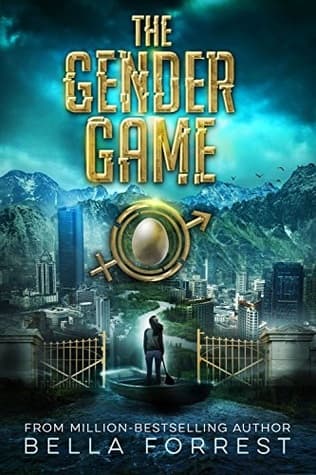
Bella Forrest (2016)
Genre
Fantasy / Science Fiction / Young Adult / Romance
Reading Time
8-9 hours
Key Themes
See below
Sign in to track this book
Divided by a toxic river, two gender-segregated nations are on the brink of war. A young woman, sentenced to death, must infiltrate the enemy kingdom to save her brother, risking forbidden love and her life.
Nineteen-year-old Violet Bates lives in Matrus, a nation ruled by women, separated from the male-dominated Patrus by a toxic river. Her life has been marked by grief and anger since her younger brother, Lee, disappeared years ago. Violet is known for her rebellious spirit and her inability to follow Matrus's strict rules, often clashing with authorities. She is caught stealing food, though her reasons are tied to a deeper search, and is sentenced to death. This harsh judgment shows Matrus's rigid society, where dissent is not allowed and punishments are severe. Faced with execution, Violet is given a choice that will drastically change her fate.
Just before her execution, the Matrus Council offers Violet a reprieve. Instead of dying, she can become a spy for Matrus within Patrus, the patriarchal nation across the toxic river. Her mission is to gather information on Patrus's military and political structure, focusing on their leader, the Patrus King. This is a desperate measure, as no Matrus citizen has ever successfully infiltrated Patrus and returned. Violet, driven by a desire to survive and a faint hope of finding answers about Lee, reluctantly accepts the dangerous assignment, knowing it means entering a world completely opposite to her upbringing.
Violet is secretly transported across the treacherous toxic river, a journey full of danger. Upon arriving in Patrus, she immediately faces a society where women are subservient to men, a sharp contrast to matriarchal Matrus. She is given a new identity and forced to adopt the customs and dress of Patrus women, which include being demure and obedient. The initial shock of this oppressive environment is immense for the fiery Violet, who struggles to suppress her rebellious nature. She observes the social hierarchy, the strict gender roles, and the constant surveillance, understanding that any mistake could lead to her discovery and death.
As part of her infiltration, Violet is placed within the Patrus court, where she eventually meets the Patrus King, Ash. He is a strong and charismatic leader, whose presence commands respect and fear. Violet's first encounters with Ash are tense, as she tries to maintain her cover while gathering information. She finds herself unexpectedly drawn to his intelligence and complex personality, even as she despises everything his nation stands for. Ash, in turn, seems to notice Violet, sensing something different about her, which puts her mission at even greater risk. Their interactions are a delicate dance of deception and growing attraction.
While on her spy mission, Violet continues to search for any information about her brother, Lee. She begins to find subtle clues and hear whispers that suggest Lee might not have simply disappeared but could have been taken to Patrus, or perhaps even defected. This discovery renews her hope and gives her a personal motivation beyond her Matrus assignment. The possibility of Lee being alive and in Patrus adds a deeply emotional layer to her dangerous mission, making her even more determined to uncover the truth, even if it means risking her cover and her life.
Despite their opposing loyalties and the inherent danger, a powerful and forbidden attraction begins to grow between Violet and King Ash. Their interactions move beyond politics, revealing a deeper connection based on mutual respect and understanding. Violet becomes increasingly conflicted, torn between her loyalty to Matrus and her growing feelings for the man who represents everything she is supposed to hate. Ash, too, is drawn to Violet's spirit and intelligence, qualities rarely found in the submissive women of Patrus. This emotional entanglement complicates her mission, blurring the lines between enemy and lover.
Through her espionage and her developing relationship with Ash, Violet begins to uncover a deep secret about Patrus. She learns that the rigid gender roles and the division between Matrus and Patrus are not as simple as they appear. There is a deeper, more complicated history involving a devastating past event, a plague, and a shared ancestor. This revelation challenges everything Violet believed about her world and the reasons behind the gender war. The truth reveals a desperate attempt by both nations to survive and rebuild after a cataclysmic event, making the conflict far more tragic and nuanced than she ever imagined.
Violet looks deeper into the history of both nations and discovers that Matrus and Patrus were once a single, unified society before the gender split and the creation of the toxic river. This shared ancestry is a closely guarded secret, particularly in Matrus, where the story of Patrus as an inherently evil enemy is deeply ingrained. The revelation that the two nations are not inherently different but rather fractured parts of a whole challenges the very foundation of the gender game. It forces Violet to question the propaganda she was raised with and the true motives of the Matrus Council.
Violet's relentless search for Lee leads to a devastating discovery. She learns that Lee was indeed taken to Patrus, but not as a prisoner. He was living there under a different identity, having been recruited or forced to serve the Patrus cause due to his unique skills or circumstances. The specifics of his fate and his involvement with Patrus are revealed, leading to a complex emotional confrontation for Violet. This truth about Lee further blurs the lines between good and evil, forcing Violet to confront the painful reality that her brother might not be the innocent victim she always imagined, but rather an active participant in the opposing nation.
As Violet puts the puzzle together, she understands that the Matrus Council has deliberately hidden the true history of the world and the origins of the gender divide. The story they presented to their citizens was a carefully constructed lie, designed to maintain power and continue the conflict with Patrus. This manipulation extends to the reasons for Lee's disappearance and the overall state of the world. Violet feels betrayed by her own nation, realizing she has been a pawn in a much larger, more deceitful game. This revelation solidifies her disillusionment with Matrus and strengthens her resolve to find a different path.
With the truth about their shared history and the manipulated conflict exposed, Violet and Ash, despite their initial animosity and forbidden love, begin to explore the idea of reuniting Matrus and Patrus. They realize that the ongoing gender war is not only destructive but also based on lies. Their mutual understanding and growing trust lead them to believe that peace and unity are possible, even necessary for the long-term survival of their people. This potential alliance is a dangerous and revolutionary concept, challenging the deeply ingrained prejudices and power structures of both nations. They face immense opposition from those who benefit from the division.
Armed with the truth, Violet prepares to confront the Matrus Council, knowing this will be her most dangerous act yet. She must choose where her true loyalties lie: with the nation that condemned her and lied to her, or with the possibility of a unified future alongside Ash. This confrontation is fraught with peril, as she risks being branded a traitor by both sides. Her decision will not only determine her own fate but also potentially the future of both Matrus and Patrus, as she stands at the edge of sparking either further conflict or a revolutionary path towards peace and reconciliation.
The Protagonist
Violet transforms from a rebellious prisoner focused on personal revenge into a leader willing to risk everything for a unified future, challenging deeply ingrained prejudices.
The Antagonist/Love Interest
Ash evolves from a staunch defender of Patrus's traditions into a visionary leader willing to consider reconciliation and unity with Matrus, driven by his connection with Violet.
The Supporting/Mentioned
His arc is revealed retrospectively, shifting from a missing person to a figure who challenges Violet's understanding of loyalty and the conflict.
The Antagonist
Their role remains largely static as the institutional antagonist, representing the oppressive status quo that Violet seeks to dismantle.
The Supporting
Remains a consistent figure representing Matrus's authority and determination to maintain its power.
The Supporting
Their individual arcs are minor, collectively representing the political landscape and challenges within Patrus.
The novel explores the extreme consequences of a society divided purely by gender, with Matrus as a matriarchy and Patrus as a patriarchy. It highlights how strict gender roles can lead to oppression, conflict, and the suppression of individual identity. Violet's struggles in Patrus, where she must conform to subservient female norms, contrast sharply with her rebellious nature, showing the dehumanizing effects of such divisions. The story ultimately questions if these divisions are necessary or valid, suggesting they are created rather than natural.
“A toxic river divides nineteen-year-old Violet Bates's world by gender. Women rule the East. Men rule the West.”
Deception is a central theme, from Violet's role as a spy to the larger lies spread by both nations. Matrus and Patrus both maintain their power by hiding the true history of their world and the origins of the gender divide. Violet's journey is about uncovering these hidden truths, revealing how governments manipulate information to control citizens and continue conflict. The revelation of a shared past and the lies about Lee's disappearance force characters to question everything they have been taught.
“Everything I thought I knew about Matrus, about Patrus, about our world... it was all a lie.”
Violet's identity is central to the story. She is a natural rebel in Matrus, and her forced conformity in Patrus is a constant struggle. The theme explores how individuals try to maintain their true selves in oppressive environments. Violet's internal conflict between her nature and the roles she must play highlights the human need for autonomy and self-expression. Her journey is about finding her true identity beyond gender and national loyalty, ultimately choosing to create a new path.
“But abiding by rules has never been Violet's strong suit.”
The growing romance between Violet and Ash, leaders of opposing nations, embodies forbidden love. Their relationship challenges the deep hatred and prejudice between Matrus and Patrus, suggesting that personal connection can overcome political divides. This forbidden love helps drive the idea of reconciliation and unity, showing that understanding and empathy can bridge even the most hostile gaps. It represents hope for a future where cooperation replaces conflict.
“In a world divided by gender, only the strongest survive... and sometimes, the strongest defy the rules of love.”
A physical and symbolic barrier dividing Matrus and Patrus.
The toxic river serves as both a literal and metaphorical plot device. Physically, it separates the two nations, making travel between them dangerous and rare, thus reinforcing their isolation and mutual ignorance. Symbolically, it represents the deep-seated hatred and division between the genders. Its toxicity reflects the poisonous nature of the conflict itself. Crossing the river is a perilous rite of passage for Violet, marking her entry into the unknown and her confrontation with the enemy, while its eventual remediation becomes a symbol of potential unity.
Violet's assignment to infiltrate Patrus and gather intelligence.
Violet's spy mission is the primary driver of the plot. It places her directly in the heart of the enemy territory, forcing her to adapt, observe, and interact with the very people she's been taught to despise. This device allows for the slow reveal of Patrus's culture, its secrets, and eventually, the truth about the world. It creates constant tension and high stakes, as Violet must maintain her cover while also pursuing her personal agenda of finding Lee. The mission's success or failure is tied directly to the larger themes of truth and reconciliation.
Violet's brother whose disappearance fuels her actions and reveals deeper truths.
Lee's disappearance acts as a powerful personal motivation for Violet, initially driving her rebellion and later her determination to uncover the truth in Patrus. This plot device serves as a MacGuffin, propelling Violet's journey forward while simultaneously being integral to the larger mystery. The eventual revelation of Lee's fate and his connection to Patrus exposes the extent of the deception perpetrated by both nations, making the conflict deeply personal for Violet and adding emotional weight to her discoveries about the world's true history.
“There are only two sides in this world, my girl. Male or female. And you belong to one.”
— Early in the story, establishing the fundamental societal division.
“In the land of the strong, the weak perish. And in this land, strength is defined by gender.”
— Reflecting on the harsh realities of the gender-segregated world.
“Love was a dangerous game in a world that sought to divide us.”
— Laying out the romantic stakes in a society built on segregation.
“Sometimes, the biggest battles are fought not with swords, but with words, and with the strength of your own conviction.”
— A moment of introspection about the nature of resistance.
“Every secret has a price, and sometimes that price is your very soul.”
— Pondering the consequences of keeping profound secrets.
“The lines between good and evil are often blurred, especially when survival is at stake.”
— A character grappling with difficult choices in a harsh environment.
“Hope is a fragile thing, easily crushed, but also incredibly resilient.”
— A moment of reflection on the endurance of hope amidst despair.
“They say knowledge is power, but in my world, ignorance can sometimes be a shield.”
— Contemplating the dangerous nature of truth in a controlled society.
“To truly know someone, you must see them not as their gender dictates, but as their heart beats.”
— A profound realization about transcending societal prejudices.
“Freedom is not given; it is taken, often with great sacrifice.”
— A statement on the active nature of achieving liberty.
“The greatest prison is not built of stone, but of the minds that refuse to question.”
— Critiquing the mental and ideological confinement of society.
“Sometimes, the only way to find yourself is to get lost first.”
— A character's journey of self-discovery through adversity.
“Fear can be a powerful motivator, but courage is what truly changes the world.”
— Contrasting the impacts of fear and bravery.
“The world may try to define you, but only you can decide who you truly are.”
— A strong message of individual agency and identity.
Ready to see how well you understood this book? Take our interactive quiz with 10 questions.







