“The garden is not merely a place, but a state of being, a reflection of the soul's deepest yearnings.”
— Early in the book, the narrator reflects on the profound meaning of the titular garden.

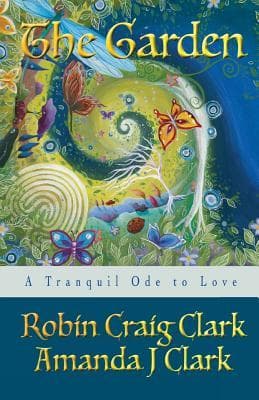
Genre
Fantasy / Spirituality / Creativity / Philosophy / Romance
Reading Time
120 min
Key Themes
See below
Sign in to track this book
Begin a spiritual journey where old wisdom, romance, and the idea of 'I Am That I Am' come together to reveal your deepest self.
The story starts with a nameless Seeker arriving in a mystical place called The Garden. From the moment he enters, he feels a strong sense of familiarity, as if he has returned home. The Garden is not just a physical place; it is a living thing, full of unseen energy. An inner urge pulls the Seeker deeper, a longing for something he cannot yet name. He sees the calm and beauty around him, which is very different from his past life. A quiet sense of anticipation grows in him for what this sacred place holds.
As the Seeker walks through The Garden, he meets an old, wise Elder. The Elder's presence is calm and full of deep understanding. He greets the Seeker with a knowing smile, as if he expected him. Their talk is not direct; the Elder speaks in stories and puzzling questions, asking the Seeker to look past what he sees. He says The Garden reflects inner truth, a place to rediscover one's true self. The Elder's words spark curiosity and a deeper purpose in the Seeker, suggesting his journey is not just to explore The Garden but to explore himself.
Deep in The Garden, the Seeker hears a beautiful melody. The song is so pure and clear it seems to come from existence itself. Following the sound, he finds a beautiful Maiden, whose presence is as light as her voice. Her song speaks of old truths, of how all things are connected, and of the hidden wisdom in the heart. Listening to her, the Seeker feels a stirring within him, a longing and recognition beyond simple attraction. The Maiden's song starts to peel back the layers of his conditioned mind, hinting at a deeper, spiritual love.
After the first discoveries, the Seeker enters a phase called 'The Sleeping'. Despite the profound meetings, he starts to have doubts, confusion, and a feeling of separation. The clarity he felt with the Elder and the Maiden seems to fade, replaced by the usual patterns of the 'limited mind'. He questions if his experiences are real, wondering if The Garden is just a dream or fantasy. This time shows how humans often return to old ways of thinking, where the ego takes over again, creating a perceived distance from the universal truth he briefly saw. The beauty of The Garden now seems hidden, and his inner quest feels hard.
During 'The Sleeping', the Seeker faces inner shadows—memories, fears, and attachments from his past life that he thought were gone. These inner struggles make him feel heavy, stopping him from fully living in the present moment in The Garden. He struggles with the illusion of his individual identity, the 'self' he thought he was, and his resistance to letting go of these ideas. This phase is important for self-discovery, as it makes him acknowledge and move past the limits of his former self, preparing him for a deeper awakening.
In 'The Dreaming' phase, the Seeker's journey moves inward, marked by deep self-reflection and symbolic visions. While in The Garden, his mind goes into a dreamlike state where normal reality blurs. He has vivid, allegorical dreams that share deep spiritual truths, often echoing the Elder's wisdom or the feelings from the Maiden's song. These dreams are not random; they guide him, revealing hidden parts of his being and the interconnectedness of existence. This period is a powerful process where subconscious insights come to the surface and change his understanding of himself and the world.
Within 'The Dreaming', the Seeker's experiences lead to a deep understanding of love. It is not just an emotion for another person but a basic force of existence, a unifying idea that connects everything. He starts to see the Maiden not just as an individual but as a sign of this universal love, a reflection of the divine within himself. This understanding goes beyond romantic love, expanding into a caring, all-encompassing awareness that dissolves the illusion of separation. This insight marks a big change, preparing him for the final reawakening.
In 'The Reawakening', the Seeker reaches the peak of his journey. All his past experiences—the Elder's wisdom, the Maiden's song, the struggles of 'The Sleeping', and the insights from 'The Dreaming'—come together into one deep realization. He moves past his limited ego-self and experiences his true identity as 'I Am That I Am'—a boundless, timeless, and spaceless awareness. This is not just an idea but a direct, experienced knowing, a 'seeing into one's being'. The illusion of separation completely disappears, and he sees himself as one with The Garden, one with the universe, and one with the divine source of all life. This is the 'gateless gate' of enlightenment.
Having reached the 'Unborn Mind', the Seeker, now truly awake, no longer watches The Garden from a distance but fully joins its vibrant life. He moves with new grace and spontaneity, his actions flowing easily from his awakened state. This is called a 'dance of being', where every moment is lived with complete presence and joy. He embodies the wisdom he sought, showing that 'Life is the answer'. The journey has changed him from a seeker into an embodiment of what he sought, living in harmony with the universal rhythm.
The final understanding for the awakened Seeker is that The Garden is not just a physical place he visited, but an eternal state of mind, an inner sanctuary always within him. The outer journey through The Garden was a metaphor for the inner journey to self-discovery. He understands that the 'gateless gate' is not an outer barrier but a mental one, and by breaking the limits of his mind, he has gained access to this boundless awareness. He now carries The Garden within him, always connected to its wisdom and beauty, ready to move freely between heaven and earth.
The Protagonist
The Seeker transforms from a lost individual burdened by the illusion of self into an enlightened being who realizes his true, boundless nature, embodying the 'Unborn Mind'.
The Supporting
The Elder remains a constant, unchanging source of wisdom, his role being to facilitate the Seeker's transformation rather than undergo one himself.
The Supporting
The Maiden serves as a constant, pure embodiment of universal love, her role being to inspire and awaken the Seeker's inner understanding.
The Setting/Anthropomorphic
The Garden remains a constant, timeless entity, its perceived nature changing only through the Seeker's evolving consciousness.
The main theme is the Seeker's journey to find his true self, moving past his ego and conditioned mind to realize a boundless, timeless awareness. This journey is shown in the book's four parts: 'The First Awakening' (first glimpse), 'The Sleeping' (struggle with illusion), 'The Dreaming' (inner integration), and 'The Reawakening' (full realization). The Elder's puzzling guidance and the Maiden's song always point the Seeker inward, stressing that the 'secret' is within him, ending with the understanding that 'I Am That I Am'. This is the spiritual liberation mentioned.
“The great path has no gates, Thousands of roads enter it. When one passes through this gateless gate He walks freely between heaven and earth.”
A main theme is breaking down the belief in individual separation. At first, the Seeker feels separate from The Garden and its inhabitants, experiencing doubt and confusion in 'The Sleeping' phase. But through the Elder's teachings and the Maiden's representation of universal love, he slowly understands how all existence is connected. The Garden itself is shown as a reflection of his inner state, highlighting that the outside world is linked to inner consciousness. The final enlightenment involves dissolving this illusion, seeing himself as one with the divine and the universe, as suggested by the Mandukya Upanishad's 'four levels of consciousness' leading to 'being one with the soul'.
“This secret lies nearer to us than does anything else.”
The book explores different states of consciousness—waking, dreaming, deep sleep, and the 'fourth mystical state'—as described in the Mandukya Upanishad. The Seeker's journey through 'The Sleeping' and 'The Dreaming' phases shows these different levels of awareness, suggesting that perceived reality is not absolute but built by the mind. The ultimate goal is to move past these states to reach a 'fourth mystical state' or the 'Unborn Mind', which is presented as the true, birthless, deathless, timeless awareness. The story asks the reader to question their own view of reality and to seek a deeper truth beyond normal senses.
“One may be ready to see the Truth this book contains, while another may only see a dreamland of fantasy.”
While there is a 'spiritual love story', it goes beyond typical romance. The Maiden stands for universal love, not just an individual. She is a unifying force that connects all beings. Her song awakens the Seeker to a deep sense of recognition and belonging, not to her specifically, but to the essence she represents—the divine love that fills existence. This theme shows that true love is a vast, non-dual state of being, a reflection of the unity that lies beneath all seeming separation. It is a love that helps enlightenment, rather than being an end in itself, pointing to the interconnectedness of the 'Unborn Mind'.
“The wisdom it contains points to the greatest mystery that has always surrounded us yet always alluded us.”
The entire narrative is a symbolic journey of spiritual awakening.
The Garden itself is a powerful allegory for inner consciousness and the path to enlightenment. The characters, the Seeker, the Elder, and the Maiden, are archetypal figures representing aspects of the spiritual quest: the aspiring soul, the wise guide, and divine inspiration/love, respectively. The 'gateless gate' symbolizes the mental barriers to truth. The four parts of the story—'The First Awakening', 'The Sleeping', 'The Dreaming', and 'The Reawakening'—are allegories for the stages of spiritual development, mirroring the Mandukya Upanishad's states of consciousness. This device allows complex philosophical and spiritual concepts to be conveyed through an accessible narrative.
Cryptic questions and stories designed to provoke inner realization rather than provide direct answers.
The Elder frequently speaks in riddles, parables, and questions that do not have straightforward answers. This technique, reminiscent of Zen Koans, is a crucial plot device. Instead of giving the Seeker direct instructions or explanations, the Elder's words force him to look inward, to ponder, and to arrive at his own understanding. This encourages active participation from the Seeker (and the reader), fostering a deeper, experiential learning process that bypasses intellectualization and aims for direct insight into the 'Unborn Mind'. It prevents the Seeker from simply adopting dogma and instead cultivates genuine realization.
The Seeker's lack of a name emphasizes universality and the dissolution of ego.
By not giving the protagonist a specific name, the author universalizes the Seeker's journey. This allows readers to more easily project themselves into the role, making the quest for self-discovery highly relatable. Furthermore, the absence of a name subtly reinforces the theme of dissolving the ego and the individual identity that the Seeker ultimately transcends. It suggests that the true 'self' is beyond names, labels, and personal history, aligning with the concept of the 'Unborn Mind' and the 'I Am That I Am' realization, which is a universal, nameless awareness.
“The garden is not merely a place, but a state of being, a reflection of the soul's deepest yearnings.”
— Early in the book, the narrator reflects on the profound meaning of the titular garden.
“To truly create, one must first surrender to the chaos, for within its heart lies the seed of all beauty.”
— A mentor figure advises the protagonist on overcoming creative blocks.
“Love is not a gentle breeze, but a storm that reshapes the landscape of your heart.”
— The protagonist grapples with intense romantic feelings.
“Every thorn has its purpose, every shadow its lesson. Without them, the light would hold no meaning.”
— Reflecting on past hardships and their role in personal growth.
“The whispers of the ancient trees carry more truth than the loudest pronouncements of man.”
— Discovering the deep, mystical connection between nature and wisdom.
“To tend a garden is to tend one's own spirit, nurturing what is good, uprooting what hinders growth.”
— A quiet moment of reflection while working in the garden.
“The truest magic is not found in spells or incantations, but in the unwavering belief in what is possible.”
— Challenging conventional notions of magic and power.
“Despair is but a fallow season, preparing the soil for a richer harvest of hope.”
— Overcoming a period of deep sadness and finding renewed purpose.
“The lines between reality and dream blur when the heart is open to wonder.”
— Experiencing surreal and mystical events within the garden.
“A shared silence, deeper than any words, is the truest language of love.”
— A tender, unspoken moment between two lovers.
“Do not fear the wilderness within you; it holds the untamed power of your authentic self.”
— Embracing one's wilder, less conventional aspects.
“The greatest masterpieces are not painted on canvas, but woven into the fabric of a well-lived life.”
— Contemplating the ultimate purpose and expression of creativity.
“Even in ruin, there is a kind of enduring beauty, a testament to what once was and what might yet be.”
— Exploring an older, neglected part of the garden.
“The universe conspires for those who dare to dream beyond the visible.”
— A moment of profound realization about the interconnectedness of all things.
Ready to see how well you understood this book? Take our interactive quiz with 10 questions.







