“I leave to the various futures (not to all) my garden of forking paths.”
— The narrator's great-grandfather, Ts'ui Pên, explains the nature of his unfinished novel and labyrinth.

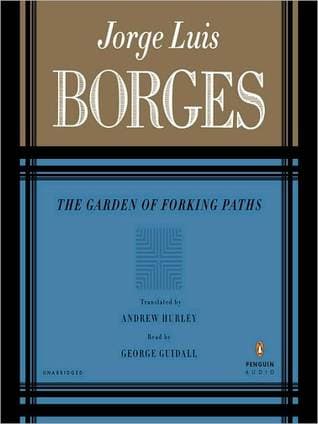
Jorge Luis Borges (2018)
Genre
Fantasy / Philosophy
Reading Time
20 min
Key Themes
See below
Sign in to track this book
A Chinese spy in England, on the run from a German agent, uncovers an ancestral labyrinthine novel that mirrors his own fragmented reality and the infinite possibilities of time.
The story begins with an editor's note. It presents the narrative as a piece from the interrogation of Dr. Yu Tsun, a former English professor and Chinese spy for Germany in World War I. Yu Tsun is being chased by Captain Richard Madden, a British counter-intelligence agent. Yu Tsun just learned his contact, Viktor Runeberg, was arrested and tortured. Knowing his own capture is near, Yu Tsun realizes he has hours to tell German High Command the location of a new British artillery park. He decides his only choice is to give this information in a way that will confuse Madden and ensure delivery.
Yu Tsun escapes a taxi and boards a train. He thinks about his ancestors, especially his great-grandfather Ts'ui Pen, a governor who gave up his position to write a long, complex novel and build a labyrinth. As he travels, Yu Tsun considers ways to share the secret. He rules out obvious methods and decides he must use an indirect, symbolic approach. The artillery park's name is 'Albert.' He concludes the only way to tell his chief this location, without being caught, is to kill a specific person named Albert. This would link the name to the secret in a British newspaper headline, which his chief would then understand.
Yu Tsun arrives at the train station and takes a taxi to Dr. Stephen Albert's house, guided by a child. He knows nothing about Albert but his name, yet he trusts his gut. The journey is tense; Yu Tsun is constantly aware of Madden's pursuit. He reaches a secluded, overgrown garden, which he immediately sees as labyrinth-like. Dr. Albert, an elderly scholar, greets him. Albert seems to have expected him, or at least a visitor interested in Ts'ui Pen.
Dr. Albert, a sinologist, welcomes Yu Tsun. He explains he has spent years studying Ts'ui Pen's work. Albert reveals that Ts'ui Pen's labyrinth and his novel, 'The Garden of Forking Paths,' are the same thing. The novel is the labyrinth. It explores all possible outcomes of an event at once, where time constantly branches, creating endless parallel realities. Albert shows this by pointing out passages where characters make conflicting choices, yet all are shown as happening.
Albert explains Ts'ui Pen's idea of time. Instead of a single, straight path, Ts'ui Pen believed time was a 'garden of forking paths,' a network of diverging, converging, and parallel futures. Every decision creates new branches of reality. In this view, the future is not set but an endless series of possibilities, all existing at once. Albert says Ts'ui Pen's novel reflects this, with chapters that contradict each other, not as mistakes, but as depictions of different timelines from one point.
Yu Tsun is deeply moved and intellectually stimulated by Albert's explanation. He feels a strong connection to his ancestor's brilliance and the philosophical meaning of Ts'ui Pen's work. The conversation goes beyond his immediate problem, offering a moment of pure intellectual pleasure and understanding. He briefly forgets his spy mission, lost in the beauty and complexity of Ts'ui Pen's vision. However, the approaching time and the threat of Captain Madden's arrival bring him back to his grim reality.
As Albert finishes his explanation, Yu Tsun looks out the window and sees Captain Madden approaching. The crushing realization hits him: he must act now. The deep intellectual talk, the shared moment of understanding, must end. To tell his German chief the name 'Albert' (the British artillery park's location), Yu Tsun knows he must kill the man who just shared his ancestor's deepest secrets. The irony and tragedy are immense.
With a heavy heart, knowing it is necessary, Yu Tsun pulls out his revolver and shoots Dr. Stephen Albert. The act is quick, shattering the peaceful scholarly atmosphere. Almost immediately after the shot, Captain Madden bursts in, having heard it. Yu Tsun offers no resistance and is arrested. He has succeeded in his mission, though at a terrible personal cost, knowing British newspapers will report 'Dr. Albert's' murder by 'the spy Yu Tsun,' thus sending the information to his German superiors.
Yu Tsun, now in custody, knows his life is over. However, he finds a grim satisfaction knowing his message was sent. The German High Command, reading news of 'the Chinese spy Yu Tsun' murdering 'the sinologist Stephen Albert,' would immediately figure out 'Albert' was the name of the secret British artillery park. He sees his act as a necessary sacrifice for his country, a last, desperate move in a spy game where morals are less important than strategy. The story ends with Yu Tsun accepting his fate.
The Protagonist
Yu Tsun transforms from a desperate fugitive to a cold-blooded assassin who achieves his mission, sacrificing his life and moral comfort for his cause.
The Supporting
Albert remains a static character, representing an intellectual ideal that is tragically destroyed by the necessities of espionage.
The Antagonist
Madden functions as a catalyst for Yu Tsun's actions, remaining consistently focused on his duty.
The Mentioned
As a historical figure, Ts'ui Pen's character arc is complete before the story begins, but his legacy is revealed and understood within the narrative.
The Mentioned
Runeberg serves as a plot device to initiate the main conflict, his arc is off-screen.
The main theme explores non-linear time and multiple realities. Ts'ui Pen's novel, 'The Garden of Forking Paths,' shows that all possible results of an event exist at once. Dr. Albert explains this, describing time not as a single path, but as an infinitely branching network of possibilities. The story itself, with Yu Tsun's choice to kill Albert, is just one path among many that could have happened. This deepens Borges's look at philosophy. It challenges how readers usually understand cause and effect and free will.
“In Ts'ui Pen's work, all possible outcomes occur; each one is the point of departure for other forking paths.”
Labyrinths work on many levels: a physical maze, a literary maze, and a time maze. Dr. Albert reveals that Ts'ui Pen's unbuilt labyrinth and his seemingly confusing novel are the same—a literary maze reflecting time's branching paths. Yu Tsun's desperate journey through the English countryside, searching for Albert, also becomes labyrinth-like, both physically and in his mental struggle to plan. The story itself is like a labyrinth, with its complex layers of narrative and philosophical side notes, inviting the reader to get lost in its details.
“The Garden of Forking Paths is an enormous riddle, or parable, whose theme is time.”
Yu Tsun faces a tough moral choice: to do his duty as a spy, he must commit a terrible act—killing an innocent man who just gave him deep intellectual insight and hospitality. His inner struggle shows the conflict between personal ethics and national loyalty or strategic needs. The story makes the reader confront the moral questions in espionage and wartime decisions, where human connection and morals are sacrificed for a larger, often abstract, cause. Yu Tsun's final act clearly shows this theme.
“I knew that the spy's name was Albert and that he had been murdered by a man named Yu Tsun.”
Borges explores the limits of storytelling through Ts'ui Pen's novel. The idea of a novel where characters make conflicting decisions, where every possible future is explored, challenges traditional linear narratives. The story implicitly asks what makes a 'complete' or 'clear' story. The editor's note also plays with the idea of fiction, presenting the narrative as a 'fragment' from a real interrogation. This blurs the lines between reality and invented story. It is a meta-narrative about creating and interpreting.
“I leave to the various futures (not to all) my garden of forking paths.”
An editor's note introduces the narrative as a fragment of an interrogation.
The story begins with a brief editor's note, presenting Yu Tsun's confession as a 'fragment' from a larger document. This device immediately establishes a sense of verisimilitude and historical context, even though the events are fantastical. It creates an aura of authenticity and mystery, suggesting that the reader is privy to a secret, unearthed document. It also sets up the story's ending, as the 'confession' implicitly refers to the murder Yu Tsun is about to commit, adding an layer of dramatic irony from the outset.
Yu Tsun's murder of Albert serves as a coded message.
The core of Yu Tsun's plan relies on a highly symbolic and indirect form of communication. Instead of transmitting the name 'Albert' through conventional means, he murders a man named Albert. This act, when reported in the British press, is intended to serve as a code for his German chief, who would understand the significance of a Chinese spy killing a man with the same name as the secret artillery park. This device is crucial for the plot's resolution and highlights the desperate ingenuity required in espionage, blurring the lines between information and violence.
The story comments on the nature of storytelling and its own construction.
Borges frequently employs metafiction, and 'The Garden of Forking Paths' is a prime example. The story features a novel within a story (Ts'ui Pen's 'The Garden of Forking Paths') that directly explores themes of narrative structure, time, and multiple realities. Dr. Albert's analysis of Ts'ui Pen's work can be seen as a commentary on Borges's own writing philosophy. This self-referential quality invites the reader to consider the story not just as a narrative, but as an intellectual puzzle and a meditation on the very act of creating and interpreting fiction.
Hints of Yu Tsun's ultimate action are present from the beginning.
The editor's note at the beginning immediately informs the reader that Yu Tsun's confession concerns the 'murder of the sinologist Stephen Albert.' This creates a powerful sense of dramatic irony throughout the narrative, as the reader knows the tragic outcome long before Yu Tsun reaches Albert's house. Every interaction between Yu Tsun and Albert is tinged with this foreknowledge, making their intellectual exchange both profound and heartbreaking, as the audience is aware of the innocent man's impending doom and Yu Tsun's terrible purpose.
“I leave to the various futures (not to all) my garden of forking paths.”
— The narrator's great-grandfather, Ts'ui Pên, explains the nature of his unfinished novel and labyrinth.
“The Garden of Forking Paths is an enormous, but uncompleted, puzzle, a labyrinth that would reveal the infinite possibilities of time, not space.”
— The narrator, Yu Tsun, describes Ts'ui Pên's true artistic ambition.
“In all fictional works, each time a man is confronted with several alternatives, he chooses one and eliminates the others; in the work of the virtually indispensable Ts'ui Pên, he chooses — simultaneously — all of them.”
— Yu Tsun explains the unique structure and philosophy behind Ts'ui Pên's novel.
“The author of an atrocious undertaking, he had to discover a name to be yelled to a city of 20,000,000 inhabitants.”
— Yu Tsun reflects on his desperate need to transmit the name of the British artillery park.
“The problem is how to make a book infinite.”
— Stephen Albert, the sinologist, discusses the core challenge Ts'ui Pên faced with his novel.
“He did not believe in a uniform, absolute time. He believed in an infinite series of times, in a growing, dizzying net of divergent, convergent and parallel times.”
— Stephen Albert elucidates Ts'ui Pên's revolutionary concept of time.
“Every time he imagined a point of divergence, he would then imagine, in another branch, the other point of divergence.”
— Stephen Albert describes Ts'ui Pên's method for constructing his novel, embracing all possibilities.
“From this we deduce that the Garden of Forking Paths is the novel, and the novel and the labyrinth are one and the same.”
— Stephen Albert reveals the profound connection between Ts'ui Pên's two seemingly disparate projects.
“The future already exists, but in another way.”
— A philosophical musing on the nature of time and destiny within the story's framework.
“I had to kill him. The train was already moving.”
— Yu Tsun's grim realization of the necessity of his action to fulfill his mission.
“An ancient Chinese secret; it must be a secret.”
— Yu Tsun's thoughts on the elusive nature of Ts'ui Pên's legacy.
“The solution to the enigma is always less spectacular than the enigma itself.”
— A general philosophical observation that can be applied to the story's revelations.
“I foresaw that the British would decipher the name of the city, and that the Chief would be pleased.”
— Yu Tsun contemplates the success of his desperate and tragic plan.
“He lived in a remote, almost deserted part of the country.”
— Description of Stephen Albert's secluded residence, mirroring the isolation of Ts'ui Pên.
Ready to see how well you understood this book? Take our interactive quiz with 10 questions.
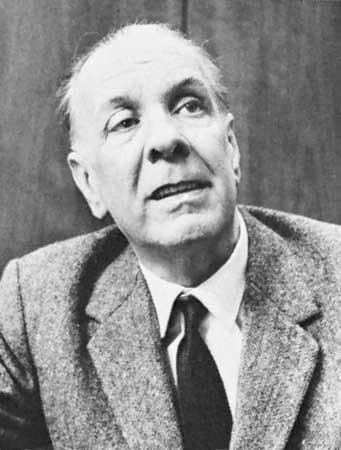
Jorge Francisco Isidoro Luis Borges Acevedo was an Argentine short-story writer, essayist, poet and translator, as well as a key figure in Spanish-language and international literature. His best-known books, Ficciones (Fictions) and El Aleph, published in the 1940s, are collections of short stories exploring themes of dreams, labyrinths, chance, infinity, archives, mirrors, fictional writers and mythology. Borges's works have contributed to philosophical literature and the fantasy genre, and have had a major influence on the magic realist movement in 20th century Latin American literature.







