“To forget is to suffer. To remember is to find peace.”
— Yun Ling's thoughts on memory and healing, a central theme of the novel.

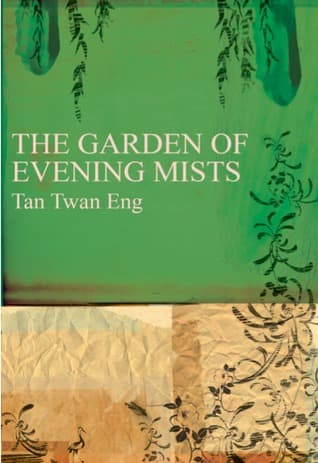
Tan Twan Eng (2011)
Genre
Literary Fiction / Historical Fiction
Reading Time
9-10 hours
Key Themes
See below
Sign in to track this book
After World War II, a Japanese internment camp survivor, haunted by her past, apprentices herself to a former Imperial gardener to build a memorial, uncovering secrets, forbidden desire, and war's lasting impact during a communist insurgency.
In 1989, Teoh Yun Ling, a retired Supreme Court judge with aphasia, returns to the Japanese garden of Yugiri in Cameron Highlands, Malaya. She plans to write her memoirs, focusing on her time there decades earlier. The garden, now run by Nakamura Aritomo's former assistant, is deeply important to her. She returns to reconcile her past, especially her relationship with Aritomo and the trauma of the Japanese occupation during World War II, which killed her sister and left her a survivor of a brutal internment camp.
In 1949, a younger Yun Ling, a lawyer still deeply affected by her war experiences and hating the Japanese, travels to the Cameron Highlands. She seeks out Nakamura Aritomo, the former gardener to the Emperor of Japan, who lives in exile and maintains the private garden of Yugiri. She wants him to design a Japanese garden in Kuala Lumpur to honor her younger sister, Teoh Yun Hong, who died in the Japanese internment camp at Syonan (Singapore) with her. Yun Ling believes this garden will honor Yun Hong's memory and bring her peace.
Aritomo, a mysterious and disciplined man, first refuses Yun Ling's request to design a garden in Kuala Lumpur. Instead, he offers her a deal: she can become his apprentice at Yugiri until the monsoon season. During this time, she will learn Japanese gardening and then design her own garden. Despite her deep resentment towards the Japanese, Yun Ling, driven by her desire to honor her sister, reluctantly accepts his offer, beginning a period of intense physical work and personal change under his guidance.
Yun Ling moves into the nearby bungalow of Magnus Praetorius, a South African tea planter and friend of Aritomo, who offers her lodging during her apprenticeship. She adapts to the demanding routine of Yugiri, learning the details of pruning, shaping, and the philosophy behind Japanese garden design. Her days are full of hard work, but she also begins to notice the subtle beauty of the natural world around her, slowly finding a peace she had not felt since the war. She also learns about the ongoing Malayan Emergency and the Communist insurgency.
As Yun Ling spends more time with Aritomo, she starts to uncover his mysterious past. She learns that he was exiled from Japan after refusing to design a garden for the Emperor that would celebrate military conquest. His dedication to art and beauty, rather than political power, led to his self-imposed isolation in Malaya. Through his teachings, Yun Ling begins to understand the deep connection between nature, art, and memory, and how a garden can be a living expression of time and emotion, challenging her previous ideas about the Japanese.
Despite her initial dislike, Yun Ling finds herself increasingly drawn to Aritomo. Their shared passion for the garden, his patient guidance, and his quiet strength begin to break down her emotional barriers. She starts to see him not just as a Japanese man, but as an artist and a mentor. This developing relationship is complicated by her lingering trauma and the societal prejudices of the time, yet it grows into a deep, unspoken affection, blurring the lines between teacher and student, enemy and confidant.
The peace of the Cameron Highlands is often disrupted by the growing Malayan Emergency. Communist guerrillas, operating from the jungle, are a constant threat of ambush, kidnapping, and murder. Magnus Praetorius, because of his perceived neutrality or perhaps a deeper, unspoken understanding, seems somewhat immune to these attacks. Yun Ling sees the brutal realities of the conflict firsthand, reinforcing her sense of a world consumed by violence, yet the garden remains a sanctuary, a fragile refuge against the encroaching chaos.
As the monsoon season nears, Aritomo mysteriously disappears. He leaves no explanation, only the garden and a deep emptiness in Yun Ling's life. His disappearance leads to speculation, with rumors linking it to the Communist guerrillas or even the legend of 'Yamashita's Gold,' hidden Japanese wartime treasure. Yun Ling is left heartbroken and confused, dealing with the sudden loss of her mentor and lover, and the unanswered questions about his fate. This event marks a turning point in her life, leaving a lasting mark on her memory.
After Aritomo's disappearance, Yun Ling leaves the Cameron Highlands. She dedicates herself to her legal career, eventually becoming a Supreme Court judge. Despite her professional success, she is always haunted by the memory of Aritomo and the unresolved mysteries of Yugiri. She continues to search for clues about his fate, revisiting the Highlands periodically, interviewing people, and putting together fragments of information, all while carrying the burden of her own wartime trauma and the secret of her sister's death.
One of Yun Ling's darkest secrets is the true story of her sister, Yun Hong's, death in the Japanese internment camp. Overcome by starvation and despair, Yun Hong had begged Yun Ling to end her suffering. In an act of deep mercy and agony, Yun Ling smothered her sister. This traumatic event, a secret she has kept for decades, explains much of her guilt, her initial hatred, and her strong desire to build the memorial garden, which she now understands must be Yugiri itself, a living symbol of memory and forgiveness.
Yun Ling eventually discovers that Aritomo had a deeper purpose for Yugiri. He was not just creating a beautiful garden for himself; he was creating a 'yamanashi,' a living memorial for all the innocent lives lost during the war, both Japanese and Malayan. He intended the garden to be a place of healing and remembrance, a quiet defiance against the brutality of conflict. This revelation changes Yun Ling's understanding of Aritomo and his art, as she realizes his deep empathy and the true meaning of the garden they both cherished.
Yun Ling eventually uncovers the truth behind Magnus Praetorius's apparent immunity from the Communist guerrillas and his surprising connections. Magnus, it is revealed, had a relationship with a Japanese woman before the war and had discreetly helped some Japanese individuals during the occupation. This complex past, along with his reputation as a neutral party and perhaps some strategic engagement with local factions, gave him a degree of protection in the volatile Highlands. His story highlights the intricate moral complexities of wartime and its aftermath.
Through her investigations, Yun Ling learns about the legend of 'Yamashita's Gold,' vast Japanese wartime treasure hidden in Malaya. She deduces that Aritomo, rather than being involved with the Communists, was likely targeted by them because of his knowledge or perceived connection to this gold. It becomes clear that Aritomo may have sacrificed himself, or chosen to disappear, to protect the garden and perhaps prevent the treasure from falling into the wrong hands, thus preserving a deeper, more profound legacy than material wealth.
In 1989, as Yun Ling finishes her memoirs at Yugiri, her aphasia worsens, but her understanding of her past and Aritomo's legacy deepens. She realizes that the garden itself is the most fitting memorial for her sister and for all those lost to war. She comes to terms with her grief, guilt, and the complex emotions she held for Aritomo. The garden, with its lasting beauty and quiet strength, becomes a symbol of healing, forgiveness, and the power of memory, allowing her to find peace in her later years.
The Protagonist
Yun Ling transforms from a vengeful, traumatized survivor into a woman capable of forgiveness and profound understanding, ultimately finding peace through the creation and preservation of Yugiri.
The Supporting/Love Interest
Aritomo's arc is largely revealed through Yun Ling's memories and investigations, showing him as a man of artistic integrity and a quiet humanitarian who dedicates his life to creating a living memorial.
The Mentioned/Catalyst
Her story is static, existing primarily in Yun Ling's memory, but her influence drives Yun Ling's significant character development.
The Supporting
Magnus remains a stable, supportive figure, his own past gradually illuminated to provide context rather than undergo significant personal transformation.
The Supporting
Gorlitz's role is largely functional, serving to introduce new information and prod Yun Ling's memory, rather than undergoing personal development.
The Supporting
Ah Cheong remains a steadfast guardian of Yugiri, embodying loyalty and the preservation of Aritomo's legacy.
The Antagonist
They serve as an ongoing environmental threat and plot device, rather than individual characters with arcs.
The novel explores how personal and national trauma shapes individuals and the long process of healing. Yun Ling's entire journey is shaped by her traumatic past – the internment camp, her sister's death, and her hatred of the Japanese. Tending the garden and later writing her memoirs becomes a form of therapy, helping her confront, process, and ultimately find peace. The garden itself is a living memory, a place where pain and beauty exist together, reflecting the complex nature of remembrance. The book shows that true healing means integrating the past into the present, not forgetting it.
“A garden is a metaphor for life, and for the soul. The way we tend it reflects the way we tend our inner selves.”
A central theme is the struggle to forgive, especially after immense suffering. Yun Ling's initial hatred for the Japanese is strong, a direct result of her war experience. Her relationship with Aritomo forces her to confront these prejudices, blurring the lines between oppressor and individual. The novel suggests that forgiveness is not about excusing past atrocities, but about freeing oneself from consuming hatred. It also explores reconciliation at a national level, acknowledging the complex history between Malaya and Japan, and finding common ground through shared humanity and art, as seen in the garden.
“Sometimes, forgiveness is the only way to heal the wounds that hate leaves behind.”
The novel shows art, specifically Japanese gardening, as a powerful force for beauty, meaning, and resilience in the face of destruction. Aritomo's dedication to creating and maintaining Yugiri, even in exile and amid political unrest, highlights the human need for beauty. The garden becomes a sanctuary, a symbol of life and growth against the backdrop of war and violence. It embodies the idea that art can be a form of resistance, a way to preserve culture, memory, and hope, even when everything else is falling apart. The details of gardening also reflect the patience and discipline needed for healing.
“A good garden should be a place of refuge, a place where one can forget the world outside, if only for a moment.”
Yun Ling's struggle with her identity as a Malayan Chinese woman, a survivor, and a judge, is a key part of the novel. She grapples with where she belongs, both geographically and emotionally, after the war. Aritomo, as an exiled Japanese, also questions his place in the world. The garden, Yugiri, itself unusual as the only Japanese garden in Malaya, becomes a symbol of mixing cultures and their complex interplay. The story explores how individuals form their identities after historical upheaval, often finding belonging in unexpected places or through shared experiences, rather than strict national or ethnic lines.
“We are all exiles, even in our own land, if we do not know ourselves.”
The novel constantly questions the nature of truth and how history is formed, both personally and publicly. Yun Ling's fragmented memories, her aphasia, and the different accounts of events (Aritomo's disappearance, Yamashita's Gold, her sister's death) highlight how subjective and often unreliable memory is. The story unfolds through layers of recollection, investigation, and speculation, suggesting that a single, definitive truth is often impossible to find. Instead, a more nuanced understanding comes from piecing together various perspectives, acknowledging the gaps and silences in historical records and personal narratives. The story implies that personal truth is often more complex and painful than official versions.
“Memory is a treacherous thing. One moment it is there, bright and clear, the next it is gone, like a mist.”
The story is told through two alternating timelines: 1949 and 1989.
The novel masterfully uses a dual timeline structure. The primary narrative unfolds in 1949, depicting Yun Ling's apprenticeship at Yugiri and her relationship with Aritomo. This is interspersed with chapters set in 1989, where an older, ailing Yun Ling revisits the garden to write her memoirs. This device allows for suspense, as the reader gradually learns the outcomes and consequences of the past events. It also provides an opportunity for Yun Ling to reflect on her experiences with the wisdom of hindsight, while her progressing aphasia adds urgency and fragility to her recollections, emphasizing the theme of memory's impermanence.
A central symbol and setting that embodies memory, art, and healing.
The garden of Yugiri is more than just a setting; it is a profound symbol and a character in itself. It represents beauty, order, and harmony in contrast to the chaos of war and human suffering. It is a place of memory, designed as a living memorial, and becomes a space for Yun Ling's personal healing and transformation. The intricate art of its creation and maintenance mirrors the meticulous process of confronting trauma and rebuilding a life. Its enduring presence, even after Aritomo's disappearance, signifies resilience and the timeless power of nature and art.
Yun Ling's neurological condition that affects her memory and ability to write.
Yun Ling's aphasia in the 1989 timeline serves as a powerful plot device. It directly impacts her ability to recall and articulate her past, creating narrative tension and emphasizing the fragility and subjective nature of memory. It forces her to confront the gaps in her own history, mirroring the elusive nature of truth. The struggle to write her memoirs despite her condition underscores her determination to preserve her story and Aritomo's legacy before it is lost forever. It also provides a meta-commentary on the act of storytelling itself.
The legend of hidden Japanese wartime treasure.
The legend of 'Yamashita's Gold' functions as a MacGuffin, driving much of the external mystery and connecting Aritomo's disappearance to the broader historical context of the Malayan Emergency. While the treasure itself is less important than its implications, its pursuit by various factions (including the Communists) provides a plausible reason for Aritomo's fate and introduces elements of intrigue and danger. It highlights how the lingering effects of war, even after the fighting has ceased, can continue to shape lives and destinies, linking material greed to human suffering.
“To forget is to suffer. To remember is to find peace.”
— Yun Ling's thoughts on memory and healing, a central theme of the novel.
“The past is not a string of events, but a garden, where each memory is a flower, and we are its gardeners.”
— Yun Ling reflecting on how she cultivates and interprets her memories.
“A garden, if it is to be a work of art, must be a place where the soul can be healed, not merely entertained.”
— Aritomo's philosophy on the purpose and profound impact of a garden.
“We were all survivors, but we were also shadows of our former selves, haunted by what we had seen and done.”
— Yun Ling's reflection on the lasting trauma of the war and internment.
“Sometimes, the only way to forgive is to forget, and the only way to forget is to build something new.”
— Yun Ling grappling with forgiveness and moving on from past atrocities.
“The Japanese believed that beauty was not just something to be appreciated, but something to be created, to be lived.”
— Yun Ling observing Aritomo's approach to life and art.
“A garden is never finished. It is always changing, always growing, always dying. It is a metaphor for life itself.”
— Aritomo's explanation of the dynamic nature of a garden and its connection to existence.
“The heart, like a garden, needs constant tending. Neglect it, and weeds will grow.”
— Yun Ling's internal reflection on emotions and self-care.
“History is not what happened, but what is remembered.”
— Yun Ling considering the subjective and often manipulated nature of historical narratives.
“Silence is not the absence of sound, but the presence of peace.”
— Aritomo's teaching on the profound nature of true silence.
“There are some things that even time cannot erode, some wounds that never truly heal.”
— Yun Ling's enduring pain from the loss of her sister and the war.
“To truly see a garden, you must not merely look at it, but listen to it, feel it, breathe it.”
— Aritomo's advice on experiencing a garden with all senses.
“We carry our histories within us, like the layers of an old tree.”
— Yun Ling's contemplation of how the past shapes individuals.
“The most beautiful gardens are those that are imperfect, those that bear the scars of time and the touch of human hands.”
— Aritomo's appreciation for wabi-sabi aesthetics in gardening.
Ready to see how well you understood this book? Take our interactive quiz with 10 questions.

Biography coming soon.







