“Love and Death are the two great forces. They are the warp and weft of the universe. And they are playing a game.”
— The fundamental premise of the story, explaining the cosmic game.

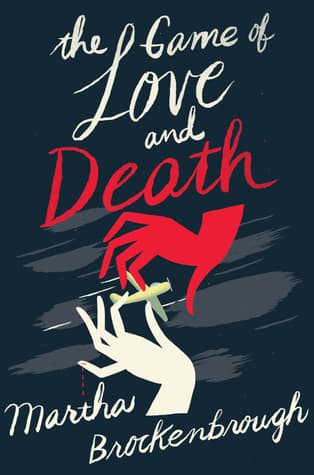
Martha Brockenbrough (2015)
Genre
Fantasy / Historical Fiction / Young Adult / Romance
Reading Time
7-8 hours
Key Themes
See below
Sign in to track this book
In 1930s Seattle, an African-American aviator and a white scholar become pawns in a cosmic game between Love and Death, where their forbidden romance might finally break Death's winning streak.
Love and Death observe humanity, playing a game where they choose two mortals and influence their lives to see if love can win or if death will claim victory. Death has never lost. Their latest players are Flora Saudade, a jazz singer in Great Depression Seattle who wants to be an aviator, and Henry Bishop, a wealthy boy from an adoptive family, destined for college. Their paths are set to cross as Love and Death begin to manipulate events to bring them together and test their connection.
Flora performs at a jazz club, captivating the audience. Henry, a regular who enjoys the music, is drawn to her. Despite their different backgrounds—Flora, a Black woman facing poverty and prejudice, and Henry, a white man from privilege—a spark ignites between them. Their first interaction is brief but impactful. Love notes the promising start, while Death remains confident in her victory, knowing the social obstacles ahead.
Flora and Henry begin meeting regularly, their connection growing with each encounter. They share their dreams—Flora's ambition to fly and Henry's love for engineering. Their relationship is a source of joy amid the Great Depression and the racial segregation of 1930s Seattle. They have secret dates, aware of the social disapproval their interracial romance would face if public. Their love grows despite the world around them. Love and Death watch every development.
Henry's adoptive parents, the wealthy Bishops, expect him to marry well and secure his future, preferably to a girl from their social class, like Eleanor. They do not know about his relationship with Flora. Henry feels pressure to meet their expectations, which conflict with his feelings for Flora. He worries about disappointing his family and losing their financial support for his education, which he needs for his dreams. This external pressure tests his commitment to Flora.
Flora faces more racial discrimination and threats, especially as rumors of her relationship with a white man spread. She endures racist remarks and is shunned, risking her job at the club and her safety. The harsh realities of segregated society weigh on her, making her question the possibility and safety of her love with Henry. Death observes these growing tensions, believing that prejudice will tear them apart, proving her theory again.
Henry's parents learn about his relationship with Flora, likely through gossip or a chance sighting. This leads to an angry confrontation. They express their disapproval and threaten to disinherit him if he does not end the relationship. They stress the social disgrace and the harm it would do to their family's reputation and Henry's future. Henry is torn between his love for Flora and the fear of losing everything he knows, including his promising career path, which Death influences.
Seeing the pressure Henry is under and fearing her presence will ruin his life, Flora makes the painful decision to push him away. She believes that by sacrificing their relationship, she can protect him from his family's anger and allow him to pursue his dreams. She creates distance, hoping he will choose the path his parents want for him. This selfless act, though born of love, plays into Death's hand, as the separation seems to confirm her victory.
Despite Flora's attempts to distance herself, Henry realizes he cannot live without her. He makes a choice: he rejects his family's ultimatum, choosing love over wealth and social standing. This decision costs him greatly, as he is disowned and loses access to his family's resources and his college scholarship. This defiance is a turning point in the game, surprising Death and giving Love hope, as Henry shows a new level of commitment.
Having chosen each other, Flora and Henry start a new, uncertain life. Henry finds work to support himself and Flora, who continues her music and aviation dreams. They face financial hardship and ongoing social prejudice, but their bond strengthens through adversity. They find support in Flora's community and other allies who admire their courage. This period shows resilience and mutual support, as they prove their love can withstand external pressures and hardships.
As the game nears its end, Death creates a dangerous event, a life-threatening situation meant to break their spirits and claim one of them. This could be an accident, an illness, or violence from the era's racial tensions. This moment is the ultimate test of their love, pushing them to their limits. Love watches, knowing this is the moment her long losing streak could finally end or continue.
When faced with Death's challenge, Flora and Henry's love is a strong force. Through their devotion, mutual sacrifice, and perhaps a touch of Love's intervention, they overcome the life-threatening obstacle. They emerge together, their bond stronger. This outcome signals a shift in the eternal game, as Love finally wins, showing that true love can defy Death, at least this one time.
Having defied the odds and won the game, Flora and Henry build a fulfilling life together. Flora pursues her passion for aviation, becoming a respected pilot, while Henry uses his engineering skills to help society. Their love story becomes a quiet legend, inspiring those around them and showing the power of connection across differences. Their lives together embody love's enduring strength, changing the dynamic between Love and Death, who must now deal with the game's unprecedented outcome.
The Protagonist
Flora evolves from a dreamer constrained by circumstances to a courageous woman who defies societal expectations for love and personal ambition.
The Protagonist
Henry transforms from a boy bound by family expectations into a man who sacrifices privilege for true love and builds his own path.
The Supporting
Love, initially a perennial loser in the game, finally achieves a victory through Flora and Henry, changing her dynamic with Death.
The Antagonist
Death, initially confident and undefeated, is finally challenged and defeated by Flora and Henry's love, forcing her to re-evaluate the game.
The Supporting
They remain largely static, representing the societal forces that Henry must defy to achieve true happiness.
The Supporting
Eleanor serves as a catalyst for Henry's decision, representing the life he chooses to reject.
The Supporting
Auntie Rose provides consistent support and wisdom, embodying the strength of Flora's community.
The Mentioned
Their perspectives evolve as they witness Flora and Henry's unprecedented love, leading to a shift in their eternal game.
This is the main theme, shown through Flora and Henry's relationship. Despite social prejudice, economic hardship, and family disapproval, their love lasts. The book's premise, the game between Love and Death, relies on this theme. Their sacrifices for each other, like Henry giving up his inheritance and Flora risking her safety, show that love can be stronger than external pressures and even the plans of ancient beings. Their victory over Death proves that true love is a resilient, transformative power.
“For centuries, Death had won, always. But then came Flora and Henry, and the game changed.”
The novel shows the harsh realities of racial segregation and prejudice in 1930s Seattle. Flora, as an African-American woman, faces discrimination, from limited opportunities to direct threats. Her interracial relationship with Henry challenges these social norms, bringing danger and ostracism. Henry's wealthy adoptive family shows the class and racial biases of the era, trying to control his choices to keep their social standing. This theme highlights the obstacles that external social forces place on individual happiness and freedom, making their love an act of defiance against an unjust world.
“The world was not built for a love like theirs, but they built their own.”
The game by Love and Death asks if human lives are set or if individuals have true choice. While the entities influence events, Flora and Henry make their own choices—choices that defy expectations and the game's 'rules.' Henry choosing to leave his inheritance for Flora, and Flora choosing to fight for their love despite risks, shows that human will and individual decisions can override even ancient, cosmic forces. Their story suggests that while destiny might set the stage, free will writes the play.
“We nudge, we whisper, but in the end, they choose. And that, my dear, is where the true game lies.”
Both Flora and Henry are driven by personal dreams beyond their current situations. Flora dreams of flying and a career in aviation, an unusual path for a Black woman in her era, while also pursuing her music. Henry, despite his wealthy background, is drawn to engineering and a life different from his parents' expectations. Their individual aspirations are not pushed aside by their romance but become linked with it. Their love helps them pursue these dreams, suggesting that true partnership supports individual growth and the making of one's identity, even when facing problems.
“Her voice soared, but her soul yearned for the sky.”
An overarching meta-narrative framework where two cosmic entities manipulate human lives.
This device serves as the primary framing mechanism for the entire story. Love and Death, personified ancient entities, select human players (Flora and Henry) and subtly influence their lives, setting up challenges to see if love can overcome all obstacles or if death will always prevail. This allows for an omniscient narrative perspective, providing commentary on human nature, love, and destiny. It heightens the stakes of Flora and Henry's romance, transforming their personal struggles into a cosmic battle, while also allowing for magical realism within a historical setting.
The story is told by Love and Death, offering dual, biased perspectives.
The narrative voice alternates between Love and Death, each providing their own biased, yet omniscient, perspective on Flora and Henry's story. Love is hopeful and invested in their success, while Death is cynical and expects their failure. This device allows the reader to understand the 'rules' of the game, gain insight into the characters' inner thoughts, and experience the tension of the cosmic wager. It also enriches the thematic exploration of love, fate, and free will by presenting contrasting philosophical viewpoints directly to the reader.
The Great Depression and racial segregation in Seattle provide the backdrop for the story.
The specific historical setting of Seattle during the Great Depression and the era of pervasive racial segregation is a crucial plot device. It generates the primary external conflicts and challenges for Flora and Henry: economic hardship, the stark class divide, and intense racial prejudice against their interracial relationship. These societal forces are not merely background but active antagonists, manipulated by Death, that test the very limits of their love. The historical context grounds the fantastical elements in a tangible, relatable reality, making their struggle more poignant and impactful.
Flora's dreams of aviation and her talent for jazz music represent freedom and expression.
Flora's aspirations to fly symbolize her desire for freedom, transcendence, and breaking societal barriers. Aviation, a realm traditionally dominated by white men, represents her ambition to defy limitations. Her jazz music, a genre deeply rooted in African-American culture, serves as a powerful form of self-expression, emotional connection, and a means of navigating hardship. Both flight and music represent escape, hope, and the pursuit of a life beyond the constraints imposed by her race and gender, acting as guiding lights for her and Henry.
“Love and Death are the two great forces. They are the warp and weft of the universe. And they are playing a game.”
— The fundamental premise of the story, explaining the cosmic game.
“Some stories are meant to be told, no matter how much they hurt.”
— Flora reflecting on the importance of her own story and the past.
“Every person is a story, and every story is a person.”
— One of the celestial players discussing the nature of humanity.
“The world is full of magic, if you only know where to look.”
— Flora's realization about the hidden wonders around her.
“To truly live, you must be willing to risk everything, even your heart.”
— Henry's growing understanding of love and its demands.
“Sometimes the greatest acts of courage are the quietest ones.”
— Reflecting on the subtle bravery of characters facing their challenges.
“Fate is not a road, but a river. You can steer, but you cannot stop the current.”
— A philosophical observation on free will versus destiny.
“We are all made of stardust and stories.”
— A poetic description of human existence and connection.
“The past is not dead; it is not even past. It's all around us, shaping us.”
— The historical setting's influence on the characters' lives.
“True art doesn't just show you the world; it makes you see it differently.”
— Henry's passion for jazz and its transformative power.
“There are a thousand ways to fall in love, and a million ways to break your heart.”
— An observation on the complexity and vulnerability of romance.
“Even in the darkest times, beauty can bloom.”
— The setting of the Jazz Age during a period of societal change and hardship.
“To be truly seen is the greatest gift, and the greatest fear.”
— Flora and Henry's journey of self-discovery and vulnerability with each other.
“Sometimes the rules are made to be broken, especially when they stand in the way of what's right.”
— Characters defying the expectations and limitations placed upon them.
Ready to see how well you understood this book? Take our interactive quiz with 10 questions.







