“The past is like a string of pearls. Each one beautiful on its own, but together, they make a story.”
— Suzanna reflects on the importance of history and connection.

Genre
Fantasy / Children's / Historical Fiction / Young Adult
Reading Time
250 min
Key Themes
See below
Sign in to track this book
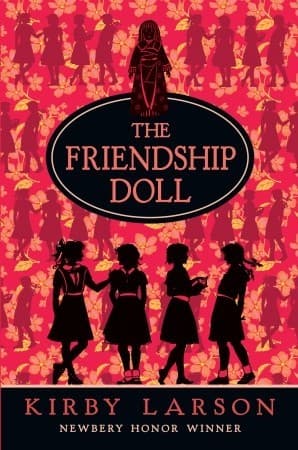
Transported from Japan to America as an ambassador of friendship, a doll named Miss Kanagawa chronicles her journey through the Great Depression, the lives she touches, and the poignant mystery of her missing sister dolls.
Miss Kanagawa, one of 58 Japanese Friendship Dolls, recounts her journey from Japan to America in 1927. She describes the farewell ceremony in Japan and the voyage across the Pacific. Upon arrival in New York, she and her sister dolls are met with fanfare, intended to foster goodwill between the two nations. Miss Kanagawa is initially housed in a department store, where she observes American life and the excitement surrounding the dolls' arrival. She is then selected to travel to a small town in Oregon, eager to fulfill her mission as an ambassador of friendship, unaware of the challenges ahead.
Miss Kanagawa is sent to live with Bunny, a young girl in Oregon. Bunny is initially hostile towards the doll, seeing her as a replacement for a lost family heirloom. Bunny's family struggles financially, and her father is often absent. Miss Kanagawa observes Bunny's loneliness and anger, understanding that Bunny feels overlooked. Bunny often neglects Miss Kanagawa, leaving her in dusty corners, and even attempts to damage her in her frustration. Despite this mistreatment, Miss Kanagawa maintains her purpose, hoping to soften Bunny's heart and fulfill her mission of fostering understanding.
Bunny's mother insists that Bunny take Miss Kanagawa to a local doll convention, hoping it will improve Bunny's attitude. At the convention, Miss Kanagawa is displayed alongside other dolls, and Bunny remains sullen. Here, Miss Kanagawa meets Lois, an imaginative girl who is enchanted by the Japanese doll. Lois treats Miss Kanagawa with kindness and respect, imagining stories for her. This brief encounter contrasts with Bunny's treatment and offers Miss Kanagawa a glimpse of genuine affection. Lois's gentle nature and imaginative play are a balm to Miss Kanagawa, who yearns for such connection.
As the Great Depression deepens, Bunny's family's financial struggles intensify. Her father loses his job, and the family faces eviction. Miss Kanagawa witnesses the growing despair and tension within the household. Bunny's resentment towards the doll lessens slightly as she grapples with larger family problems, but she remains distant. The doll observes the family's sacrifices, their dwindling resources, and the sense of uncertainty. This period marks a shift in Miss Kanagawa's understanding of human suffering, as she sees the harsh realities of poverty and its emotional toll.
When Bunny's family can no longer afford to keep Miss Kanagawa, the doll is given to a young girl named Willie Mae, who lives in a shantytown known as 'Hooverville.' Willie Mae, despite her family's extreme poverty, treats Miss Kanagawa with immense love and care. She makes a small bed for the doll, shares her meager meals, and confides in her. Willie Mae's genuine affection awakens Miss Kanagawa's 'heart,' making her feel truly cherished for the first time. This relationship is impactful, showing Miss Kanagawa the power of human kindness and resilience during adversity.
Willie Mae's family faces increasing hardship in Hooverville. Her father, desperate for work, decides they must move to California in search of opportunities. The family can only take essential items, and Willie Mae is forced to leave Miss Kanagawa behind. The parting is agonizing for both Willie Mae and the doll. Miss Kanagawa describes feeling a profound sense of loss and a 'broken heart,' having just discovered the joy of being truly loved. This separation teaches Miss Kanagawa about the transient nature of human connections and the pain of goodbyes.
After being left behind by Willie Mae, Miss Kanagawa is eventually discovered and sold to an antique shop. Here, she spends years observing the comings and goings of customers and the other items in the shop. She becomes a silent witness to countless human stories, from the hopeful to the melancholic. She learns about the passage of time, changing fashions, and the enduring value people place on objects with history. During this period, she reflects on her purpose and the lives she has touched, waiting for another opportunity to fulfill her mission of friendship.
Years later, Miss Kanagawa is purchased from the antique shop by a kind and imaginative young girl named Lucy. Lucy immediately forms a deep bond with the doll, treating her with the same tenderness and affection that Willie Mae once showed. Lucy includes Miss Kanagawa in all her games, confides in her, and cherishes her as a true friend. This relationship brings immense joy to Miss Kanagawa, reminding her of the love she felt with Willie Mae and reaffirming her belief in the power of friendship. Lucy's devotion becomes a source of comfort and purpose for the doll.
As the years pass, the political climate between America and Japan deteriorates, leading to World War II. The once cherished Friendship Dolls become symbols of a now hostile nation. Miss Kanagawa, while safe with Lucy, hears whispers of other dolls being destroyed or hidden away due to anti-Japanese sentiment. Lucy, though young, understands the precariousness of the situation and becomes protective of Miss Kanagawa. The doll feels the weight of the conflict, understanding how quickly sentiments can change and how her original mission of peace is now threatened.
Fearing for Miss Kanagawa's safety amidst the growing anti-Japanese sentiment, Lucy decides to hide her doll. She wraps Miss Kanagawa and places her in a secure, secret location, promising to retrieve her when the war is over. This act of protection deeply moves Miss Kanagawa, who recognizes the depth of Lucy's love and loyalty. The doll spends years in darkness, a silent witness to the passage of a terrible war, holding onto the hope of reunion with Lucy and the eventual return of peace. This period of hiding shows the fragility of goodwill and the power of personal bonds.
Once the war ends, Lucy, now an adult, retrieves Miss Kanagawa from her hiding place. The reunion is poignant and filled with emotion, solidifying their lifelong bond. Miss Kanagawa reflects on her journey from a symbol of international friendship to a cherished personal companion, and then a hidden relic of a difficult past. She realizes that her mission has evolved; while her initial purpose was grand, her most significant impact has been on the individual lives she has touched. She continues to reside with Lucy, becoming a treasured family heirloom and a living example of enduring friendship.
In her narrative, Miss Kanagawa reveals that of the original 58 Friendship Dolls sent from Japan, only 45 remain accounted for. She poses this mystery to the reader, hinting that her own story might offer clues as to the fate of her missing sisters. She believes that some were lost to neglect, others to the Great Depression, and many more to anti-Japanese sentiment during World War II. She encourages the reader to consider the historical context and the individual stories that led to the disappearance of these symbolic ambassadors, urging them to piece together the fragments of history.
The Protagonist/Narrator
Miss Kanagawa evolves from a symbolic ambassador of international friendship to a deeply empathetic observer of human life, learning the profound meaning of personal connection and enduring love amidst historical turmoil.
The Supporting
Bunny's initial resentment towards Miss Kanagawa gradually softens as her family faces deeper struggles, showing a subtle shift from self-pity to a nascent understanding of hardship.
The Supporting
Willie Mae remains steadfastly kind and loving despite her family's increasing poverty, demonstrating resilience and a pure heart that deeply impacts Miss Kanagawa.
The Supporting
Lucy grows from a loving child to a fiercely protective young woman, demonstrating unwavering loyalty and courage in safeguarding Miss Kanagawa through wartime.
The Supporting
Lois's character remains consistent as a kind and imaginative child, serving as a brief beacon of warmth for Miss Kanagawa.
The Supporting
Bunny's mother endures the increasing strain of the Great Depression, showcasing her quiet strength and the sacrifices made for her family.
The Supporting
Bunny's father experiences a decline in morale and increased absence as his efforts to find work during the Depression prove futile.
The Mentioned
Willie Mae's family endures severe poverty, ultimately being forced to move in search of economic opportunity, highlighting the transient nature of life in the Depression.
This theme is central to Miss Kanagawa's journey, showing how personal connections can transcend political strife and historical upheaval. Her bonds with Willie Mae and especially Lucy demonstrate that true friendship is not limited by species (doll and human) or circumstances. Willie Mae's pure love awakens Miss Kanagawa's 'heart,' while Lucy's loyalty and courage in hiding the doll during WWII prove that genuine affection can overcome prejudice and fear. The doll's original mission of international friendship finds its most potent expression in these individual, deep relationships.
“''It was then, as Willie Mae held me close and whispered her secrets, that I truly felt my heart awaken. Not the wooden heart of a doll, but something more profound, something that beat with the rhythm of her own small, brave one.''”
The story shows the resilience of both the human characters and Miss Kanagawa herself. Through the Great Depression, characters like Bunny's family and Willie Mae's family endure extreme poverty, job loss, and displacement, yet they continue to strive for survival and hope. Willie Mae's ability to find joy and care for Miss Kanagawa despite her dire circumstances is an example of this resilience. Miss Kanagawa, too, endures neglect, abandonment, and the threat of destruction, yet she maintains her purpose and hope, adapting to new environments and finding meaning in each new relationship.
“''Life in Hooverville taught me that even in the deepest shadows, the human spirit, like a stubborn weed, would find a way to grow, to reach for the light.''”
The novel illustrates how major historical events like the Great Depression and World War II shape the lives of ordinary individuals. The Depression leads to Bunny's family's financial ruin and Willie Mae's family's displacement, forcing difficult choices and fostering despair. World War II transforms Miss Kanagawa from a symbol of peace into a potential casualty of anti-Japanese sentiment, forcing Lucy to hide her. The story shows how grand historical narratives affect personal relationships, beliefs, and even the fate of inanimate objects, highlighting the human cost of global events.
“''The goodwill of nations, I learned, was a fragile thing, easily shattered by the harsh winds of war and suspicion.''”
Miss Kanagawa's journey is about understanding her own identity and purpose. Initially, her purpose is clearly defined as an 'Ambassador of Friendship' on a national scale. However, through her experiences with different owners, her understanding of her purpose evolves. She learns that her most profound impact comes not from grand diplomatic gestures, but from the individual love and connection she shares with children like Willie Mae and Lucy. Her identity shifts from a mere object to a sentient observer and cherished companion, finding deeper meaning in personal relationships than in her initial, broader mission.
“''I was a doll, yes, made of wood and paint. But in their hands, in their hearts, I was more. I was a friend. And that, I realized, was a purpose far greater than any ambassadorial duty.''”
The story is told from the unique perspective of Miss Kanagawa, a sentient doll.
This device allows for an objective yet deeply empathetic observation of human behavior and historical events. As an inanimate object, Miss Kanagawa is privy to intimate moments and conversations without being an active participant, granting her a unique vantage point on the characters' inner lives and struggles. Her perspective offers a timeless, unbiased commentary on the changing world around her, allowing the reader to experience events like the Great Depression and WWII through an unusual and compelling lens, highlighting the often-overlooked details of daily life.
The dolls represent international goodwill and the fragility of peace.
The 58 Friendship Dolls are initially powerful symbols of peace and cultural exchange between Japan and America. Their journey and subsequent fates—some cherished, some neglected, some destroyed—mirror the fluctuating political relationship between the two nations. During times of peace, they are celebrated; during wartime, they become targets of prejudice. This symbolism underscores the fragility of international relations and how easily goodwill can be tarnished by conflict, while also highlighting the enduring power of individual connections that can transcend nationalistic divides.
The narrative begins and ends with the mystery of the missing dolls.
Miss Kanagawa opens and closes her story by posing the question of what happened to her missing sister dolls. This mystery serves as a framing device, encouraging the reader to actively engage with the historical context and piece together clues from Miss Kanagawa's own experiences. It transforms the book into a detective story, prompting readers to consider the broader implications of the dolls' fates—how neglect, economic hardship, and wartime prejudice contributed to their disappearance—and to reflect on the lasting impact of history.
The story spans several decades, showing the long-term effects of history.
The narrative covers a significant period, from 1927 through World War II and beyond. This extended timeline allows the author to illustrate the profound and cumulative impact of major historical events like the Great Depression and World War II on individuals and society. It also showcases the development and resilience of characters over many years, and how enduring friendships, like that between Miss Kanagawa and Lucy, can withstand the test of time and great social upheaval, giving a sense of historical sweep and personal longevity.
“The past is like a string of pearls. Each one beautiful on its own, but together, they make a story.”
— Suzanna reflects on the importance of history and connection.
“Sometimes, the bravest thing you can do is to just keep going, even when you don't know where you're headed.”
— Suzanna facing uncertainty during her journey.
“A true friend isn't just someone who stands by you, but someone who helps you remember who you are.”
— The doll's influence on Suzanna's self-discovery.
“Magic isn't always grand spells and flying brooms. Sometimes, it's just finding the right thing at the right time.”
— Suzanna's understanding of the subtle magic in her world.
“Every object has a memory, if you know how to listen.”
— A character explaining the magical properties of objects.
“The greatest adventures often begin with the smallest steps.”
— Suzanna embarking on her journey with the doll.
“Fear can be a useful guide, but it should never be your master.”
— Suzanna overcoming her anxieties.
“Home isn't just a place. It's the people you share it with, and the stories you make together.”
— Suzanna's evolving definition of home.
“Even the smallest voice can change the course of a river, if it's sung with enough heart.”
— The power of individual action and belief.
“To truly see something, you must look beyond what is obvious.”
— A lesson learned about observation and hidden meanings.
“Mistakes aren't failures; they're just unexpected detours on the path to where you're meant to be.”
— Suzanna reflecting on her missteps.
“Sometimes, you have to let go of what you think you know to find out what's truly possible.”
— Suzanna's open-mindedness to new experiences.
“The thread of kindness, once woven, can never truly be broken.”
— The lasting impact of benevolent actions.
Ready to see how well you understood this book? Take our interactive quiz with 10 questions.

Biography coming soon.







