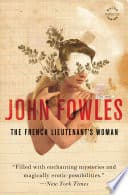
Lyme Regis and the Mysterious Woman
In 1867, Charles Smithson, a wealthy paleontologist, visits Lyme Regis with his fiancée, Ernestina Freeman. While walking, Charles sees a woman looking out to sea. He learns she is Sarah Woodruff, a former governess disgraced for an alleged affair with a French lieutenant who left her. Sarah is now avoided by society and lives alone, known as 'the French Lieutenant's Woman.' Charles is immediately drawn to her sadness and the scandal, finding her very different from the conventional Ernestina.
Growing Fascination and Secret Meetings
Charles's initial pity for Sarah quickly turns into a strong fascination. He finds reasons to visit the isolated Undercliff where Sarah often walks, hoping to see her. During one meeting, Sarah shows a more complex side, hinting that she chose her isolation. Charles feels pulled into her mind, a pull he cannot explain. These secret meetings become more frequent, creating a conflict between his duty to Ernestina and his growing interest in Sarah.
The Proposal and Sarah's Plea
Charles, struggling with his feelings, proposes to Ernestina again, confirming his commitment. However, Sarah, after hearing about his engagement, seeks him out, supposedly for medical advice for her employer, Mrs. Poulteney. During their talk, Sarah admits her deep despair, suggesting Charles is her only hope. She describes herself as trapped and wanting a future beyond Victorian society. Her vulnerability and intense gaze further involve Charles, making him question his upcoming marriage and planned life.
The Confession and the Lie
Sarah continues to influence Charles, sharing more about her past. She confesses that the French lieutenant, Varguennes, did not abandon her; she chose to be with him, knowing the social cost, as an act of defiance and a search for authenticity. She admits to deliberately creating her reputation as a fallen woman to escape Victorian life's expectations. This confession, while shocking, also deepens Charles's admiration for her unusual spirit, further separating him from Ernestina's polite society.
The Break with Ernestina
Charles's inner conflict peaks after an intense meeting with Sarah in an abandoned barn. Though they are not physically intimate, their connection is clear. Later, overwhelmed by his feelings and Sarah's influence, Charles tells Ernestina he cannot marry her. This decision causes a scandal for Ernestina and her family, and for Charles, who loses his social standing and money. He ends the engagement, fully committing to the unknown path Sarah represents, believing she is his true match.
The Search for Sarah
After Charles breaks his engagement, he looks for Sarah, expecting to find her. Instead, he discovers she has vanished from Lyme Regis without a trace. Her disappearance leaves Charles confused and desperate. He searches the town, asking everyone if they saw her, but finds nothing. The woman who had consumed his thoughts and changed his life is now gone, leaving him to deal with the results of his actions and the emptiness she left.
Scandal and Social Ruin
Charles's decision to break his engagement has serious consequences. He faces social rejection, and the Freeman family sues him for breach of promise. His reputation is ruined, and his financial future is damaged. He must leave Lyme Regis, his academic career uncertain. This time is a downfall for Charles, stripped of his conventional life and left with only Sarah's memory and the questions her disappearance raises. He becomes an outcast, like Sarah, but without her apparent self-control.
Exile and Self-Discovery
Devastated, Charles leaves England and travels through Europe and America to escape the scandal and find new purpose. He continues his paleontology studies but also thinks deeply about his past choices, his Victorian upbringing, and Sarah's impact on his ideas of freedom and truth. This exile, though painful, helps him shed some of his ingrained Victorian ways and develop a more independent, modern view, preparing him for an uncertain future.
The First Ending: Reconciliation and Convention
The narrator steps in, offering a traditional Victorian ending where Charles eventually finds Sarah. They get back together, and she explains her disappearance as a test of his commitment and an act of independence. They marry and live a respectable, if somewhat unusual, life. This ending gives the reader closure and fits the romantic expectations of the time. However, the narrator questions its truth, suggesting it is just one possible outcome, showing how artificial literary conventions can be.
The Second Ending: Sarah's Independence
In a very different ending, Charles finally finds Sarah three years later in London. She is living with the Pre-Raphaelite artist Dante Gabriel Rossetti, working as his muse. Sarah, now independent, reveals that her past confessions and pleas were partly planned to free herself from Victorian limits. She rejects Charles, saying she needs to live for herself, not as a part of any man. This ending leaves Charles heartbroken but also enlightened, facing Sarah's modern spirit and his own lingering Victorian expectations.
The Third Ending: Ambiguity and Freedom
The narrator again suggests a third, more unclear ending. After Sarah rejects him at Rossetti's house, Charles leaves, shattered but also deeply changed. He is left alone to think about his experiences and Sarah's freedom. This ending highlights life's uncertainty and the lack of clear answers. Charles must make his own way, stripped of his illusions, but also possibly freed from his past, embracing a future defined by choice rather than social expectation. It is the most modern ending.