“The truth is a thing of many facets, and each person sees but one.”
— Detective Grant musing on witness testimonies.

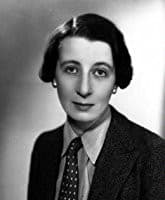
Josephine Tey (1948)
Genre
Historical Fiction / Mystery
Reading Time
360 min
Key Themes
See below
Sign in to track this book
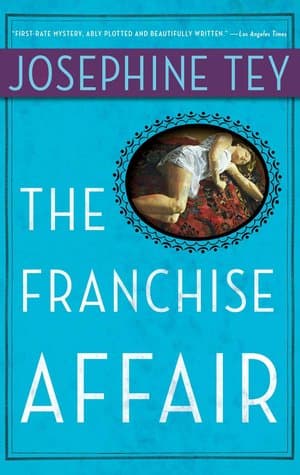
A small-town solicitor uncovers the truth behind a baffling kidnapping claim against two reclusive women, showing how even convincing lies can't withstand a meticulous search for facts.
Robert Blair, a solicitor in Milford, receives a call from Marion Sharpe, who lives with her elderly mother at their isolated country house, The Franchise. Marion tells him she and her mother are accused of kidnapping a young girl, Betty Kane. Blair, surprised due to the Sharpes' quiet reputation, agrees to meet them. He learns the police, led by Inspector Alan Grant from Scotland Yard, are taking the accusation seriously. Betty Kane described her alleged prison—an attic room, a kitchen, and old trunks—which matches The Franchise. The Sharpes strongly deny ever seeing Betty Kane or holding her captive.
Betty Kane, appearing innocent, tells her story to the police and public. She claims she was taken from a bus stop, driven to The Franchise, and held for a month in an attic room. She describes abuse, poor food, and living in fear from the two women. Her story is convincing and gains public sympathy, turning opinion against Marion Sharpe and her mother. Despite no clear motive, Betty's detailed descriptions of the house, especially the attic room and its cracked window, convince many, making the Sharpes' denials seem less believable.
Inspector Alan Grant, though initially careful, begins to believe Betty Kane's story because of the details she provides about The Franchise. He searches the house and finds some items that seem to support Betty's claims, like the attic room matching her description. Robert Blair, however, remains unconvinced by Betty's performance and the lack of a clear motive for the Sharpes to commit such a crime. He starts his own investigation, feeling a strong sense of injustice and believing the Sharpes are innocent, despite growing evidence and public anger against them. The legal and public pressure on the Sharpes increases.
Local and national newspapers pick up Betty Kane's story, publishing vivid details and portraying Marion Sharpe and her mother as cruel kidnappers. Headlines declare a 'Franchise Horror,' and the public, fueled by anger and Betty's seemingly helpless demeanor, quickly condemns the two women. The Sharpes become outcasts in their community, facing hate mail and vandalism. Robert Blair struggles against public opinion, realizing that the media's portrayal makes it very hard to defend his clients fairly, regardless of the evidence. The pressure on him to drop the case is immense.
As Robert Blair investigates further, he notices inconsistencies in Betty Kane's testimony and actions. He questions her perfect recall of some details while others are vague. Blair begins interviewing witnesses, including bus drivers and locals who might have seen Betty or the Sharpes around the time of the alleged abduction. He finds no one who can place Betty at The Franchise or confirm her initial abduction story. He also learns about Betty's past, which starts to show a different person than the innocent victim presented. These early findings strengthen Blair's belief that Betty Kane is not telling the full truth.
Blair carefully reconstructs the Sharpes' daily routines and confirms their alibis for the time Betty Kane claimed to be held captive. He interviews tradesmen, neighbors, and anyone who had contact with The Franchise during that month, finding no one who saw Betty Kane or anything unusual. He also looks more closely into Betty Kane's background, searching for any reasons she might have to invent such a story. Blair's careful method differs from the police's initial acceptance of Betty's story, causing some disagreement with Inspector Grant, who is held back by Betty's seemingly strong testimony and public feeling.
The trial begins, and the prosecution presents a strong case, relying heavily on Betty Kane's convincing testimony and the circumstantial evidence found at The Franchise. The public gallery is full, mostly hostile towards the Sharpes. Betty Kane, under oath, repeats her difficult story, deeply affecting the jury. Robert Blair, facing a tough fight, works to find flaws in Betty's story and to present the Sharpes as innocent victims of a cruel lie. He points out the lack of a clear motive and the inconsistencies he has found, but the emotional impact of Betty's testimony is hard to overcome. The Sharpes remain calm but clearly distressed.
Following a hunch, Robert Blair focuses on a detail Betty Kane mentioned: a man she saw at a fair. He tracks down fairground workers and identifies the man as a traveling showman named Kevin Macandrew. At the same time, Blair discovers Betty Kane had a secret life, having run away from home before and been involved in other deceptions. He pieces together that Betty was not kidnapped by the Sharpes, but ran away with Macandrew. Her abduction story was a desperate attempt to cover her elopement and later abandonment, fearing her strict family's reaction to her behavior.
With clear evidence, including statements from Kevin Macandrew and others who saw Betty Kane with him, Robert Blair confronts Betty Kane with the truth. Faced with proof of her deception, Betty breaks down and admits she made up the entire story. She confesses she ran away with Macandrew, spent time with him, and only invented the kidnapping to avoid her father's anger and keep her 'innocent' image. This dramatic confession destroys the prosecution's case. The judge immediately dismisses the charges, and Marion Sharpe and her mother are cleared, though the experience leaves them deeply affected by the public's judgment.
With their names cleared, Marion Sharpe and her mother return to The Franchise, changed by the experience. The community, initially hostile, slowly begins to rebuild its relationship with them, though some doubt remains. Robert Blair, seen as a hero, reflects on how easily public opinion can be swayed by a compelling story, even without truth. Inspector Grant recognizes Blair's better detective work, seeing the limits of his own initial acceptance of Betty Kane's story. The case reminds everyone of the dangers of quick judgment and the importance of careful investigation over emotional appeals.
The Protagonist
Blair transforms from a small-town solicitor to a brilliant amateur detective, restoring his faith in his own abilities and the pursuit of truth.
The Accused Protagonist
Marion endures public vilification and a harrowing trial, emerging exonerated but deeply scarred by the experience.
The Accused Supporting
She endures the trauma of the accusation through the support of her daughter and solicitor, her innocence ultimately proven.
The Antagonist
Betty's carefully constructed facade of victimhood unravels, exposing her as a deceitful manipulator.
The Supporting
Grant moves from initial conviction of the Sharpes' guilt to a realization of Betty Kane's deception and an appreciation for Blair's alternative approach.
The Supporting
Macandrew reluctantly comes forward, providing the key evidence that exposes Betty Kane's lie.
The Mentioned
Not a character with an arc, but his strict nature is the catalyst for Betty's actions.
The novel shows how easily public opinion can be swayed by a compelling story, even without truth. Betty Kane's act as a victim, amplified by sensational media, quickly turns the community against the Sharpes, leading to their rejection and conviction in public opinion before any legal judgment. Scenes of hate mail and vandalism at The Franchise show the destructive power of unchecked public feeling and media frenzy. Robert Blair constantly fights this tide, seeing that the emotional appeal of Betty's story overpowers rational thought and evidence.
“It was not a trial of facts, but a trial of emotions, and the emotions were all on Betty Kane's side.”
The story explores how easily justice can be sidetracked by lies and how hard it can be to find the truth when a convincing lie is told. Inspector Grant, an experienced professional, at first accepts Betty Kane's story because of its detail and emotional impact, showing how even skilled investigators can be misled. The Sharpes' fight to prove their innocence against much circumstantial evidence and public condemnation shows how vulnerable innocent people are when faced with a determined liar. Robert Blair's careful work demonstrates the effort needed to uncover truth and restore justice.
“Truth was a fragile thing, easily obscured by a well-told lie.”
A main theme is the sharp difference between how people and situations appear and their true reality. Betty Kane seems like an innocent victim, but she is actually a manipulative liar. The Sharpes appear reclusive and possibly strange, leading to easy blame, but they are, in fact, dignified and innocent. The run-down look of The Franchise itself, which Betty uses to her advantage, also hides the quiet, respectable lives lived inside. The novel constantly asks the reader to look past first impressions and question what is truly beneath the surface.
“She had the face of an angel and the heart of a serpent.”
Robert Blair's strong belief in the Sharpes' innocence, against all odds, shows the power of integrity and conviction. Despite skepticism from the police, public hostility, and great pressure, Blair never wavers in his commitment to finding the truth. His moral compass guides his investigation, pushing him to carefully gather evidence and challenge accepted stories. Similarly, Marion Sharpe's quiet dignity and refusal to break under pressure show her strong personal integrity, even when her reputation is ruined. Their resilience highlights the strength of sticking to one's principles.
“He knew, with a certainty that went beyond mere professional duty, that these women were innocent.”
Betty Kane's detailed, yet fabricated, testimony misleads everyone.
Betty Kane serves as a classic example of an unreliable witness, whose entire testimony forms the basis of the false accusation. Her detailed descriptions of The Franchise, including the attic room and its cracked window, are convincing enough to sway the police, the public, and even the jury. The device is used to create suspense and misdirection, making the reader, like the characters, initially believe her story. The eventual revelation of her deception is a powerful twist, highlighting how easily a compelling, but false, narrative can be constructed and believed.
Physical details of The Franchise align with Betty's story, creating a strong but misleading case.
The novel heavily relies on circumstantial evidence to build the case against the Sharpes. Betty Kane's descriptions of the house, which accurately match The Franchise, are taken as proof of her captivity. The presence of certain items or arrangements in the house that could be interpreted as consistent with her story further strengthens the prosecution's case. This device effectively creates a sense of plausibility for the false accusation, demonstrating how seemingly corroborating details can be entirely coincidental or misinterpreted, making it very difficult for the Sharpes to prove a negative.
Robert Blair, a solicitor, outmaneuvers professional police to solve the mystery.
Robert Blair, a solicitor, functions as the amateur detective in the story. Unlike Inspector Grant, who is bound by official procedures and initial evidence, Blair is free to pursue hunches and investigate outside conventional police channels. His personal investment in the Sharpes' innocence drives his meticulous, often unconventional, methods. This device allows for a different perspective on the investigation, highlighting the power of individual intuition and perseverance in uncovering truths that professional systems might overlook or misinterpret, ultimately proving more effective than the established authorities.
The Sharpes' reclusive lifestyle inadvertently makes them easy targets for suspicion.
The Sharpes' reclusive and somewhat eccentric lifestyle at The Franchise acts as a red herring, subtly directing suspicion towards them. Their isolation and lack of close social ties make it easier for the public and police to believe they could be capable of such a heinous crime, as they are not well-known or integrated into the community. This societal prejudice, combined with the mysterious nature of their old house, makes them convenient villains in the public imagination, distracting from the true perpetrator and delaying the discovery of Betty Kane's fabrication.
“The truth is a thing of many facets, and each person sees but one.”
— Detective Grant musing on witness testimonies.
“It is not the crime that matters, but the reaction to it.”
— Grant reflecting on public and private responses to the alleged abduction.
“There are no ordinary people, only people you do not know well enough.”
— Grant's internal thought about the seemingly unremarkable villagers.
“Suspicion, like a small seed, can grow into a formidable tree if watered by rumour.”
— The narrative describing how public opinion turned against the Misses Winter.
“The past is never dead. It's not even past.”
— Though a famous quote often attributed to Faulkner, it perfectly encapsulates the lingering effects of past events on the present in the story.
“It’s a peculiar thing, the human mind. It can convince itself of almost anything, given enough encouragement.”
— Grant considering the reliability of Betty Kane's memory and testimony.
“The most dangerous lies are the ones we tell ourselves.”
— Implicit in Betty Kane's steadfast belief in her own story, despite inconsistencies.
“Justice, in the end, is a very human affair, and therefore fallible.”
— Grant's reflections on the legal process and its imperfections.
“Silence can be as eloquent as speech, and often more revealing.”
— Grant observing the quiet demeanor of the Misses Winter.
“It’s not what people say, but what they don’t say, that often holds the key.”
— Grant's detective methodology, focusing on omissions and implications.
“Reputation is a fragile thing, easily shattered by a breath of gossip.”
— The ease with which the Misses Winter's good standing was destroyed.
“The greatest mysteries are often found not in grand schemes, but in the small, everyday details.”
— Grant's realization that the solution lay in overlooked aspects of the case.
“To be innocent is not always to be believed.”
— The central struggle of the Misses Winter against public and legal skepticism.
“The past, like a shadow, follows us, sometimes long and distorted.”
— The lasting impact of past events and relationships on the present case.
Ready to see how well you understood this book? Take our interactive quiz with 10 questions.
Biography coming soon.







