“The past is a stubborn thing. It clings to you, no matter how hard you try to shake it off.”
— Kaelen reflecting on his past and the weight of his family's legacy.

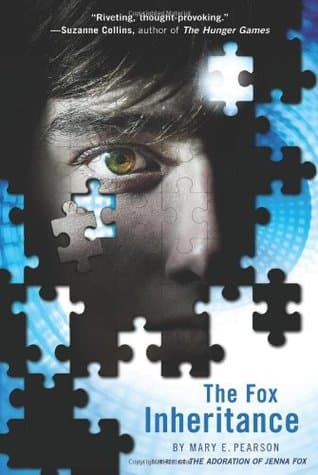
Mary E. Pearson (2011)
Genre
Fantasy / Science Fiction / Young Adult / Romance
Reading Time
240 min
Key Themes
See below
Sign in to track this book
Two centuries after a catastrophic accident, two disembodied minds awaken in new bodies to a future where everyone they knew is gone, except for the mysterious third friend who vanished from their digital prison.
Locke and Kara awaken in an unfamiliar room, disoriented and with no memory of how they got there. They discover they are in new, perfect bodies, centuries after their original accident. Their last memory is of their minds being uploaded into a neural network after a catastrophic accident that destroyed their physical forms. They immediately search for Jenna Fox, their third companion, but she is nowhere to be found. Dr. Rowen, a seemingly benevolent figure, explains that they have been 'reborn' into a future where the world has drastically changed. Locke and Kara struggle to reconcile their past memories with their present reality, feeling a sense of loss and displacement.
Driven by their deep bond, Locke and Kara press Dr. Rowen for information about Jenna. Dr. Rowen is cagey, offering vague assurances but no concrete answers. Frustrated, Locke and Kara begin to explore their new surroundings, a sterile, technologically advanced facility. They quickly realize their isolation; everyone they knew is long dead, and the world outside is alien. Their determination to find Jenna intensifies, as she represents the last link to their past and their shared identity. They begin to suspect Dr. Rowen is hiding something about Jenna's fate.
Through investigations and piecing together fragmented memories, Locke and Kara learn that their minds were not merely 'preserved' but were part of a vast, illegal neural network known as the 'Net.' This network housed the minds of countless individuals, a controversial practice following the Bio-Crisis. They realize their existence is a legal and ethical grey area, and that their 'reawakening' is not a simple medical procedure but a complex and potentially dangerous experiment. This revelation deepens their distrust of Dr. Rowen and the organization behind their revival.
Locke and Kara eventually catch a glimpse of Jenna Fox, now much older and seemingly living a normal life. However, she appears to have no memory of them or their shared past in the Net. This encounter is devastating for Locke and Kara, who had held onto the hope of a reunion. Jenna's altered state raises questions about what happened to her during her time in the Net and why her memories are absent. They realize that simply finding her isn't enough; they need to understand what changed her and how to reach the Jenna they knew.
Locke and Kara begin to uncover the history of the Fox family's role in the Bio-Crisis and the subsequent preservation of their minds. They discover that Jenna's father, Dr. Fox, was a brilliant but controversial scientist who played a role in creating the technology that kept them alive. The ethical implications of their existence, and the lengths to which the Fox family went to preserve them, become clearer. This knowledge complicates their feelings towards Jenna and her family, as they grapple with the idea that their existence is a product of scientific ambition and moral ambiguity.
Driven by their desire for answers and a growing sense of injustice, Locke and Kara eventually make contact with a resistance group that opposes the illegal practices of mind preservation and the manipulation of human consciousness. This group offers them a chance to understand their situation better and potentially find a way to help Jenna. They learn about the dangers of the existing Net and the potential for abuse by those who control it. Joining the resistance marks a shift from passive observation to active participation in a larger conflict.
Armed with new information from the resistance, Locke and Kara confront Dr. Rowen, demanding full transparency about Jenna's condition and their own past. Under pressure, Dr. Rowen reveals that Jenna was 'reconstructed' earlier than them, but due to complications, her memories of the Net and her friends were suppressed to ensure her integration into society. She explains the risks involved in trying to restore those memories. This confession is a painful blow, confirming their fears about Jenna's altered state but also offering a glimmer of hope for her recovery.
Determined to reunite with the Jenna they knew, Locke and Kara, with the help of the resistance, devise a plan to restore Jenna's lost memories. This involves a complex and risky procedure that could potentially harm Jenna or even erase her current self. They understand the ethical tightrope they are walking, as they are essentially attempting to overwrite a part of who Jenna has become. The decision weighs heavily on them, but their love and loyalty to Jenna compel them to take the risk, believing that her true self is worth fighting for.
The operation to restore Jenna's memories is fraught with tension and danger. Locke and Kara participate directly, using their unique connection to the Net to facilitate the process. The procedure is successful in part, as flashes of Jenna's past memories begin to surface. However, it also creates an upheaval in Jenna's mind, causing confusion and distress as her two identities clash. The immediate aftermath is not the joyful reunion they envisioned, but a period of intense struggle for Jenna as she tries to reconcile her past and present selves.
In the wake of the operation, Jenna slowly begins to process her restored memories, gradually understanding who Locke and Kara are and their shared history. The reunion is complex, marked by both joy and lingering pain. While their bond is rekindled, the scars of their prolonged separation and the ethical dilemmas surrounding their existence remain. The trio, now aware of the world's complexities and their unique place within it, faces an uncertain future. They must decide how to navigate their new lives, protect their identities, and advocate for others like them in a world that fears and misunderstands them.
The Protagonist
Locke transforms from a disoriented individual clinging to the past into a proactive leader willing to fight for justice and the restoration of his friend.
The Protagonist
Kara evolves from a grieving, disoriented survivor to an insightful advocate for ethical treatment and a key strategist in the plan to help Jenna.
The Supporting
Jenna's arc involves the traumatic reawakening of suppressed memories and the struggle to integrate her past and present selves.
The Supporting
Dr. Rowen moves from a secretive gatekeeper to a reluctant confessor, revealing the truths she had hidden.
The Supporting
Alina serves as a guide and ally, helping Locke and Kara navigate the resistance and understand the larger ethical conflict.
The Mentioned
His influence is primarily historical, shaping the circumstances the protagonists find themselves in.
The Supporting
Mr. Bender provides crucial technical support and expertise to the protagonists.
The novel explores what constitutes a person's identity when their physical body is replaced and memories are manipulated. Locke and Kara grapple with being 'new' people in a 'new' world, questioning if they are still the same individuals without their original bodies and lives. Jenna's struggle to reconcile her suppressed past with her present self is central to this theme, as she experiences a crisis of identity when her memories are restored. The narrative asks whether identity is tied to physical form, memory, or the continuity of consciousness, particularly in the face of advanced biotechnological intervention. Their existence challenges traditional notions of what it means to be human.
“"We were copies, not originals. We were the echoes of what had been, not the real thing."”
The story explores the moral and ethical implications of advanced science, specifically mind preservation and human cloning. The creation of the 'Net' and the revival of minds raise questions about the sanctity of life, the right to personal autonomy, and the dangers of playing God. Dr. Rowen's actions, driven by a desire to preserve life but executed with questionable methods, highlight the grey areas in scientific advancement. The resistance movement directly opposes these ethical breaches, forcing characters and readers to confront the potential for abuse when technology outpaces moral guidelines. The narrative critiques the idea that if something can be done, it should be done, emphasizing the human cost.
“"There are some lines that should not be crossed, no matter how noble the intention."”
At its core, the novel is about the enduring power of love and loyalty. The unwavering bond between Locke, Kara, and Jenna transcends death, time, and physical transformation. Locke and Kara's entire motivation stems from their deep love for Jenna and their shared past. Their loyalty drives them to embark on a dangerous quest, risking their own newfound lives to restore Jenna's memories and reunite their trio. This theme is evident in their refusal to give up on Jenna, even when she doesn't recognize them, and their willingness to make immense sacrifices for their friendship. Their connection is the emotional anchor of the story.
“"We were three, and three we would remain, no matter what the world tried to do to us."”
Locke and Kara experience grief for their lost lives, families, and the world they once knew. They awaken to a future where everyone they loved is dead, and their past is a distant memory. This sense of loss shapes their emotional landscape, making their quest for Jenna not just about friendship, but about reclaiming a piece of what they've lost. Even their 'perfect' new bodies cannot erase the pain of their past. Jenna, upon regaining her memories, also experiences a form of grief for the life she lived without her true past, and for the choices made on her behalf. The novel explores how individuals cope with loss and seek meaning in its wake.
“"How do you grieve for a life that was taken from you centuries ago?"”
The deliberate manipulation of a character's memories to control their identity.
This device is central to Jenna's character arc. Her memories of Locke, Kara, and her time in the 'Net' were suppressed to allow her to integrate into society. This creates a powerful narrative drive for Locke and Kara, who must find a way to restore these memories. It raises questions about the right to one's own past and the ethical implications of manipulating personal history. The act of restoring Jenna's memories is a major plot point, fraught with danger and ethical dilemmas, and its success is crucial for the resolution of the main conflict.
A vast digital repository of preserved human minds, the source of the protagonists' consciousness.
The 'Net' serves as both the origin of Locke, Kara, and Jenna's continued existence and a major source of conflict. It is an illegal and controversial technology that preserved their minds after their original bodies were destroyed. The existence of the 'Net' creates the futuristic setting and the ethical framework of the story, as it represents the extreme lengths to which humanity went to preserve life, with unforeseen consequences. It is also the metaphorical 'home' from which Locke and Kara emerged, making their struggle to adapt to the physical world more profound.
The protagonists are given genetically engineered, 'perfect' bodies after centuries of disembodied existence.
This device immediately establishes the science fiction elements of the novel and creates a profound sense of displacement for Locke and Kara. Their new bodies are unfamiliar, yet perfect, highlighting the artificiality of their existence. It forces them to confront questions of identity, as their physical form is no longer their original one. The process of revival itself is shrouded in mystery, leading to their investigation and the uncovering of ethical breaches. This device underscores the theme of what it means to be human when the body is merely a vessel.
“The past is a stubborn thing. It clings to you, no matter how hard you try to shake it off.”
— Kaelen reflecting on his past and the weight of his family's legacy.
“Sometimes you have to break a few rules to do what's right.”
— Kaelen grappling with his moral compass and the constraints of the law.
“Love isn't a choice. It's a surrender.”
— Kaelen's internal thoughts about his growing feelings for Lia.
“There's a difference between living and just existing.”
— Kaelen contemplating his purpose and the meaning of his existence.
“Hope is a dangerous thing, but it's also the only thing that keeps us going.”
— Kaelen finding a glimmer of hope in a dire situation.
“We are all products of our past, but we don't have to be prisoners of it.”
— Kaelen considering his ability to forge his own path despite his origins.
“The greatest battles are often fought within ourselves.”
— Kaelen facing internal conflict and self-doubt.
“Sometimes the truth is a weapon, and sometimes it's a shield.”
— Kaelen weighing the consequences of revealing or concealing information.
“Family isn't always about blood. It's about who you choose to stand with.”
— Kaelen reflecting on his found family and loyalty.
“Fear can be a powerful motivator, but courage is what truly sets us free.”
— Kaelen confronting his fears and choosing to act despite them.
“The world is full of shadows, but even the smallest light can make a difference.”
— Kaelen finding optimism amidst darkness and despair.
“Not all wounds are visible, but they can still leave the deepest scars.”
— Kaelen considering the emotional impact of past traumas.
“Change is inevitable. It's how we adapt that defines us.”
— Kaelen facing significant shifts in his life and learning to cope.
“Some secrets are meant to stay buried, and some are meant to be unearthed.”
— Kaelen dealing with hidden truths and their potential impact.
Ready to see how well you understood this book? Take our interactive quiz with 10 questions.

Biography coming soon.







