“It was impossible to be a kid and not know about the Fourth Stall. It was like not knowing about recess or lunch or that the principal was a monster.”
— Introducing the legend of the Fourth Stall and its significance in the school.

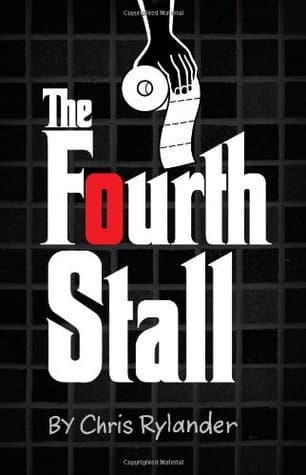
Chris Rylander (2009)
Genre
Children's / Mystery / Young Adult
Reading Time
360 min
Key Themes
See below
Sign in to track this book
In the chaotic world of middle school, a resourceful kid named Mac runs an illicit problem-solving business out of the boys' bathroom, only to find himself entangled in a web of rival crime bosses, gambling rings, and a legendary bully that threatens to unravel his entire operation.
Mac, a sixth-grade entrepreneur, runs a business from the fourth stall of the East Wing boys' bathroom, providing services and items for a fee, with his best friend Vince acting as his business manager. Their operation is meticulous, with a complex filing system and a network of contacts. One Monday, their usual routine is disrupted when a third-grader named Fred requests protection from a bully named Bart, who is extorting his lunch money. Mac quickly plans to handle Bart, but an anonymous note left in his stall warns him to back off. This marks the beginning of a turf war with a new rival known only as 'The Owl,' who seems to be targeting Mac's clients and undermining his authority.
The Owl's attacks become more direct and personal. They steal Mac's organized files, leaving chaos in his stall, and then sabotage his business by replacing his inventory with useless items like broken pencils and empty candy wrappers. The Owl also starts leaving cryptic notes, referencing a legendary high school crime boss named Staples, which unnerves Mac. Vince, ever the pragmatist, suggests they focus on identifying The Owl. Mac begins interviewing his clients and contacts, looking for anyone who might have a motive or the means to orchestrate such an attack. He also enlists the help of his network, including the school's resident graffiti artist, The Ghost, to gather intelligence.
Mac discovers that a new intramural gambling ring has emerged, taking bets on school sports and activities. This directly competes with Mac's own, smaller-scale operations. He learns that Bart, the bully from the first incident, is involved in collecting money for this new ring. This connection raises Mac's suspicions, as Bart seems to have gained influence and resources quickly. Mac realizes that The Owl is not just trying to put him out of business, but is attempting to establish a new criminal enterprise within the school. He and Vince strategize on how to infiltrate the gambling ring to gather more information about its leader and The Owl's identity.
The intramural gambling ring's climax revolves around a high-stakes bet on the Chicago Cubs World Series game, which is significant as it's the first in almost seventy years. Mac, realizing this is his best chance to expose The Owl, decides to place a massive bet on the game, using his remaining funds and leveraging his reputation. He intentionally makes his involvement known, hoping to draw The Owl out into the open. Vince is nervous about the high risk, but Mac is determined. He believes that by controlling such a large sum of money and the outcome of the bet, he can force The Owl to reveal themselves during the collection process.
Through careful observation and a clever trap involving the Cubs game bet, Mac and Vince finally unmask The Owl. To their shock, The Owl is Fred, the seemingly innocent third-grader who initially sought Mac's protection from Bart. Fred confesses to orchestrating the entire scheme, including manipulating Bart, stealing Mac's files, and setting up the intramural gambling ring. He explains that he admired Mac's business but believed he could run a more efficient and profitable operation, using Mac's own tactics against him. Fred's intelligence and ruthlessness are a contrast to his youthful appearance, leaving Mac and Vince stunned by his cunning.
Fred, now unmasked, reveals his motivation: he seeks to emulate and surpass Staples, the legendary high school crime boss, whom he has researched. He sees Mac as a stepping stone, a smaller rival to overcome before he can truly ascend to the top of the school's underworld. Fred's knowledge of Staples' methods and history is extensive, showing a deep obsession. He explains how he used the legend of Staples to intimidate Mac and create an air of mystery around his own identity. Mac realizes that Fred isn't just a competitor, but a dangerous, ambitious prodigy with a clear long-term goal to dominate the school's illicit economy.
Mac, recovering from the shock, confronts Fred not with anger, but with a surprising offer. Recognizing Fred's intelligence and ambition, Mac proposes a collaboration rather than continued rivalry. He acknowledges Fred's skill but points out the flaws in his current approach, emphasizing the importance of trust and a reliable network. Fred, initially resistant, eventually agrees to a truce and a partnership, recognizing the benefits of Mac's experience and established connections. The gambling ring is dismantled, and the school's illicit operations are brought back under a more controlled, albeit still unofficial, system. Mac and Vince, though wary, see potential in Fred's capabilities, under strict supervision.
Afterward, Mac and Vince reflect on the events. Mac's business is re-established, but with new protocols and more caution. The experience with Fred forces Mac to re-evaluate his own methods and the vulnerabilities of his operation. He realizes that even a well-run machine can be disrupted by unexpected genius. The legend of Staples takes on a new, more immediate meaning, as Mac understands the long-term game of power and influence. While his business continues to thrive, Mac is now aware that new, formidable challengers can emerge from unlikely places, always keeping him on his toes and forcing him to adapt.
The Protagonist
Mac learns to be more adaptable and cautious, realizing that even the most established systems can be challenged by unexpected rivals. He grows to understand the complexities of power and ambition.
The Supporting
Vince's unwavering loyalty is tested, but he remains a steadfast partner, demonstrating his resourcefulness in crisis.
The Antagonist/Supporting
Fred evolves from a seemingly innocent client to a formidable rival, ultimately agreeing to a partnership, showing his strategic flexibility and ambition.
The Supporting
Bart is used as a tool by Fred, demonstrating his lack of independent agency and strategic thought.
The Supporting
The Ghost remains a consistent, enigmatic ally, demonstrating the importance of diverse contacts in Mac's network.
The Mentioned
Staples's legend serves as a static, aspirational, and cautionary tale for the characters, driving Fred's ambition.
The Supporting
The Nine remain a constant background threat, representing the raw power and chaos Mac often has to navigate.
The novel explores the world of business through Mac's eyes, showing the principles of supply and demand, customer service, and strategic planning within a school setting. Mac operates with a clear code of conduct, even if his services are illicit. The theme covers the ethics of his operations, especially when confronted by Fred's more ruthless approach, forcing Mac to reflect on the balance between profit and integrity. It shows the challenges of competition and the need for adaptation in a dynamic market.
““The first rule of business: know your market. The second rule: know your competition.””
The struggle between Mac and Fred is about who controls the flow of goods, services, and influence within the school. Mac seeks to maintain his established order, while Fred aims to take it over and build his own empire. The theme examines the forms of power, strategic, physical (through bullies), and informational (through networks), and how they are used. It also touches upon the corrupting nature of power and how far individuals will go to attain or maintain it, echoing the legend of Staples.
““In this school, power wasn't about who could throw the hardest punch. It was about who knew the most and who could get things done.””
The friendship between Mac and Vince is the emotional core of the story. Vince's loyalty and support are important to Mac's success and survival against The Owl. The theme explores the importance of trust and camaraderie in the face of adversity, contrasting it with Fred's more solitary and manipulative approach to building influence. It shows how genuine relationships provide strength and resilience, offering a counterpoint to the cutthroat world of schoolyard commerce and crime.
““Vince was more than just a business partner. He was the only one who truly understood the weight Mac carried.””
Mac's reputation as the school's problem solver is central to his identity and business. The Owl's attacks are not just on his operations, but on his standing and the perception of his competence. Fred, in turn, seeks to establish his own identity, even adopting the moniker of 'The Owl.' The theme explores how identity is built through actions, reputation, and the stories people tell about themselves and others, showing its fragile yet powerful nature in the social hierarchy of the school.
““Your reputation was everything. It was currency, protection, and a warning all rolled into one.””
The novel explores the blurred lines between 'good' and 'bad' in middle school. Mac's business, while providing services, operates outside official rules. Fred's actions are clearly antagonistic, yet his ambition and intelligence are almost admirable. The theme questions whether intentions or outcomes define morality, and how 'justice' is served in a world without official enforcement. It challenges the reader to consider the moral complexities of characters who operate in a gray area.
““Sometimes, the only way to do something good was to do something a little bit bad first.””
Mac's hidden office and symbol of his enterprise.
The fourth stall in the East Wing boys' bathroom serves as Mac's headquarters and a central motif. It is a literal hidden space, symbolizing the clandestine nature of his business and his ability to operate beneath the radar of authority figures. It also represents a sanctuary where problems are solved and deals are made. The stall is not just a location; it's an extension of Mac's identity and the nerve center of his operations, making its disruption by The Owl a deeply personal attack on Mac's control and security.
A mythical figure influencing the characters' ambitions.
Staples, a legendary former high school student, functions as an unseen but powerful influence. His story serves as a benchmark for criminal enterprise within the school, inspiring Fred's ambition and providing a historical context for Mac's own operation. The legend acts as a cautionary tale of power and a goal for those who seek to dominate the school's unofficial economy. It adds a layer of depth and continuity to the narrative, suggesting that the struggles for power are cyclical and enduring.
A method of communication and intimidation.
Anonymous notes are a recurring plot device used by The Owl to communicate with and intimidate Mac. These notes build suspense and mystery around The Owl's identity, forcing Mac to deduce who his rival is. They also serve as a way to deliver cryptic warnings and reveal information gradually, escalating the conflict without direct confrontation. This device highlights the secretive and strategic nature of the conflict, where information and psychological warfare are as important as direct action.
A plot driver escalating the conflict and revealing The Owl.
The intramural gambling ring is a key plot device that serves multiple functions. It provides a direct financial threat to Mac's business, creating a clear point of conflict. More importantly, it acts as a mechanism through which The Owl can consolidate power and reveal their true identity. The high-stakes bet on the Cubs game becomes the ultimate trap, forcing The Owl to expose themselves during the collection process. It's a tangible manifestation of the power struggle and a strategic tool for Mac to outmaneuver his rival.
“It was impossible to be a kid and not know about the Fourth Stall. It was like not knowing about recess or lunch or that the principal was a monster.”
— Introducing the legend of the Fourth Stall and its significance in the school.
“You got a problem, you come to me. I got a problem, I come to me. We all got problems, we all come to me.”
— Mac's declaration of his role as the problem-solver and 'boss' of the Fourth Stall.
“The Fourth Stall wasn't just a business; it was an institution. It was the glue that held the school together, the oil that greased the gears of childhood.”
— Mac reflecting on the essential nature and importance of his operation.
“Every good empire needs a good second-in-command. And every good second-in-command needs a good boss to make them look good.”
— Mac acknowledging Vince's role and their partnership.
“Sometimes the best way to solve a problem is to make it someone else's problem.”
— Mac's pragmatic approach to certain tricky situations.
“Fear is a powerful motivator, but loyalty is a lasting one.”
— Mac considering the different ways to maintain control and influence.
“There are three kinds of people in this world: those who make things happen, those who watch things happen, and those who wonder what happened.”
— Mac's philosophy on taking initiative and being proactive.
“Even the toughest kid in school had a weakness. You just had to know where to look, and what to exploit.”
— Mac's analytical approach to dealing with other students and their issues.
“Being a boss wasn't about being the strongest or the loudest. It was about being the smartest, the most resourceful, and knowing how to get what you needed.”
— Mac's definition of true leadership.
“A good reputation is like money in the bank. You don't always need it, but it's good to know it's there.”
— Mac explaining the value of maintaining a strong and trustworthy image.
“The greatest trick the devil ever pulled was convincing the world he didn't exist. The second greatest was convincing kids that adults knew everything.”
— Mac's cynical but insightful view on the perceived wisdom of adults.
“Sometimes, the biggest threats come from the places you least expect them. And sometimes, the solutions do too.”
— Mac reflecting on the unexpected twists and turns in his cases.
“It wasn't about right or wrong in the traditional sense. It was about balance. About keeping the peace, even if you had to bend the rules a little.”
— Mac's moral compass and his pragmatic approach to justice.
“Every kid had a secret. Some were small, some were huge, but they were all valuable. Because secrets meant leverage.”
— Mac's understanding of the power of information.
Ready to see how well you understood this book? Take our interactive quiz with 10 questions.

Dan Gemeinhart
4.5

Kate O'Hearn
4.4

Jeanne Birdsall
4.4

Jen Wang
4.4
Wendelin Van Draanen
4.3

John Marsden
4.3

Chris Van Allsburg
4.3
Jennifer A. Nielsen
4.2