“It is not too much to say that the New York Times was not in the business of hiring men who had lost a hand.”
— On the initial absurdity of Patrick's situation and the Times's conservative hiring practices.

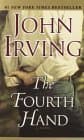
John Irving (2001)
Genre
Literary Fiction
Reading Time
736 min
Key Themes
See below
Sign in to track this book
After losing a hand to a lion, a cynical TV journalist receives a transplant from a dead man whose widow demands visitation rights, forcing them into a bizarre relationship that challenges their notions of loss, connection, and second chances.
Patrick Wallingford, a handsome and famously amorous TV news correspondent, is on assignment in India. While filming a segment about a circus lion, the lion bites off his left hand. This incident, caught on camera, instantly makes Patrick a global spectacle, earning him the nickname 'the lion guy.' His story becomes a top news item, both for the shocking injury and the public's interest in his recovery and the potential for a groundbreaking medical procedure. Patrick, used to reporting news, finds himself unwillingly at the center of it, dealing with his new identity as a disabled celebrity.
Amidst the media attention, Dr. Nicholas M. Zajac, a brilliant but socially awkward hand surgeon, contacts Patrick with an unprecedented offer: a full hand transplant. Dr. Zajac, driven by scientific ambition and a desire to advance medical knowledge, sees Patrick's case as the ideal opportunity for this pioneering surgery. However, his colleagues view him with suspicion, thinking his eagerness comes from a desire for fame rather than medical innovation. Dr. Zajac's unusual behavior and lack of social skills further isolate him within the medical community, even as he begins this monumental task.
A suitable donor hand is found after Otto Clausen, a man who dies by suicide in his beer truck in Green Bay, Wisconsin. Otto's widow, Doris Clausen, a strong-willed woman with unusual demands, agrees to donate her late husband's hand under one condition: she wants to meet Patrick Wallingford before the surgery. She also insists on having 'visitation rights' to her husband's hand after it has been transplanted. This request baffles and disturbs Patrick and the medical team, but they agree to it to proceed with the surgery.
Patrick undergoes the groundbreaking hand transplant surgery. The procedure is medically successful, but his recovery is difficult. He faces extensive physical therapy to regain sensation and movement in his new hand, which feels both foreign and intimately connected. Psychologically, Patrick struggles to reconcile his own identity with another man's hand attached to his body. The public remains captivated by his story, and the pressure of being a medical marvel, combined with the personal strangeness of his new limb, weighs heavily on him. His life, and his understanding of himself, changes completely.
True to her word, Doris Clausen begins exercising her visitation rights. She often travels to New York to see 'Otto's hand,' observing Patrick during his physical therapy sessions or even asking to touch the hand. These visits are deeply uncomfortable for Patrick, who finds Doris's presence intrusive and her attachment to his new limb unsettling. Doris, however, remains firm in her belief that she is maintaining a connection to her deceased husband. This bizarre arrangement forces Patrick to confront the reality that his new hand comes with unexpected, and very personal, conditions.
Over time, the relationship between Patrick and Doris changes beyond mere visits. Their shared connection to Otto's hand creates an unusual closeness. Doris, lonely and grieving, finds comfort in seeing a part of her husband alive, while Patrick, initially resistant, begins to understand her deep loss. Their interactions, though still awkward, become more frequent and less formal. They discuss Otto, Patrick's recovery, and their own lives, slowly forming a bond that defies social norms. This strange connection begins to affect Patrick's understanding of his own identity and his ability to form genuine human connections.
Patrick Wallingford, known for his promiscuity and inability to commit, finds his established lifestyle disrupted by his new hand and Doris's peculiar influence. His many affairs and casual relationships are complicated by the presence of Otto's hand, which constantly reminds him of another man's life and death, and by Doris's periodic appearances. He struggles with physical intimacy, both because of the novelty of his new hand and the psychological weight of its origin. Doris, in her own way, subtly challenges Patrick's superficiality, making him confront deeper emotional truths he previously avoided.
As their relationship deepens, both Patrick and Doris must confront the idea of second chances. Patrick, having received a new hand and a new start in life, must learn to use it not just physically, but metaphorically, to build a more meaningful existence. Doris, still grieving Otto, finds herself unexpectedly drawn into a new kind of relationship, offering her a chance to move forward. They both carry the weight of their pasts – Patrick's superficiality and Otto's tragic end – but also receive opportunities for growth and transformation, though through an incredibly unconventional path.
Ultimately, Patrick and Doris develop a deep and unusual bond. Doris, through her connection to Otto's hand, finds a way to process her grief and move toward a new life. Patrick, through his interactions with Doris and his experience with the transplant, begins to shed his superficiality and embrace a deeper emotional maturity. They accept the bizarre circumstances that brought them together and find a unique form of companionship and support in each other, showing the unexpected ways people can connect and heal, even through tragedy and strangeness.
By the end of the story, Patrick Wallingford has not only physically adapted to his new hand but has also psychologically integrated it into his identity. He no longer sees it merely as Otto's hand but as his own, a part of himself that carries the history of another life yet is now distinctly his. This acceptance shows his deep personal growth. He has moved beyond 'the lion guy' and the recipient of a medical marvel, becoming a man who has truly embraced change, confronted his past, and found a deeper sense of self through an extraordinary and transformative experience.
The Protagonist
Patrick transforms from a superficial womanizer into a man capable of genuine connection and self-reflection, accepting his altered identity and finding a unique bond with Doris.
The Supporting
Doris slowly moves through her grief and finds an unexpected form of companionship and closure through her unique relationship with Patrick.
The Supporting
Dr. Zajac remains a constant, professionally focused figure, his arc centered on the medical success of the pioneering transplant.
The Mentioned
His arc is completed before the story begins, but his legacy profoundly influences the other characters.
The Supporting
Dr. Larch remains a critical voice, never fully accepting Zajac's methods but forced to acknowledge the transplant's success.
The Supporting
Her arc is static, serving primarily as a reflection of Patrick's emotional distance.
The Mentioned
Its 'arc' is complete at the very beginning, serving as the story's initial inciting force.
The novel explores how identity is shaped and changed by trauma and unusual events. Patrick Wallingford, initially defined by his good looks and promiscuous lifestyle, must confront a new identity as 'the lion guy' and then as a man with another's hand. He struggles to reconcile his sense of self with the foreign limb, which connects him to another man's life and death. His journey involves shedding superficiality and accepting a deeper, more complex understanding of who he is, as seen when he finally accepts the hand as truly his own, integrating its history into his present (e.g., his newfound emotional depth in later interactions with Doris).
“He knew he had the hand of a dead man, but he was alive; he had been given a second chance, if only he could learn to use it.”
The story examines the many sides of grief and the unusual ways people seek connection after loss. Doris Clausen's deep grief for her husband, Otto, appears in her bizarre demand for visitation rights to his transplanted hand. This strange request is her way of keeping a tangible link to her deceased loved one, offering a unique way to explore the complexities of mourning. Her interactions with Patrick, initially awkward, gradually become a deep, if unusual, bond, showing how shared vulnerability and a common, strange experience can create unexpected human connections that go beyond typical relationships.
“She wanted to see her husband's hand, to touch it, to remember him by it. It was a part of Otto, and she was not ready to let go.”
The novel is about second chances, both literal and metaphorical. Patrick receives a literal second chance at a normal life with his new hand after a life-altering injury. This physical 'new beginning' forces him to rethink his past choices and superficial lifestyle. Similarly, Doris, through her connection with Patrick and 'Otto's hand,' gets a chance to move past her paralyzing grief and embrace a new phase of her life. The narrative suggests that second chances are rarely simple, often coming with unexpected complexities, but they offer opportunities for growth and change, as shown by the personal transformations of both main characters.
“He had a new hand, a new chance, but it wasn't just his; it carried the history of another man.”
John Irving often includes elements of the absurd in his stories, and *The Fourth Hand* is no different. The initial premise – a journalist losing a hand to a lion and receiving a transplant from a man who died by suicide – is inherently bizarre, highlighting life's strange and unpredictable nature. The media circus around Patrick, where he becomes 'the lion guy,' makes fun of modern society's obsession with celebrity and sensationalism. The public's interest in his private medical journey, and Doris's peculiar demands, show the often-absurd intersection of personal tragedy, medical advancement, and public spectacle in contemporary life.
“He was 'the lion guy.' He knew that. He was no longer just a reporter; he was the story.”
A literal and symbolic bridge connecting two disparate lives.
The transplanted hand is the central plot device, serving as both a medical marvel and a powerful symbol. Literally, it allows Patrick to regain function, but symbolically, it links him inextricably to Otto Clausen and, by extension, to Doris. It represents a 'fourth hand'—neither entirely Patrick's original hand, nor Otto's, but a new entity with a shared history. This device drives the plot by creating the unusual circumstance that brings Patrick and Doris together, forcing them to confront themes of identity, grief, and connection. It is a constant physical reminder of transformation and the unexpected consequences of medical advancement.
The public and journalistic obsession with Patrick's accident and recovery.
The media frenzy surrounding Patrick's injury and subsequent transplant serves as a significant plot device. It immediately establishes Patrick as a public figure, 'the lion guy,' and creates external pressure that he must navigate. This device highlights the superficiality of modern celebrity culture and the way personal tragedy can be commodified for public consumption. It also forces Patrick to confront his own role as a journalist-turned-subject, adding layers to his struggle with identity and privacy. The constant public gaze influences his decisions and his recovery process.
A contractual agreement that creates the central, unusual relationship.
Doris Clausen's demand for 'visitation rights' to Otto's hand is a crucial plot device, as it directly creates the bizarre and intimate relationship between her and Patrick. This unusual condition is the catalyst for their ongoing interactions, forcing two disparate individuals into a deeply personal and unconventional bond. It's a contractual obligation that transcends its literal meaning, allowing for the exploration of grief, attachment, and the unexpected ways people connect. Without this demand, the emotional core of the story—the evolution of Patrick and Doris's relationship—would not exist.
The inciting incident that irrevocably changes Patrick's life.
The lion attack, occurring at the very beginning of the novel, is the inciting incident that sets the entire plot in motion. It's a sudden, violent, and absurd event that immediately transforms Patrick Wallingford from a detached observer (journalist) into the unwilling subject of a global story. This dramatic opening establishes the novel's tone, blending the tragic with the bizarre. Without this specific, shocking event, there would be no need for a hand transplant, and thus no subsequent connection between Patrick and Doris. It acts as the initial, irreversible turning point in Patrick's life.
“It is not too much to say that the New York Times was not in the business of hiring men who had lost a hand.”
— On the initial absurdity of Patrick's situation and the Times's conservative hiring practices.
“He knew that he was a man who, if he were to lose his virginity, would almost certainly lose his virginity to a woman who would not be his wife.”
— Patrick's early life and his predilection for casual relationships.
“The right hand, which had been Patrick’s, was now a woman’s left hand.”
— The central premise of the story: the transplant of Patrick's hand to a woman.
“He felt like a man who had been given a second chance, but he didn't know what he was supposed to do with it.”
— Patrick's feelings after the hand transplant and his new lease on life.
“It was impossible to be a journalist and not be a voyeur.”
— Patrick's reflection on the nature of his profession.
“There was no such thing as a perfect family, but there were families that worked.”
— Mary Cain's perspective on the complexities of family life.
“He was a man who was always looking for the next story, even if it was his own.”
— Patrick's journalistic drive extending to his personal experiences.
“Love, like a good story, was something you had to work at.”
— A character's insight into the effort required for meaningful relationships.
“The past was never really past; it was always just waiting to catch up to you.”
— The lingering effects of past events on the characters' lives.
“He was learning that some things, once broken, could never truly be fixed, only reassembled differently.”
— Patrick's acceptance of the permanent changes in his life.
“The truth was always more complicated than anyone wanted it to be.”
— A reflection on the often messy reality of life and relationships.
“Sometimes the greatest gifts came in the most unexpected and inconvenient packages.”
— Considering the unexpected turns in Patrick's life.
“He was a man who had lost a hand, but found a family, or at least the idea of one.”
— Summarizing Patrick's journey and his search for belonging.
“Life had a way of surprising you, even when you thought you'd seen it all.”
— A general observation about the unpredictable nature of existence.
Ready to see how well you understood this book? Take our interactive quiz with 10 questions.
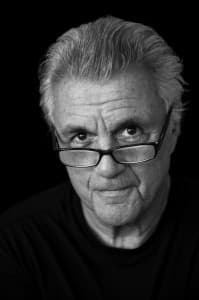
John Winslow Irving is an American-Canadian novelist, short story writer, and screenwriter.







