“Silence has a language of its own. It speaks in the spaces between words, in the pauses of breath, in the hollows of memory.”
— Reflection on the oppressive atmosphere of Franco's Spain.

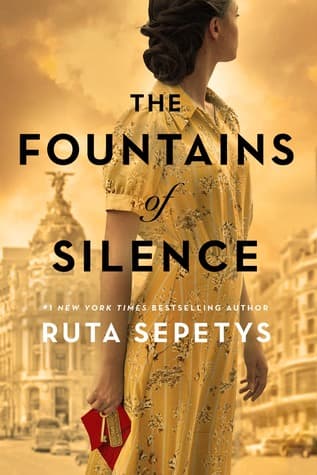
Ruta Sepetys (2019)
Genre
Historical Fiction / Young Adult / Romance
Reading Time
600 min
Key Themes
See below
Sign in to track this book
In 1957 Madrid, an American teenager's camera captures a forbidden romance and the secrets of a nation silenced by Franco's dictatorship, forcing him to choose between love and exposing the truth.
In the summer of 1957, eighteen-year-old Daniel Matheson, an aspiring photographer and son of an American oil executive, arrives in Madrid, Spain, with his parents. His mother, a Spanish expatriate, hopes to reconnect with her heritage, while his father pursues business opportunities with the Franco government. Daniel is captivated by Madrid's atmosphere, using his camera to document everything from the streets to the opulent Castellana Hilton where they are staying. He quickly encounters Ana, a young maid at the hotel, and her younger brother Puri, who hopes to be a bullfighter. Daniel is drawn to Ana's quiet strength and the glimpses she offers into the lives of ordinary Spaniards, a contrast to the glamorous facade presented to tourists. Their initial interactions are tentative, marked by the language barrier and the social divide, but a mutual curiosity begins to grow.
As Daniel explores Madrid with his camera, he captures images that reveal the inequalities and fear under General Franco's dictatorship. He photographs a public protest, the somber faces of people queuing for rations, and the ever-present Guardia Civil. These images spark his journalistic interest, pushing him beyond the superficial tourist experience. Through Ana and her family—her protective older brother Rafa, her aunt Fina, and her uncle Antonio, a Republican sympathizer—Daniel begins to understand the impact of the Spanish Civil War and the ongoing repression. He learns about the 'disappeared' and the constant surveillance, realizing that many Spaniards live in a state of enforced silence, careful not to attract the attention of the authorities. His photographs, initially a hobby, start to feel like a dangerous act of witness.
Despite their different backgrounds, Daniel and Ana's connection grows. Daniel finds himself drawn to Ana's resilience and her quiet intelligence. He learns about her family's struggles, including their poverty and the constant threat of being identified as 'reds' due to their Republican sympathies. Ana, in turn, is intrigued by Daniel's American optimism and his interest in her world. Their secret meetings become a source of comfort and danger. They share moments of intimacy, but their romance is overshadowed by the political climate. Daniel's growing awareness of the government's brutality and his photographs, some of which capture sensitive subjects, put him and Ana at risk. The government's secret police, led by Inspector Vallejo, are always present, watching and listening, making any open expression of dissent or even unconventional behavior dangerous.
Daniel's photographic inquiries lead him to a discovery: the widespread practice of stealing children from Republican families, particularly from mothers deemed 'unfit' or 'red,' and placing them with politically loyal, often wealthy, families. This truth starts to emerge through various clues and whispered conversations. He learns that many of these children were taken from hospitals or orphanages, their birth records falsified. The full weight of this crime hits close to home when he realizes that Puri, Ana's younger brother, might be one of these stolen children. Puri's birth certificate is suspiciously vague, and his physical appearance differs from Ana and Rafa. This revelation adds urgency and danger to Daniel's investigation, as exposing such a secret could have severe consequences for Ana's family and anyone involved in the cover-up.
Driven by the oppressive atmosphere and the desire for a better life for his family, Ana's older brother, Rafa, tries to flee Spain. He attempts to cross the border into France with the help of a smuggler, hoping to find work and eventually bring his family to join him. However, his escape attempt fails. He is caught by the Guardia Civil and beaten, suffering severe injuries. This incident brings the full force of the government's repression down upon Ana's family. They are now under closer scrutiny, labeled as potential dissidents. The family faces increased harassment and economic hardship, as Rafa's inability to work further strains their already limited resources. The event serves as a warning to Daniel about the dangers faced by those who defy or even appear to defy Franco's rule.
As Daniel learns more about the government's actions, particularly the stolen children, he tries to share his findings with his father. Mr. Matheson, focused on securing oil deals with the Spanish government, dismisses Daniel's concerns, urging him to ignore the politics and not jeopardize their family's standing or his business. This creates a rift between father and son. Daniel is torn between his journalistic ethics and the safety of Ana and her family. He has photographic evidence of the government's cruelty, including images related to the stolen children, but exposing them could lead to severe repercussions for everyone involved. He grapples with the ethical implications of his role as an observer, realizing that his photographs hold power but also risk.
Through investigation, aided by a sympathetic priest, Father Ramón, and a former nurse, Ana and Daniel piece together the truth about Puri's birth. They discover falsified hospital records and testimonies confirming that Puri was taken from his birth mother, a Republican prisoner, shortly after his birth. His true identity was erased, and he was given to a family loyal to the government, who later abandoned him, leading to his adoption by Ana's aunt and uncle. This revelation is heartbreaking for Ana and her family, confirming their worst fears. It also places them in extreme peril, as exposing this truth challenges the foundation of the government's narrative. Inspector Vallejo and his network are closing in, sensing Daniel's and Ana's inquiries.
Realizing the danger, Daniel, with the reluctant support of his parents, plans an escape. He knows he cannot openly publish his findings in Spain, but he is determined to expose the truth about the stolen children and the government's actions to the outside world. He decides to smuggle his photographs and notes out of the country. This involves careful planning and risk, as Spanish customs are strict. At the same time, he works with his parents to secure a way for Ana and Puri to escape Spain, knowing that their lives are in danger if they remain. The plan is full of tension, as they are constantly aware of being watched, and time is running out before Inspector Vallejo can intercept them.
The time for Daniel's departure arrives, a moment filled with urgency and sadness. He shares a tearful farewell with Ana. He gives her a coded message, a promise of his return and his commitment to exposing the truth. He also provides her with resources and a plan for her and Puri to eventually join him, emphasizing that their separation is temporary. The weight of leaving her behind, knowing the dangers she still faces, is immense. He carries with him the rolls of film and his notes, the only tangible proof of the government's crimes. As his plane takes off, Daniel looks back at Madrid, vowing to use his photography to give voice to the silenced and to fight for justice for Ana, Puri, and all the victims of Franco's Spain.
Years later, after Franco's death and the transition to democracy, Daniel Matheson returns to Spain. He is a photojournalist, his work having played a role in exposing the actions of the Franco government, particularly the scandal of the stolen children. His photographs and articles helped bring international attention to the issue, contributing to the eventual acknowledgment and investigation of these crimes. He reunites with Ana, who has survived the years of repression. Their reunion is emotional, showing their enduring love and the long-fought battle for truth and justice. Puri, now an adult, also finds some peace, though the scars of his past remain. The novel ends with hope, celebrating resilience and the power of memory and truth to overcome even the deepest silences.
The Protagonist
Daniel evolves from a sheltered tourist to a courageous photojournalist, using his art to fight for truth and justice in Franco's Spain.
The Protagonist
Ana grows from a cautious survivor to a woman who finds her voice and hope for a future beyond repression, largely through her connection with Daniel.
The Supporting
Puri remains largely innocent of his past throughout the main narrative, his arc culminating in the revelation of his true origins and the hope for a more stable future.
The Supporting
Rafa's arc is marked by his desperate attempt to escape and its tragic failure, symbolizing the crushing weight of the dictatorship on individual aspirations.
The Antagonist
Vallejo remains a static character, a relentless force of oppression whose power ultimately wanes with the fall of the regime.
The Supporting
Mr. Matheson shifts from a purely business-driven perspective to a more compassionate stance, eventually supporting his son's moral imperative.
The Supporting
Mrs. Matheson confronts her past and her conflicted feelings about Spain, ultimately choosing to support her son's fight for justice.
The Supporting
They remain steadfast figures of quiet resistance and parental love, demonstrating the enduring strength of family bonds under oppression.
The Supporting
Don Emilio serves as a wise informant, his arc is to pass on crucial knowledge and context to the younger generation.
Silence and secrecy are central to life under Franco's dictatorship. Spaniards are forced into silence about the past, particularly the actions of the Civil War and the ongoing repression, out of fear of the government's secret police. This shows in hushed conversations, unspoken truths, and the suppression of dissent. The 'fountains of silence' symbolize this enforced quiet. Ana's family shows this, carefully guarding their Republican past and Puri's true origins. Daniel's presence, with his camera, helps break this silence, as his photographs become a dangerous way to tell the truth against the government's story of peace and prosperity.
“In Spain, silence was a language, a weapon, a shield.”
The novel explores how identity is shaped by political circumstances, personal history, and the search for truth. Daniel's journey of self-discovery is linked with his photographic quest to understand Spain beyond its tourist facade, leading him to confront moral dilemmas and define his role as a journalist. Ana grapples with her identity under oppression, balancing survival with her yearning for truth and freedom. Puri's entire identity is a construct of the government's deception, and the revelation of his true origins is an act of reclaiming his stolen past. The characters' struggles show how political governments can try to erase or redefine personal and national identities.
“A photograph was more than a moment. It was a fragment of life, a piece of truth, a silent scream.”
Amidst the oppression and danger, love, in its various forms, is a force of resilience. The romantic love between Daniel and Ana crosses cultural and political divides, offering them comfort and hope. This love fuels Daniel's determination to expose the truth and protect Ana. Familial love, particularly Ana's devotion to Puri and Rafa's attempts to secure his family's future, shows the deep bonds that help people endure hardship. The resilience of the Spanish people, who find ways to maintain their dignity, culture, and humanity despite constant surveillance and fear, shows the enduring power of the human spirit.
“Hope was a quiet rebellion. A dangerous whisper.”
Photography is not just a hobby for Daniel but a tool for truth, witness, and social justice. His camera captures the hidden realities of Franco's Spain—the poverty, the fear, the stolen children—that the government tries to conceal. These images become evidence, challenging the official story and giving a voice to the voiceless. Daniel's art transforms him from an observer into an activist, showing how creative expression can be a form of resistance and a way to preserve history and memory, especially when official records are falsified or suppressed. His photographs contribute to international awareness and the eventual reckoning with Spain's past.
“My photographs were not just pictures; they were questions. And the questions were dangerous.”
The novel examines how a nation deals with a traumatic past that has been suppressed. Franco's government tried to erase the memory of Republican Spain and the actions committed during and after the Civil War. The story highlights the long-term consequences of this suppression, especially through the 'stolen children' scandal, a crime that went unacknowledged for decades. Daniel's investigation and the exposure of these truths are a quest for justice for the victims and a demand for historical accountability, emphasizing the importance of remembering and confronting the past to build a just future.
“A country that forgets its past is condemned to repeat it.”
An American protagonist provides an outsider's view into a closed society.
The narrative primarily follows Daniel, an American, who serves as an external observer to Franco's Spain. This device allows the author to introduce the complexities of the regime and its impact on ordinary citizens through a fresh, initially naive, but increasingly critical lens. Daniel's outsider status grants him a certain freedom and perspective that native Spaniards lack, enabling him to ask dangerous questions and document truths that locals cannot. It also helps the reader, who may be unfamiliar with Spanish history, to learn alongside Daniel, making the discovery of the regime's horrors more impactful.
Daniel's camera drives the plot, uncovering secrets and symbolizing truth.
Photography is central to the plot, acting as both a catalyst for Daniel's investigation and a powerful symbol. Daniel's camera is his tool for observation and documentation, inadvertently leading him to uncover the regime's dark secrets, particularly the stolen children. The act of taking photographs, especially those depicting sensitive subjects, is a dangerous act of defiance in a society built on silence. The photographs themselves become tangible evidence, a record of truth that challenges the government's propaganda, symbolizing the power of visual art to expose injustice and preserve memory.
A historical atrocity serving as the central mystery and emotional core.
The historical phenomenon of the 'stolen children' is a key plot device, serving as the central mystery that Daniel and Ana uncover. This real-life atrocity, where children of Republican prisoners or 'undesirable' parents were illicitly taken and given to regime-loyal families, provides a deeply emotional and morally resonant core to the story. It connects directly to Puri's identity and exposes the profound human cost of the dictatorship, adding a layer of personal tragedy and urgency to the broader political narrative. It highlights the regime's cruelty and the long-lasting trauma inflicted on families.
The hotel reflects the stark contrast between tourist facade and Spanish reality.
The Castellana Hilton functions as a microcosm of 1957 Spain, highlighting the stark contrast between the glamorous facade presented to foreign tourists and the harsh realities faced by ordinary Spaniards. The hotel is a bubble of luxury, American influence, and perceived freedom, where tourists like the Mathesons reside. However, beneath this surface, the Spanish staff, like Ana, live lives of poverty, fear, and surveillance. This setting allows for the collision of two worlds and effectively illustrates the economic disparities and the deliberate efforts of the Franco regime to control its international image while oppressing its own citizens.
Incorporation of historical records and personal testimonies to enhance authenticity.
While not explicitly a device *within* the fictional narrative, the book's structure, as described, utilizes elements of oral history and found documents (like 'vintage media reports, oral history commentary, photos'). This meta-narrative device lends authenticity and depth to the fictional story, grounding it in historical fact. It reminds the reader that the fictional events are rooted in real-world atrocities and experiences, enhancing the impact of the themes of truth, memory, and justice by blurring the lines between fiction and historical documentation.
“Silence has a language of its own. It speaks in the spaces between words, in the pauses of breath, in the hollows of memory.”
— Reflection on the oppressive atmosphere of Franco's Spain.
“In Spain, the truth is a dangerous currency. It can buy you freedom or cost you your life.”
— Daniel's realization about the political climate.
“We are all prisoners of our past, but some of us are also prisoners of our future.”
— Ana's thoughts on the constraints of her life.
“A photograph is a moment stolen from time, a secret kept in plain sight.”
— Daniel's perspective as a photographer.
“Love in a time of fear is the bravest act of all.”
— The developing romance between Daniel and Ana.
“The fountains run with water, but the streets run with blood. Madrid remembers what it cannot forget.”
— Description of the lingering trauma from the Spanish Civil War.
“Sometimes the most powerful stories are the ones never told, the ones whispered in shadows.”
— Reference to the silenced voices of the regime's victims.
“Hope is a fragile thing in a country built on broken promises.”
— Ana's reflection on life under Franco.
“The past is not a ghost; it is a tenant, living in the walls of the present.”
— Observation on how history permeates daily life.
“To be invisible is to be safe, but to be seen is to be alive.”
— Ana's dilemma between safety and authenticity.
“In a land of secrets, the truth becomes a revolutionary act.”
— Daniel's growing understanding of his role.
“Memory is a rebellion against forgetting.”
— The importance of preserving personal and historical memories.
“The heart does not understand borders or politics; it only understands love.”
— The cross-cultural romance between Daniel and Ana.
“We are all archaeologists of our own lives, digging through layers of silence to find the truth.”
— Metaphor for uncovering personal and national history.
Ready to see how well you understood this book? Take our interactive quiz with 10 questions.
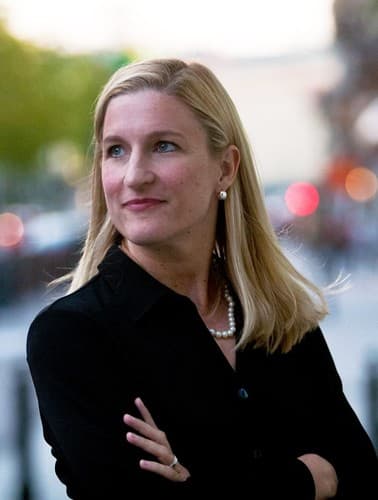
Biography coming soon.







