“Violence is the last refuge of the competent.”
— Salvor Hardin reflecting on political strategy during the rise of the Foundation.

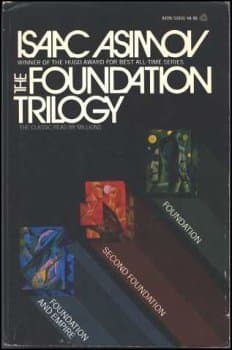
Isaac Asimov (1950)
Genre
Fantasy / Science Fiction
Reading Time
1131 min
Key Themes
See below
Sign in to track this book
A secret society of scientists uses psychohistory to guide humanity through a millennium of collapse and rebirth, battling warlords, empires, and psychic mutants to ensure a new, enlightened empire.
On Trantor, the capital of the Galactic Empire, psychohistorian Hari Seldon is arrested for predicting the Empire's coming collapse, which will lead to thirty thousand years of chaos. During his trial, Seldon explains psychohistory, his science that uses statistical analysis to predict the future of large populations, though not individual actions. He proposes a plan to shorten the period of chaos to one thousand years by creating two Foundations. The first, openly on the planet Terminus, is a colony of scientists compiling an 'Encyclopedia Galactica.' In reality, it is meant to be the start of a new galactic empire. Seldon and his team are exiled to Terminus, where they begin their task. The Second Foundation's location and purpose remain secret.
Fifty years after its founding, the Foundation on Terminus faces its first Seldon Crisis. The four surrounding prefectures of the crumbling Empire have declared independence and want Terminus's advanced nuclear technology. The Foundation's Board of Trustees, made up of encyclopedists, believes diplomacy and scientific superiority will work. However, Mayor Salvor Hardin, a practical politician, sees the real threat. He takes political control of the Foundation, making the encyclopedists figureheads. Hardin uses the Foundation's advanced technology, especially its nuclear power, to create a religious cult among the superstitious kingdoms. By controlling technology and presenting it as divine power, Hardin forces the kingdoms into a dependent relationship with the Foundation, solving the crisis without war.
Centuries pass, and the Foundation grows, facing new challenges as the Empire falls apart. The surrounding kingdoms, now technologically dependent on the Foundation, produce their own ambitious leaders, called Warlords. One Warlord, Anacreon's Prince Regent Wienis, tries to break free from the Foundation and attack using Foundation-supplied ships. However, the Foundation's control over advanced technology is total, and its engineers within the Warlord's fleets can disable ships at will. Hober Mallow, a skilled trader and later Mayor, leads the Foundation's response. He shows that economic and technological dominance, not religious belief, is the best tool for control. He ensures the Foundation’s continued expansion and secures its place as the main power in its sector.
About three centuries after its founding, the Foundation faces its biggest threat: the Galactic Empire, though much smaller, reappears. General Bel Riose, a brilliant and loyal commander, sees the Foundation as a rising power and a direct threat to the Empire. He launches a successful military campaign, capturing Foundation worlds and pushing its forces back. The Foundation, having become too comfortable and focused on economic power, struggles against the Empire's organized military. However, Riose's success leads to his downfall. The Emperor, afraid of Riose's popularity and ambition, recalls and executes him. This ends the Empire's serious challenge to the Foundation and fulfills a key Seldon Plan prediction that no single person could permanently stop the Foundation's rise.
The Foundation, after overcoming the Imperial threat, continues to expand, believing itself unbeatable and on track to establish the Second Galactic Empire. However, a new, unforeseen threat emerges: a mutant known as the Mule. The Mule has incredible mental powers, able to manipulate emotions and wills, turning enemies into loyal followers. He quickly conquers the Foundation and its trading empire, making its technology useless and psychohistory's predictions invalid, as his individual power cannot be accounted for. The Seldon Plan, which had guided the Foundation for centuries, is broken, sending the galaxy into a new era of uncertainty. This event is the most significant change from Hari Seldon's plans.
With the First Foundation defeated, a small group of survivors, including former general Han Pritcher, young couple Bayta Darell and Toran Darell, and Toran's uncle Ebling Mis, search for the legendary Second Foundation. They believe only the Second Foundation, rumored to be mental scientists, can counter the Mule's mind control and restore the Seldon Plan. Their journey takes them across the galaxy, meeting various people and groups under the Mule's influence. Ebling Mis, a brilliant but weak psychohistorian, tries to find the Second Foundation's location, believing its existence holds the key to humanity's future. The Mule, disguised as a clown named Magnifico Giganticus, travels with them, secretly observing and manipulating their progress.
As Ebling Mis gets close to revealing the Second Foundation's location through his psychohistorical research, Bayta Darell realizes the Mule has been with them all along, disguised as Magnifico. To protect the Second Foundation's secrecy and prevent the Mule from further disrupting the Seldon Plan, Bayta kills Ebling Mis before he can speak the location. This act, while sad, stops the Mule's immediate goal. The Second Foundation, watching, recognizes the Mule's power as an unprecedented threat. They start a long-term plan to subtly influence the Mule, guiding him towards a path that will lead to his defeat and allow the Seldon Plan to resume, with major adjustments.
The Second Foundation, through careful and undetectable mental manipulation, guides the Mule's actions and ambitions. They subtly influence him to abandon direct conquest and focus on strengthening his current empire, which accidentally weakens his overall position. The Mule, unaware of this manipulation, becomes less of a direct threat to the galaxy. Eventually, after years of subtle influence, the Second Foundation neutralizes the Mule's threat, either through his natural death or by mentally incapacitating him; the exact method is unclear. With the Mule's extraordinary powers no longer disrupting the galactic order, the Seldon Plan can slowly begin to reassert itself, correcting the changes caused by his emergence.
Decades after the Mule's defeat, the First Foundation has recovered and is again a dominant power. However, a new fear grips them: the existence and unknown influence of the Second Foundation. They realize that if the Second Foundation truly consists of mental scientists guiding humanity's destiny, then the First Foundation is merely a puppet. A group of prominent figures, including Dr. Darell, Bayta and Toran's son, forms a conspiracy to find and destroy the Second Foundation, believing it to be a dangerous, unseen dictator. They develop a 'mental static' device to detect mentalics, hoping to expose the Second Foundation's members. This hunt becomes a central conflict, with the First Foundation's scientific skill against the Second Foundation's mental abilities.
Arcadia Darell, Dr. Darell's smart teenage daughter, becomes involved in the search for the Second Foundation. She travels to Kalgan, where the former Mule's empire is now ruled by Lord Stettin, and then to Trantor, the decaying former capital of the Empire. During her travels, Arcadia gathers information and forms her own theories about the Second Foundation's location. Unknown to the First Foundation, the Second Foundation has planted subtle clues and manipulated events to misdirect their search. They allow the First Foundation to believe they have found the Second Foundation, leading to a planned confrontation and a carefully staged reveal that is not what it seems.
The First Foundation, guided by the clues and manipulations orchestrated by the Second Foundation, believes they have finally found the Second Foundation on Terminus itself, among a group of prominent citizens. They confront these 'mentalics,' who appear to be the leaders of the Second Foundation. A dramatic showdown occurs, where the First Foundation, using their anti-mentalic technology, seemingly neutralizes and defeats these individuals. This apparent victory brings great relief to the First Foundation, as they believe they have eliminated the unseen power controlling their destiny. However, this entire event is a deception by the true Second Foundation, designed to make the First Foundation believe they are again masters of their own fate, allowing the Seldon Plan to continue.
After the 'defeat' of the supposed Second Foundation on Terminus, it is revealed that the true Second Foundation is on Trantor, the old capital of the Galactic Empire. Its members are not powerful mentalics controlling minds from afar, but subtle manipulators, psychohistorians, and philosophers, working to guide humanity's development through generations of careful planning. The 'First Speaker' of the Second Foundation reveals their true purpose: to protect and modify the Seldon Plan, ensuring its success, and to support the intellectual and mental development of humanity. Their location on Trantor, a seemingly unimportant and decaying world, provides the perfect cover for their long-term, subtle influence on the galaxy, ensuring the Seldon Plan's ultimate triumph and the establishment of the Second Galactic Empire.
The Protagonist/Architect
Seldon's arc is primarily established before the main narrative, as he creates and sets in motion the foundational plan for the galaxy's future. His later appearances are posthumous, guiding the Foundation through his recorded messages.
The Protagonist/Leader
Hardin evolves from an astute observer to the decisive political leader who ensures the Foundation's survival and initial expansion, establishing a precedent for future leaders.
The Protagonist/Trader
Mallow transforms from an independent trader into a key political leader, pioneering the Foundation's economic empire and demonstrating a new method of control.
The Antagonist
Riose rises as a formidable military leader, representing the Empire's last gasp of power, only to be undone by the political machinations of his own government, fulfilling the Seldon Plan.
The Antagonist
The Mule rises from obscurity to become a galactic conqueror, disrupting the Seldon Plan. He is eventually subtly guided and neutralized by the Second Foundation, allowing the Plan to resume its course.
The Protagonist/Seeker
Bayta evolves from a civilian caught in galactic upheaval to a decisive figure who takes drastic action to protect the future of the Seldon Plan.
The Supporting
Mis dedicates his remaining life to deciphering the location of the Second Foundation, coming closer than anyone before, but ultimately sacrifices his life for the Plan's protection.
The Protagonist/Leader
The First Speaker is the embodiment of the Second Foundation's guiding principles, orchestrating complex plans to ensure the Seldon Plan's success.
The Supporting
Darell dedicates himself to freeing the First Foundation from perceived mentalic control, ultimately becoming an unwitting pawn in the Second Foundation's larger plan.
The Supporting
Arcadia evolves from a naive, yet insightful, teenager into a key, albeit unwitting, player in the Second Foundation's grand deception.
The main theme is Hari Seldon's psychohistory, which says the future of large populations can be predicted statistically, but individual actions are unpredictable. This idea is challenged by the Mule, a unique individual whose mental powers defy all predictions, showing the limits of Seldon's science. The Second Foundation's role then becomes to subtly adjust the plan, accounting for such unpredictable elements. The trilogy explores the tension between humanity's desire to control its future and the chaos of individual genius or mutation, showing the Seldon Plan's strengths and weaknesses.
“History is a wheel, for the nature of man is change.”
Early in the Foundation's history, its advanced science and technology are presented as a 'religion' to the surrounding worlds. This allows the Foundation to control and expand its influence without direct military conquest. This theme changes as the Foundation moves beyond religious belief to economic and political power. The 'religion of science' eventually becomes outdated, but the underlying power of knowledge and technology remains. The contrast between the Foundation's scientific advances and the beliefs of the crumbling Empire's remnants shows the power dynamic in a galaxy losing its intellectual heritage.
“Never let your sense of morals prevent you from doing what is right!”
The trilogy explores different forms of power and governance: the declining, bureaucratic Galactic Empire; the First Foundation's change from scientific community to technocracy, then to economic empire; and the hidden, subtle mental control of the Second Foundation. Each model has its strengths and weaknesses, showing how power is gained, kept, and lost. The story questions whether open control (Empire, First Foundation) or covert manipulation (Second Foundation) is more effective in guiding humanity's future. It is a study in the shift from brute force to intellectual and psychological dominance.
“An atom blaster is a good weapon, but it can be turned against you. So can a spaceship, or a a psych-probe. A commercial transaction, however, can be turned against no one.”
Psychohistory is based on the idea that individual actions are unimportant, but the collective behavior of billions is predictable. This theme is challenged by the Mule, an individual whose unique powers change galactic history, forcing the Second Foundation to intervene. The story then focuses on key individuals like Bayta Darell and Arcadia Darell, whose personal courage and insights, though often guided, help the Seldon Plan recover. This highlights the tension between the grand, predetermined path of psychohistory and the unpredictable, impactful agency of individuals, suggesting a dynamic interaction rather than absolute determinism.
“It is the chief characteristic of the Seldon Plan that it is statistical in nature, and does not deal with individual human beings.”
The trilogy is built around the idea of a predetermined destiny set by the Seldon Plan, yet characters constantly struggle with their sense of free will. The Seldon Crises present difficult challenges, but the Foundation's leaders, through their own choices and ingenuity, navigate them in ways that, in hindsight, fit the Plan. The Mule's emergence is the ultimate test of this theme, as he seems to shatter destiny. The Second Foundation's subtle guidance then reasserts a form of destiny, but one that is actively managed and adapted, suggesting that free will exists within a larger, guided framework.
“To succeed, the Plan had to be kept secret. The knowledge of the Plan would have changed the actions of the individuals involved, making the Plan itself invalid.”
A fictional science used to predict the future of large populations.
Psychohistory is the cornerstone of the entire Foundation saga. Developed by Hari Seldon, it is a complex mathematical science that uses statistical analysis to predict the general course of future events for large human populations, making the future of the galaxy somewhat predictable. It cannot, however, account for individual actions or unique, unforeseen variables like the Mule. Psychohistory serves as both a plot engine, driving the narrative through 'Seldon Crises,' and a philosophical device exploring themes of determinism versus free will, and the power of knowledge to shape destiny. Its limitations and successes define the challenges faced by the Foundations.
Predetermined historical junctures where the Foundation's future hangs in the balance.
The Seldon Crises are critical turning points in the Foundation's history, predicted by Hari Seldon. At each crisis, the Foundation faces an existential threat, and a pre-recorded holographic message from Seldon appears, explaining the nature of the crisis and the limited, unavoidable solutions. These crises serve as a structural device, dividing the narrative into distinct challenges and demonstrating the efficacy of the Seldon Plan. They often test the Foundation's leaders, forcing them to make difficult choices that, in hindsight, align with Seldon's predictions, reinforcing the idea of a guided destiny, until the Mule's emergence breaks this pattern.
A visible scientific outpost and a hidden mentalic society, both crucial to the Plan.
Hari Seldon establishes two Foundations: the First Foundation, openly founded on Terminus, focused on physical sciences and the Encyclopedia Galactica, and the Second Foundation, whose location and purpose are initially unknown. This dual structure is a core plot device. The First Foundation represents overt power, technology, and governance, while the Second Foundation represents covert mentalic influence and the subtle guidance of psychohistory. The mystery surrounding the Second Foundation drives much of the later narrative, as characters seek to find or evade it. Their distinct roles highlight the different ways power can be wielded and the complexity of Seldon's long-term plan.
Individuals with mind-altering abilities, and the science of mental influence.
Mentalics are individuals, primarily associated with the Second Foundation, who possess the ability to read, influence, and manipulate minds and emotions. This 'mental science' is a major plot device, especially in the latter half of the trilogy. The Mule's unique mental powers shatter the Seldon Plan, demonstrating the vulnerability of psychohistory to such an individual. The Second Foundation's mentalic abilities are then used to subtly guide events, counter the Mule, and deceive the First Foundation, showcasing a different, more advanced form of power compared to the First Foundation's physical science. It introduces a new dimension of conflict and control.
“Violence is the last refuge of the competent.”
— Salvor Hardin reflecting on political strategy during the rise of the Foundation.
“It is the chief characteristic of the human mind, that it can never attain a complete satisfaction.”
— Hari Seldon's early musings on human nature and the limitations of his psychohistory.
“To succeed, planning alone is not enough. One must follow through.”
— A lesson learned by the Foundation's leaders in implementing Hari Seldon's Plan.
“An atom-blaster is a good weapon, but it can point both ways.”
— Salvor Hardin's pragmatic view on the dangers of relying solely on military power.
“The only way to win is to not play.”
— A cynical but often effective strategy employed by the Foundation against superior forces.
“Never let your sense of morals get in the way of doing what's right.”
— Salvor Hardin justifying his often ruthless decisions for the greater good of the Foundation.
“It pays to be obvious, especially if you have a reputation for subtlety.”
— Hober Mallow's insight into outmaneuvering opponents who expect complex schemes.
“The true meaning of a thing is in the way it is used, not in the thing itself.”
— A philosophical point made about the nature of technology and power.
“Individual science fiction stories may seem as trivial as ever to the world's critics, but collectively, they are the literature of ideas.”
— An implicit theme of the entire series, showcasing the power of speculative thought.
“There are no accidents in psychohistory.”
— A core tenet of Hari Seldon's science, emphasizing the deterministic nature of his predictions.
“The greatest enemy of knowledge is not ignorance, it is the illusion of knowledge.”
— A warning against complacency and overconfidence in one's understanding.
“A good political policy is one that works, not one that is necessarily morally correct.”
— Another of Salvor Hardin's maxims on effective governance.
“The only constant in the universe is change, and the only certainty is uncertainty.”
— A reflection on the dynamic nature of history and the challenges faced by the Foundation.
“When you're dealing with a crisis, you don't have time for introspection.”
— A practical approach to leadership during critical moments, often adopted by the Foundation's heroes.
Ready to see how well you understood this book? Take our interactive quiz with 10 questions.
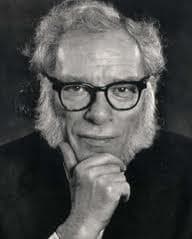
Isaac Asimov was an American writer and professor of biochemistry at Boston University. During his lifetime, Asimov was considered one of the "Big Three" science fiction writers, along with Robert A. Heinlein and Arthur C. Clarke. A prolific writer, he wrote or edited more than 500 books. He also wrote an estimated 90,000 letters and postcards. Best known for his hard science fiction, Asimov also wrote mysteries and fantasy, as well as much non-fiction.







