“Perhaps she was right. Perhaps the soul was like a river, always flowing, always changing, and sometimes, for a moment, two rivers could merge.”
— Reflecting on the nature of souls and connections between people.

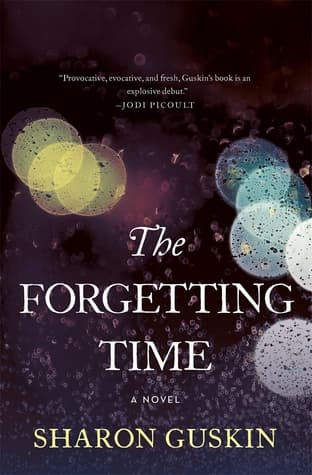
Sharon Guskin (2016)
Genre
Fantasy / Mystery
Reading Time
7-8 hours
Key Themes
See below
Sign in to track this book
A mother, a professor, and a four-year-old's memories of a past life come together to solve a seven-year-old disappearance, blurring lines between fantasy and reality.
Janie, a single mother in New York City, gets an urgent call from Noah’s preschool. They report that four-year-old Noah has shown increasingly disturbing behavior, including violent outbursts, speaking in a foreign language, and saying his 'other mother' is looking for him and he needs to go 'home.' The staff are worried and suggest professional help. Janie, already dealing with Noah's unusual habits and vivid 'memories' of a past life since he was a toddler, feels a growing sense of fear and isolation as she tries to understand her son's distress.
Dr. Jerome Anderson, once a well-known psychology professor whose career was ruined by his focus on reincarnation, is terminally ill. He believes his life’s work is unfinished and ridiculed, so he is desperate to find clear proof of past lives before he dies. He has spent years collecting and studying cases of children who say they remember previous lives. When he hears about Noah's case through contacts, Anderson sees familiar patterns and believes Noah could be the key to proving his theories and restoring his academic reputation, giving him a final purpose.
After trying all regular medical and psychological options without success, Janie is at her breaking point. She is doubtful but desperate when she gets a letter from Dr. Anderson, explaining his research into children with past-life memories and suggesting Noah might be one. Despite her initial hesitation and fear of being judged, Janie agrees to meet him. She is wary of his unusual appearance and theories, but the clear desperation in his eyes, along with her own helplessness about Noah's suffering, convinces her to consider his idea.
Dr. Anderson starts working with Janie and Noah, carefully recording Noah's fragmented memories, drawings, and spontaneous statements. Noah describes a life in a different house, a different family, and specific details about a 'brother' and a 'bad man.' Anderson explains the typical patterns of past-life memories in children, including the 'forgetting time' around age five. He helps Janie understand that Noah's distress comes from his inability to make sense of his current life with his vivid past-life identity, urging her to take his claims seriously to help him find peace.
Encouraged by Anderson’s certainty and Noah’s continued suffering, Janie decides to go on a difficult journey to find the family Noah says he remembers. Using the specific, though often unclear, details Noah provides – such as a house with a red door, a certain type of tree, and a 'big water' nearby – Janie and Noah start traveling. Their search is hard due to money problems, doubt, and the emotional toll of following a four-year-old's memories. Anderson, despite his failing health, supports them from a distance, offering advice and resources.
After a long and difficult search, Janie and Noah arrive in a small coastal town in Maryland. They find a house that perfectly matches Noah's detailed descriptions: a red door, a specific tree in the yard, and a view of the bay. Janie knocks on the door and is met by a woman named Denise, who is at first suspicious and guarded. Denise is the mother of a boy named Tommy, who disappeared seven years earlier and was thought to be dead. The emotional tension is clear as Janie introduces Noah, and the meaning of his presence becomes evident.
As Noah talks with Denise and explores the house, he immediately recognizes objects and places, confirming his past-life identity as Tommy. He begins to tell specific details of Tommy’s life and, most importantly, the events leading up to his disappearance. Noah's memories show that Tommy did not just disappear; he was in a tragic accident with his older brother, Ben, who was driving a car without permission. The accident led to Tommy's death and Ben's panicked decision to hide the body, out of fear of their abusive stepfather, Robert.
Janie and Denise, now convinced by Noah's clear recollections, confront Ben, who is now a young adult. At first resistant and terrified, Ben is overwhelmed by Noah's accurate details and his mother's heartbroken pleas. He finally tells the full story: he accidentally hit Tommy with the car, and in a moment of panic and fear of their stepfather, Robert, he buried Tommy's body in a remote area. The confession is a painful but necessary step towards healing for Ben and Denise, bringing long-awaited answers to a seven-year mystery.
Ben leads them to the hidden grave, and Tommy's remains are found. This discovery brings a deep sense of closure to Denise, who can now properly mourn her son. The family begins the hard process of healing and forgiveness. Noah, having revealed the truth, starts to experience the 'forgetting time.' His memories of Tommy's life begin to fade, replaced by a growing focus on his current identity as Noah, bringing him peace and allowing him to fully embrace his life with Janie.
Dr. Anderson, weak but successful, hears news of Tommy's body being found and Ben's confession. The successful resolution of Noah's case provides the clear evidence he had sought his entire life, proving his theories on reincarnation. He dies shortly after, his life's work finally recognized, leaving behind a legacy that questions common scientific understanding. His research, now supported by Noah's story, offers hope and comfort to others trying to understand unexplained events.
With Tommy's story resolved and his memories fading, Noah settles into a normal childhood, free from the pain of his past-life recollections. Janie, changed by the experience, has found a deeper connection with her son and a new understanding of life and death. The journey was hard, but it strengthened their bond and gave them a unique view of existence. They move forward, forever linked to the family they helped heal, embracing a future with peace and the quiet wonder of the unknown.
The Protagonist
Janie transforms from a struggling, skeptical mother into a woman who embraces the inexplicable, finding strength and a deeper connection with her son through an extraordinary journey.
The Protagonist
Noah begins as a deeply distressed child caught between two lives, gradually finding peace and fully integrating into his current identity as his past-life memories fade.
The Supporting
Anderson, initially driven by a desperate need for academic validation, finds peace and fulfillment in the successful resolution of Noah's case, validating his life's work before his death.
The Supporting
Denise moves from years of unresolved grief and uncertainty to finally receiving answers and finding peace regarding her son's disappearance.
The Mentioned/Central to plot
Tommy's story is revealed retrospectively, moving from a mysterious disappearance to a tragic, accidental death that is finally brought to light, allowing his family to grieve and find closure.
The Supporting
Ben transitions from a life burdened by guilt and fear to confessing his secret, beginning a painful but necessary journey towards healing and forgiveness.
The Mentioned
Robert's character remains static, serving as the catalyst for Ben's actions in the past and a symbol of the trauma the family endured.
The novel explores how far a mother will go for her child. Janie, despite her doubts and the huge challenges, goes on an extraordinary journey, driven only by her wish to ease Noah's suffering. Similarly, Denise's seven years of unresolved grief show the lasting bond between a mother and her lost child. This theme is key to Janie's decision to trust Anderson and to Denise's acceptance of Noah's story, as both mothers put their children's peace first.
“What if, Janie thought, a mother's love was the only thing that could bridge the gap between two lives?”
This theme appears through Dr. Anderson's lifelong desire to prove reincarnation and Janie's desperate search for answers about Noah's condition. Anderson's scientific pursuit, though mocked, is a search for a deeper understanding of existence beyond standard science. Janie, at first looking for a medical explanation, finds herself on a spiritual journey for truth. The solving of Tommy's disappearance brings truth not only to Denise but also to Anderson, proving his life's work and giving meaning to his final days.
“He had chased this truth his entire life, a ghost in the machine of conventional thought.”
The novel looks at the long-term effects of unresolved grief on Denise, who has lived for years without knowing what happened to her son. Noah's memories, while painful for him, help the entire family heal. Ben's confession, caused by Noah's revelations, allows him to start forgiving himself and seeking forgiveness from his mother. The 'forgetting time' for Noah is a form of forgiveness for his past self, letting him live fully in the present.
“Grief was a thing with teeth, and it had bitten deeply into Denise, leaving a wound that refused to close.”
The idea of identity is central, as Noah struggles with being both Noah and Tommy. The novel asks if identity is only tied to one's current physical life or if it can go beyond lifetimes. Noah's journey shows how much a past consciousness can affect a present one, and the peace that comes when one's current identity fully takes hold. Dr. Anderson's research directly challenges the usual understanding of consciousness, suggesting it is not limited to the brain or a single life.
“How could a person be two people at once, a child in one body and a ghost in another?”
The central premise that drives the entire narrative and mystery.
The concept of reincarnation, specifically a child's vivid memories of a past life, is not merely a theme but the fundamental plot device that sets the entire story in motion. Noah's unexplained memories and distress force Janie to seek unconventional help, leading her to Dr. Anderson. It provides the initial mystery (why is Noah like this?), the quest (finding Tommy's family), and the ultimate resolution (uncovering Tommy's fate). Without this central premise, the story would not exist, as it dictates the characters' motivations, conflicts, and the extraordinary journey they undertake.
A natural phenomenon in the story where past-life memories fade around age five.
The 'forgetting time' is a crucial plot device that creates a sense of urgency and provides a natural conclusion to Noah's past-life torment. Dr. Anderson explains that children with such memories typically begin to lose them around the age of five. This impending deadline motivates Janie to act quickly, knowing that Noah's window to find peace by resolving his past life is rapidly closing. It also offers a hopeful resolution for Noah, implying that he will eventually be free from his double identity and can fully embrace his current life, bringing a sense of closure and healing.
Noah's disjointed recollections serve as the breadcrumbs leading to the truth.
Noah's fragmented and often cryptic memories – drawings, specific phrases, details about a house or a body of water – act as the primary clues that Janie and Dr. Anderson must piece together. These are not full, coherent narratives, but rather disjointed pieces of information that require interpretation and investigation. This device creates a mystery element, engaging the reader in the puzzle alongside Janie, and highlights the difficulty and uncertainty of their quest. It also makes the eventual discovery of the truth more impactful when the pieces finally align.
Jerome Anderson's terminal illness creates a ticking clock for his life's work.
Dr. Anderson's terminal illness serves as a powerful ticking clock, adding urgency and emotional depth to his character's motivation. His impending death means that Noah's case is his final opportunity to validate his controversial research and find redemption for his academic career. This device not only drives Anderson's relentless pursuit of proof but also makes his eventual success before his death more poignant and impactful, providing a sense of bittersweet triumph and closure for his character arc.
“Perhaps she was right. Perhaps the soul was like a river, always flowing, always changing, and sometimes, for a moment, two rivers could merge.”
— Reflecting on the nature of souls and connections between people.
“The past isn't just behind us. It's inside us, too. Sometimes, it's the only thing that makes the present make sense.”
— Dr. Anderson explaining the impact of past lives on current experiences.
“You can't choose what you remember, but you can choose what you do with it.”
— A poignant realization about agency in the face of involuntary memories.
“There are things in this world that defy explanation, things that science hasn't caught up to yet. That doesn't make them any less real.”
— Discussing the existence of phenomena beyond current scientific understanding.
“Sometimes the greatest mysteries aren't about what happened, but why we remember it.”
— Considering the purpose and burden of certain memories.
“Love isn't just a feeling. It's a connection, a resonance that can echo through lifetimes.”
— Exploring the enduring nature of love across different incarnations.
“Fear is a powerful thing, but it's often born of not understanding. Once you understand, the fear can lessen.”
— A character confronting their fears by seeking knowledge.
“Every life leaves an imprint, a ripple in the fabric of existence. Some ripples just happen to be stronger than others.”
— Contemplating the lasting impact of individual lives.
“The truth isn't always convenient, but it's always necessary.”
— A character facing a difficult truth about their past.
“What if forgetting isn't a curse, but a kindness? A way to allow us to start fresh, to forgive ourselves for what we once were?”
— Pondering the potential benefits of forgetting past lives.
“Some questions don't have answers that fit neatly into a logical box. Sometimes, you just have to accept the mystery.”
— Acknowledging the limits of rational explanation for certain phenomena.
“The greatest prison isn't made of bars, but of the things we refuse to remember.”
— Highlighting the psychological burden of suppressed memories.
“Even in the darkest moments, there's always a flicker of hope. You just have to be willing to see it.”
— A moment of encouragement amidst despair.
“We are all stories, waiting to be remembered, waiting to be retold.”
— Reflecting on the narrative nature of identity and existence.
Ready to see how well you understood this book? Take our interactive quiz with 10 questions.







