“The forest was not just trees and animals; it was a living, breathing entity, a sanctuary, and a challenge.”
— Early descriptions of the New Forest's profound influence on its inhabitants.

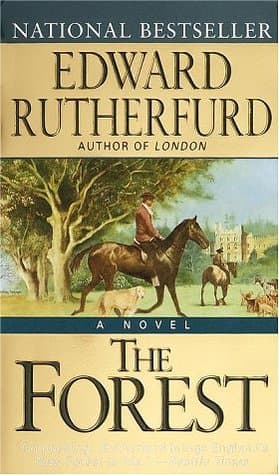
Edward Rutherfurd (2000)
Genre
Historical Fiction
Reading Time
1560 min
Key Themes
See below
Sign in to track this book
Edward Rutherfurd's 'The Forest' spans the Norman conquest to the present, blending the history and legends of England's New Forest with stories of royalty, outlaws, and the lasting passions of its people, all linked by a crime that echoes through centuries to Jane Austen's Bath and beyond.
The story begins after the Norman Conquest in 1066, when William the Conqueror creates the 'Nova Foresta' – the New Forest. This means Saxon villagers are brutally forced from their homes and livelihoods to make way for a royal hunting ground. Families like the Matravers and Tottons appear, their lives forever changed by the Norman rule. The immediate tension between new Norman lords, such as Richard de Vesey, and displaced Saxons, like Elfa and her family, sets up the main theme of ongoing conflict over land and rights. The strict forest laws are quickly enforced, hinting at the long struggle between commoners and the Crown.
In 1100, King William Rufus, William the Conqueror's son, dies mysteriously in the New Forest. While officially a hunting accident, the story suggests darker reasons, perhaps a stray arrow from Walter Tyrrell or even deliberate plots. The event is full of superstition and many see it as divine punishment for the Forest's violent creation. Characters like the monk Brother Egbert watch the events, recording rumors and suspicions. This incident confirms the Forest's reputation as a place of both royal power and dangerous secrets, affecting local families who see the aftermath and the swift departure of the King's group.
Centuries later, Cistercian monks arrive and build Beaulieu Abbey within the Forest. This creates a new power dynamic, as the monks, led by abbots like Brother Gregory, become major landowners and use the Forest's resources, especially timber and iron, for their own wealth. Their presence brings both economic activity and more conflict with local commoners, who still rely on the Forest for survival. Poaching becomes a constant problem, with families like the Tottons and Paddons often clashing with the abbey's foresters. The Abbey's influence grows, but so does resentment among those whose traditional rights are steadily lost.
The mid-14th century brings the Black Death, which spreads through the New Forest, killing many people and changing the social structure. The plague's effects are shown through the suffering of various families, including the Matravers and Tottons, who lose loved ones. This population drop leads to labor shortages and weaker feudal ties, giving commoners more power and chances to get land or better terms. The economic and social changes force a re-evaluation of traditional relationships between lords, commoners, and the Church, allowing for gradual shifts in power and land ownership within the Forest.
The Tudor period brings new problems and illegal activities to the New Forest. Smuggling becomes common, with goods brought ashore and hidden deep in the woods. Families like the Tottons are involved in these secret operations, facing dangers from customs officers and rival groups. At the same time, the era's superstitions lead to accusations of witchcraft. Young Elspeth Totton, a healer who understands the Forest's old ways, is targeted by fearful villagers and a strict local magistrate, Master Finch. Her trial and the community's reaction show the conflict between old beliefs and new legal systems.
The English Civil War in the 17th century affects the New Forest. Families are split in their loyalties; some, like the Matravers, support the Royalists, while others, often commoners or those with differing religious views, side with Parliament. The Forest becomes a hiding place for Royalist fugitives and a source of timber for both sides. Skirmishes and acts of resistance happen, with local figures like Captain John Totton leading a small group against Parliamentarian forces. The war disrupts daily life, causing hardship and forcing people to make tough choices that shape their family's future in the Forest community.
The 18th century sees harsh forest laws return and a growing gap between wealthy landowners and poor commoners. Poaching, often for survival, becomes a risky activity. The story follows families like the Paddons, who must poach deer to eat, and the severe justice dealt by the Forest Keepers. A tragic event involves young Thomas Paddon, who is caught and brutally punished, leading to a desperate act of revenge by his family. This period highlights the ongoing fight for common rights against the power of the gentry and the Crown's officials.
The story moves to the early 19th century, focusing on Bath's refined society, like in Jane Austen's novels. Here, the lives of characters like Lady Annabel Matravers and the wealthy merchant, Mr. Finch, connect with a dark secret from the New Forest. A murder or scandal with deep ties to generations of Forest families comes out, threatening to ruin reputations and expose hidden truths. The effects of this crime, rooted in old feuds and illegal dealings from the Forest, spread through the drawing-rooms and ballrooms, showing the hypocrisy and weaknesses of the upper classes.
The Victorian era introduces the railway age, with plans to build lines through the New Forest. This sparks intense debates between supporters of progress and industrialization, such as ambitious engineers and business owners like Robert Finch, and those who want to protect the Forest's natural beauty and old character. Local families, including descendants of the Tottons and Paddons, are on both sides, some seeking jobs and chances, others fighting to keep their traditional way of life and unique ecosystem. The arrival of railways permanently changes the Forest's landscape and access.
The story ends in the present, with the New Forest recognized as a national park and protected area. Modern ecologists and conservationists, like Dr. Eleanor Finch, work to preserve its unique plant and animal life. However, the old commoning rights, held by families like the Tottons and Paddons, continue, creating a delicate balance between tradition and modern conservation. The story explores how these long-standing families navigate 21st-century challenges, trying to keep their heritage while adapting to new environmental concerns and tourism. The lasting spirit of the Forest and its people continues, shaped by thousands of years of history.
The Antagonist/Historical Figure
His arc is foundational, as his single act sets the stage for the entire historical sweep of the book, though he does not develop as a character himself.
The Supporting
Elfa's story establishes the initial conflict and the deep-seated resentment that will echo through generations.
The Supporting
He establishes the Norman presence and the initial power dynamic, his actions setting precedents for future conflicts.
The Supporting
Egbert's character provides a moral and historical commentary, reflecting the changing spiritual and social landscape.
The Supporting
Elspeth's struggle represents the clash between ancient ways and the oppressive forces of societal fear and judgment.
The Supporting
John's actions demonstrate the Forest's role as a haven for resistance and the deep-seated loyalties of its inhabitants.
The Supporting
Thomas's tragic fate underscores the brutal realities of life for the poor and the injustices of the legal system.
The Supporting
Annabel's story reveals the long reach of Forest history into the lives of the gentry, exposing hidden truths and societal pressures.
The Supporting
Robert's ambition drives the conflict between progress and preservation, showcasing the irreversible changes brought by industrialization.
The Supporting
Eleanor's work represents the ongoing effort to protect the Forest in the face of modern challenges, bridging science with tradition.
From William the Conqueror's initial taking of land to create the New Forest, to medieval monks' use of resources, Georgian poaching, and modern conservation debates, the struggle over who owns, uses, and benefits from the Forest is constant. This theme explores the ongoing tension between royal power, aristocratic ownership, Church authority, and the old commoning rights of local people. It shows how generations have fought to keep their livelihoods and traditions against outside forces trying to control or use the land.
““The Forest remembers, even when men forget, the blood spilled for its keeping and the tears shed for its loss.””
The book shows how the New Forest is not just a setting but an active part of history. Every major event, from royal deaths to smuggling and railway building, leaves a mark on the landscape and is, in turn, shaped by the Forest itself. The old trees, hidden paths, and coastal inlets are key to the plot, influencing battles, providing shelter, and enabling illegal trade. This theme emphasizes that the land holds memory and shapes the future of its residents.
““The roots of the oaks ran as deep as the family lines, intertwining in the very soil of the Forest.””
This theme explores the continuous conflict between established traditions, old customs, and the steady march of progress and modern ways. Early examples include Norman laws replacing Saxon customs. Later, Cistercian monks introduce new farming methods, and Victorian railways bring industrialization, directly challenging commoners' traditional lives and the Forest's natural state. In the modern era, the balance between old commoning rights and current ecological conservation further illustrates this ongoing tension, showing how hard it is to preserve heritage in a changing world.
““Every new road, every felling of a venerable tree, was a wound upon the old ways, yet some wounds healed, and others brought forth new growth.””
The story is full of perceived unfairness and the resulting desire for revenge or payback. From the initial displacement of Saxons by William the Conqueror to harsh punishments for poaching in the Georgian era, the idea of justice is often skewed by power. Characters like Thomas Paddon suffer great wrongs, leading to desperate acts of revenge by their families. This theme examines how different eras define justice, the lasting human response to perceived wrongs, and how cycles of vengeance can continue conflict across generations.
““The King’s justice was one thing, but the Forest had its own, a slower, wilder reckoning.””
Through the multi-generational story, the book shows that while technology and societies change, basic human traits—greed, loyalty, love, fear, ambition, and resilience—remain. The same conflicts over resources, power, and identity appear in different forms over centuries. Characters from various eras face similar moral choices and show similar strengths and weaknesses. This theme highlights history's cyclical nature and human experience, suggesting that while the setting changes, humanity's core motivations and struggles endure.
““Though the names changed, and the clothes, the hearts beating within were much the same, bound by the same desires and fears that had driven their ancestors.””
Traces the intertwined destinies of several families across centuries.
The novel employs a generational saga structure, following the descendants of a few key families (e.g., Matravers, Totton, Paddon, Finch) from the 11th century to the present day. This device allows Rutherfurd to explore the long-term impacts of historical events, the evolution of social structures, and the enduring traits and conflicts within these lineages. It provides a panoramic view of history through intimate family stories, showing how individual lives are shaped by, and in turn shape, the larger historical narrative of the New Forest.
The New Forest itself acts as a dynamic, living entity influencing the plot and characters.
Beyond being a setting, the New Forest is imbued with agency and personality, almost functioning as a character itself. Its ancient trees, wild creatures, and hidden depths witness and influence events. It provides refuge, conceals secrets, offers resources, and imposes challenges. The Forest's unchanging nature contrasts with the transient human lives, and its resilience mirrors that of the commoners. This device emphasizes the deep, symbiotic relationship between the land and its inhabitants, suggesting the Forest has its own memory and spirit.
Brief, informative passages that provide broader historical context for each era.
Throughout the narrative, Rutherfurd intersperses the fictional plot with concise, informative passages that explain the historical context of each period. These interludes cover major events like the Norman Conquest, the Black Death, the English Civil War, and the rise of industrialism, providing readers with a grounding in the factual history surrounding the fictional stories. This device enhances the historical fiction aspect, ensuring accuracy and depth, and helps to bridge the generational gaps in the narrative, allowing the reader to understand the broader forces at play.
Events and themes from earlier periods subtly predict or mirror later ones.
The novel frequently uses foreshadowing and echoes, where events, character traits, or conflicts from one era subtly predict or mirror those in later centuries. For instance, the initial displacement of Saxons by William the Conqueror echoes later struggles over commoning rights. A secret kept in one generation might unravel generations later. This device reinforces the cyclical nature of history and human behavior, creating a sense of destiny and the long-lasting impact of past actions, while also providing narrative cohesion across vast stretches of time.
“The forest was not just trees and animals; it was a living, breathing entity, a sanctuary, and a challenge.”
— Early descriptions of the New Forest's profound influence on its inhabitants.
“Every generation must fight its own battles, but the land remembers what we forget.”
— Reflecting on the cyclical nature of human conflict and the enduring memory of the land.
“A king's decree might change the law, but it could not change the hearts of those who lived by the old ways.”
— During the Norman imposition of forest laws and the resistance of the local populace.
“Love, like the forest, could be wild and untamed, beautiful and dangerous all at once.”
— A character's reflection on a passionate but tumultuous relationship.
“The past is not dead; it is merely sleeping, waiting for someone to wake it up.”
— As characters uncover ancient secrets and traditions embedded in the landscape.
“To truly know a place, you must know its people, and to know its people, you must know their stories.”
— An observation on the interconnectedness of place, community, and oral tradition.
“Change comes slowly to the forest, but inevitably. Like the oak, we must bend or break.”
— Discussing the slow but inexorable march of progress and adaptation.
“There are some things that even money cannot buy, and freedom in the forest is one of them.”
— A character valuing personal liberty and the wildness of nature over material wealth.
“Every tree has a story, if only you know how to listen.”
— A forester's deep connection to the individual elements of the forest.
“The whispers of ancestors are carried on the wind through the ancient trees.”
— A moment of spiritual connection to the past inhabitants of the forest.
“Even in the darkest times, the forest finds a way to renew itself, to bloom again.”
— A hopeful reflection on nature's enduring cycle of rebirth after hardship.
“The boundaries men draw on maps mean little to the deer, or to the wind, or to the spirit of the land.”
— Critiquing human attempts to control and divide nature.
“To be truly free, one must sometimes choose the path less trodden, the path through the wild wood.”
— A character making a decision to live outside conventional society.
“The forest was not merely a backdrop to their lives, but an active participant, shaping destinies.”
— Emphasizing the profound and active role of the natural environment.
Ready to see how well you understood this book? Take our interactive quiz with 10 questions.
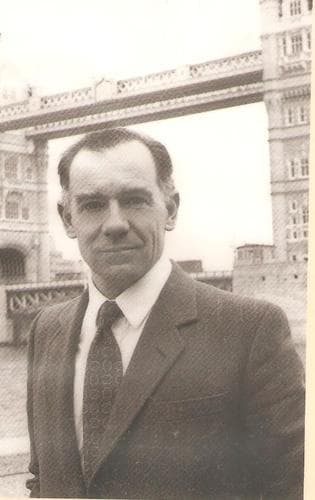
Biography coming soon.







