“I am a jinni. I am a wish-granter. And I am a slave.”
— Zahra reflecting on her nature and predicament.

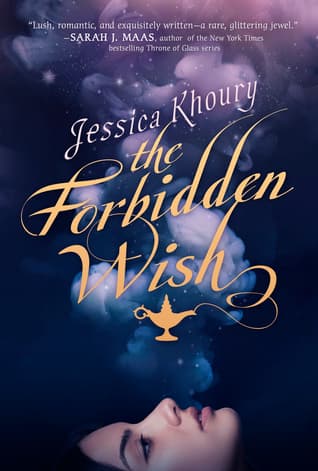
Jessica Khoury (2016)
Genre
Fantasy / Young Adult / Romance
Reading Time
580 min
Key Themes
See below
Sign in to track this book
A powerful, shape-shifting Jinni bound to a street thief must choose between her ancient freedom and a forbidden love that defies a world where magic is outlawed.
Zahra, the most powerful jinni ever created, has been trapped inside her lamp for 500 years after the Great War between humans and jinn. She awakens when a young, impoverished thief named Aladdin finds her lamp in the ruins beneath the city of Parthenia. Aladdin, seeking to save his ailing sister, Casida, from a mysterious illness, rubs the lamp, accidentally releasing Zahra. She is initially disoriented by the changed world, where magic is forbidden and jinn are hunted. Zahra is bound by ancient laws to grant Aladdin three wishes, but she also recognizes a unique spark in him.
Upon her awakening, Zahra's sister, Nayra, informs her through a magical link that the King of the Jinn, the ruthless Ghassan, has offered freedom to any jinni who brings him their human master's heart. This means killing Aladdin. Zahra is horrified by the prospect but also deeply desires freedom from the lamp, her prison for centuries. She resolves to find another way to achieve her freedom without harming Aladdin, even as she is bound to serve him. This new information adds a moral conflict to her existence.
Aladdin's first wish is not for riches or power, but to save his younger sister, Casida, who is dying from a mysterious ailment that has plagued the city. Zahra, using her ancient magic, determines that Casida is suffering from a magical blight, a remnant of the Great War. She cures Casida, much to Aladdin's relief and gratitude. This selfless act impresses Zahra, challenging her ideas about human greed and strengthening her resolve to find a way to freedom that doesn't involve his death. She begins to see Aladdin not just as her master, but as a good person.
To investigate the source of the magical blight affecting Parthenia, which Zahra suspects is tied to the royal family, Aladdin decides to infiltrate the palace. Zahra, using her shape-shifting abilities, transforms into a human woman named 'Nizara' and accompanies him, posing as his attendant. At the palace, they encounter the strict Sultan and the intelligent Princess Kifah, who is betrothed to General Malik. Zahra finds navigating human society and its political games challenging, but her close proximity to Aladdin strengthens their bond as they work together.
As Zahra and Aladdin investigate the palace, they discover that Princess Kifah possesses latent magical abilities, which she has been secretly trying to control. The blight is a manifestation of her uncontrolled magic, amplified by a magical artifact. They also uncover General Malik's plot: he plans to exploit Kifah's power and the blight to seize control of Parthenia, believing he can harness the jinn for his own ends. Malik is a descendant of the human warlord who defeated the jinn in the Great War, and he seeks to complete his ancestor's work by enslaving them.
During their investigations and shared dangers, Zahra and Aladdin's relationship deepens. Aladdin's kindness, bravery, and genuine concern for others, especially for Zahra, begin to melt her centuries-old cynicism. Zahra, in turn, finds herself drawn to his spirit and passion. The forbidden nature of their connection, given her status as a jinni and his as her master, only intensifies their feelings. She grapples with the growing conflict between her yearning for freedom, which still requires Aladdin's death according to Ghassan, and her growing love for him.
Facing General Malik's growing threat, Aladdin uses his second wish: to find a way to defeat Malik and protect Parthenia. This wish, however, is a double-edged sword for Zahra. Ghassan, the King of the Jinn, appears and offers Zahra a direct path to her freedom if she delivers Aladdin to him, claiming that this is the 'way' to defeat Malik – by removing Aladdin from the equation. Zahra is torn; she can gain her freedom, but it means betraying the man she loves and delivering him to a terrible fate. The choice weighs heavily on her.
Zahra and Aladdin, along with Princess Kifah, confront General Malik. Malik reveals his true intentions: to use a powerful ancient artifact, the Bloodstone, to control all jinn and subjugate the human world. He plans to sacrifice Kifah to fully activate the Bloodstone and unleash its power. A fierce battle ensues, during which Zahra uses her jinni powers to protect Aladdin and Kifah, exposing her true nature to many in the court. The stakes are high, and Zahra realizes that Malik's victory would mean eternal slavery for all jinn, including herself.
In the battle with Malik, Ghassan, the King of the Jinn, appears. He reminds Zahra of their bargain, demanding she fulfill her promise to deliver Aladdin's heart to him in exchange for her freedom. Ghassan intends to use Aladdin as a sacrifice to fully unleash the jinn's power and reclaim dominance over the human world. Zahra faces an impossible choice: sacrifice Aladdin, the man she loves, for her freedom and the jinn's resurgence, or defy Ghassan and risk eternal imprisonment and the jinn's continued oppression.
Seeing Zahra's torment and understanding the impossible choice she faces, Aladdin makes a selfless decision. He tries to offer his own life to Ghassan, hoping to spare Zahra. However, Ghassan demands Zahra herself be the one to take his heart. In a moment of heartbreak and desperation, Zahra chooses to save Aladdin and Parthenia. She uses her final wish, not for her own freedom, but to empower Aladdin to defeat Ghassan and Malik, knowing this will bind her to her lamp forever, but will save the man she loves and prevent a war.
With Zahra's final wish, Aladdin gains the power needed to defeat General Malik and Ghassan. Malik is vanquished, and Ghassan is severely weakened, retreating to the realm of the jinn. Princess Kifah steps up to lead Parthenia, beginning to heal the city and reconcile humans and jinn. Zahra, having used her final wish for Aladdin's sake, is now truly free of the lamp's bondage, though she is still a jinni. She chooses to stay with Aladdin, not as his servant, but as his partner, forging a new path for jinn and humans alike, united by their love and shared purpose.
The Protagonist
Zahra transforms from a cynical, self-serving jinni desperate for freedom at any cost to a compassionate, selfless being willing to sacrifice her own desires for love and the greater good.
The Protagonist
Aladdin evolves from a street thief driven by necessity to a leader who inspires change and fights for a world where humans and jinn can coexist.
The Antagonist
Ghassan remains a static antagonist, representing the unyielding forces of vengeance and the past, ultimately defeated but not entirely vanquished.
The Antagonist
Malik's arc is one of escalating villainy, culminating in his defeat as he attempts to seize absolute power.
The Supporting
Kifah transforms from a constrained princess to a strong, independent leader who embraces her magical heritage and guides her people towards a new era.
The Supporting
Casida's arc is one of recovery, symbolizing hope for the future of Parthenia.
The Supporting
Nayra's arc is largely off-screen, but she consistently provides a link to the jinni world and its machinations.
This is Zahra's central conflict. For centuries, her sole desire has been freedom from her lamp. The King of the Jinn offers her a clear path, but it requires betraying Aladdin. As she falls in love with Aladdin, her definition of freedom changes. She realizes that true freedom is not just about escaping physical bonds, but also about the freedom to choose love and make sacrifices for it. This is evident when she uses her final wish not for herself, but to empower Aladdin, choosing love over her own long-sought liberation.
“For centuries, freedom had been my only desire. Now, I found myself wishing for something else entirely.”
The novel explores the deep-seated prejudice between humans and jinn, stemming from the ancient Great War. Humans fear and forbid magic, hunting jinn, while many jinn, like Ghassan, harbor resentment and a desire for revenge. Zahra initially views humans with disdain, and Aladdin is wary of jinn. Through their relationship, they begin to bridge this divide, showing that understanding and love can overcome centuries of hatred. Princess Kifah's actions at the end also signify a move towards peaceful coexistence in Parthenia.
“We were not so different, after all, the human and the jinni. Both capable of great love, and great fear.”
The story examines different forms of power. Zahra possesses immense magical power, but it is constrained by the lamp and the laws of jinni servitude. General Malik seeks political and magical power through control and manipulation, while Ghassan desires absolute power to dominate humanity. In contrast, Aladdin's power comes from his compassion, loyalty, and selflessness. The narrative suggests that true power lies not in control or dominance, but in the ability to inspire, protect, and sacrifice for others. Zahra's ultimate act of using her power for Aladdin's sake exemplifies this.
“Power was not in what you could take, but in what you were willing to give.”
Zahra is bound by destiny and the ancient laws of her kind, seemingly fated to grant wishes and be a slave to her lamp. Aladdin, too, seems destined for a life of poverty. However, both characters actively make choices that defy these pre-ordained paths. Zahra's choice to fall in love and ultimately sacrifice her freedom for Aladdin is an act of free will, breaking centuries of jinni tradition. Aladdin's choices to use his wishes for others and to fight for justice also show his agency against his circumstances, demonstrating that personal choices can alter even the most powerful destinies.
“Perhaps destiny was not a path laid out for us, but a tapestry woven by our choices.”
The magical artifact that binds Zahra and grants wishes.
The Jinni Lamp is the central plot device, serving as both Zahra's prison and the source of her power. It binds her to her master, compelling her to grant three wishes. This device creates the initial conflict and establishes the rules of Zahra's existence. The lamp also represents Zahra's longing for freedom; her desire to be free of its confines drives much of her early actions. Its discovery by Aladdin sets the entire story in motion, making it the catalyst for all subsequent events and character interactions.
The magical contract that dictates Zahra's servitude.
The 'three wishes' serve as a crucial structural and thematic device. They provide a clear progression for the plot, with each wish creating new complications or revealing character. Aladdin's selfless use of his first two wishes highlights his noble character and deepens Zahra's affection, complicating her desire for freedom. The final wish becomes the ultimate test of Zahra's love and selflessness, forcing her to choose between her own freedom and Aladdin's safety, leading to the climax and resolution of her internal conflict.
A mysterious illness affecting Parthenia, linked to forbidden magic.
The magical blight is a significant plot device that drives much of the initial investigation and conflict. It affects Parthenia, including Aladdin's sister Casida, providing Aladdin with a compelling reason to seek the lamp. The blight's origin, linked to Princess Kifah's uncontrolled magic and General Malik's manipulation, serves to connect the personal stakes with the larger political and magical conflict. It functions as a mystery to be solved, leading Zahra and Aladdin into the royal court and uncovering the antagonists' plans.
Zahra's human form, allowing her to navigate human society.
Zahra's ability to shape-shift and assume a human disguise as 'Nizara' is a vital plot device. It allows her to move freely within Parthenia, particularly in the royal palace, without revealing her true jinni nature, which would be dangerous in a world that fears magic. This disguise facilitates her investigation into the blight and Malik's plans. More importantly, it allows her to experience human life firsthand and to develop a deep, personal relationship with Aladdin on a more equal footing, strengthening their bond beyond master and servant.
“I am a jinni. I am a wish-granter. And I am a slave.”
— Zahra reflecting on her nature and predicament.
“Wishes are not toys, and they are not free.”
— Zahra warning Aladdin about the consequences of wishes.
“Every wish has a shadow, Aladdin. Every desire has a price.”
— Zahra explaining the true cost of magic to Aladdin.
“A cage is a cage, no matter how gilded the bars.”
— Zahra lamenting her lack of freedom, despite her power.
“Love is a dangerous wish, Aladdin, for it makes you vulnerable to heartbreak.”
— Zahra cautioning Aladdin about his feelings for the princess.
“The greatest treasures are not found in chests, but in hearts.”
— Zahra realizing the value of human connection.
“Sometimes, the hardest choices are the ones that save us.”
— Zahra contemplating difficult decisions for the greater good.
“A heart that truly loves does not seek to control, but to set free.”
— Zahra's evolving understanding of true love.
“Even a jinni can dream of a life beyond her lamp.”
— Zahra expressing her longing for a normal life.
“The past is a story we tell ourselves, but the future is a story we write.”
— Zahra encouraging Aladdin to move forward from his past mistakes.
“Magic can grant wishes, but it cannot grant happiness.”
— Zahra reflecting on the limitations of her power.
“Fear is a powerful master, but hope is a stronger one.”
— Zahra finding courage in dire circumstances.
“To truly live is to choose your own path, even when it's fraught with danger.”
— Zahra embracing her agency and making her own decisions.
“Some chains are forged not of metal, but of expectation.”
— Zahra realizing the societal and personal pressures that bind her.
Ready to see how well you understood this book? Take our interactive quiz with 10 questions.







