BookBrief
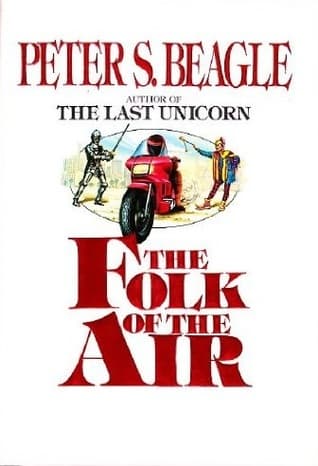
The Folk of the Air cover
Archivist's Choice

The Folk of the Air

Peter S. Beagle (1988)

Genre

Fantasy

Reading Time

7-8 hours

Key Themes

See below

Track Your Reading

Sign in to track this book

Joe Farrell, a man who enjoys medieval reenactments, finds himself entangled with Nicholas Bonner, an ancient spirit, whose presence threatens to shatter his understanding of pleasure and magic.

Synopsis

Joe Farrell, a modern man with an interest in medieval times, finds his world changed after meeting Nicholas Bonner at a League for Archaic Pleasures event. Bonner, a captivating but sinister figure, is an ancient spirit who has been in hiding for centuries. Bonner invites Joe to the mysterious House of Doors, a place where the barrier between worlds is thin and the Folk, ancient magical beings, still exist. Joe learns about these creatures and soon helps Bonner find lost members of his kind, who are diminishing in the modern world. As Joe gets more involved, he meets Sarah, a woman with a hidden past and a connection to Bonner, and he begins to feel uneasy. Father Robert, a priest who understands ancient evils, warns Joe about Bonner's true nature and the coming Ritual of Awakening. Joe must confront Bonner and make a difficult choice, leading to a battle for reality. In the end, a sacrifice changes Joe's understanding of the world and the balance between ordinary life and magic.
Reading time
7-8 hours
Difficulty
Medium
Pacing
Slow
Mood
Atmospheric, Melancholy, Mystical, Subtle Horror
✓ Read this if...
You enjoy quiet, contemplative fantasy that blends the mundane with the magical, exploring themes of ancient evil and the allure of the past.
✗ Skip this if...
You prefer fast-paced, action-heavy fantasy or clear-cut heroes and villains.

Plot Summary

The League for Archaic Pleasures

Joe Farrell, a cynical but interested member of the League for Archaic Pleasures, attends their annual event in a secluded California canyon. The League, led by Father Robert, aims to recreate medieval experiences, from feasting to sword fighting. Joe, usually a detached observer, finds himself drawn into the atmosphere. During the event, he notices a strikingly old-fashioned man, Nicholas Bonner, who seems to attract unusual attention and has an unsettling presence. Bonner talks to Joe briefly, hinting at a deeper connection to the past than simple historical reenactment. Joe dismisses it as part of the League's elaborate role-playing, but a sense of unease remains.

A Strange Invitation and a Warning

After the event, Nicholas Bonner sends Joe an unusual invitation to visit his remote home, an old, seemingly out-of-place Victorian mansion, hinting at a shared 'understanding.' Joe, intrigued despite his apprehension, accepts. Before he leaves, Father Robert, the League's leader, speaks to Joe. He talks in riddles, warning Joe about 'things that are not as they seem' and the dangers of going too deeply into the past without respect or understanding. Father Robert's words, though vague, strengthen Joe's growing suspicion that Bonner is more than just an eccentric history enthusiast, suggesting a supernatural element.

The House of Doors

Joe arrives at Bonner's isolated mansion, which feels ancient and out of time. Bonner, dressed in period clothing, greets him with an unsettling familiarity. The house is a maze of strange rooms, filled with an eclectic mix of historical artifacts, some seemingly impossible to obtain. Joe notices that the house seems to shift and change, with doors appearing and disappearing, and corridors leading to unexpected places. Bonner speaks of the house as a 'gateway' and hints at its connection to various eras. Joe feels a strong sense of disorientation and unreality, as if the rules of time and space subtly change within the mansion's walls.

Tales of the Folk

Over several visits, Bonner begins to show Joe his true nature. He claims to be an ancient being, one of the 'Folk,' a race of powerful, ethereal entities that predate humanity and exist on the edges of reality. Bonner explains that the Folk once lived with humans but were driven into hiding or forgotten as the world became modern. He speaks of their powers, their long lives, and their connection to specific places and artifacts. Joe struggles to accept Bonner's fantastic claims with his rational view of the world, yet the inexplicable events within the house and Bonner's deep knowledge of forgotten lore begin to chip away at his doubt.

The Quest for the Lost Folk

Bonner reveals his main goal: to find and awaken other members of the Folk who have been scattered, forgotten, or trapped in various states of sleep around the world. He believes the time is right for their return, and he sees Joe as an important, unwitting helper in this effort. Bonner describes specific artifacts and locations that might hold clues to the Folk's whereabouts. Joe, despite his remaining disbelief, finds himself drawn into Bonner's quest, partly out of curiosity and partly because Bonner's influence is becoming harder to resist. He begins to help Bonner research obscure historical texts and legends.

The Unveiling of Sarah

Bonner takes Joe on a journey to a remote, forgotten place, where they find Sarah, a beautiful and ethereal woman, seemingly trapped in a timeless sleep. Bonner performs an ancient ritual, using his power and a mystical artifact, to awaken her. Joe sees firsthand the raw, inexplicable magic of the Folk as Sarah slowly comes to life, her eyes holding the wisdom of centuries. Her awakening is a disturbing experience for Joe, solidifying the truth of Bonner's claims. Sarah's presence also brings a new dynamic, as she views Joe with a mix of curiosity and disdain, seeing him as a mere mortal.

Growing Unease and Father Robert's Intervention

As Bonner continues his quest, his methods become more manipulative and ethically questionable. Joe sees instances where Bonner subtly influences mortals, using them as tools for his own ends without concern for their well-being. The initial excitement of discovery begins to fade, replaced by a growing sense of dread and moral conflict. Joe shares some of his concerns with Father Robert, who, having observed Bonner from a distance, understands the true extent of the danger. Father Robert, showing a deeper knowledge of the supernatural than Joe previously suspected, warns Joe that Bonner's ultimate goal may not be harmless.

The Ritual of Awakening

Bonner announces his plan for a grand ritual, meant to awaken many of the Folk at once, bringing them back into the mortal world. He gathers various ancient artifacts and prepares his mansion as the central point. Joe, now deeply disturbed, learns the true, sinister implications of this 'awakening.' Bonner intends to use the life force and memories of unsuspecting mortals as a way for the Folk to return, effectively sacrificing them. The Folk, he explains, need a certain 'tribute' to fully appear in this age. Joe realizes he has been involved in a terrible scheme.

The Confrontation and the Choice

Joe, horrified by Bonner's true intentions, confronts him, but Bonner dismisses his concerns, seeing mortals as unimportant. As the ritual nears, Father Robert, along with a few trusted members of the League who know about the supernatural elements, tries to intervene. They arrive at Bonner's mansion, armed with ancient knowledge and protective charms. A tense standoff occurs, with Bonner mocking their efforts. Joe is caught between two worlds, forced to make a clear choice: side with Bonner and the ancient Folk, or with humanity and the fragile present.

The Battle for Reality

The ritual begins, and the mansion fills with an eerie, shimmering light as the Folk start to appear. Reality itself seems to twist and fray. Father Robert and his allies engage Bonner in a desperate magical struggle, trying to disrupt the ritual. Joe, using his new understanding of the supernatural, plays a key role, subtly sabotaging Bonner's preparations. The Folk, still in a transitional state, are powerful but vulnerable. The conflict is not just physical but metaphysical, a battle for existence itself and the future of humanity.

The Sacrifice and the Aftermath

In a key moment, a significant sacrifice is made—either by Father Robert or another important character—to fully disrupt Bonner's ritual and break the connection the Folk are trying to establish. The appearing Folk are driven back, and Bonner's power diminishes. The mansion, having been a center for the ritual, is severely damaged or changed. Joe, though physically unharmed, is deeply changed by the experience. He has seen the impossible, faced ancient evil, and participated in a battle for reality. The world he knew is permanently altered, and he is left with the weight of knowledge and the lingering echoes of the Folk.

Principal Figures

Joe Farrell

The Protagonist

Joe transforms from a skeptical bystander into a reluctant participant and ultimately a crucial figure in preventing an ancient evil, forcing him to confront and accept the supernatural.

Nicholas Bonner

The Antagonist

Bonner remains steadfast in his ancient, malevolent purpose, revealing his true, dangerous nature as the plot progresses and ultimately being thwarted.

Father Robert

The Supporting

Father Robert reveals his true nature as a protector against ancient evils, moving from subtle guidance to direct action to save humanity.

Sarah

The Supporting

Sarah is awakened from a long slumber and serves as a powerful, if enigmatic, example of the Folk's nature.

The League for Archaic Pleasures

The Mentioned

The League serves as the initial setting and a thematic backdrop, its activities inadvertently setting the stage for the supernatural conflict.

Themes & Insights

The Allure and Danger of the Past

The novel explores humanity's interest in history and the romantic idea of 'simpler times,' comparing it with the real and often dangerous results of uncovering forgotten evils. The League for Archaic Pleasures embodies this appeal, seeking to bring back medieval charm. However, Bonner represents the darker side of the past, a primal force that, if fully released, threatens to consume the present. Joe's journey shows how romanticizing the past without understanding its true nature can lead to disaster, as the ancient Folk are not harmless relics but powerful, self-serving beings.

“There are things best left buried, Joe. Not all history is meant to be relived.”

Father Robert

The Fragility of Reality and Perception

The story constantly challenges Joe's, and the reader's, idea of what is real. Bonner's house, with its shifting rooms and timeless quality, shows this theme physically. The existence of the Folk, ancient beings who bend the rules of reality, forces Joe to question everything he believes. The subtle ways Bonner manipulates human perception and the gradual blurring of the line between historical reenactment and genuine magic highlight how easily our understanding of the world can be shattered when faced with the truly inexplicable. This theme emphasizes the thin boundary between the ordinary and the magical.

“The world is not as solid as you believe it to be, Joe. It has cracks, and through those cracks, other worlds sometimes bleed.”

Nicholas Bonner

The Burden of Knowledge and Complicity

Joe's journey involves slowly gaining terrifying knowledge about the Folk and Bonner's true intentions. This knowledge, instead of empowering him, becomes a heavy burden. His initial curiosity and passive observation slowly turn into unwilling involvement, as he unintentionally helps Bonner's plans. The theme explores the moral responsibility that comes with understanding a dangerous truth, especially when that truth is so overwhelming. Joe struggles with the guilt of his involvement and the difficult choice of whether to act on his knowledge, knowing the immense risks involved.

“Once you know, Joe, there’s no un-knowing. And sometimes, knowledge is a heavier burden than ignorance.”

Narrator

Humanity's Place in the Cosmos

The presence of the Folk forces humanity to rethink its position as the dominant species. Bonner and Sarah's condescending view of mortals highlights humanity's perceived insignificance in the grand scheme of ancient, powerful beings. The Folk remind us that humanity is not alone and that older, more powerful forces are at play. This theme explores the humbling realization that our history, our advancements, and our very existence might be fleeting in the face of truly ancient entities, challenging human-centered views and suggesting a vast, indifferent universe.

“You humans are like mayflies, buzzing for a day, then gone. We have seen empires rise and fall like tides.”

Sarah

Plot Devices & Literary Techniques

The Anachronistic Setting/Character

A character or setting that feels out of place in time, hinting at deeper mysteries.

Nicholas Bonner himself, dressed in period clothing and possessing an ancient demeanor, is an anachronistic character. His mansion, too, feels like a relic from another era. This device immediately establishes a sense of unease and mystery, signaling to the reader that something is not quite right. It draws Joe's attention and curiosity, pulling him into the narrative. The anachronism serves as a direct link to the past, suggesting that the past isn't just history, but a living, breathing entity that can intrude upon the present, blurring the lines of time.

The Unreliable Narrator (Subtle)

Joe's initial skepticism and rationalizations subtly mislead the reader.

While Joe isn't overtly unreliable, his deep-seated skepticism and rational worldview initially lead him to dismiss Bonner's fantastical claims. This makes the reader, through Joe's perspective, initially doubt the supernatural elements. As Joe's beliefs are gradually eroded by undeniable evidence, the reader's own perception of reality is challenged alongside his. This device effectively builds tension and suspense, as the true nature of Bonner and the Folk slowly dawns on both Joe and the audience, making the reveal of the supernatural more impactful.

Foreshadowing through Cryptic Warnings

Vague warnings from wise characters hint at future dangers.

Father Robert's veiled warnings to Joe about 'things not as they seem' and the dangers of delving too deeply into the past serve as crucial foreshadowing. These cryptic pronouncements create a sense of impending doom and reinforce the idea that there is a hidden, dangerous reality beneath the surface. They prepare the reader for the supernatural revelations to come without giving away specific plot points, building suspense and making Joe's eventual realization of Bonner's true nature more impactful and believable, as the groundwork for such a possibility has already been laid.

The Magical Artifacts

Objects imbued with ancient power, crucial for the Folk's rituals.

Throughout the story, various ancient artifacts are introduced, such as the mystical object Bonner uses to awaken Sarah, or the items gathered for the grand ritual. These artifacts are not mere props; they are essential tools for the Folk, imbued with their ancient power and serving as conduits for their magic. They provide tangible evidence of the Folk's existence and power, making the supernatural elements more concrete. Their presence raises the stakes of the conflict, as their proper use or misuse can have profound, reality-altering consequences.

Critical analysis

Notable Quotes

The unicorn was white, of course, and it stepped out of the apple trees, into the open where the moonlight poured down like a waterfall, and she was so beautiful that for a moment Haggalund forgot to breathe.

Describing the first appearance of the unicorn.

There are no happy endings, because nothing ends.

Amalthea reflecting on the nature of existence and stories.

Great heroes need great sorrows and burdens, or half their greatness goes unnoticed. It is all part of the fairy tale.

Schmendrick explaining the necessity of struggle for heroism.

She was a unicorn, after all. She didn't have to be anything else.

Amalthea accepting her true nature.

I can never regret. I can only remember.

Lir addressing Amalthea about his past.

No matter how much you know, no matter how many facts you have, you can't be sure until you've experienced it.

Schmendrick's wisdom on experience versus knowledge.

The unicorn looked at him, and he knew that she would never leave him again, not really.

Lir's realization after Amalthea's transformation.

Magic is not a game.

Schmendrick's serious warning about the nature of magic.

It is a rare man who is brave enough to know when he is beaten, and rarer still to admit it.

Molly Grue observing a character's defeat.

Mortal heroes, you are still too young to understand that life is a long series of choices.

A character reflecting on the human condition.

She was not a woman, not a unicorn, but something new and terrible and beautiful.

Describing the unique state of Amalthea's being.

You may be a king or a common street sweeper, but sooner or later, you dance with the reaper.

A folk saying about death's inevitability.

There is no more to be said, and there is no more to be done.

A somber conclusion to a difficult situation.

The world is full of things that no one has ever seen.

A general observation on the hidden wonders of the world.

Quiz

Test Your Knowledge

Ready to see how well you understood this book? Take our interactive quiz with 10 questions.

10
Questions
~5
Minutes
?
Best Score

Key Questions (FAQ)

The story primarily unfolds in modern-day California, where Joe Farrell, a disillusioned academic, is drawn into the League for Archaic Pleasures. This group, dedicated to recreating medieval experiences and aesthetics, serves as the initial backdrop for his encounter with the supernatural and the catalyst for the unfolding mystery.

About the author